



This analysis is free, but with Premium Membership you get MORE. Join today.
Our Full Discussion is Transcribed Below:
by Rod D. Martin and Col. Rob Maness (Ret.)
October , 2026
Former Air Force Wing Commander Col. Rob Maness and I discuss why Trump’s domestic and foreign policies form one strategy: restoring accountable government, rebuilding American power, and opening a new a new age in space.
We discuss:
Why Trump is the anti-FDR
How the administrative state created de facto one-party rule
Why America needs allies who act as partners, not teenagers in our basement
The urgent need to rebuild the Navy, shipyards, and strategic supply chains
The new space race is NOT like the old one — and what comes after the midterms
It’s a full hour of in-depth analysis you won’t want to miss! Transcript after the break.

Our Full Conversation:
Announcer: Having worked his way up from the enlisted ranks to full colonel, he served our country for more than 32 years. He served as a bomber squadron commander, bomb-disposal technician, Joint Chiefs of Staff operations officer, and assisted the national security team with the campaign plan for the Global War on Terrorism. He authored the first theater nuclear war plan and served as vice commander of America’s largest airborne intelligence wing.
Colonel Rob Maness is a true American hero. This is Rob Maness Live.
Franklin D. Roosevelt (recorded): More important, a host of unemployed citizens face the grim problem of existence, and an equally great number toil with little return. Only a foolish optimist can deny the dark realities of the moment. And yet our distress comes from no failure of substance. We are stricken by no plague of locusts. Compared with the perils which our forefathers conquered because they believed and were not afraid, we have still much to be thankful for. Nature still offers her bounty and human efforts have multiplied it.
Plenty is at our doorstep, but a generous use of it languishes in the very sight of the supply. I am prepared, under my constitutional duty, to recommend the measures that a stricken nation in the midst of a stricken world may require. These measures, or such other measures as the Congress may build out of its experience and wisdom, I shall seek, within my constitutional authority, to bring to speedy adoption.
But in the event that the Congress shall fail to take one of these two courses, in the event that the national emergency is still critical, I shall not evade the clear course of duty that will then confront me.
I shall ask the Congress for the one remaining instrument to meet the crisis, broad executive power to wage a war against the emergency as great as the power that would be given to me if we were in fact invaded by a foreign foe.
Why Trump Is the Anti-FDR
Rob Maness: Welcome back to the Rob Maness Show, folks. We’re live on WorldviewTube and our X Spaces simulcast.
Well, America, it’s More War Monday, and we are giving this entire hour to one book because it explains the fight we are in better than anything I’ve read this year or previously. The headlines hand you a thousand separate fights: terrorists, deportations, firings, court battles, NATO, energy, China. It goes on and on. The legacy media calls it chaos. Well, my guest says it’s all one project.
Franklin Roosevelt’s generation built two orders we have lived under ever since. At home, a permanent government of unelected agencies and experts who keep ruling no matter who you elect. Abroad, a post-war system where America carries the burdens and is told that serving its own citizens is shameful. Donald Trump is dismantling both. He is the counter-FDR and this is the restoration. At home, elections have to matter. Abroad, nations have to matter. That American power has to serve the American people. Today, we walk the book part by part, from “The Dodged Bullet” and “FDR’s Coup” to “The Road to 2028.”
My guest was on PayPal’s startup team, served as policy director to Governor Mike Huckabee and runs Martin Capital and the Rod Martin Report from right down the coast in Destin. His new book is Trump’s New World Re-Order, Dismantling the Deep State and Ending Post-War Globalist Rule. Dr. Rod Martin, welcome back to the Rob Maness Show, sir.

Rod Martin: It’s great to be here. Thank you.
Rob Maness: You know, that clip, when I chose it and I listened to it all the way through the end the second time, I realized that we’ve been here before. He exercised the broadest executive power a peacetime president has ever exercised and he had a Congress at times that went along with him.
Rod Martin: He did. And, you know, I disagree with many of his decisions. I do applaud his courage and his boldness in trying to deal with a true crisis that was not of his making, although I think in many respects he made it worse.
I think the New Deal was flawed in its conception in the same way that Herbert Hoover’s measures were flawed in theirs and really weren’t that different. Just FDR won the election and so he took credit for the things that he claimed Hoover had not done and they were both wrong. They were both statists. They both wanted a top-down solution.
There’s a reason that in this country we call it the Great Depression and in many other countries they call it just the Depression because it wasn’t as bad in many other countries as it was here because of how government responded to it.
Nevertheless, that’s not the point. He did actually create an enormous bureaucracy, what we call the deep state. This permanent, unelected, unaccountable, and unfireable bureaucracy composed of millions of people who are there no matter who’s president. You can elect AOC or Ted Cruz, and the bureaucracy, as it has been composed, just keeps rolling along, just keeps legislating, usurping executive power, and even prosecuting people in their own courts.
Donald Trump has upended that both through his judicial nominees and his litigation strategy and also through direct legislative and executive action to restore the meaning of Article II, Section 1, that the executive power shall be vested in a president of the United States. The Founding Fathers understood what they were doing there.

You know, some people can complain, well, you know, that makes an incredibly powerful president. That’s actually the point, because you want the electorate to be able to decide the direction of the country, not a bunch of unelected so-called experts who were credentialed by other so-called experts who just happen to all be of the same political party.
So elections have to matter, and the most important thing Donald Trump is doing is making elections matter by actually restoring power to the elected president so if we don’t like what he’s doing, we can fire him and actually get meaningful change.
Rob Maness: Yeah. Did I hear you right? So a Kamala Harris presidency would have looked pretty much the same as a Ted Cruz presidency? I think I agree with you on that.
Rod Martin: No, but as far as how the government responded to various things, it wouldn’t really change. I mean, you saw that with the Autopen. Joe Biden wasn’t in control of anything. I’m not sure he was even continent. And yet, the government just keeps rolling on. The policy positions are the same. Nothing’s really changed. And honestly, you know, I’m one of the guys who believes the 2020 election was stolen. I think that’s part of why. It also gave them an insurance policy in terms of the statute of limitations.
It certainly got rid of someone they hate. But it also gave the Deep State a way to say, look, we can run this without an elected government at all. And they did, but it didn’t work out quite as well as they expected. And Donald Trump came back.
Rob Maness: Do you think the Biden policies really are the truest reflection of just how leftist and out-of-control authoritarianism inside the unelected bureaucracy is in the United States government?
The Dodged Bullet: Censorship and Permanent One-Party Rule
Rod Martin: Unquestionably. And the first part of my book is called “The Dodged Bullet” for exactly that reason. The salient facts here, the Biden counterterrorism strategy. Once the Trump administration released it and let us really see the details, it was very clear this was a blueprint to not suppress domestic terrorists, to shut you down, to shut down anybody who dissented from, you know, the science or whatever they call it this week. You must not say anything contrary to the party. Two plus two after all equals whatever the party tells you.

So, you know, we had that. That was going in a bad direction but you also had this mass censorship and I’m sorry, I’m lawyer enough to think that, you know, just because you outsource an unconstitutional action doesn’t somehow baptize it and make it constitutional. The government can’t act through a third party any differently than it can act itself and they were using social media to censor everybody up to and including the sitting president of the United States.
The elected president of the United States gets banned from Twitter? That’s absolutely obscene, and it certainly violates the First Amendment. So, if you just look at those things, if you look at half of the country being defined as basically domestic terrorists and you look at the measures they were taking to censor any dissenting viewpoint, well, how is that different from Venezuela? How is that different from Cuba? It isn’t. It isn’t at all.

And you see where this goes. I mean, Vladimir Putin’s a bad guy. He does a lot of bad stuff. But in Great Britain, where the Democrats’ friends are very much in power, they now arrest 10 times as many people as Putin does for so-called speech violations. That’s not a country you want to live in. It’s a completely unconstitutional order, as is the Deep State generally. And thank God we have a president who’s doing something about it.
Rob Maness: Yeah, under the old Soviet Union, you would have seen people probably get arrested for praying on a sidewalk silently by the KGB and the GRU and those kind of things. But I think I’ve seen that a lot in the UK in the last five to ten years, but I haven’t seen many reports on it happening in Russia or anywhere else.
Rod Martin: No, it doesn’t happen that much in Russia. If you oppose Putin, they’ll come for you. Duh.
Rob Maness: Absolutely.
Rod Martin: But apart from that, you actually sometimes have more civil liberties in sort of a practical, rough-and-ready respect in Russia than in Great Britain or Canada. Are you kidding me? Britain is the cradle of our liberty. And admittedly, our Founding Fathers took it a lot further and perfected it rather dramatically. But they got those ideas from the mother country. And look how far the mother country has fallen. So, you know, praise God for Nigel Farage. I hope he wins the next general election.
Maybe he can fix it. But it’s just a train wreck and it shows you what the so-called Democratic Socialists really are. They’re not democratic. They’re just socialists.
Rob Maness: Yeah. Every time I see chest-beating from over that direction, especially on the UK’s part, I just think of the song Britannia Rules the Waves. Britannia can’t even field a submarine that can properly launch a SLBM test launch these days. So things have gotten really bad.
Allies, Partners and American Interests
Rod Martin: It’s ridiculous. And we saw when Cyprus was attacked, they couldn’t get a destroyer out of port and get it there for a month. I mean, come on. This is absurd. Can you imagine if Argentina had invaded the Falklands with Keir Starmer or Andy Burnham in power? I mean, they might have given Argentina Wales and Northern Ireland along with the Falklands. It’s just insane.
The truth is, Britain, which is the sixth-largest economy in the world and supposedly our most dependable partner, is in some ways now our most dependent partner other than Canada in that they now have twice as many admirals as warships.

They have presided over the slow death of the Royal Navy. Germany, same thing: they were showing up at NATO exercises just a few years ago with broomsticks because they didn’t bother to buy enough rifles. Why would they need to? The American taxpayer will take care of that.
And so everywhere you look — and this is a key point of the book, too. We’re not quite to that yet, but it’s a key point — American taxpayers have plenty of things that they need to pay for. They don’t need to pay for Germany’s welfare program. That’s insane.
And those guys were charging us four times our auto tariff. Canada is charging us 280% on dairy even today. India was charging us 100 percent tariff on Harley-Davidson. I mean, really? Harley-Davidson? You know, and just nuking us everywhere.

These are friends? These are allies? You know, and I realize you know, the relationship with India is a little sketchier than that. But supposedly we’re buddies, and here we are. Look, Trump is the only guy who ever actually made NATO step up and hit 2 percent of GDP in defense spending.
Everybody else talked about it. Even Obama talked to them about it. Nothing doing. They weren’t interested. Donald Trump chest-thumped and threatened and cajoled and arm-twisted and got it. And now he’s got a 5 percent commitment that they haven’t hit yet, but they’re on their way. Some countries actually already have.
So that’s a tremendous sea change. And that is the other half of this new world reorder. It’s actually making our allies partners, not dependents. It’s actually making our foreign policy serve the interests of the people paying for it.

And it is certainly an Alfred Thayer Mahan chokepoint strategy to contain China and to keep the world’s oceans safe for commerce. We are a commercial trading nation. We have to have that. But the Chinese need it worse than we do, and they can’t provide it for themselves. Our containing them could ultimately bring about a collapse of communist China in the same way that Reagan contained and collapsed the Soviet Union.
Rob Maness: You’re absolutely right. We’re going to talk about that. But we’ve got to take a break real quick, Rod. When we come back, we’ll see President Trump, before he was reelected, his little statement about the Deep State, globalism, and what he was going to do. And I want to step through exactly what we’re seeing take place from a policy perspective real quick in that next segment.
We’ll be right back with Dr. Rod Martin. We’re talking about his new book. And you guys got to go get it.
We’ll be right back.
Trump’s Pledge to Dismantle the Deep State
Donald Trump (recorded): Here’s my plan to dismantle the Deep State and reclaim our democracy from Washington corruption once and for all. And corruption it is.

First, I will immediately reissue my 2020 executive order restoring the president’s authority to remove rogue bureaucrats, and I will wield that power very aggressively.
Second, we will clean out all of the corrupt actors in our national security and intelligence apparatus, and there are plenty of them. The departments and agencies that have been weaponized will be completely overhauled, so that faceless bureaucrats will never again be able to target and persecute conservatives, Christians, or the left’s political enemies, which they’re doing now at a level that nobody can believe even possible.
Third, we will totally reform FISA courts, which are so corrupt.
Rob Maness: Welcome back to the Rob Maness Show. It’s More War Monday. My guest today is Dr. Rod Martin. We’re talking about his new book, which is about Trump’s plan to re-order the globe, you know, setting up the new re-order, getting rid of globalism, getting rid of the deep state, making our allies step up to the plate so that America’s foreign policy serves its interests and its people.
There’s a lot to talk about, and Rod, welcome back. You know, you talk about Humphrey’s Executor and Chevron being the turning point in the whole attempt of the bureaucracy to permanently subvert the Constitution.
What are those, just for the audience, to refresh their memory?
Rod Martin: Well, first of all, I just want to say that if Donald Trump had not appointed a majority on the Supreme Court, we wouldn’t be talking about this at all.
Rob Maness: You’re right.
Rod Martin: It’s just transformative. So the Chevron decision came down when I was a teenager, and it says a bunch of stuff, but the thing that’s most important for our purposes is that if you get hauled before an administrative agency’s court, you didn’t have a right to appeal to a real federal court. I mean, can you just imagine? And it strips us of our rights as citizens.
And then you have Humphrey’s Executor, which strips the president of his rights as the elected chief executive.
Humphrey’s Executor came down in 1935, and ironically, it was actually a ruling against FDR. And FDR just said, hey, if they’re going to give me lemons, I’m going to make lemonade. So what it said was that FDR did not have the right to unappoint, which is to, say, fire, a member of the Federal Trade Commission. Okay, well, that’s just absurd. The FTC is definitely part of the executive branch. He either has all executive power or he doesn’t.
So that’s been standing law from 1935 until 2026. We’re talking about 90 years of unaccountable government that cannot be reined in by a president no matter who you elect. I mean, if you elect Bush, if you elect Obama, if you elect Reagan, if you elect Carter, that bureaucracy is still there doing what it wants, and it is not nonpartisan. That’s a lie. They’re all Democrats. They’re all Democrats. Even the RINOs in that system are all Democrats. They just don’t admit it.
So, you know, you get the same result down in detail, decade after decade, going after these things matters.
So, he mentioned Schedule F in the clip. That is asserting that policymaking bureaucrats are actually subject to the president’s dismissal. That’s a really big deal. No prior president has even attempted it since FDR. And then overturning Chevron, overturning Humphrey’s Executor, that is because of a deliberate Trumpian litigation strategy and the appointment of good judges to the courts.
I have my issues with John Roberts. I have my issues with Amy Coney Barrett. Sometimes I don’t agree with a couple of the others, but the truth of the matter is they are a massive improvement over what we had before, and they rule correctly nearly all the time.
So, it’s a sea change. And the bottom line is it makes elections matter again. If you want to be able to peacefully overthrow your government every four years, now you can. And you weren’t able to for most of the last century.
Rob Maness: You’re absolutely right. So, you said something there. It got my attention. I know that there is a Department of Veterans Affairs veterans court system. What other federal agencies have their own courts?
Rod Martin: More than you can believe. The Environmental Protection Agency does. Most of these agencies fuse, and think about the just blatant unconstitutionality of this. I realize a lot of our younger friends didn’t have civics in high school, but, you know, we’re old enough we did. And the truth is that legislative power is supposed to be segregated off over here in the Congress. And executive power is supposed to be with the president. And judicial power is supposed to be with the federal courts under Article III.
And what we started doing in the 30s was fusing that into silos. Basically, subject matter dictatorships. So, you know, the EPA makes binding law. They then investigate, prosecute, you know, administer whatever you would expect out of the executive branch. And then, if they don’t like what you’re doing, they’re not going to haul you in front of a federal court. They’re going to haul you in front of an EPA court and no right to appeal?
Are you kidding? So, you know, all of our constitutional system just kind of got winked and nodded at, if not outright suspended, for about 90 years. And Trump is undoing that. It’s not going to happen all at once. It’s not all going to be perfect tomorrow. But he has made more progress against this than anybody.

And that’s really one of the bigger points of the book: that FDR didn’t create a different order for a term or even the three terms that he lived through. No, he created an epochal change in American life in every possible area, and we are still living under it. Donald Trump is doing the same thing.
If he pulls this off, and if we don’t screw it up in 2028 and maybe 2032, this is going to last through the end of the century.
Rob Maness: Yeah. Oh, yeah. I think so. So, what’s stopping the president from just abolishing the court systems inside his own branch of government, which are blatantly unconstitutional, and sending it back over to the judiciary and saying, hey, we’re not allowed to do your job?
Presidential Power, Energy and the Courts
Rod Martin: I think that’s a great idea. And, of course, the president does so many things every single day, I think he runs out of time to do some of the things on his list.
You see that in countless areas. He invoked the Defense Production Act over the weekend to reopen some major refineries the Democrats have been closing. They want to complain about the price of gasoline and the price of diesel while they’ve closed three major refineries in California just in the last six months after the war started, when they know prices are high.

That’s all about the election, but it’s also about the Green New Scam. They are absolutely committed to their climate cult, and they have promised you they will abolish fossil fuels. They have promised you they are going to abolish the internal combustion engine. It is still a law on the books in California that you’re not going to be able to buy a normal gasoline automobile in California by 2035. That’s unconstitutional now. The Supreme Court has ruled on that, but it’s what they want.
And if they had power over the Supreme Court, which, of course, is what they’re talking about with these court packing plans we keep hearing about. Oh, well, let’s just make it 13 justices instead of nine. Yeah, the aim isn’t the number of justices. The aim is to give one president the power to appoint an entire majority and just turn it into a rubber stamp for the Democratic Socialists of America. That’s what they’re trying to do. Well, that’s a complete corruption of the process.
There’s nothing democratic, small “d,” about it. And that’s why elections suddenly matter more than ever. But if I were Donald Trump, I’m with you, I would actually abolish at least one of these agencies’ court systems, pick one as a test case, and run it up the flagpole to the Supreme Court. And let’s just see where we get. We have gotten exactly where we were supposed to get on nearly everything we’ve done that with, birthright citizenship being a notable exception. But I think we’ll get there eventually.
And in general, that’s the right strategy, and it’s a very Trumpian strategy. Act, and then let’s see what happens. And, of course, nine nutty liberals go file a lawsuit, and we’re on our way to the Supreme Court.
Military Reinstatements and Defense Procurement
Rob Maness: Yeah, I’d also like to see them Schedule F some more policymaking, people in policymaking positions in the Department of War, quite frankly.
Rod Martin: Without a doubt.
Rob Maness: I know for a fact there are assistant secretaries, deputy assistant secretaries that are in positions changed to career that were Biden appointees, and they changed them at the end of the Biden regime to career positions. And they’re still there. And I wanted to ask you what you thought. I don’t know if you saw this or not, but Secretary Hegseth finally got to a general officer that he reinstated from the COVID vaccine shot.
Air Force Brigadier General Melissa Cunningham, who I interviewed a little bit over a year ago on this show, was reinstated last Friday, gets an opportunity to get her second star, get a second star look, which is fantastic.
But only a couple of hundred-plus folks have been reinstated out of about 9,000 official ones and almost 100,000 people that were forced out over the COVID vaccine. Rod, what are your thoughts on that real quick before we go to the next break?
Rod Martin: Well, you know, one of those guys is Tommy Waller, our friend at the Center for Security Policy. He was forced out. And I’m sorry, this is a conscience thing. This is the Democratic Party. They tell us every day that you’re supposed to keep your laws off their body, you know, until they want to do something to your body, and then anything goes. So there should be some conscience protection here.
And it was wonderful to see that reinstatement. I wish they had already done more. I realize you can only move so fast. But one of the good things that also just happened, you’re talking about flag officers and general officers, Pete Hegseth says he’s going to dismiss about 20 percent of them. We have about twice as many as we had during World War II. Why do we need that? Why are we so top-heavy? And Hegseth is making real progress.
The other thing on which he’s really making progress is defense procurement. This new Anduril shipyard just announced in Maryland. A bunch of other things they’re doing, the long-term contracts for shipbuilding. It really is transformative.

It really will make a difference. And it’s about time because we’re letting the American Navy atrophy every bit as much as the British have let theirs do.
Rob Maness: Oh, yeah. I’m glad you brought up shipbuilding. We’ll talk about some more after the break, man. But we need more commercial sealift ships and merchant marine ships and officers and sailors and all across the board. It’s not just in the Department of War. And it’s a big challenge when we start looking at China and what they’re doing. We’ll be right back with Dr. Rod Martin on the Rob Maness Show.
Daddy’s Home: A New Relationship With NATO
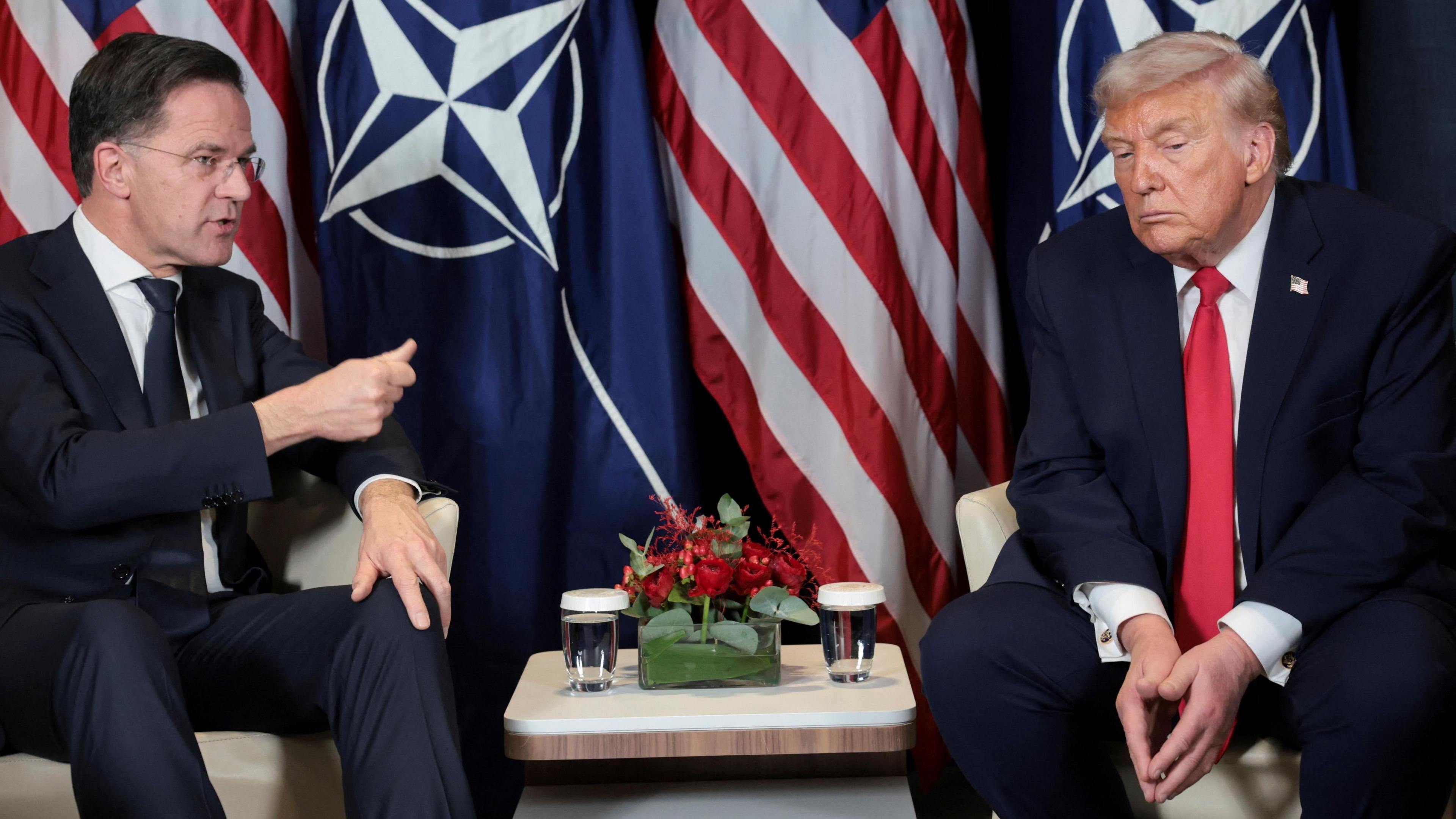
Deborah Haynes (recorded): Hello, Deborah Haynes from Sky News. Mark Rutte, the NATO chief, who is your friend, he called you “daddy” earlier. Do you regard your NATO allies as kind of children?
Donald Trump (recorded): No, he likes me. I think he likes me. If he doesn’t, I’ll let you know. I’ll come back and I’ll hit him hard, okay? He did it very affectionately. Daddy, you’re my daddy.
Deborah Haynes (recorded): Do you regard your NATO allies, though, as kind of like children? And they’re obviously listening to you, and they’re spending more. And you’re obviously appreciative of that. But do you hope that actually they’re going to be able to defend themselves, defend Europe on their own?
Donald Trump (recorded): I think they need help a little bit at the beginning. And I think they’ll be able to. And I think they’re going to remember this day. And this is a big day for NATO. You know, this was a very big day. They took it. One of the gentlemen said, you know what, we’ve been trying to raise money for, raise the rate for 30 years, he said, 20 years, from almost the beginning. And he’s been there for a long time. He said, until you came along, it never happened. What you did is amazing.
It’s been sort of an amazing day for a lot of reasons, but also for that. Yeah, go ahead.
Deborah Haynes (recorded): Do you think they can do it without you, though, in the future? Can they do it without the United States?
Donald Trump (recorded): Well, ask Mark. I mean, you have to ask Mark.
Rob Maness: Welcome back to the Rob Maness Show. It’s More War Monday. And that’s a great clip, because Rutte did say, you know, you’re my daddy, as opposed to, you know, the inflection of who’s your daddy. He said it out loud, because Donald Trump, in all seriousness, has flipped the script.
That’s why my guest today’s book is called Trump’s New World Re-Order, Dismantling the Deep State and Ending Post-War Globalist Rule. And Dr. Rod Martin is the guy that wrote that book.
Dr. Martin — Rod — I think that little clip says more about where the relationship the United States is with our allies in the world because of Donald Trump in a good way than anything you can see. And you can even have a little chuckle.
Partners Who Can Take Care of Business
Rod Martin: Oh, absolutely. And by the way, here’s the book. It’s Trump’s New World Re-Order. And it came out this past week. So everybody needs to go get one.
We have a whole chapter in the book called “Daddy’s Home.” And it’s exactly what Rutte was getting at. That, you know, the people who are serious about defense in Europe have understood that, you know, they couldn’t defend themselves against a Cub Scout troop for years now. I mean, it’s just been a joke since the end of the Cold War. And it’s gotten worse every single year.

And all of a sudden, Donald Trump actually smacks some people around and they get with the program. I saw Ari Fleischer talk about this during Trump’s first term. You know, Trump was working on the 2 percent commitment then. And Fleischer was on, I think, CNBC. And he said, “Look, we cajoled these people in the Bush administration to do exactly this every single meeting, every single year for eight years, and they just blew us off because they knew we weren’t going to do anything about it. Trump is going to do something about it, and all of a sudden, they act. My hat’s off to him.”
Okay, completely agree. Daddy is home.
We’re going to kick the teenagers out of the basement and make them get a job. And no, we don’t want them to defend themselves without us. We want partners that can actually stand up for each other. They can stand up for us when we need it. We can stand up for them when they need it.
What we don’t want is an open-ended commitment to defend literally the other 96 percent of the planet when we have just 4 percent of the population. Now, we may be 26 percent of the world’s economy, so we can do more. That’s a fair point. And we’re happy to do a disproportionate share of the work for that reason.
But Germany’s the third largest economy in the world. Britain is the sixth largest economy in the world. Japan is the fourth largest economy in the world. Come on, guys. Act like sovereign nations, not like kids. That’s the message.
And by the way, to their great credit, the new German government is doing better. They’ve hit their 2 percent commitment. They aren’t showing up at NATO exercises with broomsticks anymore.
The Japanese are doing even better. They are fielding a real Navy now. They have made clear that they see Taiwan’s security as important to Japanese security. Better than that, they’re building frigates and selling them to Australia. They are taking older frigates and giving them to the Philippines, which is facing all this harassment from the PLA Navy. They are actually helping us become the arsenal of democracy again. And we need that help. We don’t have the industrial capacity we need yet. It’s getting rebuilt, but it isn’t there yet.

So if the Japanese can step in, the South Koreans can step in, the Poles can step in. It makes the alliance stronger. We don’t have to do everything. We need to be in a position to come in and be the decision-maker when there’s a real crisis. And they need to be able to take care of their own backyard when there isn’t.
Rob Maness: Yeah, that’s why I’m a little bit obsessed about shipbuilding, especially on the sealift side and merchant marine ships and creating more merchant marine crews and shipyard workers and those kind of things so that we can reestablish what we had at the beginning of World War II, which is what enabled us to be able to beat the Japanese in World War II while we were beating the Germans too, because we could control the sea lines of communication and the air lines of communication throughout the Pacific region. We can’t do that right now.
Rebuilding the Navy and American Shipyards
Rod Martin: No, we can’t. And the outset of World War II: that’s exactly the right comparison. You know, we had a terrible army. I mean, it was very professional, very good, that’s not what I mean. But it was very small. Actually, Bulgaria’s army was bigger than the United States Army at the beginning of 1940.
But our Navy was in great shape. And it needed to be, because we understood there are enemies in the world. There are hostile forces. You know, back then we didn’t even have full control of the Atlantic approaches, much less, you know, control of the Caribbean. There were actual potential enemies with basing in the Caribbean at that point. And to Roosevelt’s great credit, he solved that problem for us in 1940 and 1941.
But we had a Navy. We weren’t trying to build a Navy from scratch. And because we had that Navy and because we had that shipbuilding capacity, we were able to create the world’s largest-ever Navy in just three and a half years, which is amazing.
But we couldn’t do that today. And I’ll just give you an example you’re, I’m sure, flawlessly aware of. We only have one shipyard in the entire country that can build or service a nuclear surface combatant.
Rob Maness: That’s right.
Rod Martin: Well, our whole Navy is built around 11 nuclear surface combatants. And of course, the Trump administration wants to take that bigger. We’ve been hearing all these people tell us how stupid aircraft carriers are since before I was born. Everybody always has a new thing that’s going to make the aircraft carrier obsolete.

No, that’s actually probably the most defensible real estate on planet Earth right now, especially with the new laser weapons we’re starting to deploy. It’s just really awesome. That’s impenetrable. If the Iranians could have gotten in a shot, they would have.
And so, you know, we don’t need 11 carriers, which is what we have. That means we can put six to sea at best. Frequently, it’s five. I’m sorry, you can’t cover the whole world with five carriers. That’s insane. We need what we had at the end of the Cold War, which is 15 or 16 carriers.
We need those Trump-class battleships. We keep hearing, oh, big hulls are terrible. No, they’re not. Big hulls give you the ability to put a nuclear power plant in there sufficient to be able to operate the next generation of directed energy weapons, railguns, and whatever else comes down the pike.
We don’t know what Elon Musk will invent next week. But we do need enough power plant and enough space in a hull to be able to carry those new inventions and make America safe again. This is crucial. We don’t have enough.

We don’t have enough of anything. We can’t even build enough submarines. We’re supposed to be building two Virginia-class boats a year. We’re now supposed to supply a bunch to Australia, which by the way, is a great deal. I’m all for AUKUS. But at the end of the day, we’re only able to construct 1.2 Virginia-class boats a year at a time when we really need to be able to build three.
So there’s a lot of work to be done here. I’m so proud of the president for getting it. Nobody else seems to have gotten it in decades. We’ve got to rebuild both the private and public shipyards of this country. And the president is very committed to an allied effort.
So you look at the trade deals with Finland and with Japan and with South Korea. And they involve those very advanced shipbuilding countries coming to the United States, taking control or building new shipyards here that can actually recreate the American shipbuilding industry. And the deal is very clear. They can bring their own people long enough to train Americans to replace them and not one day longer.
Rob Maness: Exactly right. Exactly right. Well, we’ve got a question in the live audience. Let’s go ahead and take that before we get to the break. Go ahead, Shell.
Audience Question: China’s Industrial Advantage
Moderator: We have AJ, sir.
AJ (audience question): Thank you, Shel. Thank you, Colonel. Dr. Martin, you guys were discussing the shipbuilding problem. And my question is, sir, outside of the notion that China has more facilities for shipbuilding than the United States does, last time I checked, the main proponent that China has in the form of an advantage is their metallurgy in regards to how they manipulate metal in order to build these ships. And in my understanding, nobody has a monopoly over the laws of physics or laws of chemistry and metallurgy. So where do you see us catching up and surpassing them if possible at all? Thank you.
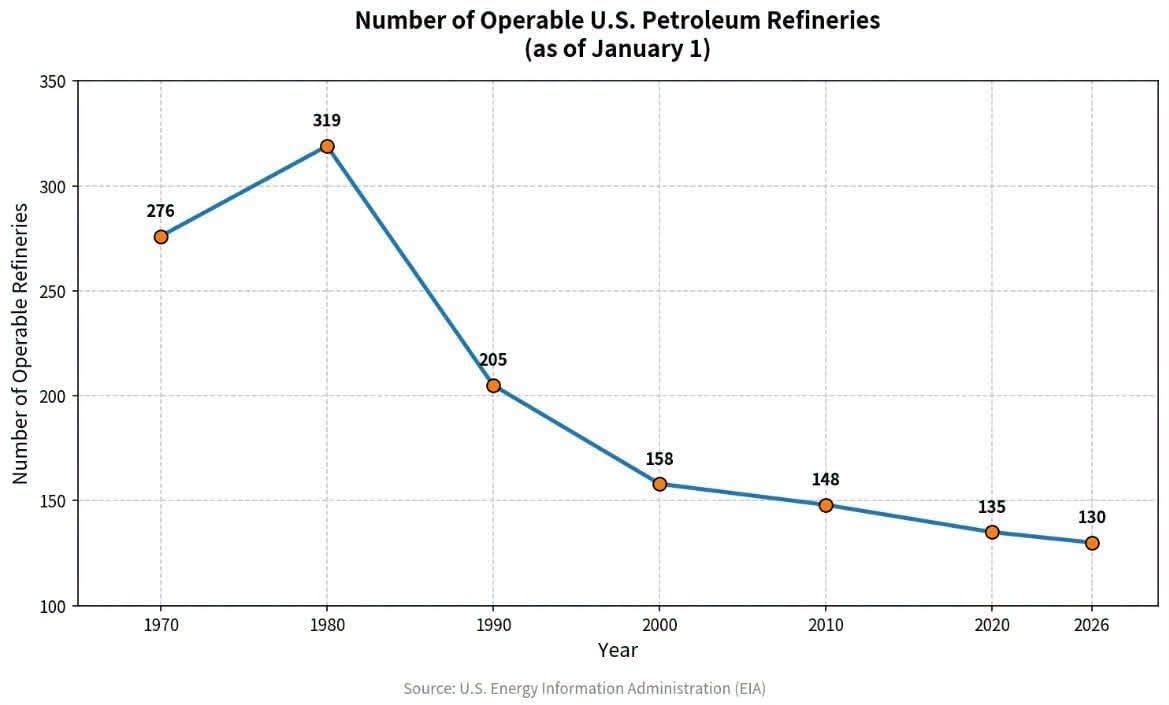
Rod Martin: It’s like so many other things. Look at, again, gas and diesel prices. This is easily understood. It’s not the war. The war has an effect, but that’s not the problem. You shouldn’t be wanting $3 gas. You should be wanting 50-cent gas, which you would have if we hadn’t shut half the refineries in this country since 1977 and refused to build even one in all that time, a time period in which we added 100 million people in this country. And guess what? They all burn gas and diesel. So this is a problem.
And we did the same thing with rare earths, which is so, so stupid, because everything depends on rare earths. Your iPhone depends on rare earths. Your F-35 darn sure depends on rare earths. That new B-21 that the more we hear, the more amazing the thing is. I mean, Rob, you’re going to want to go back in just to command some B-21s. They’re awesome.
These things all depend on something that we get 92 percent of the world’s supply from China. I mean, that’s just absurd. The only thing that keeps us from just having their boot on our throat is that we control the Strait of Malacca. So 80 percent of their energy has to come through the U.S. Navy.

And also, we are the world’s biggest consumer market. Their whole economy is built on overcapacity and overproduction. They have to have somewhere to sell it. They have to sell it here. That’s the only thing keeping any modicum of parity in any of this. And Trump is working on that too. So, you know, you’re seeing significant improvement in the rare earth situation, not just at home, but also in allied countries like Australia and sort of allied Ukraine and of course, Greenland and Venezuela.
All of these different crises have that common thread of “let’s find rare earths sufficient to wean off China and let’s build the refining capacity.” By the way, new refining capacity is coming online right now in Fort Worth, Texas. All of that has to happen.
And, you know, same thing with pharmaceuticals, but you’re right to single out shipbuilding. China now has not 250 percent more shipbuilding capacity than the United States: it has 250 times more shipbuilding capacity than the United States. That’s mostly commercial. That’s mostly the merchant marine stuff that the Colonel is talking about. But it’s China. Everything is dual use.
So, you know, if they want to jump from three aircraft carriers to nine, if they want to stay on track to have more submarines than we do by 2030, if they want to keep building missile sites and nuclear arming them — they have increased their nuclear force threefold in four years, and they’re on track to be close to parity with the U.S. and Russia by the end of this decade — they have the means to do it, and we have let the means to do it atrophy.

We are in a game of catch-up even worse than the one Ronald Reagan faced in 1981.
Rob Maness: Absolutely right. You know, and 1,740 sealift ships to our five every year. That’s the reported version from a year and a half ago in Roger Wicker’s SHIPS Act report that he did. And he’s my senator for Mississippi, the chairman of the Senate Armed Services Committee. I hope to God they get the NDAA out, because the SHIPS Act is in there. And that’s one of the things that it addresses. But, you know, we brought up steel and I just wanted to mention before I go to this last break.
You know, the whole supply chain for ship manufacturing has to be rebuilt to be brought here at home so that none of our adversaries can control key points of that supply chain. And you brought up exactly one of them, rare earths, Rod, that I lose sleep over those things at night.
When people ask me, “What do you lose sleep over?” It’s ship manufacturing, but all of the manufacturing and supply chain resources that we have to put back together inside the United States in order to be able to compete and defeat China if necessary.
Thank God that hasn’t happened. We’ll be right back with Dr. Rod Martin talking about his book, Trump’s New World Re-Order, Dismantling the Deep State and the Global World Order. We’ll be right back.
A Very Different Race for the Moon
Major Garrett (recorded): NASA wants to send humans back to the moon for the first time since 1972. In this second space race, there’s a new competitor, China. Our Mark Strassmann spoke with Transportation Secretary and Acting NASA Administrator Sean Duffy about this and so much more.
Mark Strassmann (recorded): One of the goals, clearly, is to get to the moon ahead of the Chinese. The U.S. has been to the moon already. Does it matter this time if the Chinese get there first?
Sean Duffy (recorded): It does. So we won the first space race. We are going to win today’s space race and tomorrow’s space race because in the south pole of the moon, we have ice. Ice means water. Water means life. So we want to get there first. And again, we have great partners around the world that are working with us. But I think that matters. And again, there was a time when if you controlled the seas, you controlled the Earth. I think tomorrow, he who controls space is going to control Earth.
And again, America is never in the business of control. We’re a peaceful country. We’re a country that supports democracy. Obviously, we have the same vision in space, but not everybody has the same perspective that we do on Earth or in space. And I think that’s why it’s important that we lead the way, not just in low Earth orbit, but also as we go to the moon and to Mars.
Mark Strassmann (recorded): Is NASA still...
Rob Maness: Welcome back to the Rob Maness Show. It’s More War Monday, and we’re talking about the book, you know, Trump’s New World Re-Order, Dismantling the Deep State and Ending Post-War Globalist Rule, written by Dr. Rod Martin, who is my guest today.
And, Rod, China is pushing big to settle with humans, the South Pole of the moon, for exactly the reasons then Acting Administrator Duffy of NASA was talking about.
Where are we in the race to get the United States and friendlies back on the ground there and settled permanently so that we can ensure that no one nation on the planet Earth gets to control that force?
A 1492 Moment in Space
Rod Martin: Well, I wouldn’t mind if one nation controlled it as long as the one nation is America. That would be okay.
You know, where we are in the race is perhaps less important than where we are in history. This moment is 1492. This is the moment at which we’re about to open up new worlds. And I know that just sounds like crazy talk, but trust me, it sounded like crazy talk in 1492. And yet here we are. And the reason is actually very simple.

It is cost. Before Elon Musk invented true reusability in rocketry, what we had was a cost per pound to orbit. That means every pound you send up costs $10,000 to send into space. $10,000. You’re not going to send much stuff into space. That’s just not going to happen.
Elon has brought that number down to just $200. $200 and dropping! Okay, what does that mean? You’re going to send a lot more to space. And that’s exactly what’s already happening.
SpaceX has now launched more stuff into space by weight than all of humanity in the entire period since the first satellite in 1957. Just Elon, more than everybody else combined, just in a 10-year span. It is absolutely breathtaking.
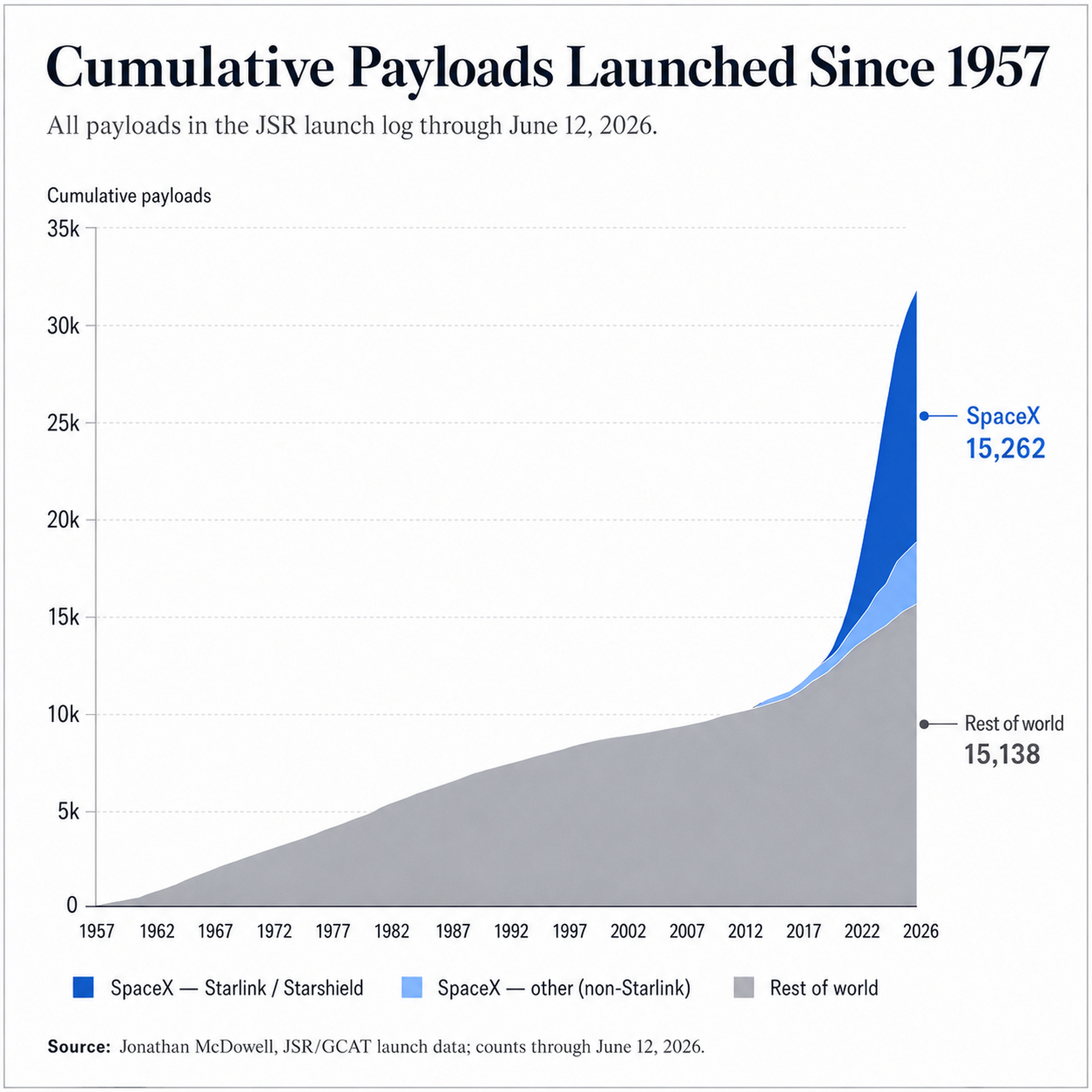
Now, what does that mean? Well, it means that cost is going to keep coming down. It means Starship is not going to be a one-off that you use and you throw away. So, as a result of that, you build a bunch of them, like you would build a bunch of airliners.
And you say, well, where do you have to go in space? Well, ignore that for the moment. Let me tell you where you have to go on Earth. If you use Starship like an airliner, you can travel from New York to London in 23 minutes. You can travel from New York to Shanghai in 47 minutes. You can travel from New York to Singapore in 49 minutes.
This is transformative. And it will knit the world together in a way that we can’t even imagine, but looks very similar to the beginning of the jet age. Wait, there’s more. Build a thousand of them for the War Department, and now you have enough lift capacity to be able to move everything we sent to Saudi Arabia in 1990 and 1991 for Desert Storm in an hour. In an hour. Not six months by sea. Not in those ships we didn’t bother to build.
No. In things that will get built because, you know, the Department of War isn’t stupid. They understand that rocket cargo is a really big deal. But once you perfect it, it’s also human transport as well. That’s when you get to space because that will bring down the cost ridiculously more.
And as a result of that, now you’re going to have a huge number of people living and working in space for the very good reason that there’s a lot of stuff out there. And if I mine a near-Earth asteroid and I manufacture something, I’m not polluting a stream. I’m not tearing down a rainforest. I am getting the benefits of microgravity and a whole lot of adventurous young people are going to want to go live there because they grew up on science fiction.
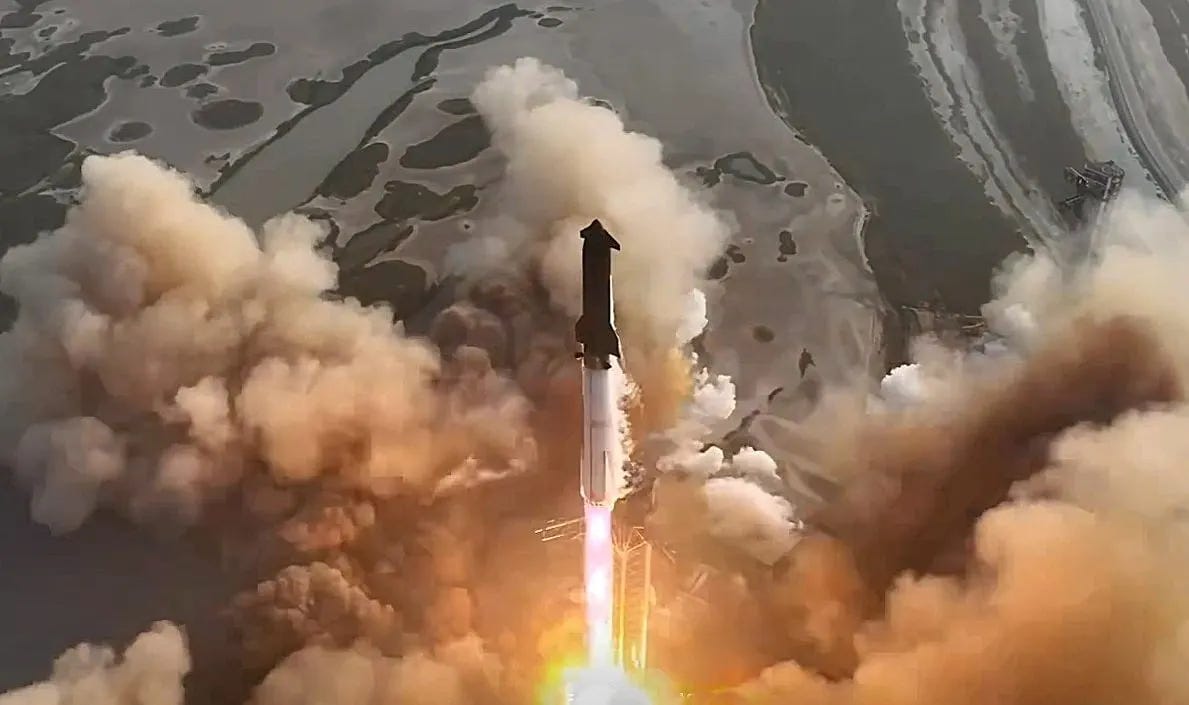
So you could have millions of people in space before the end of this century. You will eventually have billions over the next few centuries. And the reality is that the people who grab the most important real estate right now will control the future.
So some of that real estate is the South Pole of the Moon. Some of that’s the Lagrange points, which most people have never even heard of. There are other places that really matter. And we will discover more.
But the bottom line is the Chinese have discovered a lot. They know. They talk about it. It’s in their media. It’s in their military journals. We just don’t read it, partly because we’re dumb and partly because we don’t read Mandarin. So, I mean, it is what it is. But they’re all over this.

And we finally have an administration who understands that this isn’t a prestige project like Apollo. I’m not saying that prestige didn’t matter. We were at the height of the Cold War. And, you know, lots of countries were becoming independent. And they’re trying to decide whether to be free or communist. And the prestige mattered.
But we went to the moon and then we never went back. And that’s not going to happen this time. Because now it’s going to be cheap to go and profitable to stay. There’s going to be stuff that you get there and you sell here. That’s going to massively improve the life of every person on this planet. We will largely eliminate poverty in this century because space is going to collapse the price of just about every commodity you can point at.
And we aren’t going to be worrying about China and rare earths anymore because they aren’t rare in space. And we’re going to have plenty.
Rob Maness: Yeah, hopefully we can eliminate the mental health disease of communism and Islamism too.
Rod Martin: Absolutely.
Rob Maness: And don’t take that with us.
Rod Martin: You know, Mars, I think of it as the new world like people in Columbus’s day and beyond in the colonial days thought of this place as the new world. And it’s a function of technology. If you have the right technology, you can make anything inhabitable.
And I am living proof of that because I’m sitting in Florida. Nearly the entire population of Florida was concentrated between Jacksonville and Pensacola for hundreds of years. And then somebody invented air conditioning, DDT, and bulldozers. And now the whole peninsula is just full of people.
Okay, that was just not possible without technology. Those same kinds of technological advances make Mars a really fantastic destination. But far from the only one, we are going to open up the entire inner solar system over the next century or so. And it is going to transform life on Earth in an incredibly positive way if America leads. And if the Chinese lead, it will result in tyranny literally everywhere.
Rob Maness: And we won’t know anything because we don’t read Mandarin.
Rod Martin: That’s right.
Rob Maness: We’re missing the Mandarin. So we got to win. We got to win.
The Midterms and the Road to 2028
Okay, so let’s assume — we’re going to make an assumption — the elections in a week and a day come out okay for us. Last two years of Donald Trump’s administration, this, I mean, this is the mission. Really, he outlined his mission in this. What are the next steps in the policy changes look like, and does he have a prayer of getting there?
Rod Martin: You get there in multiple ways. Congress has already pre-authorized the president to make these trade deals, to impose these tariffs. The tariffs are a key part of re-industrializing America because you saw this new Audi plant that just got announced for South Carolina, or Georgia, rather. That is the result of Audi taking a huge tariff hit and being told, but wait, if you’ll build your cars in America, we won’t tariff any of your cars that you make anywhere. Okay, so now they’re building an auto plant.
And the president has that authority. He has the authority to do a lot of the things that need doing with defense. He has the authority to keep going after the roadblocks in our system that prevent us from having truly constitutional government. He will do all that.
But if we do our job, if we’re responsible for our future, if we actually find four friends and drag them to the polls next week and do our part, it’s going to be better than if he spends the next two years getting impeached three times and every junior staffer gets, you know, a multimillion-dollar investigation, they’ll still get a bunch done.

Donald Trump gets more done than any human, I think, who’s ever lived except Elon Musk. So, you know, it’ll still be kind of amazing, but it would be better if we gave him the team to actually legislate, to get us that NDAA, to get us the supplemental we need for Golden Dome, to see it through year after year, and to get out to 28 and elect a successor who is worthy of that mantle.
Rob Maness: Absolutely right. Well, thank you, sir. We appreciate it. The book’s available on Amazon, right?
Rod Martin: Yes, sir. And Barnes & Noble and anywhere else you want to go.
Rob Maness: All right. Thank you very much. We appreciate your work and your service to our country, Dr. Martin.
Rod Martin: And yours. Thank you.
Rob Maness: All right.


