


by Rod D. Martin
July 29, 2026
The U.S. Navy is about to lose two of the greatest concentrations of missile firepower it has ever put to sea. It can’t afford the loss.
The Navy relies on the Vertical Launch System, or VLS: modular storage cells with rapid multi-mission responsiveness, and 360-degree target-engagement capability. Each VLS cell can hold and fire different types of missiles, whatever the mission demands.
The catch? They have to be pre-loaded in port before the ship deploys. Run out of missiles and you have to go home. The Navy is working on a new program that would allow reloading at sea. But it isn’t here yet. And more to the point, it doesn’t solve the core problem: not enough VLS cells, a problem that’s about to get dramatically worse.
The 22 Ticonderoga-class cruisers built with the Mk 41 VLS carried 122 cells apiece. Across the class, that was 2,684 launch cells. Only seven are left, and those will retire over the next couple years. Likewise, the four Ohio-class guided-missile submarines can carry up to 154 Tomahawks each, another 616 missiles hidden beneath the sea.
Together, that’s roughly 3,300 sea-based launch positions, out of a total of 8,120 in the entire U.S. Navy. They’ll disappear over the next two years. Replacing them may take well into the 2040s.
That would be dangerous in any era. It’s especially foolish right now. China is rapidly building the world’s largest navy, backed by a shipbuilding industry so much larger than ours that the comparison is embarrassing. China’s commitments are regional: America’s are global, which means spread out. And every recent conflict has reminded us that modern war consumes precision munitions much faster than the Pentagon’s peacetime procurement system replaces them.

That is one of the key mistakes of an era in which China was seen as a friend. But China is not our friend. It never has been. It can be contained, it can be deterred, but only a fool would trust it. And the price of complacent miscalculation is catastrophe.
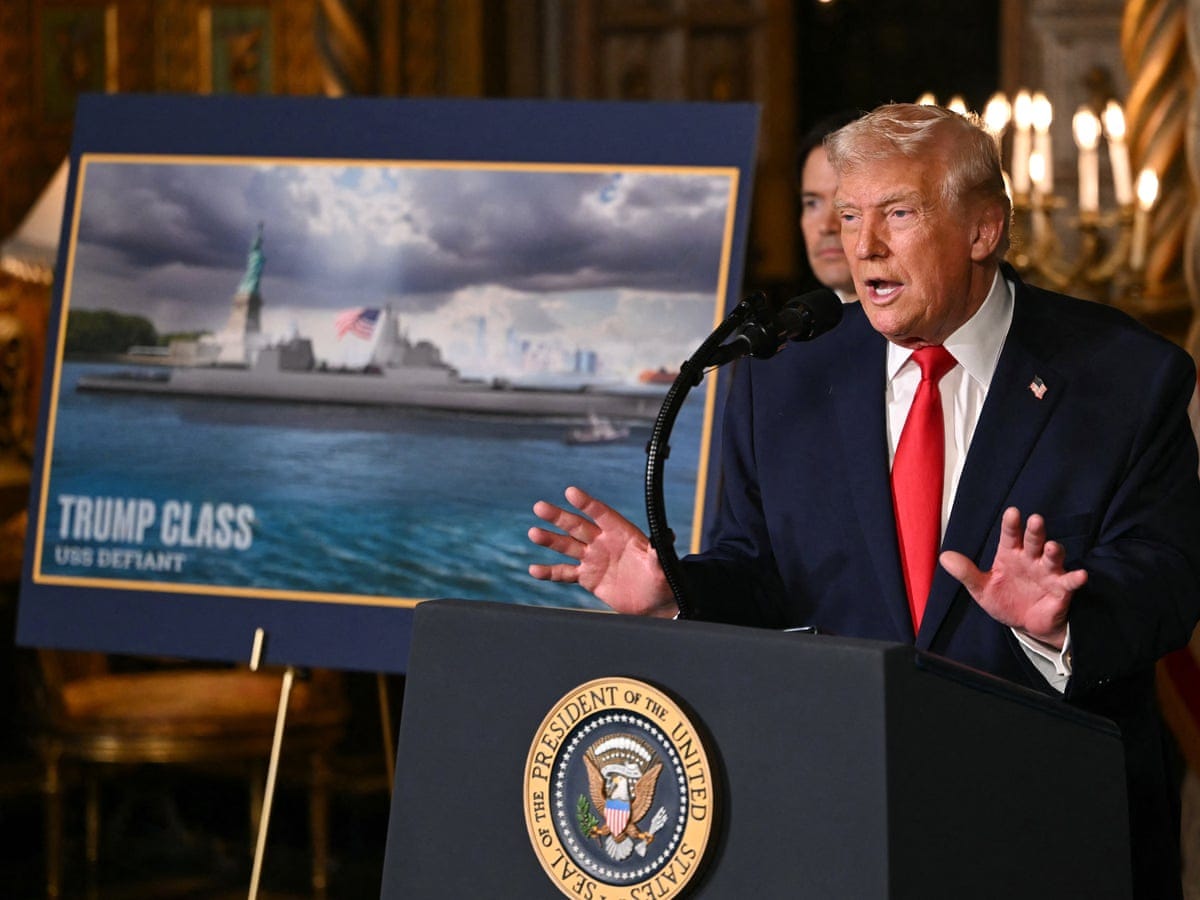
This is exactly why America needs the Trump-class battleship. All of them. Not in the 2040s. Now.
The Navy plans fifteen Trump-class BBGNs carrying 128 Mk 41 cells apiece, plus larger launchers for hypersonic and future weapons. That means 1,920 standard VLS cells restored to the fleet aboard ships designed to survive, command, defend, and fight at the highest end of naval warfare.
No, by itself that doesn’t replace all that’s disappearing, though in conjunction with more Arleigh Burke destroyers and upgraded Virginia-class attack submarines it will. Nor does a surface ship duplicate an Ohio SSGN’s stealth.
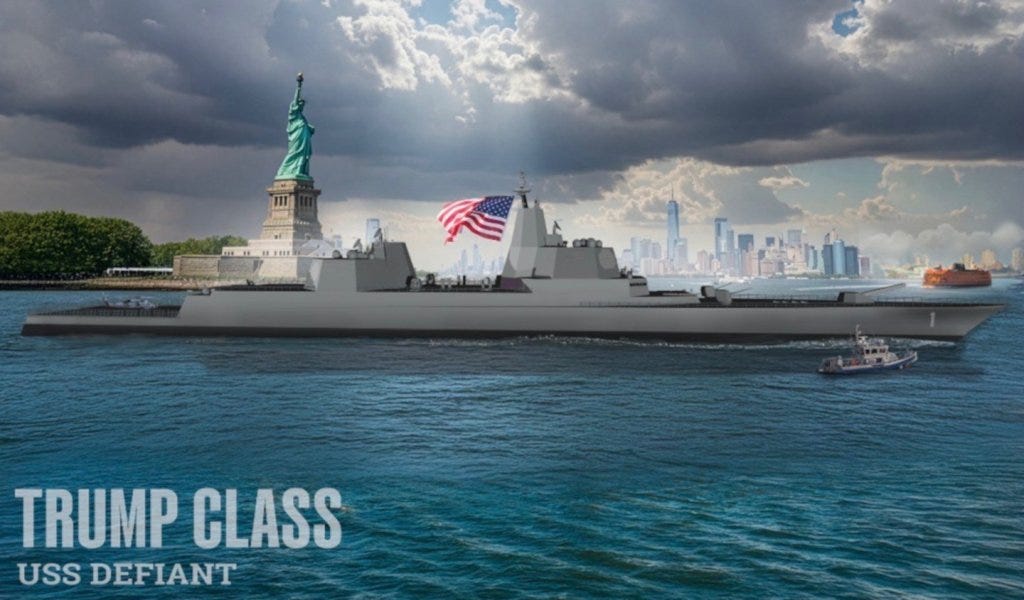
But the Trump class does far more than merely put launch cells back at sea. It is also an air-defense fortress for our carriers, a command ship, an independent cruiser, and a platform with enough electrical power to operate the directed-energy weapons (yes, lasers) and railguns that will become increasingly dominant over the next two decades. It gives the Navy a first-in-kind platform designed for constant upgrades as new technologies arrive. It will literally become more powerful every single year of the next half-century.
The BBGN is not a replacement ship. It’s a strategic leap. It’s also a design philosophy.
A Platform for the Next Fifty Years
The Mk 41 VLS entered service under Reagan. The missiles it carries have changed repeatedly since then, and they will keep changing. Tomahawks have gained new range and accuracy, new guidance systems, and new missions. Standard Missiles have evolved from fleet air defense into ballistic-missile defense and anti-ship weapons. ESSMs can be packed four to a cell. The launcher has remained useful because the Navy did not design it around one weapon, one threat, or one era.
That is the Trump-class design philosophy writ large. Here’s why:
