



This analysis is free, but with Premium Membership you get MORE. Join today.
by Rod D. Martin and Frank Gaffney
August 31, 2026
My latest interview on Securing America with Frank Gaffney. Sign up NOW for Frank’s Rumble channel and don’t miss a single episode!
Frank and I discuss:
Scott Bessent: greatest Treasury Secretary since Alexander Hamilton
Can Bessent’s “Economic D-Day” break the regime and free Iran?
China’s collusion with Tehran, and how China’s rare-earth weapon collides with the Malacca Dilemma
How to make a Taiwan invasion more expensive than it’s worth
Why Canada cannot survive a break with America
PLUS why Greenland is key to countering China’s Polar Silk Road
It’s a full 27 minutes of in-depth analysis you won’t want to miss. If you prefer to read, the full transcript is below. Watch, read, like, and share!
Our full discussion:
Frank Gaffney: We’re back, and I get to say those favorite words of mine: So is Rod Martin, the poobah uber alles of our Institute for the American Future. He serves as its chairman of the board and founder.
He is also a man of considerable experience in the business world. He started back in the PayPal days, when there was a Mafia there, in the best sense of the word. He was part of it, and he has gone on to entrepreneurial activities of many kinds.
But one of the most important of his ventures is the Rod Martin Report, a newsletter that he is producing online at RodMartin.org. It is a wealth of valuable information, his own and some select guest authors as well. I strongly commend it to you all.
Rod Martin, we’re delighted to have you with us. You have been busy on issues related to Topic A, which is the economic warfare that the Trump Administration has now very explicitly announced in the person of Treasury Secretary Scott Bessent.
We talked a bit about this with our colleague, Major Elliot Chodoff, from a foreign perspective, but we’re very anxious to get yours, especially given your expertise in these matters.
I do want to say, you and I talked a little bit about a related aspect to this that you called the Anaconda Strategy. I think we’ll probably come to that in a moment. But let’s start with the Economic D-Day that has been declared with the intention of, well, basically preventing Iran from having access to outside funds from any source. Your thoughts, sir?
Rod D. Martin: Well, first and foremost, let us now praise Scott Bessent, who is truly a remarkable, remarkable man, possibly one of the smartest people we’ve ever had in the U.S. government, and definitely the best Treasury Secretary since at least Alexander Hamilton. The guy is just a machine. He is amazing.
Trump didn’t pick him randomly. Some of your viewers won’t remember, but Scott Bessent led George Soros’s hedge fund when they broke the pound. This guy knows what he’s doing.
Of course, he was never part of Soros’s political operation, his so-called charitable operation. Bessent wasn’t on that side of the store at all. Compared with Soros, he’s to the right of Attila the Hun. But he is one of the guys who broke a major central bank. If I were China, his mere existence would make me lose sleep at night.

That’s what’s happening to Iran. Bessent’s strategy here is above and beyond anything that’s ever been attempted with Iran. But, to be fair, the foundation of it is the blockade. We are preventing pretty much anything from getting in and out of Iran.
You can say, “Well, but there are roads. There are railroads. There’s the Caspian.” Okay, there is a railroad, for instance, from China to Iran. At most, it could handle 6 percent of Iran’s exports. There’s no way to expand it in time to help enough to matter.
The roadways are bombable. The bridges are bombable. And on the Caspian Sea, there simply aren’t enough ships to be able to handle more than a tiny fraction of Iran’s needs, either imports or exports.
Even if this is porous, it doesn’t really matter. The total percentage loss to this blockade is extraordinary.
When you hear on Fox or various places that they’re losing $500 million a day, you have to understand that over just 270 days, not even a full year, just 270 days of losing $500 million a day exceeds the total value of the Iranian economy. Not the government budget, the entire economy. So this is shockingly effective.

We saw the head of the Iranian parliament say on camera the other day that, “We’re being starved to death. We can’t sustain this.” When even regime figures are saying that, and he’s a former IRGC commander, he’s not one of these guys who’s sidelined, there’s no question that this is proving effective.
What Bessent just rolled out doubles down on that by blatantly telling anyone, Qatar, the UAE, China, Russia: We will hit you with similar sanctions if you let these guys up off the mat. I don’t think there’s any question they mean it.
China’s Rare-Earth Leverage Meets the Malacca Dilemma
Frank Gaffney: Let’s explore that, because there’s, shall we say, certain skepticism in our circles, Rod, that the Bessent strategy will be fully implemented.
People are pointing, for example, to the fact that he’s given a seemingly unspecified amount of time for a grace period, if you will, for people to disassociate themselves from Iran and the business that they’ve been doing with them.
A particular disbelief is that they’re going to actually pull the trigger on these secondary sanctions on China, especially on the eve of a state visit by the Chinese emperor, Xi Jinping, to Washington. What are your thoughts about those concerns?
Rod D. Martin: China has only one thing we really need, and that’s rare earths. As your audience ought to know better than anybody, China controls 92 percent of global rare-earth refining.
It’s not so much that they supply all the raw materials, although they supply a lot of them. It’s that they refine nearly all of them. Until we wean off of that, we can’t just go cold turkey on China.
But you see what’s happening. Treasury has already been sanctioning individual Chinese refineries, some of the so-called teapot refineries. They’ve been doing that now for several months, and purely on the basis of this Iran problem. Those refineries were processing Shadow Fleet-delivered oil, and Treasury has taken a tough stand on that. I think that’s just a warm-up act.
Is Trump just going to cut off the Chinese tomorrow? No. But he can really make their life hard, and they are very aware of it.

They’re the ones who coined the term “Malacca Dilemma.” They know that 80 percent of their oil is flowing through chokepoints that we control. They know that if they really ramp up pressure on rare earths, we’re just really going to cut off their food and oil supplies. The Iran situation is an object lesson in that.
We have constantly had this discussion through the years about Hiroshima and Nagasaki. Were the atomic bombings necessary? The people who want to say no typically say, well, the United States would have had to blockade Japan, and that would have caused mass starvation. That would have been horrifying.
Of course, in the Japanese case, it actually would have been horrifying because they served their god-emperor and would have all gladly died. I don’t think the Iranian people are in that boat at all.
I think you hit a certain level of pressure where this regime is really in danger, and they’re already making noises in that direction.
So is there a high likelihood that the President just completely clamps off China? No. Can he do enough there to cause them to say, “Ouch”? Absolutely.
Remember, prewar, China was getting 90 percent of Iran’s oil exports, and they were getting it at a steep discount. They’re having trouble replacing that, and they’re never going to get it at those prices again, which is a disaster for their economy. So the President has real levers on China. But these other countries, UAE, Qatar, he can really hurt them.
Frank Gaffney: Well, the UAE has already punched out, actually, before Bessent did his thing. I think we were talking about this last week as a major development, because they had been essentially helping to finance the Iranian regime.
But just to stay with China, Rod: To the extent that the Chinese are in a position to hurt us with these rare-earth minerals, as you point out, we’re in a position to hurt them with respect to oil and food, and perhaps other things they want from us. Probably not least, investment, which continues.
Rod D. Martin: But nowhere near as high a level as it did five years ago.
Frank Gaffney: No, that’s true.
Rod D. Martin: Because the place is a mess, as you know.
Frank Gaffney: Not so investable.
Rod D. Martin: And all the companies that are pulling out! Ford just announced they’re not going to produce any more cars in China. That’s amazing.
And if I were Mark Carney, I’d take note, because if Ford (Motor, not Doug) pulls out of Ontario, they’re in a recession ten minutes later.
Frank Gaffney: We’re going to come to Canada in just a second. But just to stay again with China, are we in a sort of mutual assured destruction arrangement, would you say, Rod?
Is the net effect of that likely to have China sucking it up and saying, “Well, we’re not going to come to the aid of the Iranians”? They haven’t done so much to date, other than some weapons sales, I guess, and shipments of that kind, and buying oil where they can.
But I have to ask you to hold the thought, because we’re going to come back after a very short break. Rod Martin, I’m very keen to get your soothsaying, as it were, about how China responds to all of this, and frankly, how Donald Trump responds to all of this, because he clearly is very intent on having this summit with Xi Jinping in September.
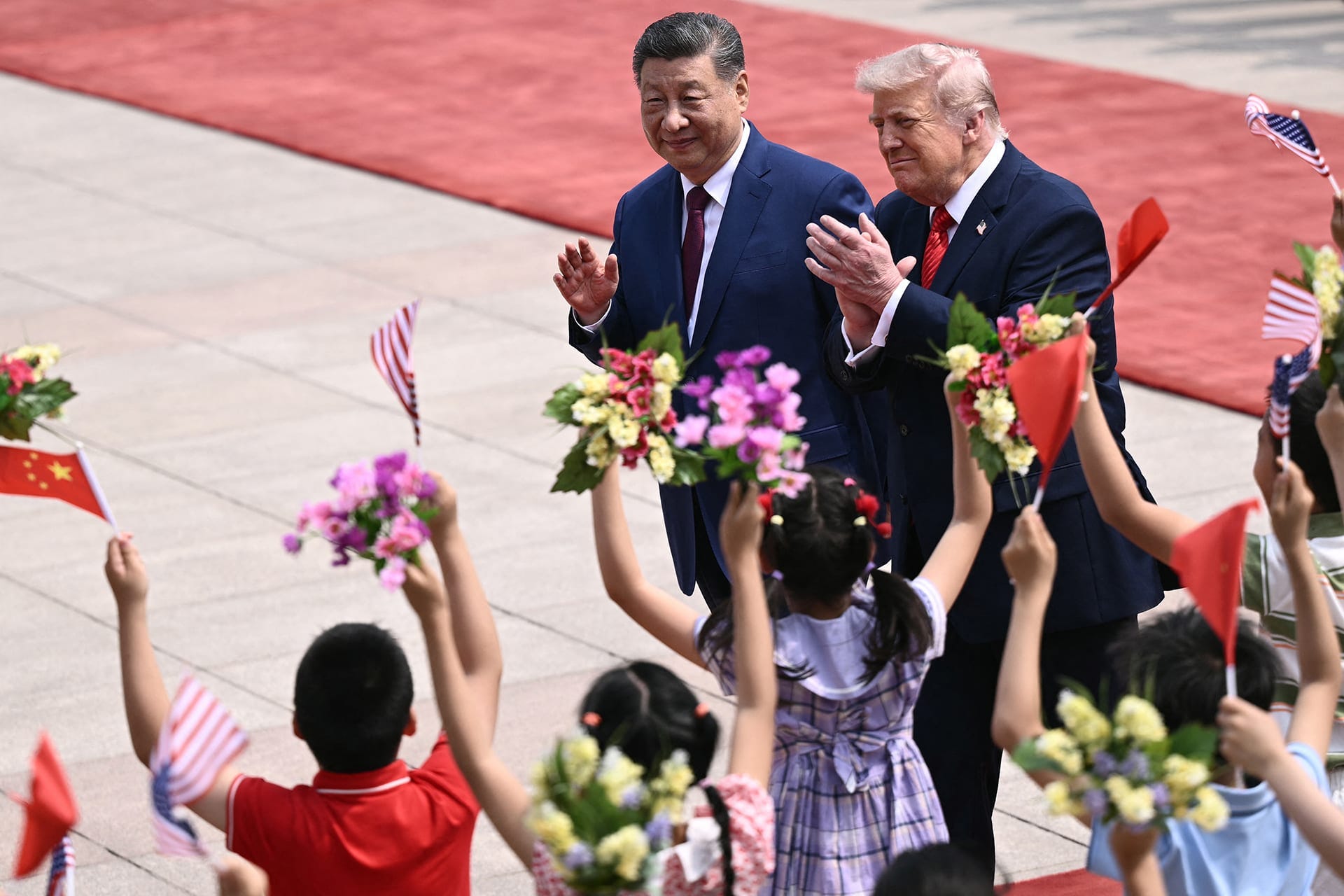
That old September song, “Will I See You in September,” is the question of the day. We’ll be right back with Rod Martin, the proprietor of the Rod Martin Report. Find it at RodMartin.org. We’ll be right back.
Cheap Iranian Oil Is a Chinese Subsidy
Frank Gaffney: Welcome back. We’re visiting with Rod Martin, which we have the privilege of doing each week, praise the Lord. We are deeply grateful for his faithful contributions to this program, especially at a time such as this.
Rod, we’ve been talking about this situation of a kind of, well, I called it mutual assured destruction between the United States and China, and where this leads in the run-up to a summit meeting here in Washington, expected to take place, as things stand now at least, with Xi Jinping.
President Trump has been, to date, especially with this threat of the cutoff of processed rare-earth minerals from China, as you’ve indicated, rather more accommodating of the Chinese than those of us on the Committee on the Present Danger: China, of which you are an important member, would otherwise prefer.
But where does this likely go from here? Scott Bessent was making some statements that made it quite clear that there were going to be no exceptions to this new order, that anybody who is helping prop up the Iranian government was going to meet the wrath of the United States through secondary sanctions and the like. So make book for us on this, if you would.
Rod D. Martin: I think the summit happens. I think it’s positive. I think it ends well.
We’re not going to get everything we want, nor are they going to get everything they want. You and I will never be happy with anything that comes out of a summit like that.
But at the end of the day, we need to keep rare earths flowing. They need to keep energy and food flowing. We’re dependent on each other for now.
Now, the problem for China that gives Trump meaningful leverage here, aside from the fact that they need the energy and the food more than we need the rare earths, is that Iran being offline and not being able to ship oil meaningfully impacts the Chinese economy.

It’s not just the oil itself. We’re actually getting a lot of oil out of the Strait. In fact, the latest numbers as of last night, we have now multiplied the amount of oil getting through the Strait of Hormuz by 400 percent in just two weeks.
In the 30 days preceding that, we had already gotten out millions and millions and millions of barrels of oil, none of it from Iran.
There are two aspects of the problem for China. The first one is the raw supply. But the second one is — remember — these things are normally done with 20-year contracts. So a lot of the people who are getting oil out have somewhere specific they have to ship it. China isn’t necessarily the recipient.
They have a supply issue. But they have an even bigger issue in that the Iranians were selling it to them on the cheap, as were the Venezuelans and the Russians.
So if you take a lot of that cheap oil offline, and remember, this was 40 percent of China’s total imports, and they’re getting it significantly below the then-lower market price, that’s a huge prop to the Chinese export-based economy.
That allows them to dump in Europe. It previously allowed them to dump here. It allows them to drive Western competitors out of business on unfair bases.

That starts going away, and it starts actually eating into China’s ability to stay out of recession territory, assuming they aren’t already there. I would argue that they are.
I know that’s in some dispute. It just depends on how much you trust the numbers coming out of Beijing, which I do not.
But the point is, China has a bigger problem here than the United States. China already said in the May summit, yeah, we want this oil online, we don’t want to arm them, we want to cooperate with you, President Trump, blah, blah, blah.
Okay, you don’t trust them. But actually, you do trust people when it works for their interest, and that has been true.
You’ll notice they haven’t sent any fighter jets to Iran. They haven’t sent huge arms shipments to Iran. There was a rumor about MANPADS a few weeks ago. The Chinese were the first ones to deny it. Maybe they shipped them, maybe they didn’t.
But if they did, I think Donald Trump would instantly double down on a new arms deal for Taiwan.
It’s a complex game from the Chinese point of view. This is not even chess. This is a game of Go. They’re always looking out for their own bottom line, not the ayatollahs.
Taiwan’s Porcupine Defense
Frank Gaffney: Interesting. Speaking of Taiwan and arms sales, the President did approve, on a pretty accelerated basis as I understand it, the movement of F-16s that have been held up interminably to Taiwan.
Some cast that as evidence that the Administration is concerned that the Chinese are, no kidding, getting ready to exercise one of the myriad options they have to try to take Taiwan.
Perhaps it’s a blockade or a quarantine. Perhaps it’s some kind of fifth-column operation. Perhaps it’s actually an invasion.
What are your thoughts about how that’s shaping up, Rod, and how that might fit into this larger story, sir?
Rod D. Martin: Well, it notably fits into the porcupine defense and not into anything offensive. That’s important. That’s essential for the general dance we’re involved in with Beijing.
Think about an F-16. That’s not a long-range jet. It has a cannon very similar to an A-10’s.
Compound that with PrSM missiles in place of ATACMS in HIMARS. Couple that with the howitzers we just shipped them. Couple that with the other things that we’re doing to help them.

What you see is a strategy to blow up landing craft in the water before they can hit the beach, and then whatever gets through, blow them up on the beach. That’s essential to the whole thing.
All we can really try to do here with China, short of invading them and conquering them — and that isn’t going to happen: I’m pretty sure Donald Trump is not Genghis Khan. So short of that, what you have to do is, as our friend Morton Blackwell would say, make the steal more expensive than it’s worth.
Everything that increases the probability that an invasion fails reduces the chance that it ever gets tried.
Frank Gaffney: Key point. We have to take a pause. We’ll be right back with much more with Rod Martin. Stay tuned.
Canada’s Anti-American Pride Meets Economic Reality
Frank Gaffney: We’re back for a final installment of this weekly conversation with our great friend Rod Martin of, among other things, the Institute for the American Future.
Did I mention that he is its chairman and that we need your support? Please make a contribution to usfuture.org, if you would, if only to make this partnership even more viable.
Rod, in addition to that work, of course, you are working on the terrific product of your Rod Martin Report. In the course of what you do, I know Canada has on occasion been a focus of conversation, notably the possibility that Alberta may decide to punch out of Canada.

But there’s a lot of chatter about how nationalistic the Canadians are now feeling because they’ve been so badly handled by Donald Trump, and the tariff thrash and the various knock-on effects of tariffs for both countries, I think it’s probably fair to say, but particularly for the Canadians.
It’s causing some to speculate that we may be driving them, oh, I don’t know, into the arms of the Chinese Communist Party. But, as I recall, that’s actually been the policy of successive Canadian governments, including, I think, this one under Mark Carney.
Give us your sense of where things stand with Canada.
Rod D. Martin: O Canada, as they say.
Canada is that really nice country to the north of us that we love to go vacation in and otherwise almost never think about. That really hacks them off.
Basically, Canada exists for the purpose of anti-Americanism. Americans have lost track of that. But remember why there’s a Canada: They didn’t want to join the Revolution.
The Continental Congress expressly included them, and they didn’t want to come. Then, of course, we kind of messed with them and invaded Quebec. But the idea was not to conquer Quebec. It was to assist and enable a rising of people who had just been conquered by the English and clearly didn’t want to stay English, at least so we thought.
No, they wanted to be Americans even less.
Canada has always been this anti-American exercise. But they’re super nice all the time and call you “buddy,” so nobody notices.
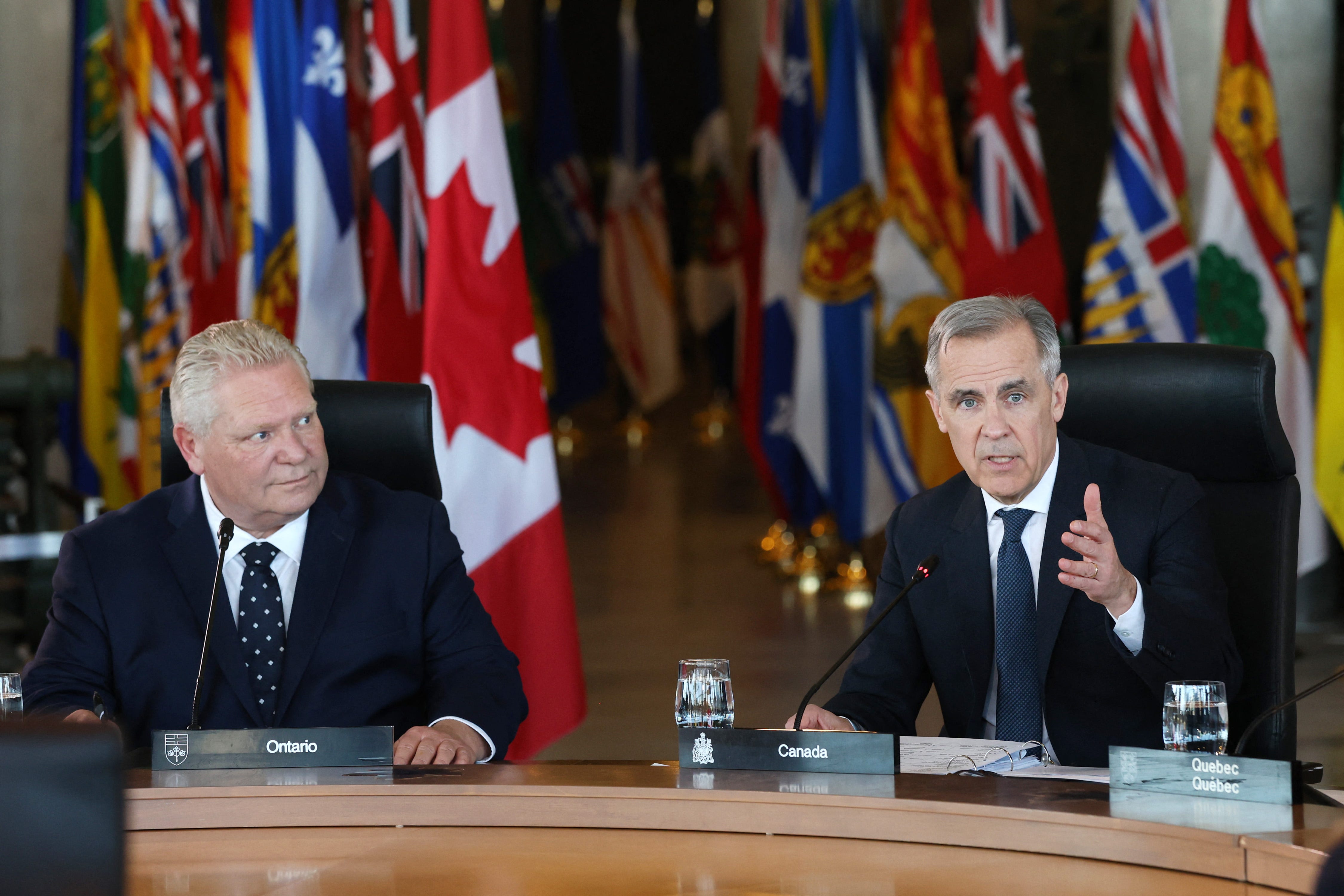
They have gone to war alongside us. Mostly they just come down here to Florida and use our health care because socialized medicine is so terrible at home. Medicare for All, right?
This is the lay of the land. The average American doesn’t think about Canada normally, and they are forcing us to do so.
Here’s the thought that they need to have: Canada is one-tenth the population of America. Ninety percent of the Canadian population lives within 100 miles of the U.S. border. Much of the industry in Canada is aimed at exporting to the United States. Seventy percent of Canada’s exports come here. Seventy percent.
The Chinese aren’t going to absorb that. The Europeans can’t absorb that. That can’t move. They can cut away at it at the margin, but they can’t replace the United States.
What we’re really seeing here comes into better focus if you look at Mark Carney’s speech about why he rejected the deal. Bear in mind, this is a deal that the two sides agreed to early last week. Then at the very last minute, Carney pulls out and gives this meandering speech about it.
You can look at it on YouTube. The prime minister of Canada, who, by the way, was also the governor of the Bank of England when Brexit was going on, was working against Brexit. He’s always working against the independence of whatever country he’s helping lead.
His response was, well, everything the Americans were demanding was reasonable, and we don’t even really disagree with it. We just don’t like how they said it.
Okay. Pure hubris. Pure pride. And pride goeth before a fall.
Do we get to a deal? We’re going to have to, or they’re going to go into not just a recession. They could go into a lot worse.
As I said in the earlier segment, if Ford’s pulling plants out of China, which is a huge, huge consumer market for their product, most of what they’re building in Canada is for the American market.
What if they pull out of Ontario? What if other companies pull out of Ontario? Ontario lives to a great degree off the subsidy it’s extracting from Alberta. It depends for its oil on pipelines that run through America. Where do they go for help?
They get reduced to the same status as the Maritimes, and they’re all a basket case together.
This has to resolve. It just has to. They need us, a lot more than they’re willing to admit. But from the American perspective, honestly, we could do without them.
Greenland and the Polar Silk Road
Frank Gaffney: Fantastically interesting point. Rod, let me ask you about one other piece of this.
You mentioned the demographic distribution of the Canadian population. In those far northern reaches, which are largely unoccupied, there’s a lot of activity going on at the moment, including the Chinese opening what they’re calling the Polar Silk Road.
What do you make of that? And how does this tie into our strategic interests, notably in Greenland, sir?
Rod D. Martin: Well, this is all about Greenland, isn’t it?
The Polar Silk Road is very deliberately taking the route around Russia to Europe, not the route around Canada to Europe. That is a worthy thing to note.
But in the long run, America just doesn’t have any icebreakers to speak of. We’ve completely ignored the Arctic.
The Chinese aren’t even in the Arctic, and they’re taking the Arctic far more seriously than anybody in the United States except Donald Trump.
Frank Gaffney: They claim to be, I think, an Arctic-adjacent country, if I’m not mistaken.

Rod D. Martin: Well, that’s their spin on it. But if you just look at a map, they’re not actually anywhere near the Arctic. And yet they are now making it a central concern, and we aren’t, aside from the President.
So, yes, this just really underlines the necessity of some deal with Greenland. I keep saying, I think you get to a Compact of Free Association like you have with Palau and the Marshall Islands.
It doesn’t make sense to annex them. But a COFA would solve the long-term problem, for Greenland even more than for the U.S.
Frank Gaffney: Good point, Rod, and right on cue. We have to wrap it there. Thank you so much for joining us, as always. Keep up the great work you do in support, among other things, of the great work we do. God bless you.
And thank you to all of you for listening. I hope you'll come back next time, and that until then you will go forth and multiply.


