


This analysis is free, but with Premium Membership you get MORE. Join today.
by Rod D. Martin
August 29, 2026
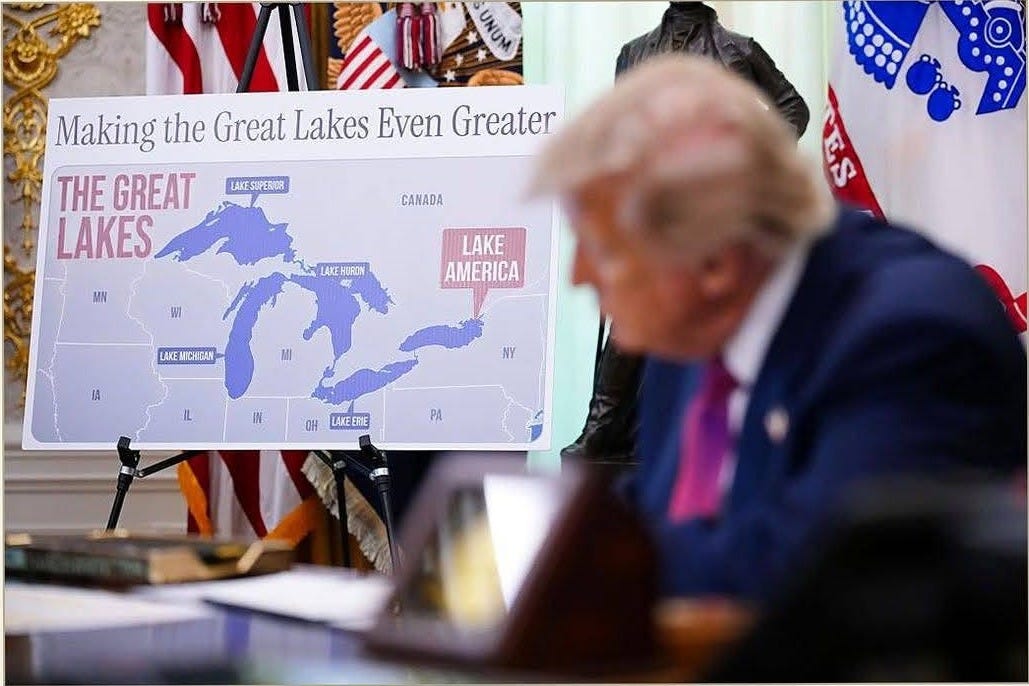
Canada is furious about “Lake America.”
President Trump’s executive order renaming Lake Ontario has been received north of the border as one more intolerable act of American arrogance: an insult to Canadian sovereignty, an affront to Canadian dignity, perhaps even proof that the United States has become a threat.
Trump is trolling, of course. But as always, the trolling isn’t random. Negotiation, like poker, is a contest in emotional control: the player who keeps his head can manipulate the one who loses his. Trump is deliberately provoking Canada because anger clouds judgment, wounded pride invites mistakes, and an emotional opponent is easier to maneuver. Canada keeps responding with outrage and claims of betrayal. Trump keeps provoking it because the provocation keeps working.
So before Canada climbs too high onto its familiar moral pedestal, a position of condescending “sophistication” all too familiar to Canadian governments, this might be a good time to remember that, within the lifetimes of my grandparents, Canadian military officers drew up a serious plan to invade the United States.
Not a joke. Not an American accusation. Fact.
It was called Defence Scheme No. 1.
Canada’s Plan to Invade America
Prepared in 1920–21 under Lt. Col. James “Buster” Sutherland Brown, Canada’s Director of Military Operations and Intelligence, Defence Scheme No. 1 contemplated a Canadian offensive against the United States. The document remained part of Canadian military planning for years; copies were ordered destroyed in October 1933.
Canada was not then a geopolitically detached neighbor. It was a Dominion of the British Empire, the world’s foremost military power, allied to Japan, and still a potential wartime enemy.
Canada’s ports, railways, industry and armed forces were therefore not merely Canadian assets; they were part of an imperial system that could be turned against the United States. In any Anglo-American war, American planners had to treat Canada as Britain’s (and Japan’s) continental bridgehead.
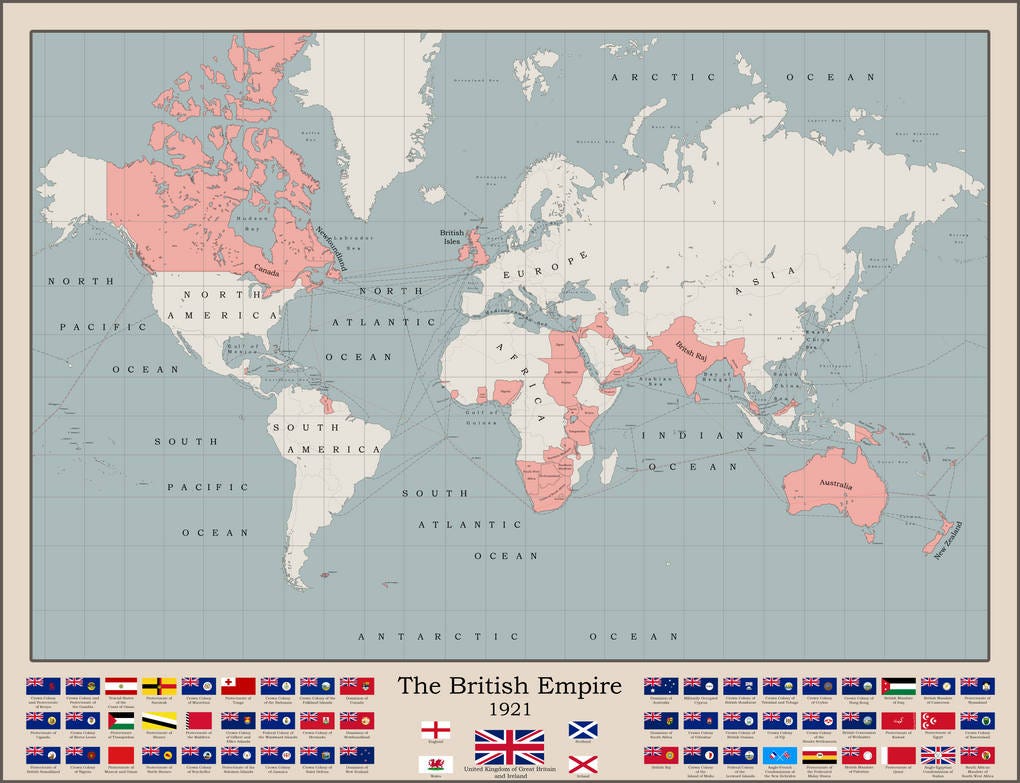
Brown was planning from the other side of the same strategic fact: Canada was the Empire’s forward position in North America — and, with barely one-twelfth America’s population and its own industrial heartland pressed against the border, also its most exposed.
Brown summarized the problem with brutal clarity:
“The first thing apparent then in the defence of Canada is that we lack depth.”
And then came the answer:
“Depth can only be gained by Offensive Action.”
That is the heart of the plan — and of this story.
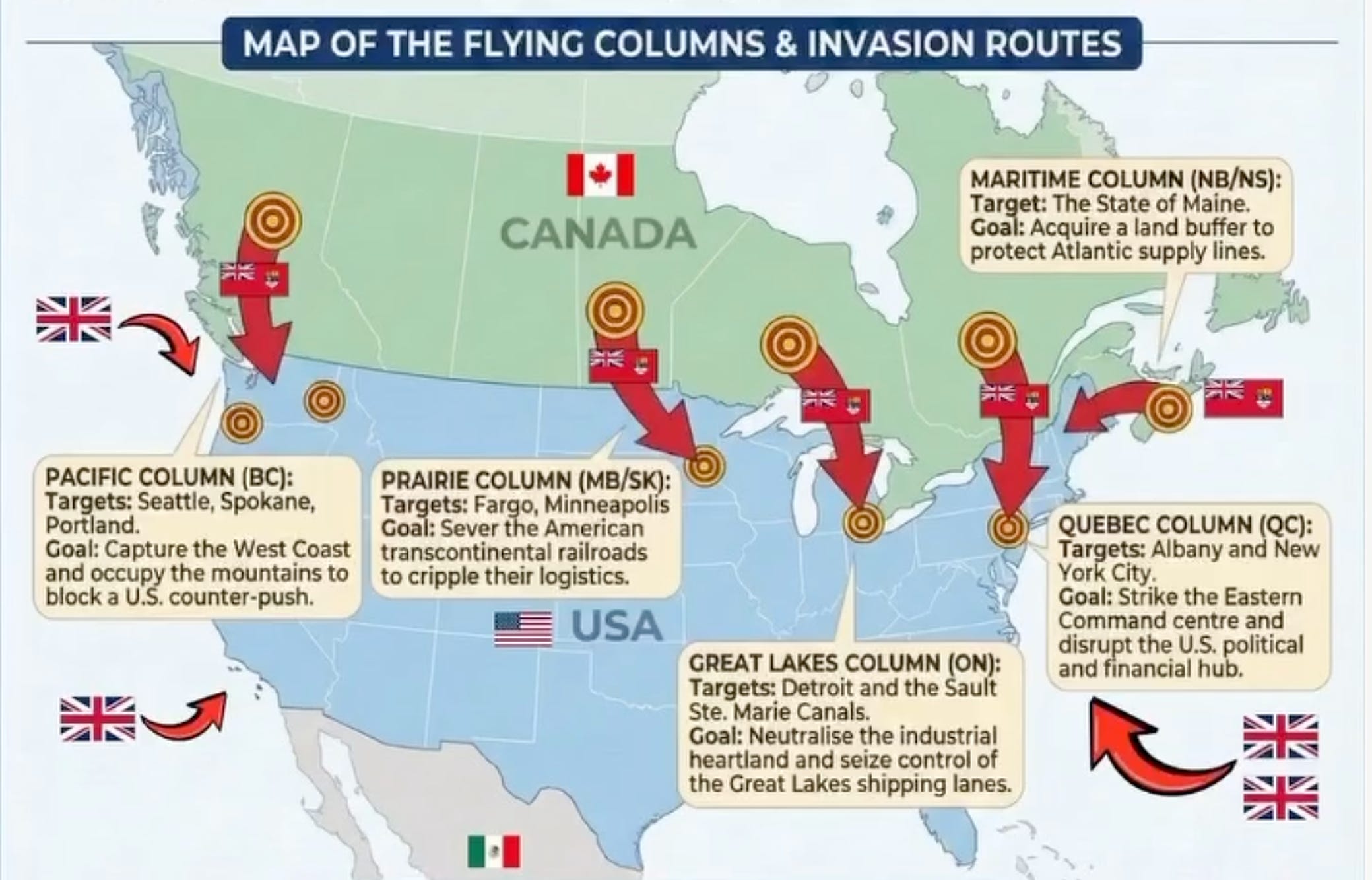
Canada could not manufacture strategic depth inside Canada, so Brown proposed taking it, violently, from the United States. Canadian forces would strike first, cross the border in fast-moving columns, seize or raid key territory, disrupt American mobilization, and wreck railways and infrastructure that might be used in an American counterattack.
The Pacific force would drive toward Spokane and Seattle. Troops from the Prairie provinces would move toward Fargo and Minneapolis–St. Paul, seizing key U.S. rail junctions and protecting Canada’s vulnerable east-west communications. Other forces would raid across the Great Lakes frontier, push toward Albany and New York City, and press into Maine.
The plan was audacious, in much the same way as Manstein’s and Guderian’s plans for the invasion of France. It’s easy to write it off as comical or hopeless, but it wasn’t: it was conceived as part of a struggle between a much weaker America and one or more of the world’s then-greatest powers. It was also recognizably serious military planning by officers confronting a real geographic predicament.
The object was not to plant the Maple Leaf permanently over American cities. It was to help win a wider war — one Canada had to plan for because it belonged to an alliance system radically different from today’s.
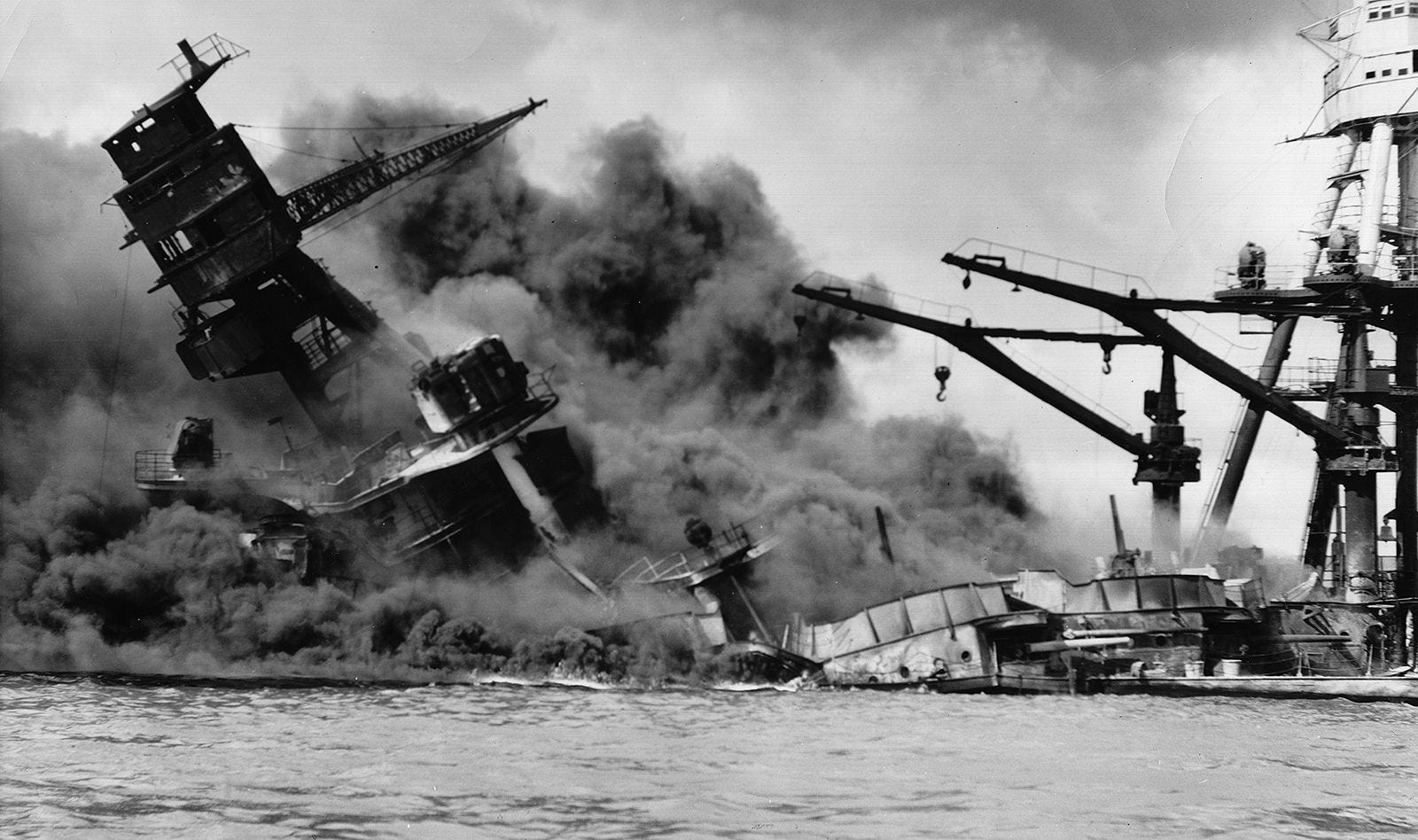
At the opening of the 1920s, Britain was still bound to Japan by the Anglo-Japanese alliance. American officials worried that, even if conflict with the British seemed unlikely after World War I, a war between the United States and Japan might obligate Britain to take Japan’s side (and in case you missed it, worrying about Japan was probably a good idea).
Canada could not vote itself out of geography. Decisions made in London or Tokyo could place it in a war Ottawa did not initiate. Defence Scheme No. 1 was the answer. It looks fantastic now only because the world that made it plausible has disappeared.
If Japan attacked America, and Britain fought beside Japan, Canada would become the nearest and most exposed British front. The peaceful North American order and alliance structure we now take for granted did not yet exist. With Canada’s socialists cozying up to China in recent years, that new order might not be permanent now either: very little in life is.
The United States understood this too. American planners developed War Plan Red in 1930, for the same hypothetical conflict with the British Empire. In its color-coded vocabulary Britain was “Red” and Canada was “Crimson.” The plan called for American operations into Canada, including attacks designed to sever Canadian communications, capture Halifax before Britain could use it, and deprive the Empire of Canada as a base against the United States.
Together these plans establish something modern statesmen forget at their peril: today’s alignments are not laws of nature. Serious countries plan for circumstances that current diplomats find unthinkable. These were staff plans, not declarations of national hatred. That makes them more instructive, not less. Strategic circumstances can change profoundly while people remain friendly and diplomats continue exchanging pleasantries. Within a decade of War Plan Red, Americans and Canadians would be fighting side by side against Hitler, and in point of fact, Japan.
But this seeming historical footnote reminds us of the crucial point: Alliances shift. Geography does not. Or as Lord Palmerston famously put it, nations have no permanent friends and no permanent enemies, only permanent interests.
That may not sound “nice”. It doesn’t make it any less true.
How America Solved Canada’s Problem
What made war between America and Canada effectively inconceivable was not some “enlightened” Canadian discovery of pacifism. What changed was the strategic structure.
The United States became the supreme power in the Western Hemisphere and then the leader of the free world. American military predominance secured the continent. Japan was flattened, occupied, and remade as an American ally. Canada and a greatly weakened Britain joined an American-led alliance. American and Canadian defense became deeply integrated. NORAD joined the defense of North American airspace. The American nuclear umbrella, Navy, Air Force and industrial base made an attack on Canada almost indistinguishable from an attack on the United States.
That transformation was built through wartime cooperation, permanent defense institutions, shared warning systems, integrated supply chains, and decades of American willingness to make Canadian security and prosperity part of its own strategic order. At the height of its postwar power, America did not exploit Canada’s weakness. It chose instead to make Canada’s defense one of its own national interests.
The economic bargain followed the same logic. After World War II, the United States deliberately tolerated asymmetric trade arrangements and carried a disproportionate share of the defense burden. Rebuilding allied economies and keeping them inside the American-led order were strategic necessities in the struggle against Communism.

Canada’s free ride was not originally theft. It was an American strategic subsidy with a purpose.
The Cold War ended. Much of the subsidy did not. And the free ride turned into freeloading.
How Charity Became an Entitlement
Unfortunately, success and the passage of time produced amnesia. Canada became accustomed to extraordinary access to the American market, extraordinary protection from American military power, and extraordinary latitude to criticize the country supplying both. A persistent strand of Canadian nationalism came to define Canada not by what it was, but by what it imagined America to be: cruder, greedier, more militaristic, less humane. The condescension reeks.
Now you mustn’t misunderstand. Friends disagree, and the entire Trump Doctrine is about standing up partners strong enough to do so. America wants allies who open their markets as much as we’ve opened ours, who can defend themselves in a fight, and who are sovereign rather than subject to the sort of unelected globalist elites Mark Carney prefers. No one minds Canadians speaking their minds, or differing at times. But hectoring like a teenager in our basement is quite another thing, especially when its room is a mess and it’s demanding the car keys.
Today, Canada treats the benefits of the relationship as permanent entitlements, while treating reciprocity as American aggression. That’s just not okay.
Consider the current trade dispute. The United States offered Canada the most preferential trade deal it has ever offered any country, including major concessions in steel, aluminum, autos, lumber and other sectors. Even Carney acknowledged that negotiations had been moving Canada toward what he called the “best deal in the world with the U.S.” Canada agreed to that deal — and then reneged, denouncing Washington and turning defiance of Trump into a politically useful display for his socialist base.
This was not an innocent Canada minding its own business. This was not Trump attacking it without cause. It was Mark Carney threatening to hold his breath until he turns blue.
Dairy alone makes the point. Canada sells freely into the American market while its supply-management system walls off favored sectors at home. Above-quota tariffs have reached 245 percent on cheese and 298 percent on butter. That’s not a tax: it’s an embargo. But Canada won’t say that, because embargoes are an act of war, and Canadians are supposed to be “nice”.
It gets worse. Under USMCA, Canada promised new access for American dairy and fair administration of the quotas through which that access was supposed to occur. It lied. The dispute persisted, and American farmers continued to face barriers Ottawa would never tolerate in reverse.
Milk is not a pretext. Defending American farmers is precisely the President’s job. Reciprocity is simple fairness. And the postwar logic that allowed wide-ranging access to the world’s largest consumer market without that reciprocity has long ceased to exist.
Ditto for defense. NATO’s own figures show Canada spending just 1.01 percent of GDP on defense in 2014 and 1.47 percent in 2024. Canada finally reached an estimated 2.01 percent in 2025, and that increase is welcome. But Ottawa’s new $63 billion total includes more than $14 billion spread across other departments and whole-of-government security functions, little of which meaningfully contributes to North American defense.
A last-minute sprint to yesterday’s target does not erase a generation of freeloading on American taxpayers’ defense budgets. That’s not partnership in any sense of the word.
All of this gets much more galling when you compare who needs whom.
In 2025, 71.7 percent of Canada’s exports went to the United States. There’s a reason, and it’s structural: there’s very little Carney can do to change it, and even less that he’s willing to change. Take, for example, oil. Alberta would dearly love to expand pipeline access and thus exports, and rightly so. Yet the socialists continually block pipeline expansion toward the Pacific, or even to Eastern Canada. Trump knows what Carney has forgotten: if Ottawa wants a real trade war, cutting off access to American pipelines leaves Ontario shivering in the dark.

Ninety percent of Canada’s population and industry is concentrated within 100 miles of the U.S. border. Its automotive, energy, transportation and manufacturing systems were built around deep integration with the American economy. China can’t replace that market. Europe can’t replace it. Twenty new trade agreements can’t move Toronto, Montreal, Windsor or Calgary away from the United States. And Canada’s domestic politics only compound the problem.
Canada has no Plan B because geography has not provided one.
Friendship is not sentimentality, and even if it were, the American government’s sentiment belongs first with its own farmers and businesses, not with any foreign country’s. Likewise, an alliance is not something nations sign, frame and hang in a museum. It’s a relationship in which partners are supposed to contribute equally, or at least proportionately. Without true burden-sharing, what’s the point?
A century ago, Canadian officers mapped routes into American cities because the international order of their time made war entirely conceivable. American officers later mapped routes north for the same reason. Just one generation later, the two countries were intimate allies. The map didn’t change. The alignment of power and interest did. What exists today cannot be counted on to exist forever: it must be maintained, to the benefit of both. And if not, it sometimes must be reassessed.
Alliances shift.
Geography does not.


A shocking piece of history I had no idea about! Thank you, Dr. Martin for bringing it out of Canada’s closet and back into the light of day! This was a tremendous article that shows that President Trump is 100% in the right to go after Canada and to troll them mercilessly!
Excellent article! It shows too, as we've seen also in our own bloated welfare system, that generosities provided soon turn into expected entitlements that become nearly impossible to rescind without open hostility the result.