


by Rod D. Martin
May 20, 2026
Wall Street was shocked this week by China’s April economic data.
I wasn’t. Xi Jinping certainly wasn’t. Donald Trump probably wasn’t.
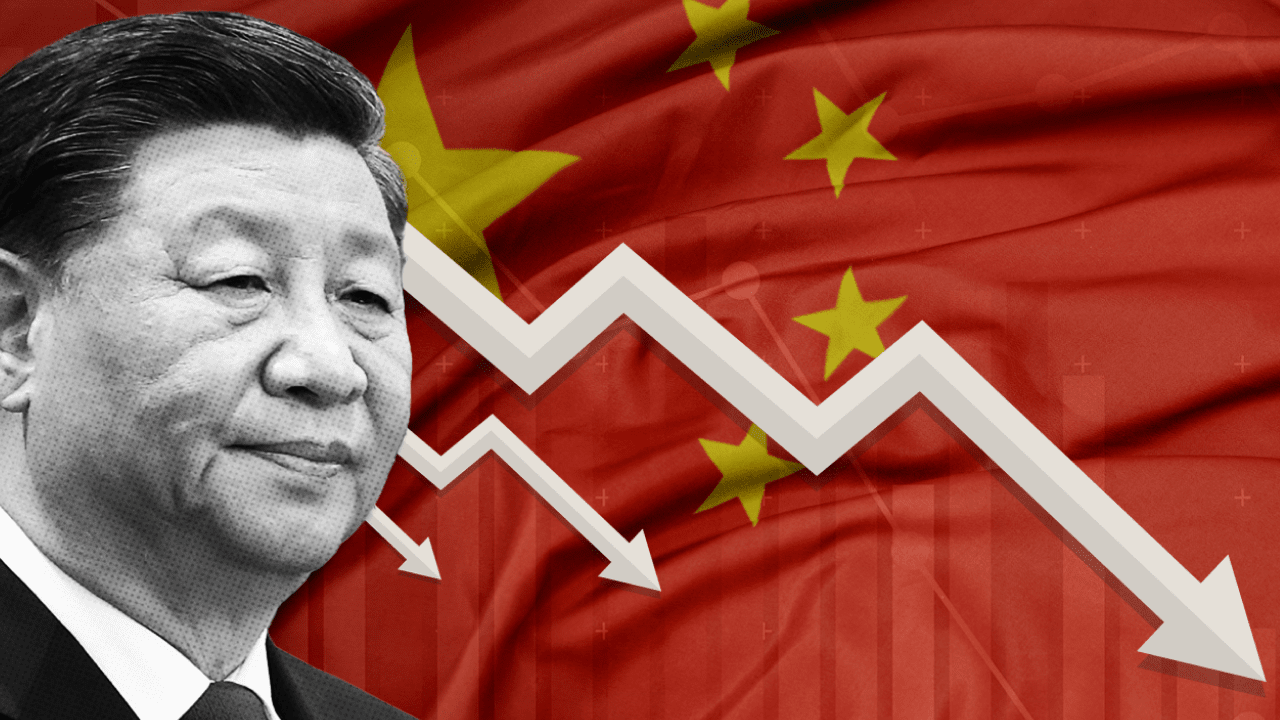
Beijing reported numbers that show its exports can no longer offset its deteriorating domestic consumption. The numbers are so bad that not a single economist surveyed by Bloomberg had predicted the result, across industry, retail sales, and investment. Industrial production rose just 4.1 percent. But retail sales rose only 0.2 percent. Fixed-asset investment unexpectedly shrank 1.6 percent in the first four months of the year. Car sales plunged 15 percent. Household confidence remains broken.
And these are the cooked official numbers. Reality is much worse.
Nothing matters more than educating the next generation with the values we cherish. The Herzog Foundation is making that possible. Learn more here.
The “experts” were stunned. They shouldn’t have been.
The problem is not that economists missed a monthly data point. The problem is that the people paid to understand China still do not understand the larger story. They see industrial production, retail sales, property, tariffs, rare earths, oil, and shipping lanes as separate issues. They are not. They never are. But under Trump, they have become one comprehensive story.
That story is China’s Great Reversal.

For a generation, Beijing rose inside an international system the United States built, financed, defended, and then absurdly allowed, if not downright encouraged, China to exploit. China got access to our markets. It used it to dump subsidized goods into our economy, steal our technology, and build industrial overcapacity to drive American manufacturing out of its own market. It assumed America would keep buying forever, by making America too dependent to do anything else.
China depended on sea lanes protected by the U.S. Navy. It bought discounted oil from rogue regimes. It pushed into the Western hemisphere, increasingly threatening the approaches to North America. It imagined it could one day displace the dollar while still benefiting from the dollar system.
Those days are over.
Trump’s demand that trade become reciprocal — with tariffs backing that up — is a near-existential threat to China’s export-driven economic model. His disruption of the Shadow Fleet, smugglers bringing China illegal Russian, Iranian, and Venezuelan oil at a steep discount to market, has put incredible strains on the Chinese economy at the worst possible time. Taking Venezuela and Iran off the board not only worsens that but also humiliates China’s nascent arms export industry.
What’s also obvious, to Xi and Trump at least, is that two years ago, China controlled both ends of the Panama Canal, had allies in Caracas and Havana, and was working toward both a permanent naval presence in the Caribbean and a deal with the former government of Argentina allowing it to threaten shipping around the tip of South America. The plan was clear: America encircled, unable to act.
Now all of that is undone. We've kicked Xi out of the Western Hemisphere, while locking down the Malacca, Sunda, and Lombok Straits with our new Indonesian defense pact(s). Every day, the noose tightens further, as South Korea, Japan, Taiwan, the Philippines, Indonesia, India, and Australia become real U.S. defense partners with real, and useful, militaries. Trump has spent the last 16 months seizing control of every chokepoint through which China’s trade flows. That includes 74 percent of its oil, 30 percent of its food, and all of its export income.
The map is closing around China. Because unlike a generation of American leaders enamored with or stupified by the “inevitable” rise of China, Donald Trump grasped the immensity of American power and unashamedly used it to advance American interests. And to the horror of Davos, Brussels, Beijing, and the Beltway, those interests require refusing to quietly surrender.
Like the Soviets before them, China cannot overtake an America willing to win.
Now consider those April numbers in that light. They are not merely bad numbers. They are evidence that China’s old model is cracking under the pressure of a new strategic environment. Here’s why:
