



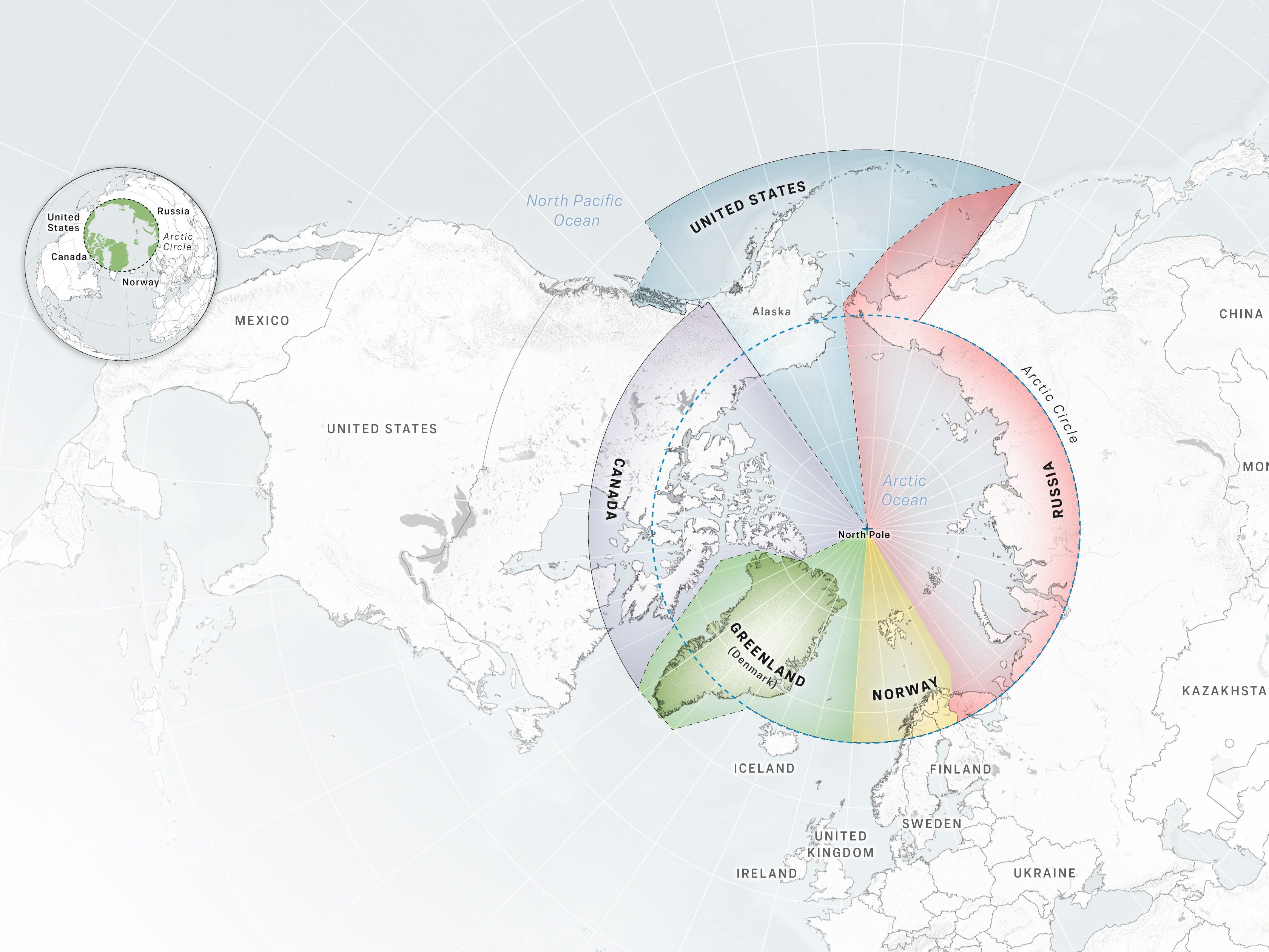
NOTE: President Trump’s Davos speech raised the issue of Greenland at the NATO summit this week in Ankara, a meeting which saw countless U.S. wins. Predictably, the Enemedia marveled.
They shouldn’t have. First, negotiations commenced in January between the U.S., Greenland, and its colonial overlord Denmark, and continue even now.
But second, hemispheric defense is non-negotiable. There’s a reason Trump wants to “own” Greenland (though far more likely is an independent Greenland with a U.S. Compact of Free Association like several island nations in the Pacific). He likes Europe. He’s for NATO. But he doesn’t trust either of them.
As we learned in Iran — and perhaps worse, with Keir Starmer’s mindnumbing Chagos deal — he’s not wrong. — RDM
by John Haughey and Autumn Spredemann
July 10, 2026
U.S. President Donald Trump has said that the United States must purchase or annex Greenland “for the purpose of national security” before Russian or Chinese interests are entrenched in the area.
The autonomous Danish territory straddles key sea lanes, including trans-Arctic shipping corridors, and is rich in critical minerals and rare earth elements.
Trump has said that “whether they like it or not,” Greenland will soon belong to the United States. Possible scenarios include Greenland becoming a U.S. territory, such as the Virgin Islands, or a freely associated state in a compact with the United States.
The United States has similar compacts with Micronesia, the Marshall Islands, and Palau, granting them substantial economic aid, while the United States has authority over security and defense.
The president first expressed his intention to buy Greenland in 2019, and the second Trump administration has voiced increased urgency in incorporating the world’s largest island.
The Trump administration is also backing mining projects in Greenland, focusing on the island’s rare earth elements.
Incorporating Greenland — nearly 50 percent bigger than Alaska and three times the size of Texas — would be the largest territorial expansion in the nation’s history.
Competing for Dominance
Trump has consistently expressed concern about the Russian and Chinese presence in the region.
In 2007, Russia planted a Russian flag on the North Pole seabed. Since that time, it has revitalized more than 50 old Soviet military installations. The Russian presence in the Arctic now includes six army bases, 10 radar stations, 14 airfields, and 16 deep-water ports.
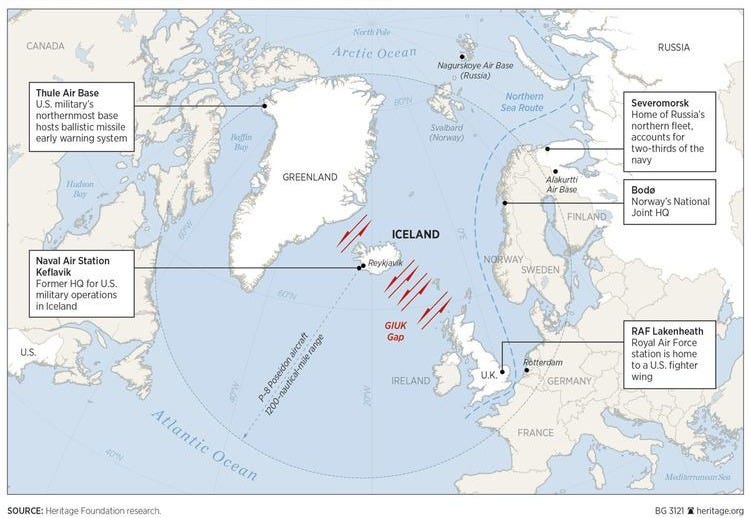
“It is important to consistently strengthen Russia’s positions in the Arctic, comprehensively develop our country’s logistics capabilities, and ensure the development of a promising Arctic transport corridor from St. Petersburg to Vladivostok,” Russian President Vladimir Putin said in November 2025.
Russia’s coast frames more than half the Arctic Ocean, and it has more icebreakers, including nuclear-powered ice-crushers, than the rest of the world combined, according to an August 2025 report from the Atlas Institute for International Affairs.
The United States, in contrast, has no bases directly on the Arctic Ocean. It has five bases in the Arctic, four in Alaska, and Pituffik Space Force Base in Greenland.

Eric Cole, a former CIA officer and CEO of Secure Anchor, said the importance of Greenland from a national defense perspective is no small matter and will increase with time. According to Cole:
