



This analysis is free, but with Premium Membership you get MORE. Join today.
Our full discussion transcribed after the break:
by Rod D. Martin and Frank Gaffney
October 13, 2026
My latest interview on Securing America with Frank Gaffney. Sign up NOW for Frank’s Rumble channel and don’t miss a single episode!
Frank and I discuss:
Cutting the head off the snake: Iran’s direction of every Middle East conflict
Iran’s role in October 7th
How Trump’s blockade is bankrupting Iran
Why China isn’t coming to Iran’s rescue
High gas prices? Blue states keep closing refineries
PLUS: Just four extra votes per precinct and Republicans win the House
It’s a full half-hour of in-depth analysis you won’t want to miss. If you prefer to read, the full transcript is below. Watch, read, like, and share!

Our full discussion:
Frank Gaffney: Welcome to Securing America. It’s me, Frank Gaffney, the program that’s a kind of owner’s manual for protecting the country we love against all enemies, foreign and domestic, to the glory of God and his kingdom. We’re on the road. We are at the moment outside of Washington, D.C., and very, very delighted to have with us for this full hour, one of our favorite guests.
His name is Rod Martin. He is, among other things, the chairman of the board of the Institute for the American Future, which makes this program possible, for which we are profoundly grateful. We encourage you to support the Institute at USFuture.org for that purpose, among others.
Rod Martin is also a man who served as policy director to then-Governor Mike Huckabee. He was a member of the very, very impactful PayPal mafia back in the day. He is these days, however, the driving force behind The Rod Martin Report, which you can subscribe to at RodMartin.org.
I strongly urge you to do so. We’re going to be talking about several of the prominently featured analyses and articles that Rod has featured there in the course of this program. And we’re very, very pleased to have him back for the purpose. Rod, welcome once again.
October 7 and Iran’s Proxy War
Let me start, Rod, on the occasion of October 7th, on the anniversary of one of the most horrific crimes against humanity, certainly of recent times. That would be Hamas’s attack against innocent Israeli civilians and others out of Gaza into Israel proper three years ago today. You and Eric Metaxas, another man I consider to be a great friend, as well as a very much admired national treasure, had a conversation about this, and I wanted to share it with our guests, with our audience, if we can.
A brief reprise on the most important point, it seems to me, which is that what’s going on here is, in fact, a product of Iranian Sharia supremacism. And this is a perfect example of how the nostrums about how Sunnis and Shia can’t possibly collaborate with one another or even get along. Talk us through the evidence that Iran was behind this horrific attack and what it says about its malevolence and why this regime, in fact, cannot be allowed to survive.
Rod D. Martin: Well, it certainly turns out that there are more than a few Sunni terrorists who are happy to take Iranian money. And that has been true now for a very long time. Hezbollah is an Iranian proxy. The Shia militias in Iraq are Iranian proxies. The Bashar Assad regime was an Iranian proxy. It also worked closely with the Russians, as it had previously worked with the Soviets. But nevertheless, there you are. Hamas, same thing.
And there’s really a very good reason for all of this. First of all, the Palestinians have spent a lot of time in other people’s countries. They were in Jordan in 1970 when they tried to overthrow that government. Once they were kicked out of there, they went to Lebanon and did their best to overthrow that government, and sparked a civil war that, for many purposes, still isn’t over all these decades later. And of course, Hezbollah being the tip of that spear starting in the early 80s.
So there’s just nowhere that these people are welcome in the Arab world because every time they show up in an Arab country, they try to take it over and they blow up school buses and they do terrible, terrible things. So who is left who wants to support them?

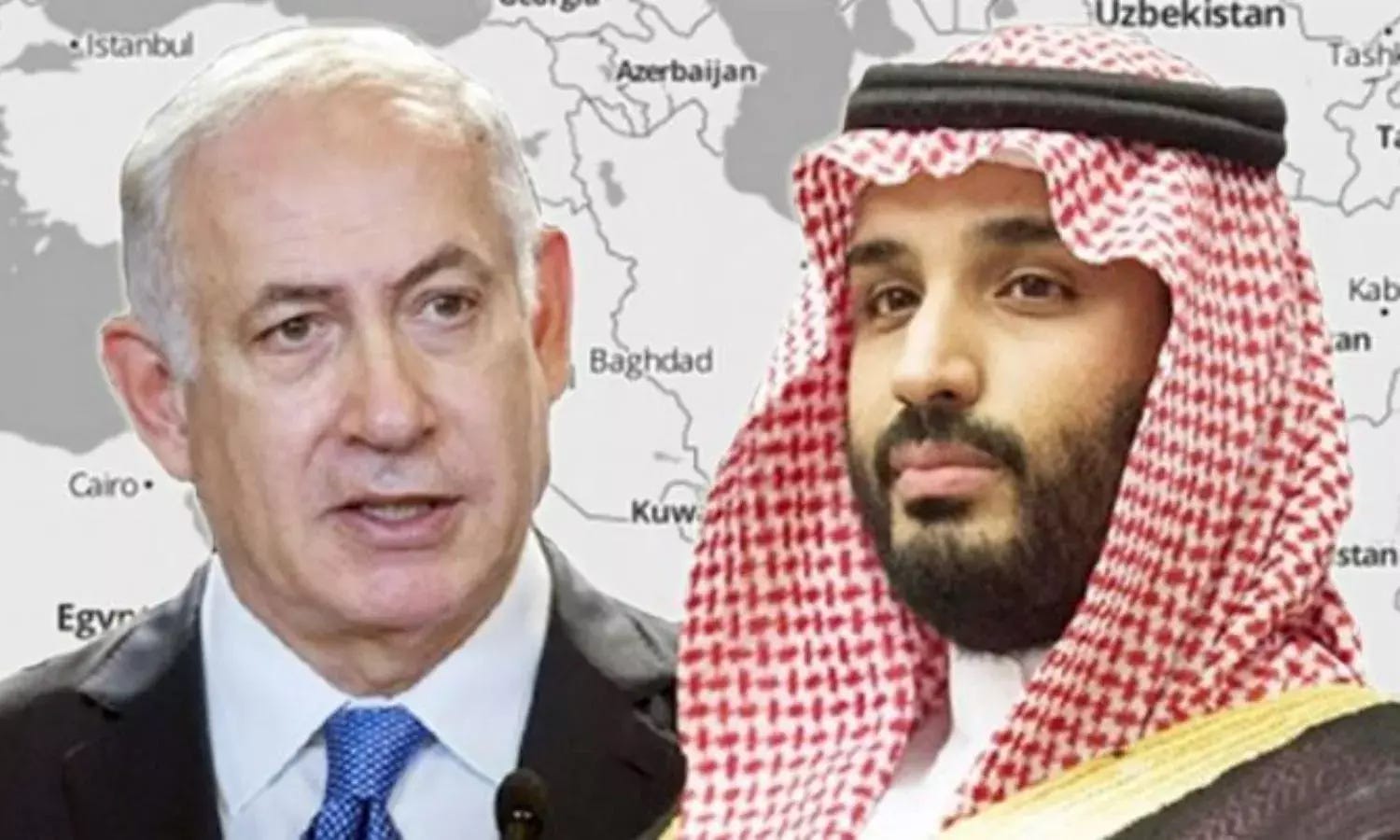
I mean, you’ve got all the lip service you get from the normal Arab suspects. Certainly MBS’s father’s generation in Saudi Arabia is very, very committed to the Palestinian cause. The younger Arab leaders, not so much, because they know who these people are. They know what they do. They know that they can’t play nicely with others.
So who does that leave? And of course we know the answer, Tehran. And the mullahs have spent decades backing these guys, arming them, training them, funding them, directing them with a very clear aim. They have extended, until the last year or so, they have extended an Iranian empire across the Middle East, de facto though it might be. And that, of course, includes our Houthi friends in Yemen as well. So there’s just no end to this unless you end it.
And certainly October 7th was fundamentally about that. It was the Iranian aim to use Hamas as a suicide squad to go and provoke a conflict that would result in a delay or possibly, you know, just never happening, some kind of peace between Israel and Saudi Arabia, which at the time looked imminent. Well, again, I think they’re going to fail in the long-term goal, but they succeeded for years now, and that was the aim.
And everyone involved knew Hamas was going to die in the process. On the other hand, the Hamas leaders didn’t care that much because they were in fancy condos in Qatar. So, you know, “everybody wins,” except the people on the ground, of course.
And they were successful in demonizing Israel, despite Israel being the victim. So I’ll just wrap that thought up: the most salient point about October 7th is that it wasn’t actually equivalent to an Israeli 9/11. It was equivalent to an Israeli Nagasaki. When you look at the number of people who were murdered on that day and you adjust it proportionately to the Israeli population, to compare to the U.S. population, we would have had to have lost 50,000 people on 9/11, not 3,000.
That’s staggering. That’s a nuclear strike. That’s what Hamas did. That’s what they pulled off. And that directly results in the Israeli response.
The Israelis had withdrawn from Gaza 20 years earlier. They had done everything they could to just let those people do their thing by themselves. And Hamas was having none of it, raining down rockets into Israeli neighborhoods for years, sometimes as many as 5,000 in a single year, going after Israeli homes and schools and everything else. And the Israelis mostly didn’t respond.
But October 7th provoked the response the Iranians wanted. And that is, of course, why we had a war.
Frank Gaffney: And why that war is continuing, I guess, is because that regime continues to engage in both its horrific predations against its own people, as well as, of course, trying to do whatever it can to attack others. Our own forces, of course, and bases elsewhere in the region included. And let me just ask you, as you are contemplating the bottom line of all of this, Rod, is there really any possible outcome other than this regime being, well, put out of business?
Rod D. Martin: Well, there are other possible outcomes, but I don’t think there’s another likely outcome. I think this president has been very clear about his intent, even if he has kept it out of official war aims and so forth. But, you know, we talked about this all the way back in January.
Donald Trump was horrified by the Iranian regime murdering 42,000 of its own citizens, unarmed protesters in the streets. And immediately after that, you start having the gathering of the military forces necessary to attack Iran. And that is ongoing. I don’t think he’s going to stop.
Commercial break
Frank Gaffney: We are having a conversation with one of our most valuable contributors to this program, a man whose free-range mind is something that we’re privileged to tap as we try to do each week. His name is Rod Martin. He is the founder of a series of enterprises, I guess it’s fair to say, among the most important of them at the moment being, of course, the RodMartin.org web resource with The Rod Martin Report.
He is also bringing to us momentarily, I’m pleased to say, I think available for pre-order right now from Skyhorse Press, a wonderful new book. I guess it’s the Eric Metaxas imprint at Skyhorse called Trump’s New World Re-Order. It’s very, very important that you find out what is the distilled essence of Rod’s thinking on this very important subject, and we’ll tap the book, among other things, as well as his website, rodmartin.org, in the course of this conversation.
So, Rod, I apologize, I had to cut you off there. You were, I think, making the conclusory point about what the regime in Iran has done, not only to Jews and others in Israel through its cutout Hamas, but what it has done itself to its own people, and what Donald Trump has done in response to its horrific, well, murders of 40-some thousand of them, for example.
Rod D. Martin: It’s just extraordinary. And we’re talking about a regime, when we’re talking about the Iranian mullahs, we are talking about a regime that actually executes young girls for getting raped. This is an evil, evil, malignant force in the world, and again, it’s the center of every armed conflict in the Middle East, bar none. Pick any, and it’s the Iranians behind it.
So, the good news is, the war has actually been very successful, whether you’re talking about the Israeli portion of it or the American portion of it. On the Israeli side, they’ve really, really taken a bite out of Hamas. It’s going to be very, very difficult for Hamas to reconstitute in any meaningful way, and all the more so because without Iranian money and arms, where are they going to get money and arms? You know, even terrorists have to make payroll, so they have a problem.
Hezbollah has the same problem, but Hezbollah also has a Syrian regime now in its hinterland that hates it because Hezbollah is a threat to the Syrians, and the Syrians are a mess, but at least they’re no longer Iran’s friends.

That’s a good thing, and we actually now have a Lebanese government that has sat down across a table from the Israelis with Marco Rubio and signed a deal that actually, for the first time in history — Lebanon’s been at war of its own choosing with Israel since 1948 — they sat down and signed an agreement in which they take responsibility for disarming Hezbollah, and they also recognize the territorial integrity of Israel, which is a first ever. So that’s on its way to some kind of Camp David Accord or Abraham Accords or whatever, and there’s possibility of that with Syria as well.
The Iranian-sponsored militias in Iraq being decimated by the new government there, which is making arrests right and left of Shia militia leaders. The government in Yemen just took back a key bit of territory along the coast from the Houthis, so everywhere we’re rolling these guys up, and honestly, in a way, we should probably thank Iran because had they not started these awful wars, we wouldn’t now be in a position to finish them, which brings us to Iran.
Trump’s Strategy and the Midterm Calendar
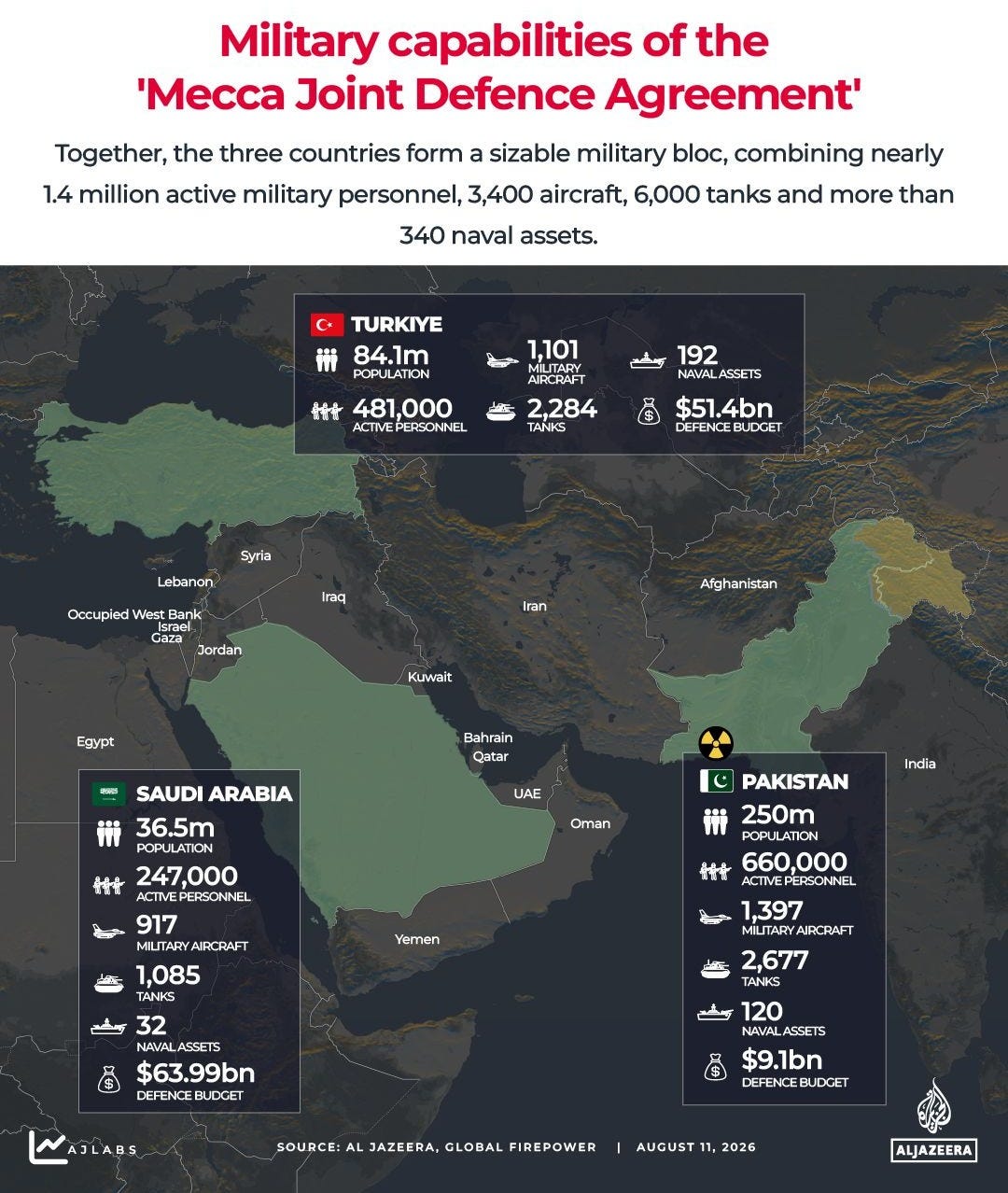
I don’t think Donald Trump’s going to stop until this regime is gone. He knows that all of his goals in the Middle East key off of that, and I think that’s what you’re seeing really with this Mecca Pact. You know, the most interesting thing about the Mecca Pact is that Pakistan, Saudi Arabia, and Turkey, if you draw a line around them, oh, wait, at the center is Iran. I think that’s the target they’ve organized for. And, you know, the Iranians have managed to unite everybody against them.
So Trump has been very, very careful, I think, to destroy targets that are needed by the IRGC to conduct a war. He has been very careful not to attack critical infrastructure and economic assets that a free Iran will need after a war. And I think that’s where we’re going.
I’ve been telling you all year, I don’t think Donald Trump is calculating the midterms into any of this. He’s going to do what he wants to do. I think we’re now — in October, less than a month before the midterms — clearly able to say conclusively, I was right on that point. He sees this as a legacy thing. I don’t think he’s going to stop until it’s done. I think that’s where we’re headed, and I think it’ll be a boon to the entire world.
Frank Gaffney: Well, I think it’s absolutely essential, and I hope you’re right, Rod. But, you know, he has, over these months, talked periodically about fashioning a deal. It does seem as though he’s decided not to do that at this point, and more of this will be forthcoming after the election.
Rod D. Martin: I think the deal was always, you guys leave, and we’ll get you a really nice villa on the Riviera. And they just haven’t been willing to do that. So that’s okay. We can send them there in a box.
Frank Gaffney: Yeah, let’s dispatch them permanently, I think, is the point.
Iran’s Money, Oil, and the Strait of Hormuz
Rod, speaking of Iran, Scott Bessent had, of course, two weeks or so ago said that he thought the outfit would be bankrupt, the Iranian regime, that is, in about two weeks. That, you know, they were simply out of oil to sell, and without it, there was just not much in the way of cash flow and, therefore, the ability to pay. Well, not just their foreign terrorists, but their own terrorists there in the IRGC and Basij and so on.
But at the same time, we’re being told that the output of oil and gas through the Persian Gulf, not the pipelines outside of it and so on, but actually through the Gulf itself, are now at pre-war levels. And that, in fact, that’s without any Iranian oil at all in the mix, which is suggestive that there’s quite a turnaround here.
Is that, in fact, the case as you see it, sir? Is that one-off, you know, good luck in, you know, getting some stuff through at one particular point in time? Or is there really a turnaround that’s taking place here? And will we see the impact on oil prices anytime soon, do you think?
Rod D. Martin: Yeah, absolutely. I mean, yes, it’s real. And, yes, there’s very little that the Iranians can do about it. We sank what navy they had. It turns out there really weren’t a meaningful number of mines in the strait. And Trump is committed to getting these oil prices down, not at the cost of letting the Iranians have their way, but you don’t need to.
Now, what isn’t coming through is container traffic. What isn’t coming through is LNG from Qatar. Honestly, that helps. I mean, what that means is that everyone in the region is inconvenienced by the Iranians and has reason to be mad at them. And we’re actually gathering LNG contracts that would normally go to Qatar for Texas and Louisiana. So it’s a little hard to see this as anything but an absolute win.
And in the meantime, Bessent is right, as he is almost always right. The Iranians don’t have any way to make money. You and I have talked about that. There’s a railway between Iran and China that can carry like six percent of the oil they were shipping before. That’s not enough to make a dent.

And it’s worse than that because the Iranian president went on Fox News and gave an interview to them a couple weeks ago in which he said, “The Chinese have now frozen our money. We can’t get our money out of China.” Okay, well, game over, you know, and it’s just a matter of time because IRGC thugs have to be paid too.
Frank Gaffney: Right.
We are visiting with Rod Martin. We’re going to be talking a bit now about the reordering of the world that Donald Trump is engaged in. He is making it clear that this is not just taking place in the Middle East, but we’re going to get into some of the other places, and in particular what it means for us, both in a geostrategic sense, but also in terms of pocketbook issues, which, of course, are top of mind for a lot of people in this election season.
So, Rod, on the point that Bessent was making, is it your view that we are approaching a point where, as with the Soviet Union, when my old boss Ronald Reagan essentially cut off their cash flow, we’re likely to see the regime come apart? Or are these people, you know, dead-enders, and they will go down to the last man and killing their own countrymen and as many of us as they can get their hands on in the process?
Rod D. Martin: I think that at some point, people have to get paid, and I think that was ultimately the problem in the Soviet Union. That was ultimately the problem with Robert E. Lee’s army at Appomattox. At some point, you can have all the will and grit and determination and intransigence you want, but if you can’t eat, you can’t eat. And that was really the Soviets’ problem. I don’t think anybody thinks that the communists had any lack of desire to fight to the last breath. They just ran out of ability.
And so that’s what we’re attempting here. We’ll see if it works. I mean, we’re not doing it with a land invasion. We’re not doing it the way you would normally think of, and thank God for that, because that would be a disaster. But we have cut them off.
You know, in the American Civil War, the North used a blockade strategy as well, and it was not one hundred percent effective, but it actually did reduce Southern exports by ninety-five percent, which resulted in hyperinflation, resulted in just the dismantling of the Southern economy.

And yeah, with the technology of the time, you had to also match that with an invasion in several places. No question about that. But that isn’t necessarily so today, when the Chinese can just cut off their money. That’s really a quite remarkable thing.
And you’ll recall that pre-war, ninety percent of Iran’s oil was going straight to China. The Chinese have adjusted to the loss. They are buying from other sources.
That puts a huge hurt on their economy because they were using that steeply discounted Iranian oil, as with Venezuela, as with Russia, to be able to prop up and subsidize their export economy. That’s gone now.
But it is something they have just accepted. They don’t have a lot of choice. There’s nothing they can do that’s meaningful for Iran. And they know that. And I think we saw that in the amount of non-decisive talk at the most recent summit with Xi in Washington, followed up by a cutting off of Iran’s money, which actually is pretty decisive.
How Much Help Can China and Russia Provide?
Frank Gaffney: Is it your understanding, Rod, that the components for drones and ballistic missiles and the like that the Chinese were supplying, I think, some of it being flown in and some of it coming across that Pakistani train corridor, has come to a halt as well as access to money in China?
Rod D. Martin: Well, probably not entirely, but the Chinese are pretty mercenary. I mean, this is one of the reasons they told the Iranians, we’re not going to sell you advanced fighter jets. The Iranians have been begging them to do that for years. And the response from Beijing is, yeah, but you guys don’t pay. We don’t trust you to pay, and you are asking for credit that we know you’re not good for.
So, you know, when you look at that, and honestly, if you look at any of the Belt and Road countries, it’s the same thing over and over. The Chinese set up debt traps. They don’t actually create alliances. And over time, people catch on. So I think it’s time we catch on.
I’m not saying that the Chinese might not send them stuff. The Chinese are not our friends. However, there’s only so much they can do. And the same thing’s true with Russia.
Russia is in its own quagmire, and they were trying to send some stuff by the Caspian route to Iran. And Zelensky blew it up on the water. That was like the coolest thing Zelensky’s done in the entire war. So they’re really in a bind. And the road links are tenuous at best because we can take them out at will, and they’re not going to get help from the neighbors that they were hoping for. So, yeah, I think we’re close. I don’t know how long it’ll take, but we’re close to the end.
Gasoline Prices, Refining Capacity, and the Midterms
Frank Gaffney: It’s, as always, Rod, heartening to hear your assessment. And I don’t think anything you’ve said is disputable. Whether it’s as complete a picture as one might want is another question. But I think it’s important to be giving us some hope in all of this. And just to tie this off, Rod, obviously the president and pollsters and politicians of other stripes are hearing a lot about the price of the gas pump and the price in the grocery stores and so on. Is there relief, do you think, in prospect, in time to make a difference in this election, sir?
Rod D. Martin: Ah, maybe. Look, this is a turnout election, and I can’t stress that enough. If we turn out about a thousand more voters in about 20 U.S. House districts that are tightly contested, we win. I mean, it’s really that simple. That works out, by the way, to four more voters per precinct in the targeted areas. Four. I mean, I can put four in my car and drive them to the polls. This isn’t hard.
So Republicans need to get their act together. I mean, you’re unhappy about gas prices, so you want to let the guys get in who told you they’re going to ban gasoline. They’re going to ban gasoline cars. They’re going to force you to buy an EV, which I’m sure will not be a Tesla because they’re mad at Elon, so it’ll probably be a Chinese car. And this is somehow better. I mean, it’s just stupid. So our team actually has to stop being stupid and actually clue in and do what they need to do to win.
Now, the president isn’t helping us with the Iran thing. There’s no question about that, but there are two other very short points about that. The first one is this is an essential task, and the time chose him, not he chose the time.
Second, the real bottleneck on gas is on oil. Now, the refineries have to buy on futures contracts, and it is what it is, but the truth is West Texas Intermediate today is at $89, which is, you know, it’s only $20 more than it was before the war, you know, versus Brent, which is over $100.
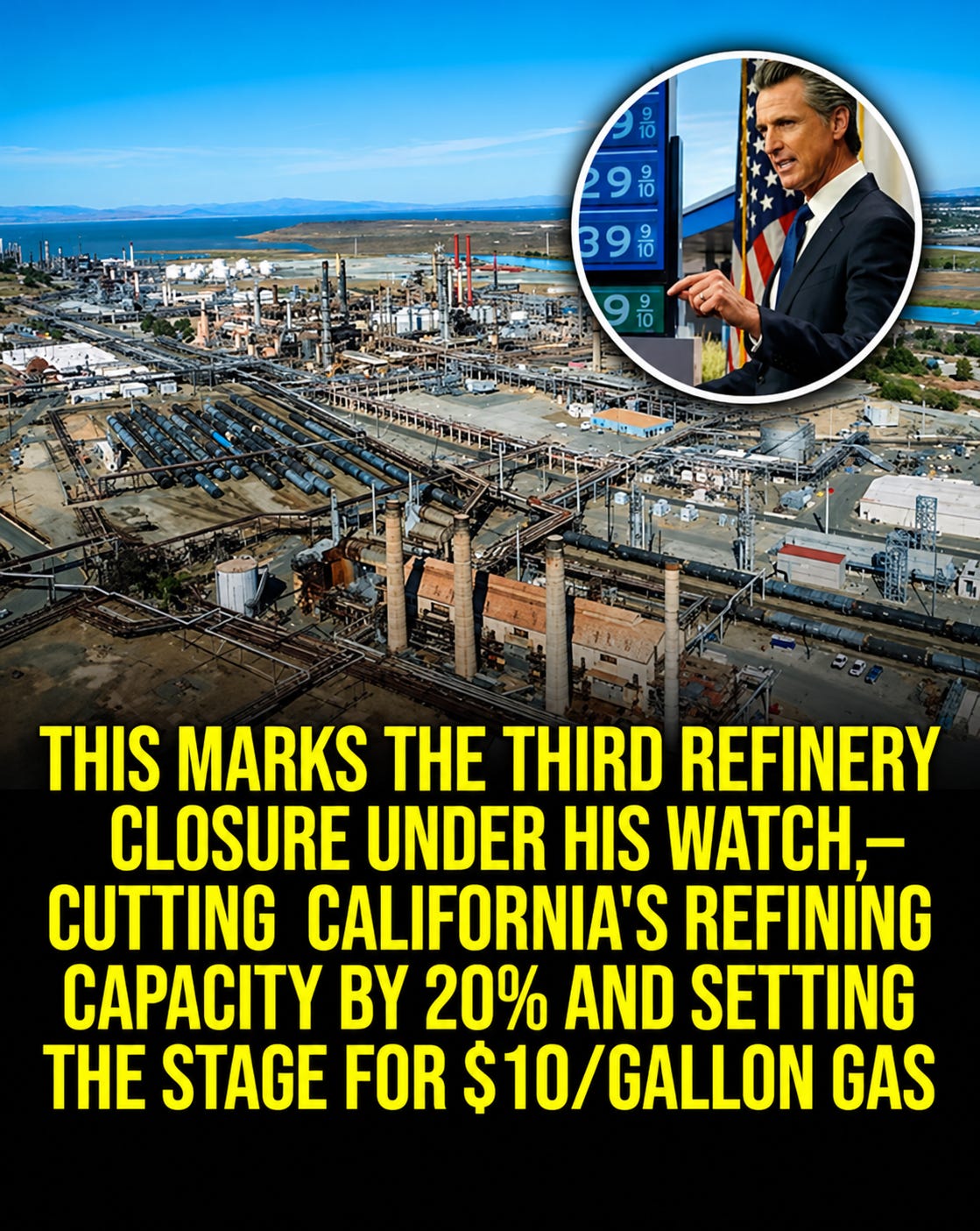
We’re doing fine on crude, where we’re lacking is refineries, and since the war began, the Democrats in California shuttered two more major refineries. If the national average is high, that’s a big part of why. And if you want to take that national, if you want the Democrats in power to be able to shut down a bunch of refineries in Texas and Louisiana, too, and put gas over $10, well, be my guest. Have at it. But that’s stupid, and we shouldn’t do it. And don’t be complaining about the price of oil if you’re going to do that, obviously, right? This is something that can be controlled.
Frank Gaffney: Yeah, this is ours to lose.
Rod D. Martin: It absolutely is.
Frank Gaffney: So, Rod, let me just put it this way. One other piece of all of this, it seems to me, in terms of getting people to the polls, as we’ve talked about on this program on any number of occasions, is to be telling them that you recognize something that they’re worried about is actually a threat. And that would be what I call Sharia supremacism. And that you’re going to do something about it, not just admire the problem or not just throw a sop to those who are concerned and disregard the need for action. What we have been seeing, I think, in some parts of the country, at least, is people really wanting action taken here. And Texas is one of those places. Can you comment briefly on the importance of clarity, particularly about the red piece of this so-called red-green axis, as well as the Sharia supremacist green part?
Rod D. Martin: Well, we’re at a point where the Democratic Socialists of America are just telling you that they’re communists. You know, we had here a little over a month ago the big DSA convention. One of the senior leaders gets up at the podium and says, “Our goal is communism,” quote, unquote. And the crowd cheers. This is who they are.
Talarico isn’t fooling anybody. Abdul El-Sayed isn’t fooling anybody.
And I think, again, if we do our part and just pile friends into our cars and drive them to the polls, we’ve got this. The numbers, the turnout numbers are so low in a midterm election that direct action by regular people really does determine the outcome. So we need to be the ones who do it. But, yeah, the communists.
Frank Gaffney: To be clear, you’re not talking about direct action as in the violent sense of the word. You’re talking about—
Rod D. Martin: No, no, we’re not Democrats. We don’t kill people.
Frank Gaffney: I just want to be clear about that, folks, unless there’s any disagreement.
Rod, thank you. Congratulations on the forthcoming arrival of Trump’s New World Re-Order. And thank you for visiting with us about so many different aspects of what that reorder looks like. We look forward to a real deep dive on the book when it is available. In the meantime, stay well, my friend. Come back to us soon. I hope the rest of you do the same next time. And until then, you will go forth and multiply.


