


This analysis is free, but with Premium Membership you get MORE. Join today.
by Rod D. Martin
June 2, 2026
More than a year ago, both before and after Donald Trump announced his “Liberation Day” tariffs, I told you that China could not win a trade war with the United States. My reasoning was straightforward: China’s economy is far weaker than its official numbers pretend, its demographic collapse is leading it off a cliff, and its only way out — even in the short term — is exports, particularly to the U.S. market.
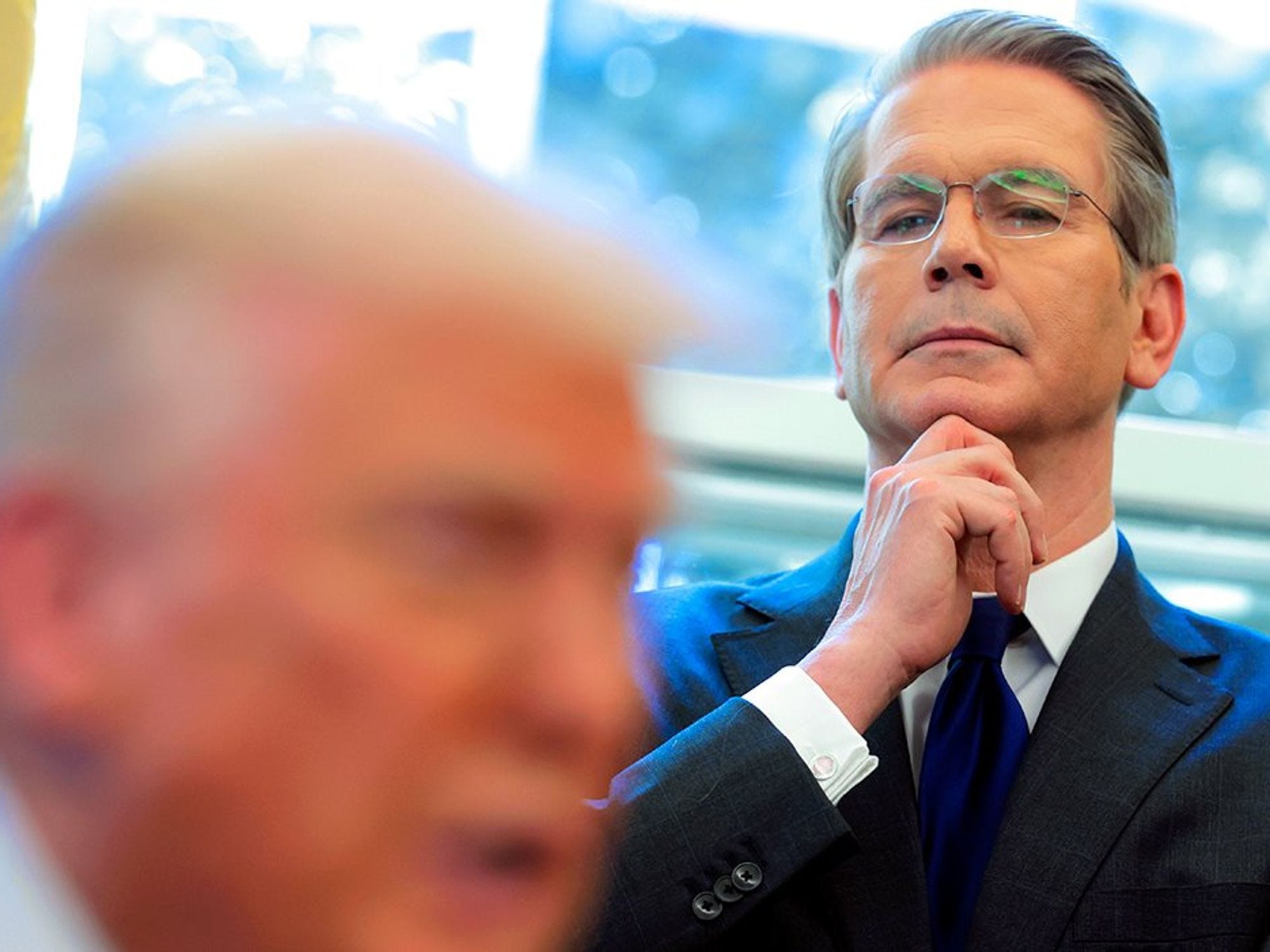
Not long after I started sounding that alarm, Treasury Secretary Scott Bessent gave a long-form interview explaining Trump’s tariff strategy. Buried inside it was something far more important.
China, he said, has the most imbalanced economy in modern history. It is trapped in a deflationary recession — perhaps depression — and trying to export its way out. Its own people do not trust the yuan. They want to get their money out. The Chinese Communist Party will not let them.
That sounds like normal economic commentary. It isn’t. Bessent was describing the anatomy of a currency regime under pressure.
If you understand who Scott Bessent is and what he once did, that should run shivers up your spine.
In 1992, Bessent was a leading member of the team at Soros Fund Management that “broke the Bank of England.” Britain was trying to defend the pound inside Europe’s Exchange Rate Mechanism. The official line was confidence, stability, managed order, and responsible policy. The SFM team saw something else: a government defending a position reality no longer supported.
Soros got the legend. Bessent helped him execute. Trump watched, and learned the lesson.
Speculators do not destroy sound currencies by magic. They attack when governments defend lies. They see the contradiction before politicians admit it, before central bankers explain it away, before the press corps discovers it three years too late and pretends it was obvious all along. Britain broke. The pound fell. The Bank of England lost.
Now Bessent is Trump’s Treasury Secretary, and the currency under pressure is not the pound. It is the yuan.
So here is the question the Enemedia will not ask, and probably won’t even think of: is Scott Bessent working to crash China’s currency?
Not by announcing it. Serious men don’t announce the trade before they make it. By doing something much larger: strengthening the dollar, hardening the American financial system, using tariffs to stop China from exporting its depression into our markets, and forcing Beijing’s unsustainable economic model into the open.

Presidents hire people for a reason. Trump did not put Scott Bessent at Treasury because he needed another Wall Street résumé. Trump hired a man who had helped break a major currency from the inside, who understood the role of confidence, leverage, capital flows, interest rates, debt, and political denial, and who knew that governments do not lose control of currencies because traders are clever. They lose control because reality finally catches up with the lie.
Bessent is not incidental to Trump’s China strategy. He is one of its central weapons.
China is not Britain in 1992. The analogy is not exact, nor does it need to be. Britain was defending a currency arrangement markets no longer believed. China is defending something far bigger: the fiction that an overbuilt, overleveraged, export-addicted dictatorship with too little domestic consumption and evaporating foreign direct investment can keep growing forever while its own people are trapped behind financial walls and its customers are shutting their doors.
That fiction is embodied, crystallized in the yuan.
The yuan is not a normal currency. It is not the dollar. It’s not even the euro. It is a managed instrument of Communist Party control. A real reserve currency requires trust. It requires convertibility. It requires deep and open capital markets. It requires the rule of law. It requires confidence that the government will not trap your savings the moment they become politically inconvenient.
China cannot offer any of those things without ceasing to be Communist China.
This is the place where all of China’s contradictions meet. Beijing needs a weak yuan because its economy is built around exports. If Chinese goods get too expensive abroad, factories slow, unemployment rises, debt problems worsen, and the Party’s claim to competent rule erodes. But Beijing also needs a strong yuan because the moment ordinary Chinese believe their currency will fall, they will try to get their savings out even faster than they already do. That means tighter capital controls, more fear, more distortions, and still less trust.
It gets worse. China needs loose money to keep its property sector, local governments, state firms, and zombie industries from collapsing under the weight of years of bad debt. But loose money weakens the currency. To defend the yuan, Beijing must burn reserves, tighten credit, squeeze banks, or impose still harsher controls on its own people. Each decision makes the next choice worse.
That’s the trap. China wants export growth, currency stability, domestic stimulus, capital control, and global reserve-currency prestige all at the same time. It wants the benefits of a market without permitting a market. It wants the trust given to free systems while running a dictatorship. It wants foreigners to hold yuan while its own citizens would rather hold dollars. It wants to rival the dollar while treating money as an instrument of Party discipline.
For decades, Washington helped China paper over that weakness. Clinton opened our consumer market. Wall Street financed the dragon’s rise. Multinationals offshored factories and jobs. Politicians pretended that admitting China into the WTO would liberalize Beijing. Both parties told us engagement would make China a “responsible stakeholder,” because that phrase allowed everyone to sound sophisticated while getting rich.
But the underlying reality was very different.
China can bully Russia into taking yuan because Putin has no options. It can lure desperate countries into yuan settlement because sanctioned regimes will take whatever escape hatch they find. It can build payment rails, ports, pipelines, apps, and propaganda.
But China cannot manufacture trust, and through a series of predatory debt traps, it has squandered what trust it had. It certainly cannot order the world to treat the yuan like the dollar when Chinese citizens themselves do not trust it.
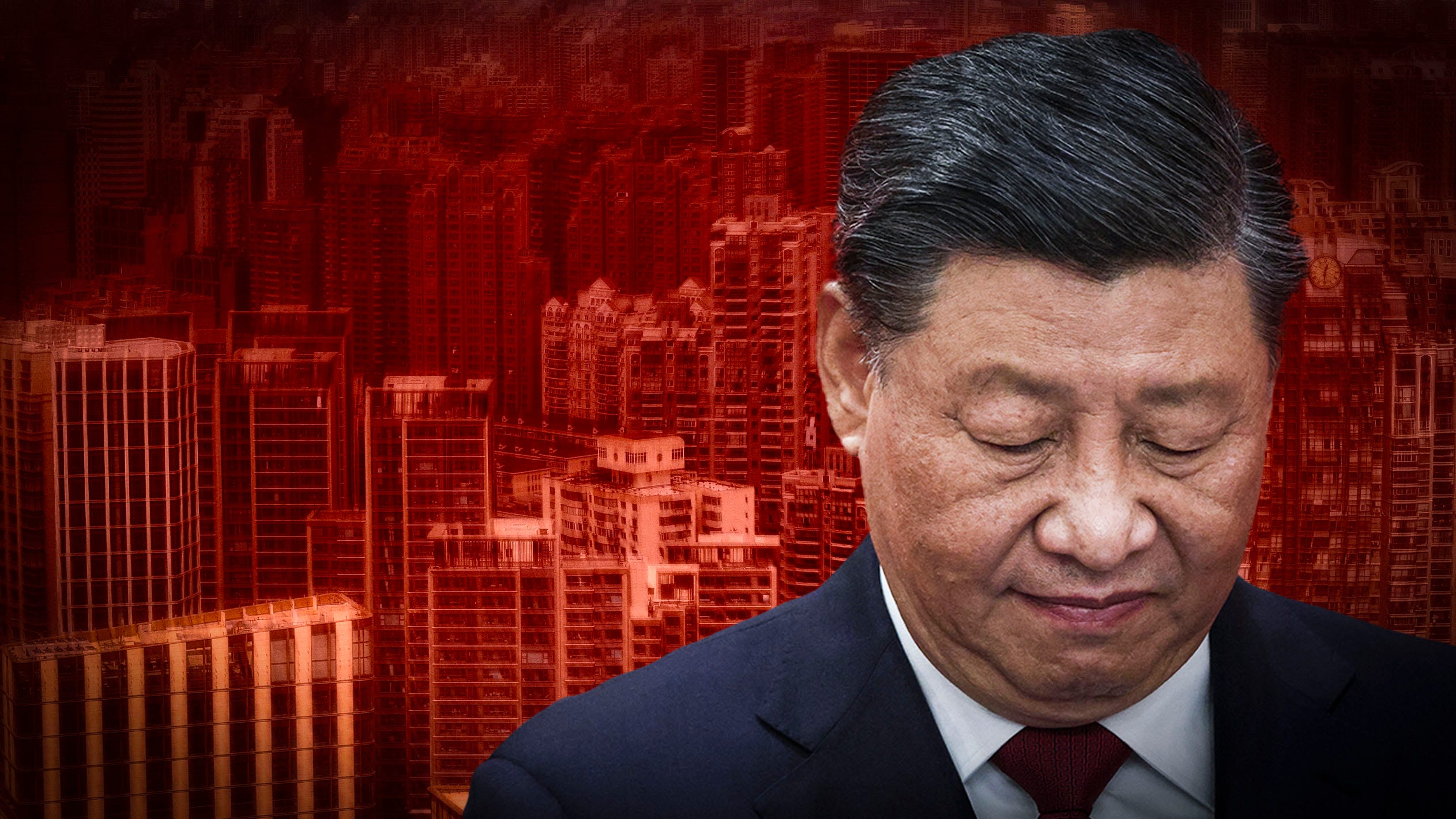
Lenin said the capitalists would sell the communists the rope with which they would hang us, and that they did, for decades. China manufactures more than its own people can consume. Beijing has long suppressed consumption because the Party prioritized production, exports, control, and obtaining hard currency. The Chinese people are not the customer. They’re the labor force, the savings pool, the collateral, and, when necessary, the hostage.
The real customer was always us.
Thus, the tariff war is a strategic weapon aimed at the heart of China’s economic model. If China tries to devalue the yuan to offset tariffs, it risks confirming to the world that Beijing is exporting deflation because its domestic economy is failing. If China defends the yuan, it must absorb the tariff hit, lose export share, tighten credit, or burn through financial ammunition.
Either way, Trump turns China’s favorite weapon — cheap exports — into a liability.
Trump isn’t just raising costs. He is forcing choices. He’s making China decide which lie it wants to defend first: the lie that its export machine can survive without unrestricted access to the American consumer, the lie that its domestic economy is healthy, the lie that the yuan is trusted, or the lie that Communist capital controls are compatible with global financial leadership.
A currency does not crack because one number moves on a screen. It cracks when the government behind it must defend too many lies at once. And Beijing is defending a lot of lies.

Trump has relentlessly used hard power to constrain China and increase its costs. Bessent’s job is to make sure the financial side reinforces that strategy. Strengthen dollar dominance. Bring crisis finance and even maritime risk under Washington’s direct control. Create dollar funding centers in the Gulf and Asia. Use swap lines to keep allies inside the American system. Rebuild confidence in America’s balance sheet through growth, energy, tariffs, spending discipline, and reindustrialization.
The world does not flee strength. It flees weakness. The dollar is not strong because central bankers like it. It is strong because it rests on the full weight of American power: markets, law, energy, technology, food, finance, sanctions, liquidity, and the only Navy capable of securing global trade. Trump and Bessent aren’t just strengthening that system. They’re taking command of it.
That matters because if the yuan cracks, money will not run to Beijing. It will run from Beijing. It will not run to BRICS. It will not run to some fantasy “petroyuan.” It will not run to some multilateral currency scheme cooked up by Davos panels and Chinese state banks. It will run where money always runs in a real crisis: to the deepest, safest, most liquid market on Earth, the U.S. Treasury market.
That may be the point.
America has enormous debt to refinance. A global flight into Treasuries would push capital toward the United States at the very moment Washington is rebuilding industry, expanding energy exports, financing the next American boom, and forcing the world back into dollar channels. China’s pain would become America’s liquidity.
What would a yuan break mean? Likely not some overnight cartoonish collapse. China is not a small emerging market with an open capital account. The Party can order banks to obey, punish capital flight, falsify numbers, jawbone markets, and pretend the problem does not exist long after everyone knows it does.
The problem is, it’s been doing that for quite some time already.
Bessent has seen, nay directed, this movie before. He understands exactly how a currency regime breaks, and Trump hired him at the precise moment America began applying pressure to every major weakness in China’s.
If the yuan cracks, it won’t be because America launched some secret attack in the night. It will be because China built the largest economic fiction in the modern world, and Donald Trump finally stopped paying for the illusion.
So is Scott Bessent working to crash the yuan? Yes. But he may not even need to.


One more item that should be added to the list of China's weaknesses and lies: Debt to GDP ratio.
Officially it is only about 60-70%, but in reality it is at least 300%, and perhaps approaching 400%, or maybe even higher.
The numerator (debt) should include not just Beijing govt debt, but local government debt, various semi-off-the-books and off-the-books debt schemes (like LGFVs), SOE debt, China Rail debt (almost $1T). The debt that everyone ASSUMES Beijing stands behind adds up to north of $30T, possibly north of $35T - there is no reason to assume that the reported numbers for all these debts are a ceiling. They might be a floor, given how the CCP cooks the books on virtually every statistic.
The denominator (GDP) is just as opaque, but the official number (around $20T) is clearly an overestimate by probably 2x. Nobody really knows what it is, not even the CCP itself, but $8T-10T is a reasonable estimate. Taking the lower end number of $8T, and $35T of debt gives us a debt to GDP ratio of OVER 400%.
Now THAT is a scary number, if I were a Chinese economist. There is no precedent in history for a large economy of global significance with those kind of debt ratio numbers. It's hard to even imagine what the future holds, beyond acknowledging the complete unsustainability of this.
"money will not run to Beijing. It will run from Beijing. It will not run to BRICS. It will not run to some fantasy “petroyuan.” It will not run to some multilateral currency scheme cooked up by Davos panels and Chinese state banks. It will run where money always runs in a real crisis: to the deepest, safest, most liquid market on Earth, the U.S. Treasury market."
Money is already running from Beijing. it may not (yet) be buying US Treasuries directly but it is buying crypto currencies, real estate in Singapore and Japan and elsewhere and so on.
A significant fraction of the exports we see are money laundering. Organizations export for cheap, get paid and don’t repatriate the money back to Beijing but keep it in USD,JPY etc. and invest in something in that currency