


by Aaron Gifford
June 1, 2026
In the 1990s, New Orleans schools provided little respite from the lockdowns, the arrests, the drug use, and the violence seen and heard at home, Oscar Brown recalls.
Brown grew up in what was then among the poorest, most densely populated public housing projects in the nation. Most of its teenagers attended one crowded high school: George Washington Carver.
“The teachers cared about us and did the best they could,” Brown told The Epoch Times.
“But there was always a whole lot of disruptions. The teachers didn’t get enough time to educate us. Life skills — survival — were always more important.”
Nothing matters more than educating the next generation with the values we cherish. The Herzog Foundation is making that possible. Learn more here.
Fast-forward two decades—and past one of the most catastrophic weather events in U.S. history—and Brown’s son had earned an associate’s degree at the rebuilt high school on the very same lot in the Ninth Ward in 2020. That was even before he was handed his high school diploma.
Brown’s daughter, a rising senior at the school, is on track to complete a nursing certification that both qualifies her for a good-paying job immediately after graduation and helps contribute toward a four-year college program.
“It’s a clear night and day difference,” Brown said. “Schools here really dive deep into education now—they’re not just there to be your mom or your dad.”
The 2025–2026 academic year marked the 20th anniversary of Hurricane Katrina. In unison with the city’s physical recovery that began after the 2005 disaster, its K–12 learning institutions experienced a sea change of their own, becoming the first all-charter system in the nation and potentially a model for others to follow.
High Marks in 2026
The most recent public education scorecard, released by researchers from Harvard, Stanford, and Dartmouth College on May 13, indicates that NOLA Public Schools consistently ranked in the 99th national percentile for reading growth between 2022 and 2025, and the 98th percentile for math during the same period.
Louisiana, as a whole, is the only state to surpass pre-pandemic performance levels in both subjects, according to the report.
Fateama Fulmore, NOLA Public Schools superintendent, said her students are accelerating at about 1.35 grade levels per year. She credits the children, families, and teachers for their “relentless focus.”
“While we still have work to do to close longstanding achievement gaps, the trajectory is clear: NOLA Public Schools is moving in the right direction, and our students are growing, achieving, and thriving at higher levels than ever before,” she said in a news release.
In 2005, more than 60 percent of the city’s public schools were considered “failing” and among the Bayou State’s lowest performing. Today, none of its public schools are failing; 92 percent of them now have an A or B grade from state and national organizations that rate academic progress, and the district overall just finished the academic year with a B grade, its highest ever, said Caroline Roemer, executive director of the Louisiana Association of Public Charter Schools.
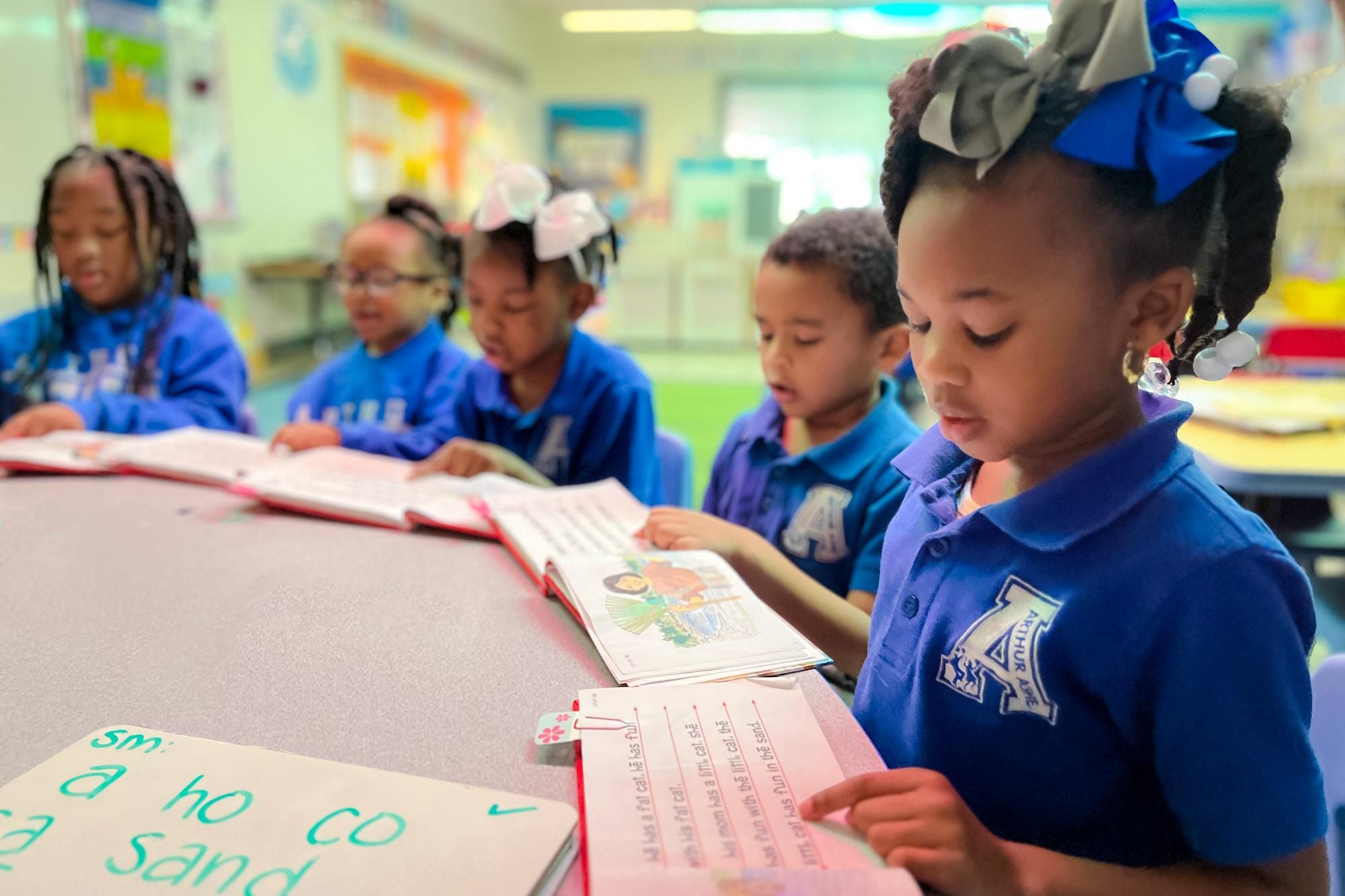
“This progress reflects what is possible when autonomy, accountability, and innovation are sustained over time,” she said.
The Rebuild
New Orleans’ move to an all-charter system was prompted by a situation unseen before anywhere in the United States.
