



This analysis is free, but with Premium Membership you get MORE. Join today.
by Rod D. Martin and Frank Gaffney
September 15, 2026
My latest interview on Securing America with Frank Gaffney. Sign up NOW for Frank’s Rumble channel and don’t miss a single episode!
Frank and I discuss:
The history of missile defense, from Nike Hercules to Safeguard to SDI and Bush’s withdrawal from the ABM Treaty.
Multimillion-dollar interceptors versus $2 laser shots: how technology could reverse the cost equation and usher in a defensive age.
Why tomorrow’s warships need nuclear power, not just more missiles.
It’s 16 minutes of in-depth analysis you won’t want to miss. If you prefer to read, the full transcript is below. Watch, read, like, and share!
Our full discussion:
Frank Gaffney: Welcome back. We are visiting with Rod Martin for this full hour, which is an extraordinary thing. The time that he has available for even our relatively short visits each week is deeply appreciated. And when he can give us an even more extended opportunity to pick his copious brain, it’s a banner day here at Securing America.
Rod, I’m so grateful to you for all you do for the cause and for the country. Let’s just pick up on something that you were emphasizing in the earlier segment. I know President Trump has, shall we say, deprecated George W. Bush recently.
One of the things that I think he deserves great credit for, and I believe we had a small hand in engineering him committing to do it, is to get us out of the 1972 Anti-Ballistic Missile Treaty, which essentially left us absolutely naked before missile attacks from the Soviet Union or from Russia or from China or from assorted others who’ve now gotten in the game: North Korea, Iran, Pakistan.
He not only promised to do that, but he did do it in his presidency, and he set the stage for us being able at last to restart in earnest the deployment of missile defenses. I know we’ve touched on this in the past with you a little bit about the Golden Dome, which is what President Trump has in mind.
And you have a piece prominently featured at your Rod Martin Reports website, rodmartin.org, about what the Navy is doing at the moment to turn electricity into ammunition, as you put it, and change tremendously the whole cost-effectiveness-at-the-margin argument about not building missile defenses because it was always going to be cheaper to have the means of attacking us than it would be to defend against them.
So bring us up to speed on all of this, if you would: the legacy of George W. Bush in this regard, and what we best be doing now, sir.
Rod D. Martin: Well, it’s that exact cost differential that got us locked into the absolute immorality of mutual assured destruction, which was totally needless in the first place. Because honestly, when the Cuban Missile Crisis happened, we had a 10-to-1 advantage over the Soviets in nuclear weapons. If they had launched a nuclear war, it would have been checkmate for them, and that’s exactly why they didn’t.
Then McNamara and LBJ allowed the Soviets to build up to near parity. And at that same time, anti-ballistic missile technology was evolving really fast, whether you’re talking about upgrading certain anti-aircraft missile systems or actually rolling out Sentinel and Safeguard, as was the plan.
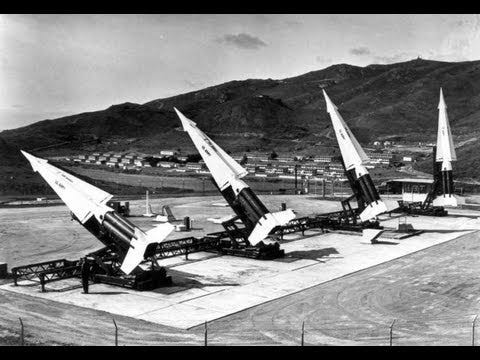
The Democrats come against that. They convinced major cities that they were in more danger if they had a missile defense than not. And when you go back and you look at those debates, first of all, it is staggeringly similar to the debates we had over the next several decades. The Democrats never changed their tune from about 1966 on, on this point.
So Reagan comes out with the Strategic Defense Initiative after Nixon kind of surrenders to reality and signs the ABM Treaty. Reagan comes back and says, “No, that’s hooey. Let’s actually build something robust. Better a shield than a sword. Let’s defend each other’s populations. We’ll even share the technology with the Russians so that everybody can feel safe together.”
That’s just a completely different take. But obviously, it didn’t come up with a working system because, first of all, a Democrat Congress was never really going to properly fund what we needed. Second, more importantly, I think, it was in some ways more a negotiating gambit than it was a reality. Because what SDI — what the Democrats all called Star Wars — really did more than anything else was convince the Soviets that they were in an unwinnable cost spiral, that the United States was going to win the Cold War simply by outspending them.
And that’s part of how you get the hesitation you get in Gorbachev in those final years of the USSR, where he could have put down what was effectively an unarmed revolt in East Germany and in Hungary and in Poland and so forth. And he didn’t. And it’s not because he was a good guy. It’s because he thought the only way they were going to survive was if they could build up their economy enough to support the military architecture that they wanted to use against us.
So Reagan bought us crucial time during which they collapsed. That was brilliant.
Bush comes along 20 years later and says, “You know what? The world’s changed. And why the heck are we in an ABM Treaty? That’s stupid. We’ve got the number of weapons on each side down to a pretty small number. If you’ve got a decent chance of knocking a few of them down, it really, really increases the risk of a first strike. And we’ve also got North Korea to contend with and some of these other little dipwad powers. So let’s pull out of the ABM Treaty. The Russians are cheating anyway, as they always did. And so let’s build something real.”

And on that basis, George W. Bush built the only actual working ABM system. We don’t call it that anymore. Now it’s Ballistic Missile Defense, or BMD. But the only real working ABM system we ever had, with the exception of the eight months that Sentinel was live, and we shut it down in less than a year. I’m floored by that.
Frank Gaffney: Rod, one of the pieces of this is that when we went into that ABM Treaty, I believe it’s the case, I think we had a discussion of this the last time you were on as to exactly when it started. But it certainly became clear that once the decision had been made that we were going to basically, as I say, leave the country undefended, it didn’t make sense for it to have much of an air defense. It didn’t make sense for it to have any kind of civil defense to speak of, and even much of a leadership defense.
Therefore, we created a condition of complete vulnerability. And the Soviets, then Russians, cheated, as you said, and protected their population, at least parts that they cared about, and their leadership, and built missile defenses and air defenses and so on. So it actually, I believe, made the world a considerably more dangerous place rather than a safer one, as does generally arms control.
Rod, we have to take a break. We’ll be right back. Stay tuned.
Golden Dome, Directed Energy, and a New Defensive Era
Frank Gaffney: Welcome back to a final installment of this very stimulating conversation with our friend Rod Martin. We’ve been talking about threats from jihadists to superpowers. We’ve been talking about the kinds of techniques that were used on 9/11 to murder nearly 3,000 of us, to the possibility of incinerating tens, if not hundreds, of millions of us, and what we need to do about it.
I think we’ve adequately addressed the point that we better get clear about the nature of the enemy we’re facing, whether it’s the jihadist level on up, but also what we best be doing to protect ourselves.
Rod, we’ve been discussing sort of the history of our vulnerability to missile attack, what President George W. Bush did to get us at least out from under a treaty that prevented us from effectively having that capability. Let’s talk a little bit about what President Trump has in mind in terms of his watch and something called Golden Dome. What is it? How is it coming along as you see it? And what role does directed energy play in the possible future defenses of our country and people against missile attacks?
Rod D. Martin: Well, as in so many things these days, you have a pretty stark choice between catastrophe and a golden age. And I’ll lay that out here in a second.
But the good news of all of that stuff we were just talking about is that research continued throughout. We had all the research necessary to get Safeguard deployed in ‘75, even though we only kept it deployed for eight months. And then Reagan resumes research in a big way. And that’s how you get to things like Patriot and THAAD and Aegis and all the different systems that we use against other kinds of missiles. And we’ve just been improving that nonstop ever since.

And now comes Trump. And the truth is, thanks to work, by the way, especially great work out of the Israelis with their layered defense against their constant missile problems from various enemies, they have developed some technology, in joint development with the United States in large part, that is really quite extraordinary.
Trump just rejects — as Reagan did, but Reagan couldn’t act on it to the degree he wanted to — Trump absolutely rejects the idea that mutual assured destruction is in any way a moral position to hold. You should defend your population. And in the process of defending your population, you reduce the risk that anyone would attack it because they can’t be assured that their missiles will get through, and they can’t be assured that your missiles won’t.
This was Reagan’s argument. This was Nixon’s argument until it wasn’t. This was everybody’s argument except the Democrats for a very long time. And Trump is acting on it. So what we’re looking at now is probably, before the end of his term, a rollout of very meaningful air and missile defenses for the continental United States, actually protect the American people for the first time in decades. That’s becoming a reality.
But the bigger story is the one you hit on, which is directed energy. Another joint development project with the Israelis, which came online in an operational form in December, called Iron Beam. Iron Beam is actually, in Dr. Evil’s terms, “frickin’ laser beams.” And they actually shoot down incoming.
Now, right now, they’re still kind of low-powered. They still struggle with atmospheric conditions. They’ve got all kinds of limitations. But all of those things could have been said about the United States Army Air Corps in 1926. And not many years later, we were losing Battleship Row at Pearl Harbor and dropping the atomic bomb on Hiroshima. So these technologies move pretty fast once they gain a head of steam.
And this is exactly the reason that Trump is pushing for the Trump-class battleships. Trump understands what a generation or two of our Navy seems to have forgotten, which is that if you’re going to power these really incredible advanced weapons systems, whether you’re talking about railguns or lasers or even advanced electronic warfare, microwave systems that can shoot down or knock down an entire drone swarm, all of this runs on power.
You need bigger hulls for actual nuclear power to run all that. And the bigger, the better, because you actually want bigger nuclear plants than you had on a Nimitz-class aircraft carrier, as we now have on the Ford. So these power plants power a future that is radically different. The drone threat fades into insignificance. Ballistic missiles become very, very untenable.

And you go from a situation where we’re shooting down a cheap drone with an $11 million missile to one in which we’re shooting down anything they can send at us with a $2 bolt of electricity. It radically changes the equation. So we are moving rapidly into a defensive era as opposed to an offensive era. That’s an incredibly positive thing for humanity. And Trump is leading the charge in both tactical and strategic.
We could actually live in a world where it’s nearly impossible to deliver a nuclear weapon for the first time since 1945. And that would be extraordinary.
Frank Gaffney: It would be extraordinary. And it would sort of defy the history of measures versus countermeasures in military affairs that will mean there will be something that will come along that maybe just is super lethal in attacking the sources of those $2 electrical volts, as you say.
But a fascinating, fascinating topic. Rod, we are out of time, I’m afraid, for more at the moment. But I think we’ve covered a very important array of issues, both historic and those that will determine, perhaps, the future security of our people and country. And as always, I deeply appreciate your insights, sir. Thank you for joining us and giving so generously of your time to do so. We’ll look forward to our next visit next week.
We look forward to talking to the rest of you next time. Until then, go forth and multiply.


