

Indonesia Chooses a Side
Trump’s new defense deal with Jakarta, pillar of the Non-Aligned Movement, is big news. It's also part of a larger strategy to tighten American control over the world's — and China’s — chokepoints.

This analysis is free, but with Premium Membership you get MORE. Join today.
by Rod D. Martin
April 16, 2026
Indonesia doesn’t choose sides. It’s a point of pride. For seventy years, the country has been a founding pillar of the Non-Aligned Movement.
Yet this week, Indonesia signed a defense agreement with the United States. “Earthquake” barely covers it.
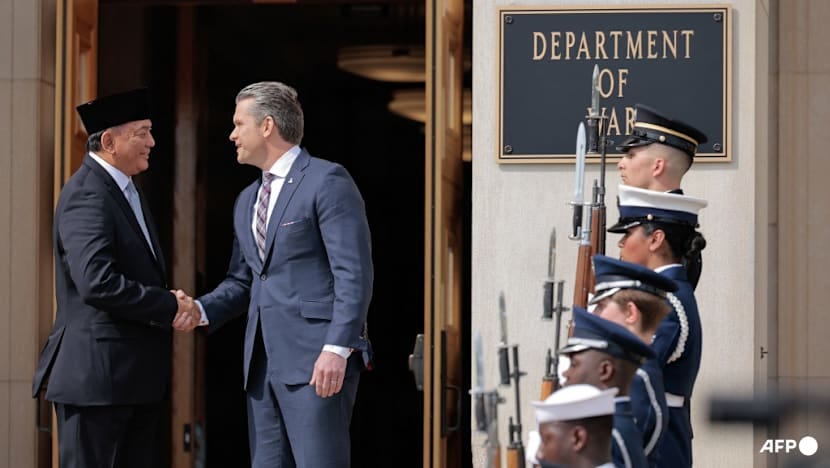
On Monday, Washington and Jakarta signed what the two parties are calling a “Major Defense Cooperation Partnership.” The agreement covers military modernization and capacity-building, training and professional military education, exercises and operational cooperation, and cooperation on “sophisticated asymmetric capabilities” and next-generation maritime, subsurface, and autonomous technologies.
Yes, it’s aimed at China. It also gives the U.S. a stranglehold on the four most important chokepoints east of Suez and Hormuz: the Straits of Sunda, Lombok, Makassar, and Malacca.
If you think Hormuz is important, Malacca is a monster. Twenty percent of the world’s oil flows through Hormuz, 29 percent through Malacca. And for China it’s even worse. Less than half of the Middle Kingdom’s oil passes through Hormuz. For Malacca, however, that number rises to an incredible 80 percent.
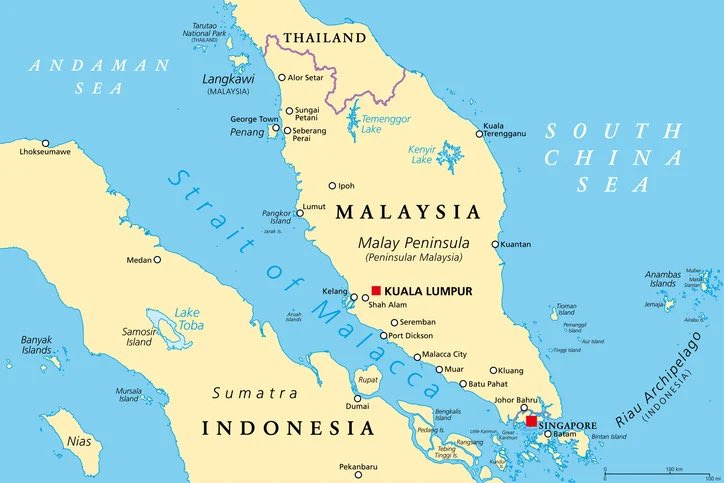
This vulnerability is so central to Chinese strategic thought that former CCP General Secretary Hu Jintao gave it a name: the “Malacca Dilemma.” It has shaped Beijing’s energy strategy, its naval buildup, its port-building spree, and much of the logic behind the Belt and Road Initiative.
And yet BRI is stalled. China’s alternatives remain incomplete, costly, or strategically insecure. Their overland workarounds are too small, too expensive, too vulnerable, or all of the above. The sea lanes remain indispensable.
And America controls them all.
Across the strait are Singapore and Malaysia. The former is one of America’s most important defense partners: sitting at the Strait’s most important point, its main naval installation purpose-built for U.S. carriers. The longstanding relationship is so close that a third of Singapore’s air force is stationed in the United States at any given time.
Malaysia is a more recent convert, having signed a defense cooperation MOU with the Trump Administration just last fall.
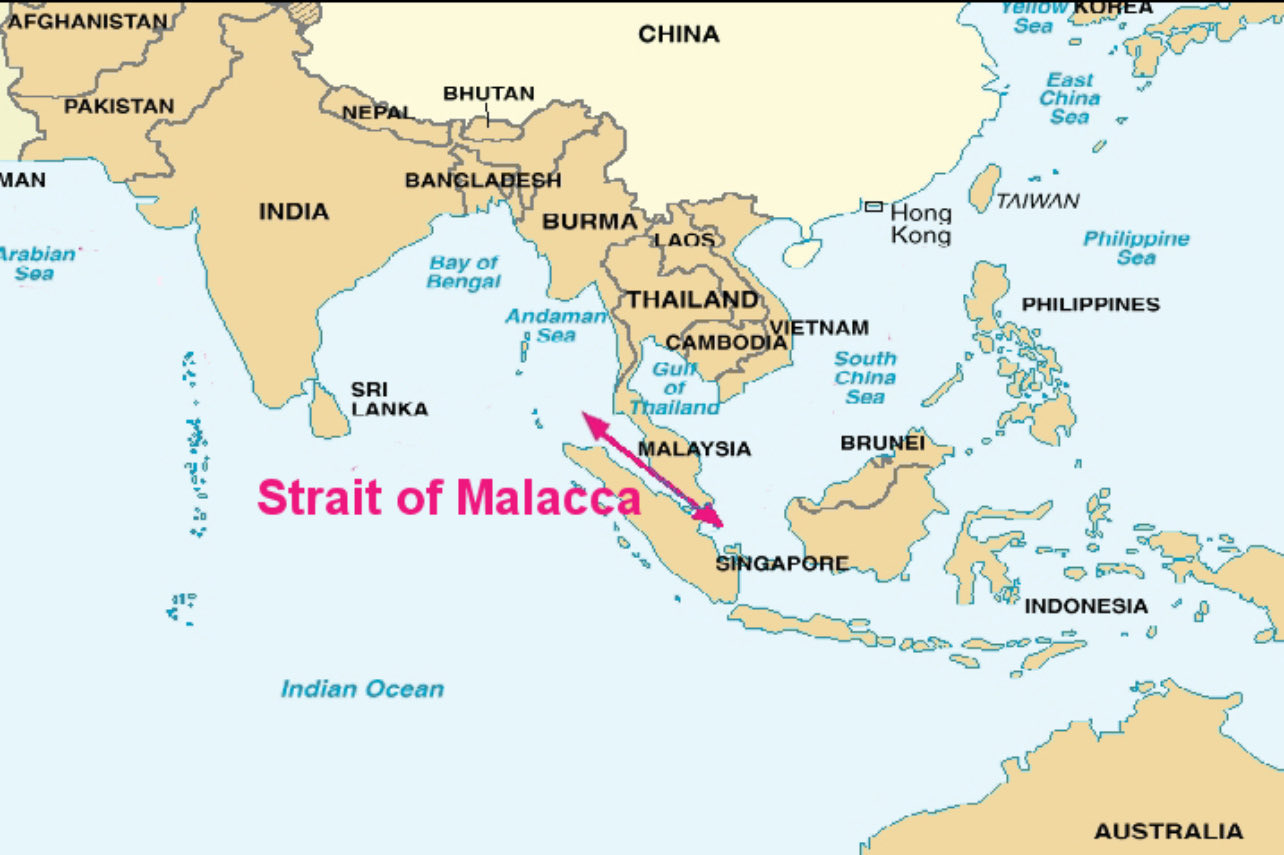
And now the last piece falls into place. Both sides of the Strait are now inside the American security architecture, along with the others Indonesia controls. That changes the geometry of power in Asia, and not only for China.
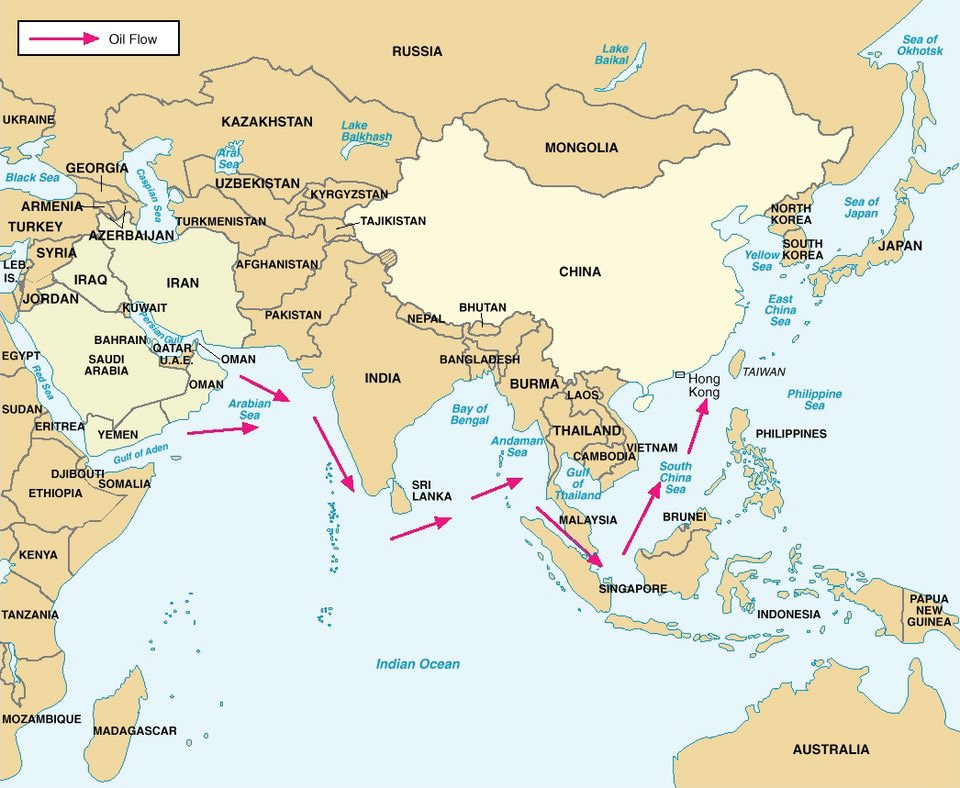
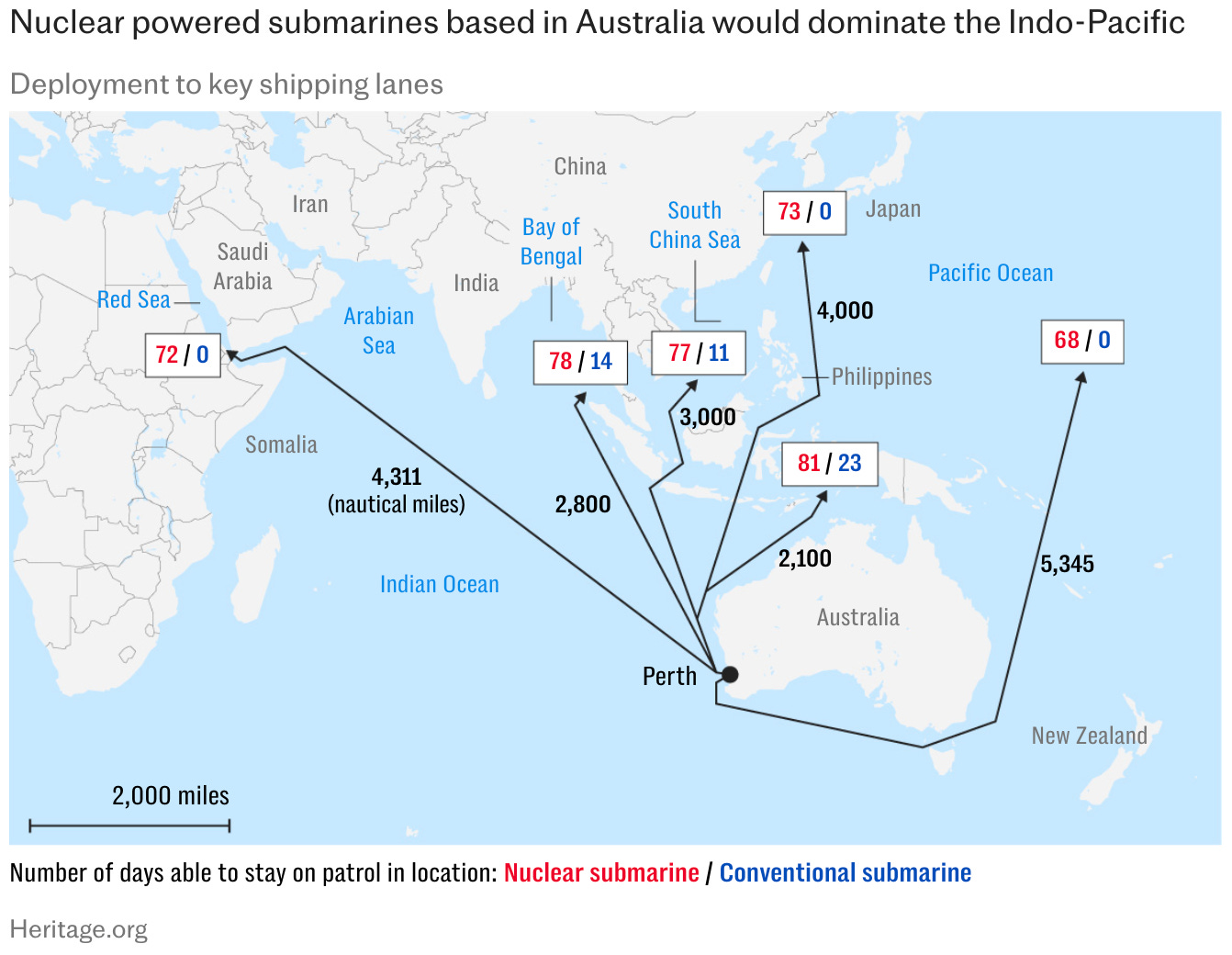
Indonesia has long been one of the great question marks in Australian strategic thinking: too large to ignore, too close to bypass, and too important to alienate. The maritime approaches to Australia run through Southeast Asia and the Indonesian archipelago. An Indonesia leaning toward Beijing would dramatically worsen Australia’s position.
But an Indonesia allied with Washington does the opposite. It makes Australia safer, the southern arc of Indo-Pacific defense more coherent, and both AUKUS and the Quad far more potent.

AUKUS is not just a submarine deal. It is a broader effort to harden the Indo-Pacific balance through tighter integration in undersea warfare, advanced defense production, technology sharing, and strategic planning. More broadly still, it is part of Trump’s effort to turn American allies into true partners rather than pampered dependents.
That has been the logic behind his alliance posture all along: stronger allies, more local capacity, and a coalition harder to intimidate because its burdens are more broadly shared. That same logic has shaped his strengthening of Japan and South Korea as meaningful military partners, not mere clients.
The same logic applies, in a looser but still very important way, to India.
For eighty years, India’s mythology has been independence. With Indonesia, it founded the Non-Aligned Movement. In practice, that often meant tilting toward Moscow while insisting it was bowing to no one. Even after the Cold War, India continued buying Russian arms and, more recently, vast quantities of steeply discounted sanctioned Russian oil, helping finance Putin’s invasion of Ukraine.
Then Trump changed the equation.
He made clear that access to American markets and systems is not a free good. He tied trade relief to strategic behavior. And suddenly India, however reluctantly, began moving.

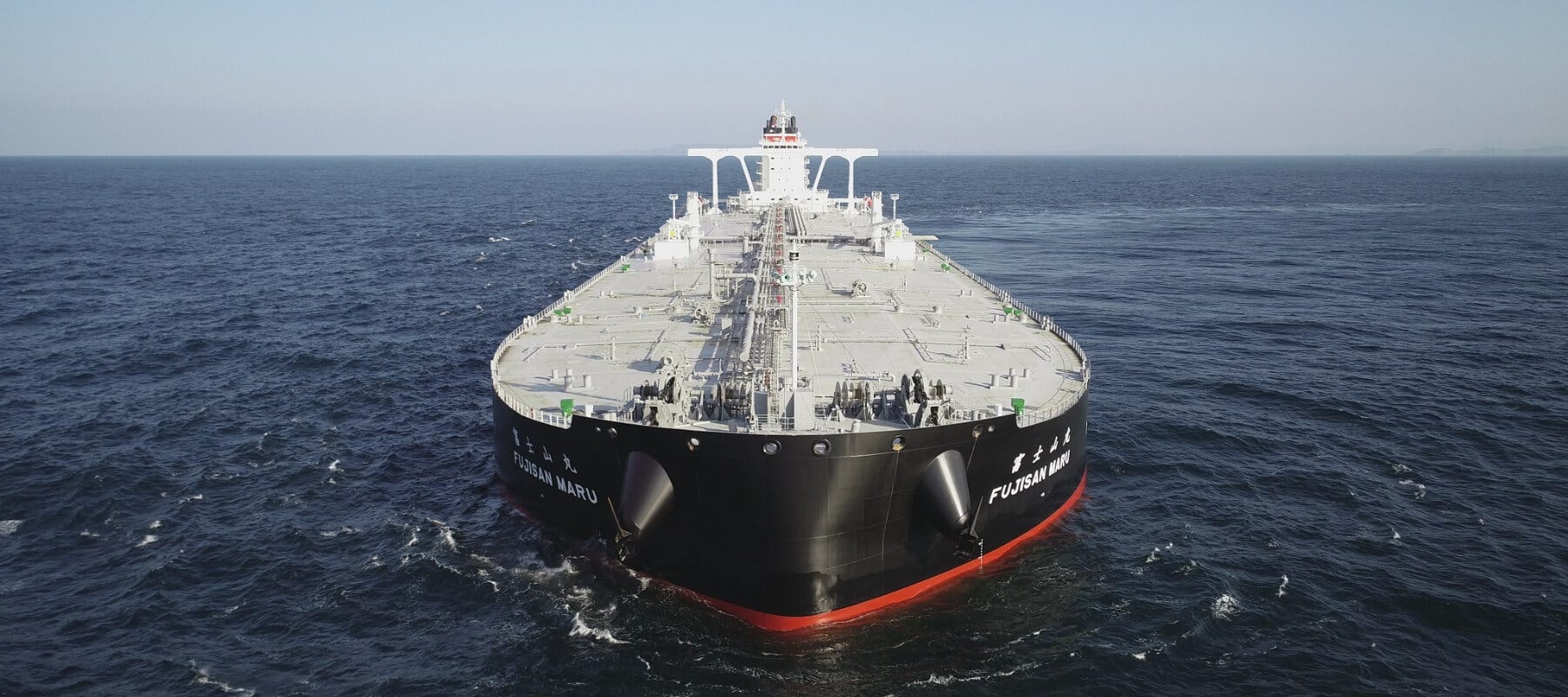
Most revealing was its recent move against Shadow Fleet tankers. The Shadow Fleet is the lifeline by which Russia sells the oil that finances its war, by which Iran and Venezuela have long evaded sanctions, and by which China buys more than 40 percent of its oil, steeply discounted illegal oil. China’s economy is deeply dependent on that discount, though not as dependent on its purchase as its allies are on its sale: a whopping 90 percent of Iran’s oil goes straight to China.
Yet in February, mere days after clinching a trade deal with Trump, India — a country that had long benefited from that same Shadow Fleet — began seizing its tankers, helping America enforce Trump’s new global order.
That’s a big story. It’s even bigger when you connect the dots.
The foreign-policy priesthood loves compartments. One story is tariffs. Another is Panama. Another is about Venezuela, or Cuba. Another is opening Hormuz, or ballistic missiles, or Iron Dome, or nuclear materials. Another is Russia and the Shadow Fleet. Another is NATO. India, Indonesia, and AUKUS don’t even make the Enemedia’s list: they are the stuff of white papers and think tanks.
And yet they’re all part of the same picture. In The West Wing (in a crisis involving the Taiwan Strait), President Bartlet urged a young Sam Seaborn to “see the whole board”. President Trump took him seriously.
In controlling the world’s chokepoints, the U.S. Navy can shut off not just oil but trade and even food for anyone at any time. Does it want to? Of course not. But it can, and in so doing, it makes it terribly difficult for America’s enemies to contemplate actually going to war.
Panama is a chokepoint, one which China controlled. No longer! It gave the CCP the ability to move naval assets to friendly ports in Venezuela and Cuba, perhaps someday even full bases that could threaten the chokepoints controlling the Gulf of America. No longer! All three pieces are off the board: Trump took, or is taking, them all.
The Shadow Fleet feeds China energy and China’s allies cash. It makes the Hamas, Houthi, and Hezbollah wars possible, not to mention the invasion of Ukraine. No longer! Capturing the ships makes the whole operation uninsurable and thus commercially impossible, exactly what closed Hormuz over the last few weeks.

Australia has been vulnerable to China, and like Western Europe, increasingly unreliable. An aligned Indonesia reduces the danger that has encouraged squeamishness, and encourages doubling down on AUKUS. It also reinforces India’s recent decisions, which no doubt helped make Indonesia’s possible.
We could go on, and have, in countless essays over the last year. The pundits may hate it, the cable news audience may not get it, but all the pieces fit together. And Donald Trump has understood that from the first.
“See the whole board.”

None of this is random. It’s not improvisation. It is not “chaos,” except to people too dim or too dishonest to see a strategy unless it is written out for them in a Brookings white paper and telegraphed ahead of time to our enemies.
What Trump is doing to China is straight out of Reagan’s playbook against the Soviets. He is accelerating an arms race while restricting the enemy’s cashflow. He is tightening the map around a brittle adversary, forcing them to deal with problems on their own turf instead of ours. He is containing them, in the belief that if they can’t afford the risk of aggression, they will eventually collapse under the weight of their own internal contradictions.
Because they’re Communists. And Communism doesn’t work, no matter how many Western “elites” are impressed with its claims to be “on the right side of history”. They forever assure us “it will be different this time!” They are forever wrong.
Trump is not doing any of this because he dreams of invading China, or even of “dominating” it, but because he understands a simpler truth: a Communist power that is internally decaying is most dangerous when it still thinks it has time to gamble. You simply must not allow it room to gamble. You have to make the steal more expensive than it’s worth.

That is what all this chokepoint-building is about. Not war, but deterrence. Not conquest, but constraint. In Kennan’s word, containment. The point is not to humiliate China: note how Trump treats Xi, Kim, Putin, or how Reagan treated Gorbachev. The point is to ensure that Beijing’s leaders know, in their bones, that a war over Taiwan (or elsewhere) would likely lead to a disaster their armed forces would be in no position to even contest. A Taiwan invasion would be lost, perhaps on Taiwan’s beaches, but more likely far away in the Straits of Malacca and Hormuz. And there’s not a thing Beijing can do about it.
A China whose oil, trade, and food imports remain exposed at Malacca, Sunda, Lombok, Makassar, Hormuz, and beyond is a China that must think very hard before betting the regime on one throw of the dice. That makes a safer world. And every month that passes without that war is a month in which China’s demographic collapse, economic weakness, elite corruption, party purges, and political brittleness get worse, not better.
Time is not on Beijing’s side. Trump knows it. That is exactly the point.
That’s also why the upcoming Trump-Xi summit matters. Trump is not meeting Xi on neutral ground. He is going to Beijing. And Xi is receiving him not as the master of some unstoppable rising order with the “Middle Kingdom” as the center of all that is, but as the head of a regime whose vulnerabilities are being exposed one by one.
Trump arrives after Panama, after Venezuela, after Iran, after the Shadow Fleet crackdown, after India’s shift, and now after Indonesia — one more pillar of the old “nonaligned” world moving inside the American security architecture. The pressure isn’t easing. It’s compounding.
Which sounds like a really good time to make a deal.
“Indonesia doesn’t choose sides.” But now it has. And if even Indonesia is moving, then the global order has fundamentally changed.


We could go on, and have, in countless essays over the last year. The pundits may hate it, the cable news audience may not get it, but all the pieces fit together. And Donald Trump has understood that from the first.
“See the whole board.”
What Drives me Nuts is the talking heads spouting off nonsense. Then it gets repeated on The Web/Social Media. Geo-Politics (like History) is Hard. You have to work at it.
/Rant # 2897,921
Thank you, Dr. Martin for this excellent piece on the United States’ historic defense pact with Indonesia! Indeed, everyone needs to look at the larger board. Indonesia historically has always been non-aligned. But not anymore! Indonesia has now chosen to throw in its lot with the United States and the West. The benefits of this are many. Both sides of the Straights of Malacca are now secured. Indo-Pacific defense is now more coherent. Australia now knows that Indonesia will cooperate with them. Twenty percent of the world’s oil can now pass safely through the straights without China interfering or holding it up if they so choose. Now, there is no way that can happen. Trump is containing China and accelerating their collapse. Their birth rate is collapsing, their population rapidly aging, their economy is head for a catastrophic recession, the housing market is going under, and China is being muscled out of the Western Hemisphere by Trump and the United States.
Indonesia realizes that China will eventually come for them too and the best defense they have against the CCP is to form an alliance with the United States of America. America now also controls ALL other alternatives for China’s routes for its shadow oil trade. This is a major foreign policy coup for Donald Trump! Singapore and Malaysia are now protected as well. He also strengthened two of our most important allies Japan and South Korea. He also got India into the fold. He made it clear American security assistance is NOT free! You need to prove to us your a reliable ally. India responded by blocking Russia’s shadow oil trade.
Donald Trump continues to excel on foreign policy. He’s absolutely brilliant and he and Marco Rubio are absolutely killing it! Pete Hegseth also is a phenomenal Secretary of War. America is stronger and safer around the world because of Mr. Trump! It’s a huge deal Trump got Indonesia into the fold. Like Reagan during the Cold War boxing in the Soviet Union, that’s what Trump is doing to China. The mainstream media won’t cover this story but it’s a game changer that’s really important. The CCP is on its last legs. I feel that in twenty-five or thirty years, the CCP will collapse.