

The New Anti-Jewish Theology
Christian views of the Jewish religion and people have two thousand years of history. Neither the Bible itself nor that history bears much resemblance to what we’re hearing on social media now.

This analysis is free, but with Premium Membership you get MORE. Join today.
NOTE: This Deep Dive by my friend Jon Harris is pretty long, but it covers the topic extremely thoroughly. If reading on the desktop version, be sure to use the Table of Contents on the left-hand side to jump quickly to key sections. — RDM
by Jon Harris
April 12, 2026
I have never been that interested in discussing eschatology, but as of late, so much error has been spread on the internet about the Bible and the church’s teaching on the nation of Israel that I think I have a responsibility to offer some clear guidance from the Bible and church history on the issue.
We are fairly inoculated here against errors stemming from date setting, dual covenant theology, in which it is claimed that Jews can be saved apart from belief in Jesus, and uncritical political support for Israel as a religious tenet. (Here are links if you want a video presentation of this information or are a supporter and would like to download a PowerPoint to use for your own purposes).
However, now there is a strong current on the internet to portray Jewish people dishonestly, reject the promises made to ethnic Israel, and claim Christians who think God’s covenant with Abraham still applies to modern Jews are somehow heretical. There are even voices now questioning Jesus’s Jewish identity. This corrupts our hermeneutics, questions God’s promises, undermines Christ’s human nature, and cuts us off from our own church history.
This is why I have decided to teach on God’s sovereign election of ethnic Israel as a chosen nation, distinct from other nations, and the instrument by which God reveals “His glory and the covenants and the giving of the Law and the temple service and the promises” (Rom. 9:4).
Most of the attacks on this doctrine stem from a political angle that opposes industrial, military, or diplomatic support for the modern nation-state of Israel or sees Jewish people as uniquely evil. I believe there are some legitimate concerns about the extent to which we have financially invested in other places while we have massive debt here at home. There is also little doubt that secular Jewish people have contributed in high percentages to liberal causes. But we should not allow political outlooks to determine our theology.
If you go online today, you will see a lot of poorly argued diatribes against dispensationalism, Protestantism, or Zionism, sometimes conflating them, that seem to assume the belief in a future ingathering for Israel or the restoration of a future Davidic kingdom are somehow novel developments that have brainwashed decent, ordinary, conservative leaning Christians into a lie intended to benefit modern Jewish people. You will also see regular re-articulations of the exclusivity of Christ for salvation or the fact that Christians are following the true Jewish religion, as if these are relevant points or are being denied by those who also believe God has a future plan for ethnic Israel.
In reality, the hope that God holds a special place for ethnic Israel and will finish restoring them in some capacity is traceable to the origins of our faith, derives from clear biblical teaching, and has been the conviction of many of the church’s greatest theologians from the past regardless of disagreements over the timing and nature of this restoration.

This is a relevant conversation for us for two reasons. First, in Romans 9-11 Paul argues that gentiles can have faith in God’s promises to them because God also keeps His promises to ethnic Israel. If God will not fail in the unique promises He made to Abraham, Isaac, and Jacob, He will not fail in the promises gentile believers are included in.
Second, we need to have a theological category for what the modern state of Israel does or does not represent theologically because there are all kinds of claims, ranging from the notion that Jews are God’s permanent enemies post-70AD, all the way to the idea that the modern nation state of Israel represents the beginning of the restoration prophesied by Isaiah, Jeremiah, and Ezekiel. This second question has a political dimension today, and I do have my own strictly political thoughts about this, but for our purposes we will only focus on theology.
There are three simple points I want to make. First, the Bible consistently speaks about a future completed restoration of ethnic Israel. Second, spiritual fathers throughout church history believed this promise. Third, the command to bless Israel is still in effect.
The Restoration of Israel
The complete fulfillment of God’s promises to ethnic Israel features, at the least, an “ingathering” in which Israel experiences universal salvation, and, at the most, a “restoration” in which the land promised to Abraham is possessed during the Messiah’s earthly reign.
God’s promise to Abraham is first found in Genesis 12:1-3, where God promises Abram a land, nation, and blessing:
Now the LORD said to Abram, “Go forth from your country, And from your relatives And from your father’s house, To the land which I will show you; And I will make you a great nation, And I will bless you, And make your name great; And so you shall be a blessing; And I will bless those who bless you, And the one who curses you I will curse. And in you all the families of the earth will be blessed.”
God reminds Abraham of His promise nine more times throughout the book of Genesis and specifies that the land promise will ultimately expand to the region between the River of Egypt (Wadi) and Euphrates River (Genesis 15:18), that it will include many nations and kings (Genesis 17:5-6), that circumcision will be the sign of the covenant (Genesis 17:11), that Abraham’s seed will rule over their enemies (Genesis 22:17), and that the covenant will be established with Isaac and not Ishmael (Genesis 17:18-21).
In Genesis 15, God ratifies the covenant and makes it unconditional by passing between a turtle dove and a pigeon, along with a cow, goat, and ram cut in half while Abram was in a deep sleep. This meant that, unlike the Mosaic covenant, which made blessings contingent upon obedience, the Abrahamic covenant’s fulfillment was only conditioned upon God’s promise to Abraham.
Islamic Interpretation
Because Islamic interpretations are becoming more popular, even in right-leaning political circles, I should note that Muslims hold to a different version of events. In Surah Al-Baqarah 2:124, the Koran says:
And [mention, O Muhammad], when Abraham was tried by his Lord with commands and he fulfilled them. [Allah] said, “Indeed, I will make you a leader for the people.” [Abraham] said, “And of my descendants?” [Allah] said, “My covenant does not include the wrongdoers.”
In this section (124-130), which addresses Israel’s claims to religious legitimacy over Islam, the Koran teaches that both of Abraham’s sons, Ishmael and Isaac, built the first Mosque, the Kabba in Mecca, and that from Abraham and Ishmael would come a “Muslim nation.”
Whereas in the Bible, God changes Abram’s name after Ishmael’s birth and in anticipation of Isaac’s birth and the fulfillment of the covenant through him, Muslims do not believe this happened and focus more on the significance of Ishmael.
On this view, there is no land promise for Israel or future salvation through a Messiah by which all people would be blessed.
Abraham to Moses
As the book of Genesis unfolds, we find the Abrahamic covenant is further narrowed from Isaac to Jacob (Genesis 28:13-15). Jacob deceives Isaac, receives the blessing from him, and then flees his brother Esau by going to Paddan-aram (Syria) from Beersheba (southern Israel). On his way, he stops at Luz (12 miles north of Jerusalem) and has a dream where God reveals Himself and applies to him the land, nation, and blessing He promised Abraham.
He tells Jacob: “Behold, I am with you and will keep you wherever you go, and will bring you back to this land; for I will not leave you until I have done what I have promised you.” Jacob renames the place Bethel and returns to it in Genesis 35. At that point, God appeared to Jacob again, renamed him Israel, and promised to give the land to Abraham to his descendants, who constitute the twelve tribes of Israel.
Of course, a famine struck the land, and Israel’s sons moved to Egypt to buy grain, where they were enslaved for 400 years, as God said they would be in Genesis 15:13. But Exodus 2:24 states that “God heard their groaning; and God remembered His covenant with Abraham, Isaac, and Jacob.” God brings them out of Egypt, and throughout Exodus, Leviticus, and Deuteronomy, the land promise is reiterated multiple times and applied to the nation of Israel.
Joshua and Solomon’s Partial Fulfillment
God also reveals an additional scenario that must take place before the complete fulfillment of the Abrahamic covenant. In Leviticus 26:40-45, before the spies even enter the land of Canaan, God tells Moses that He will eventually punish the nation of Israel for their disobedience by exiling them to the land of their enemies, where they will subsequently repent of their sin and return to enjoy the blessings of the Abrahamic covenant. Moses wrote:
40 ‘If they confess their iniquity and the iniquity of their forefathers, in their unfaithfulness which they committed against Me, and also in their acting with hostility against Me— 41 I also was acting with hostility against them, to bring them into the land of their enemies, or if their uncircumcised heart becomes humbled so that they then make amends for their iniquity, 42 then I will remember My covenant with Jacob, and I will remember also My covenant with Isaac, and My covenant with Abraham as well, and I will remember the land. 43 For the land will be abandoned by them, and will make up for its sabbaths while it is made desolate without them. They, meanwhile, will be making amends for their iniquity, because they rejected My ordinances and their soul abhorred My statutes. 44 Yet in spite of this, when they are in the land of their enemies, I will not reject them, nor will I so abhor them as to destroy them, breaking My covenant with them; for I am the Lord their God. 45 But I will remember for them the covenant with their ancestors, whom I brought out of the land of Egypt in the sight of the nations, that I might be their God. I am the Lord.’
This passage is important because it reveals that neither the conquest of Canaan under Joshua nor the expansion of the kingdom under Solomon can be the final fulfillment of the Abrahamic covenant. Joshua 21:45 describes Israel possessing all the land, even though they never reached the borders of the Euphrates. Yet it states: “Not one of the good promises which the LORD had made to the house of Israel failed; all came to pass.” Similarly, under Solomon’s reign, while the full extent of the borders promised to Abraham were never reached, Israel did exact tribute from the nations that lived within that area. 2 Chronicles 9:26 says “[Solomon] was the ruler over all the kings from the Euphrates River even to the land of the Philistines, and as far as the border of Egypt.”
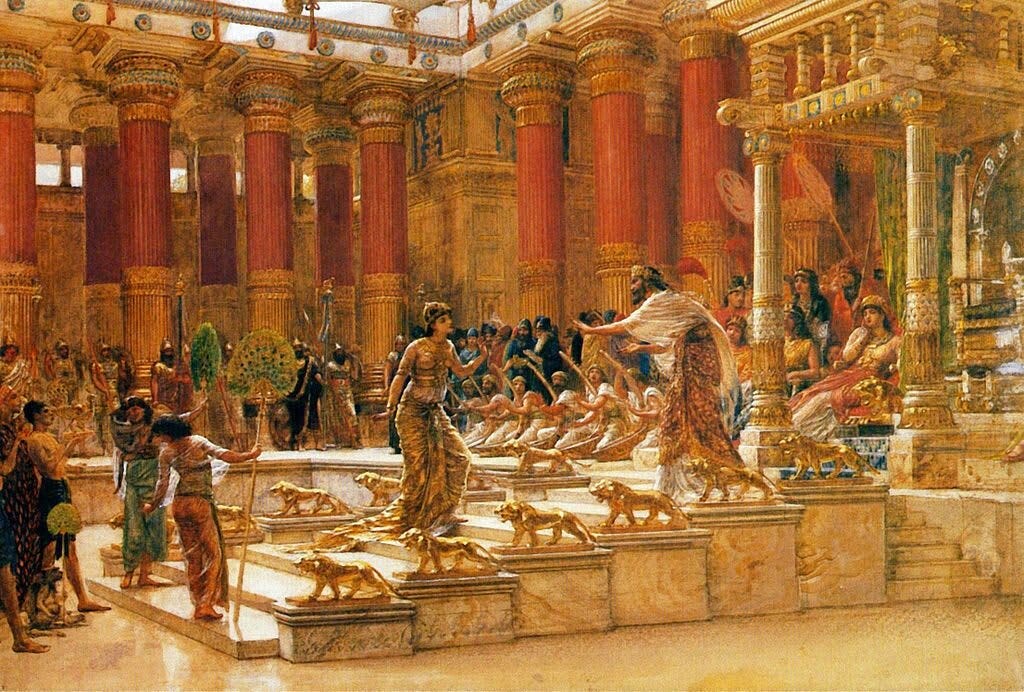
Some theologians understandably think these events mark the final fulfillment of the land promise to Abraham. There are some problems with this view, though. First, God promised Abraham (Genesis 15:18), Moses (Deuteronomy 11:24), and Joshua (Joshua 1:4) possession, not just control, of the land from the River of Egypt (Wadi) to the Euphrates. Second, the historical scenario of rebellion, captivity, repentance, and return had not taken place yet. Third, the Abrahamic covenant is described in Genesis 13:15 as an everlasting covenant, using the same term (“olam”) that Genesis 9:16 used to describe the Noahic covenant. Fourth, the Abrahamic covenant is a singular promise to institute a land, nation, and blessing together, not separately.
Furthermore, God tells Joshua in Joshua 13:1 that “very much of the land remains to be possessed.” John Calvin commented on the seeming discrepancy between Joshua 21:43, where “the Lord gave Israel all the land which He had sworn to give to their fathers, and they possessed it and lived in it,” and Joshua 13:1, where the whole land is not under Israelite possession. Calvin said:
In order to remove this appearance of contradiction, it is necessary to distinguish between the certain, clear, and steadfast faithfulness of God in keeping His promises, and the effeminacy and sluggishness of the people, in consequence of which the benefit of the divine goodness in a manner slipped through their hands. Wherefore . . . although they did not rout them all so as to make their possession clear, yet the truth of God came visibly forth, and was realized, inasmuch as they might have obtained what was remaining without any difficulty, had they been pleased to avail themselves of the victories offered to them. (Commentary on Joshua)
In other words, his explanation is that God promised and enabled Israel to possess all the land, but they only occupied a portion of it. Their achievement was a fulfillment, and they were authorized to completely fulfill the promise, but it was not a final fulfillment of the Abrahamic covenant due to their own weakness.
Throughout the rest of the Old Testament, Israel never fully realized the complete fulfillment of the Abrahamic covenant. In 931 BC, the kingdom was divided between the ten northern tribes and the Judeans and Benjamites in the south. Assyria captured the northern kingdom in 722 BC, and Babylon captured Judah in 586 BC and carried many of the Jews to Babylon. Then, around 538 BC, Ezra and Nehemiah returned with some of the Judean exiles, rebuilt the temple and the walls around Jerusalem, but they were also eventually conquered by Rome in 63 BC and were under Roman occupation until the time Christ came.
Jewish Expectations
At this point, it is important to understand what was going through the minds of the Jews when Jesus arrived on the scene. Some additional expectations developed during this period. Not only were the Jews looking for liberation from Rome and the fulfillment of the promise made to Abraham that they would occupy the promised land, but they also expected the Messiah to usher in this kingdom, which is why they shouted Hosanna (“save us”) during Jesus’ triumphal entry in Matthew 21:9.
In 2 Samuel 7:12-16, God had reiterated His promise to provide a permanent land for Israel and peace from her enemies. But He also revealed that David’s dynasty would be established forever.
Psalm 89:3-4 says: “I have sworn to David My servant, I will establish your seed forever And build up your throne to all generations.” Jews during Christ’s time expected a descendant of David to deliver them and usher in the final fulfillment of God’s covenant with Abraham. Throughout the New Testament, Jesus is identified as this promised Jewish Messiah, and this feature of His identity is intrinsic to His identity.
The first verse of the New Testament says: “The record of the genealogy of Jesus the Messiah, the son of David, the son of Abraham.” (Matthew 1:1). The angel Gabriel tells Mary in Luke 1:32-33 that “the Lord God will give Him the throne of His father David; and He will reign over the house of Jacob forever, and His kingdom will have no end.” Mary then declares that God “has given help to Israel His servant, in remembrance of His mercy, as He spoke to our fathers, to Abraham and his descendants forever” (Luke 1:54-55).

Zechariah also identifies Jesus as the Messiah and fulfillment of the Abrahamic covenant (Luke 1:68-79). Nathanael tells Jesus in John 1:49, “You are the King of Israel.” Pilate even nails a sign on the cross that says: “JESUS THE NAZARENE, THE KING OF THE JEWS” in John 19:19-22. Paul says “[God] raised up David to be their king . . . From the descendants of this man, according to promise, God has brought to Israel a Savior, Jesus” (Acts 13:22-23) and that Jesus was “born of a descendant of David according to the flesh” (Romans 1:3).
If Jesus were not “the Lion that is from the tribe of Judah” (Revelation 5:5), He could not be the Messiah. The New Testament writers go to great lengths to demonstrate that Jesus fulfilled this role and his lineage is now emphasized in many of the historic creeds and confessions. However, the Jews also expected the Messiah to usher in a kingdom marked by certain features.
The coming kingdom would be a time of peace when “the law will go forth from Zion, And the word of the LORD from Jerusalem . . . never again will they learn war” and “the wolf will dwell with the lamb” (Isaiah 2:2-4; Isaiah 11:6). It would be marked by prosperity, where “the youth will die at the age of one hundred” (Isaiah 65:20) and where people will say, “This desolate land has become like the garden of Eden” (Ezekiel 36:35). It would also be a time of spiritual renewal, when God would “pour out [His] Spirit on all mankind” (Joel 2:28) and institute a new covenant by writing His law on Israel’s hearts so that they would know Him (Jeremiah 31:31-34). The Messiah would build a new temple (Zechariah 6:12-13), God’s presence would fill it (Ezekiel 43:5), and sacrifices would be made (Jeremiah 33:18). It would be a time of reunion, as Israel and Judah were brought back together from the nations where they had been scattered (Ezekiel 37:15-23). And God would rule over the entire world (Zechariah 14:9).
Religious Jews today are still looking for the coming Messiah, the defeat of their enemies, the restoration of the temple, and the Davidic kingdom. I saw a recent video of IDF soldiers singing, “I believe with perfect faith in the coming of the Messiah, and, though he tarry, I will wait daily for his coming.”
The Messiah and The New Covenant
The problem modern religious Jews have is the same problem many of their forebears 2,000 years ago had during Christ’s first coming. Just as Leviticus 26:40-45 said there would be a period of rebellion and exile before a restoration and final realization of the Abrahamic covenant, so there also needed to be a final atoning sacrifice for sin, Israel’s general rejection of the Messiah, and the extension of the gospel message to the gentiles in the institution of the church as the manifestation of God’s spiritual kingdom.
For example, Isaiah 53 foretold a suffering servant who would be “despised and forsaken,” “pierced through for our transgressions,” and “crushed for our iniquities,” and yet would not open his mouth. Psalm 22 described the same figure whose hands and feet are pierced, whose garments are divided by casting lots, and who cries, “My God, my God, why have You forsaken me?” Daniel 9:26 predicted, with remarkable precision, the exact year the Messiah would be cut off, 69 prophetic weeks, or 173,880 days from Artaxerxes’ decree in 445 BC, which is AD 33.
Yet in John 12:34, the crowd say: “We have heard out of the Law that the Christ is to remain forever; and how can You say, ‘The Son of Man must be lifted up’?” They did not understand what the prophets taught about Jesus. The disciples on the road to Emmaus in Luke 24:21 likewise said: “But we were hoping that it was He who was going to redeem Israel.” They assumed Jesus must not have been the promised Messiah because Israel was still under Roman occupation.
But, one day, during the restoration, they will. Zechariah 12:10 states:
“And I will pour out on the house of David and on the inhabitants of Jerusalem, the Spirit of grace and of supplication, so that they will look on Me whom they have pierced; and they will mourn for Him, as one mourns for an only son, and they will weep bitterly over Him, like the bitter weeping over a first-born.”
This promise is echoed by Paul in Romans 11 when he states: “All Israel will be saved” (Romans 11:26) because “the gifts and calling of God are irrevocable” (Romans 11:29).
This brings us to the present question. Christians have been wondering since Acts 1:6: “Lord, is it at this time You are restoring the kingdom to Israel?” and Jesus answers, “It is not for you to know times or epochs which the Father has fixed by His own authority” (Acts 1:7). Jesus talked about the “kingdom of God” for His entire ministry as a spiritual reality “in your midst” (Luke 17:20-21) that one enters upon being “born again” (John 3:3-5). He could have corrected their Old Testament assumptions and said the kingdom was never tied to a physical nation, but is a present spiritual reality. But He did not, because its full realization was still to come.
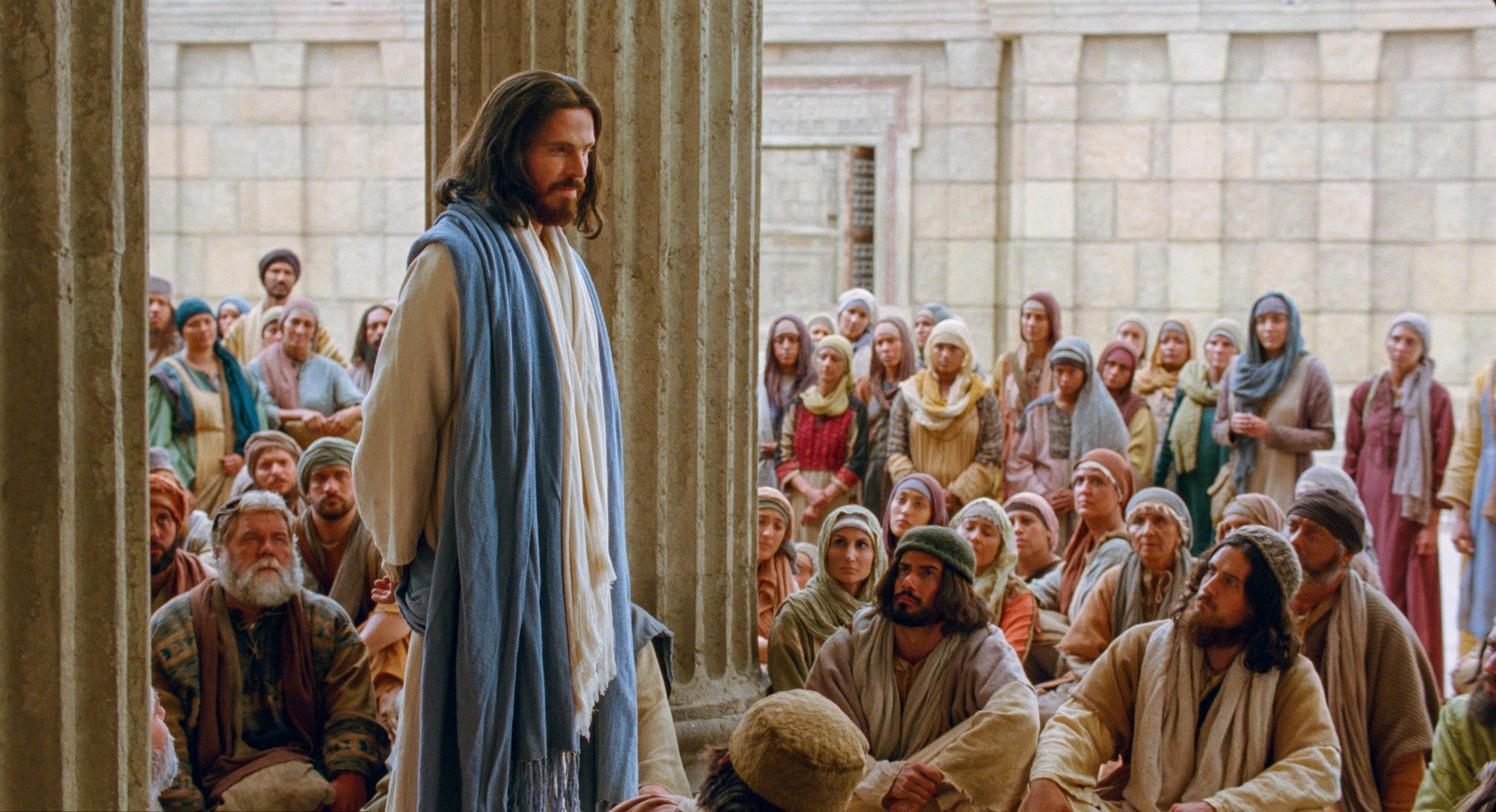
The New Covenant fulfilled an aspect of the Abrahamic Covenant, but it was not the final fulfillment. Under the New Covenant, Jesus is the “seed” by which “all the families of the earth shall be blessed” (Acts 3:25). Paul describes this as the “gospel itself” (Galatians 3:8). It was not a new concept though. Both 1 Chronicles 16 and Psalm 105 also describe the singular “seed of Israel” as distinct from the “Sons of Jacob, His chosen ones” and the salvation of the gentiles was prophesied by Moses (Deuteronomy 32:43), David (Psalm 67:2-4), and Isaiah (42:1–7). Jesus Himself told the Pharisees that “if you believed Moses, you would believe Me, for he wrote about Me” (John 5:46).
The Church and the New Covenant
What the Jewish leaders failed to see at Christ’s time was what Paul calls the “mystery” (Ephesians 3:6), that believing gentiles would be added to the Jewish religion on the basis of faith without needing to become proselytes and keep Jewish ceremonial laws. Instead, the dividing wall of “commandments contained in ordinances” (Ephesians 2:15) is broken down and there is no spiritual separation between believing Jews and gentiles. This fulfilled the promise God made to Abraham that through his seed all the earth would be blessed. Paul explains that it is through Christ that this promise is realized, writing that “in Christ Jesus the blessing of Abraham might come to the Gentiles” (Galatians 3:14).
Under the New Covenant, believers’ bodies become the temple of the Holy Spirit (1 Corinthians 6:19), which is also the sign of the New Covenant and symbolized by baptism (Ezekiel 36:27, 2 Corinthians 1:22, Matthew 28:19-20). The Passover meal gains new significance, symbolizing Christ’s atonement (1 Corinthians 5:7). Gentile believers are considered “Abraham’s descendants, heirs according to promise” (Galatians 3:29) without becoming Jewish proselytes. Paul also says “a Jew who is one inwardly” is circumcised “of the heart, by the Spirit” (Romans 2:29) and that the “Israel of God” is composed of both Jews and gentiles (Gal 6:16).
Gentiles who believe are now spiritual Jews. But, Paul also reminds us that ethnic Jews are not rejected in this arrangement because a remnant of believing Jews still exists and so does the promise of restoration.
Paul says that a remnant of spiritual Israelites always existed within ethnic Israel. The idea of a spiritual remnant would not have been a new concept to Jewish people at that time. Both Isaiah (Isaiah 10:22-23) and Micah (Micah 7:14-20) talked about this and stories like Elijah and the 7,000 faithful Israelites illustrated it. The prophet Micah talked about how God “passes over the rebellious act of the remnant of His possession” and would ultimately rule with a scepter, perform miracles, humble nations, and forgive Israel all their sins because of the “unchanging love to Abraham, Which [He] swore to [Israel’s] forefathers from the days of old.” (Micah 7:14-20).
These spiritual Jews, who were also ethnic Jews, retained their ethnic identity and heritage. Paul asks: “God has not rejected His people, has He? May it never be! For I too am an Israelite, a descendant of Abraham, of the tribe of Benjamin. God has not rejected His people whom He foreknew” (Romans 11:1-2). Thus Paul continued Jewish practices like circumcision (Acts 16:2), taking vows (Acts 18:18), and participating in temple purification rites (Acts 21:26). But he insisted that such observances were not required for salvation. The ceremonial distinctions of the Mosaic law were completely fulfilled in Christ, such as animal sacrifices for forgiveness (Hebrews 10:1-18) or dietary restrictions (Acts 10:13) that barred gentiles from participating in the covenant community.
This means that spiritual Israel, which is composed of the remnant of ethnic Israel along with gentile believers in Christ, are partakers of salvation and members of the church. It also means that God has a special plan for ethnic Israel yet to be fully completed. In Romans 11:25 Paul spoke of ethnic Israel as under a “partial hardening . . . until the fullness of the Gentiles [conversions] has come in” after which point he says: “all Israel will be saved” (11:26).
Jesus also predicted in the Olivet Discourse (Luke 21:24) that “Jerusalem will be trampled under food by the Gentiles until the times of the Gentiles are fulfilled.” After the Triumphal Entry, during His famous “Woe to the Pharisees” teaching Jesus states that the “house” of Jerusalem will be left desolate and that the religious establishment in Jerusalem will no longer see him until they proclaimed: “Blessed is He who comes in the name of the Lord!” (Matthew 23:39).
Church History and Israel
The consensus in the early church was to take these promises in a literal fashion as referring to a future national spiritual restoration. Justin Martyr (c. 100–165) believed God would gather “the people of the Jews” in Jerusalem where they would repent of their rejection of Christ. (First Apology [c. 155–157], ANF 1:180). Tertullian (c. 155–240) said God “will favour with His acceptance and blessing the circumcision also, even the race of Abraham, which by and by is to acknowledge Him” (Against Marcion [c. 207–208], ANF 3:448). For this reason he said Christians should “rejoice . . . at the restoration of Israel” because “the whole of our hope is intimately united with the remaining expectation of Israel” (Tertullian, On Modesty [c. 208–220], ANF 4:82).
Origen (c. 185–253) stated: “When the fullness of the Gentiles has come in and Israel comes to salvation at the end of time, then it will be the people which, although it existed long ago, will come at the last and complete the fullness of the Lord’s portion and inheritance” (Origen, Commentary on the Epistle to the Romans [c. 246], ACC: New Testament 6.291). Cyril of Jerusalem (c. 313–386), John Chrysostom (c. 347–407), Jerome (c. 347–420), and Augustine (354–430), among others, believed in a future mass conversion of Jews as promised.
Some early church fathers also expressed a belief in the restoration of the land promises to ethnic Israel or the creation of a third temple. Unlike the majority of church fathers, Irenaeus of Lyon (c. 130–202) applied the ingathering to all saved people, but he also believed that the Lord would construct the temple in Jerusalem where the antichrist would eventually sit. (Irenaeus of Lyon, Against Heresies [c. 180], Book V.25). Victorinus of Pettau (c. 230–304 AD), who wrote the first full commentary on Revelation (c. 270), also believed there would be a third temple (Victorinus, Commentary on the Apocalypse, ch. XIII.13).
Jerome (c. 347–420) believed that “in the latter days” God would gather the called remnant from the people of Judah” to Jerusalem. (Jerome, The Prophet Joel, in Corpus Christianorum: Series Latina [Turnhout, 1953-] 76, 198 [c. 400s]) Cyril of Alexandria (c. 376–444) likewise thought that “the entire multitude of [the diaspora of] Israel will possess the region of the nations” as a “sign of blessing from God.” (Cyril of Alexandria, Commentary on Obadiah [c. 420s], PG 71:593)
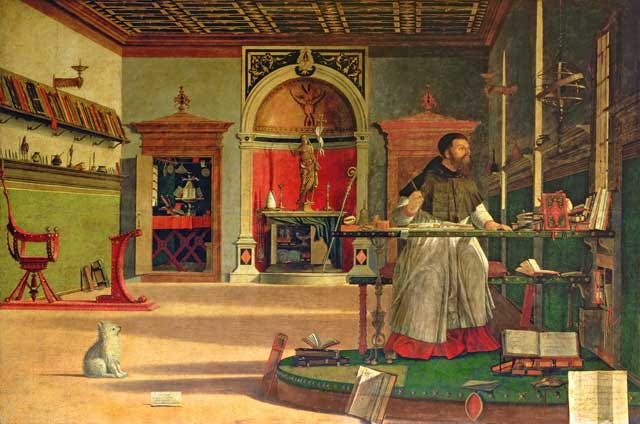
For most of church history, despite periods of persecution, there was a general political tolerance of Jews that was not afforded to pagans. This is may largely be due to the fact that Augustine taught that the existence of Judaism served as a living testament to the truth of Christianity both because their Bible foretold Christ and their condition in the diaspora confirmed the Bible’s judgment upon them (James Carroll, Constantine’s Sword: The Church and the Jews [2001], 218).
After the Fourth Lateran Council (1215), hostility toward religious Jews began to increase, particularly from the Dominicans and Franciscans, who did not see modern Jews as compatible with European society. (Donald M. Lewis, A Short History of Christian Zionism: From the Reformation to the Twenty-First Century [2021], 33–36)
Restorationism
While Jewish conversions had always taken place, a movement to focus more attention on reaching Jews with the gospel increased during the Reformation. Martin Bucer (1491–1551) and Theodore Beza (1519–1605) emphasized the promises to ethnic Israel in Romans 11. The Geneva Bible (1560) reinforced this interpretation. Soon, major religious figures in England such as Thomas Brightman (1562–1607), Sir Henry Finch (1558–1625), William Gouge (1575–1653), and John Milton (1608–1674), and came to believe in the future restoration of Jews in the diaspora to the land of Canaan. In 1655, Oliver Cromwell (1599–1658) convened the Whitehall Conference (1655), which readmitted Jews to England and positioned the nation as a divine instrument for Israel’s restoration.
Historian J. Van Den Berg said that “virtually all Dutch theologians of the seventeenth century [believed] ‘the whole of Israel’ indicated the fullness of the people of Israel ‘according to the flesh.’” Theologians in that tradition, such as Jacobus Koelman (1633-1695) also believed ethnic Jews would return to “their land” and “rebuild Jerusalem” (Eschatological Expectations, 145). Pierre Jurieu (1637-1713) said that “the kingdom of the converted Jews who, returned to the Holy Land, would govern the world together with Christ” (151).
German Pietists such as Philipp Jakob Spener (1635–1705) and August Hermann Francke (1663–1727) also took an active role in evangelizing Jews. The London Society for Promoting Christianity Amongst the Jews (1809), founded by German-Jewish convert Joseph Frey, embodied this focus on Jewish conversion. In fact, one of the society’s missionaries, Alexander McCaul (1799–1863) believed he contributed to the emergence of Reform Judaism, which rejects the Talmud’s authority, by refuting certain teachings in the Talmud (McCaul, The Old Paths, 1880).
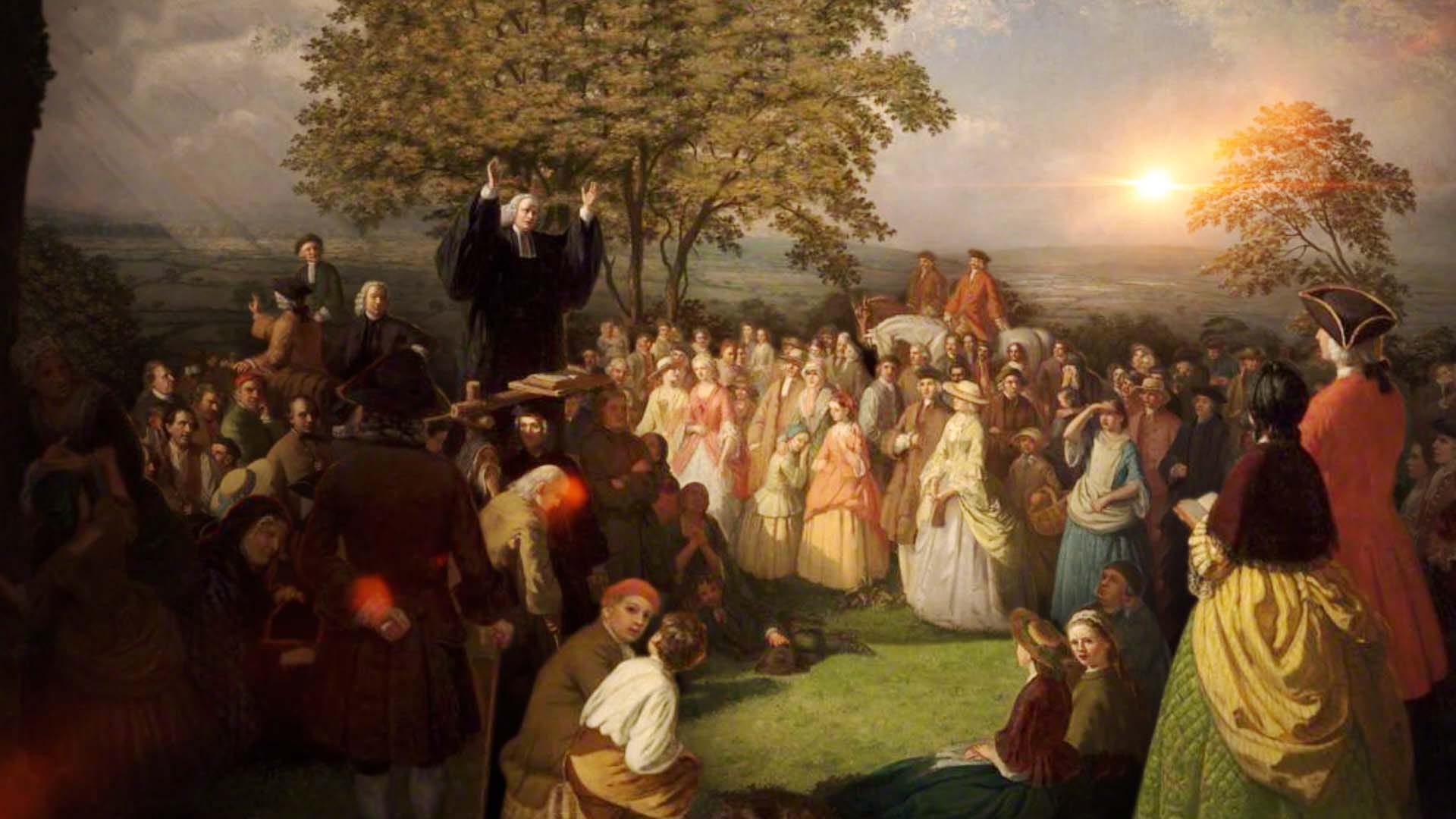
This focus on the prophetic significance of ethnic Jews and participation in Jewish evangelism led to “restorationism,” which expected a physical restoration of Jewish people to Palestine and was popular among Anglo-American theologians from the 18th century to the present. Church historian Ian Murray notes that “From the first quarter of the seventeenth century, belief in a future conversion of the Jews became commonplace among the English Puritans” (The Puritan Hope, 43).
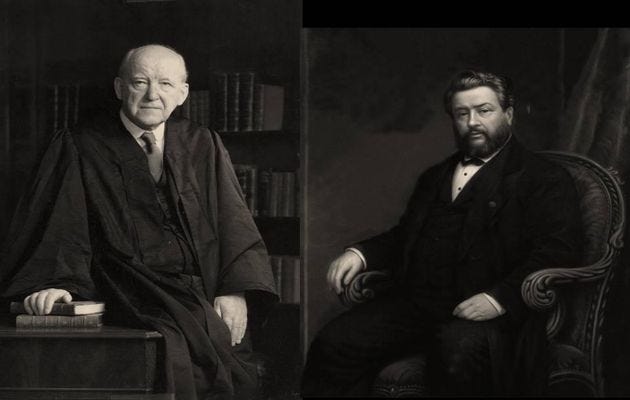
John Newton (1725–1807), the author of Amazing Grace, believed that God was working through political circumstances to miraculously preserve the existence of Jewish people and bring about their salvation” (The Works of the Reverend John Newton, 668). Major figures like Increase Mather (1639–1723), John Gill (1697–1771), Jonathan Edwards (1703–1758), J. C. Ryle (1816–1900), Charles Spurgeon (1834–1892), and Martyn Lloyd-Jones (1899–1981) all taught that the Jewish people would one day return to the land of Canaan.
Jonathan Edwards said: “It is the more evident, that the Jews will return to their own land again, because they never have yet possessed one quarter of that land, which was so often promised them.” (The Works of Jonathan Edwards: Apocalyptic Writings, 134) Charles Spurgeon said: “There shall be a political restoration of the Jews to their own land and to their own nationality; and then, secondly . . . a spiritual restoration, a conversion in fact” (”The Restoration and Conversion of the Jews,” in Spurgeon’s Sermons Volume 10, 272). Martyn Lloyd-Jones stated:
To me 1967, the year that the Jews occupied all of Jerusalem, was very crucial. Luke 21:43 is one of the most significant prophetic verses: ‘Jerusalem,’ it reads, ‘shall be trodden down of the Gentiles until the time of the Gentiles be fulfilled.’ It seems to me that that took place in 1967—something crucially important that had not occurred in 2,000 years. Luke 21:43 is one fixed point. But I am equally impressed by Romans 11 which speaks of a great spiritual return among the Jews before the end time. (Martyn Lloyd-Jones: “From Buckingham to Westminster,” Christianity Today, February 8, 1980 (Vol. 24, No. 3)
It is important to recognize at this point that there is a popular teaching online that sees the ingathering or restoration of the Jews as taking place before the destruction of the temple in 70 A.D. While Protestant theologians have disagreed as to whether the ingathering represented an ongoing process yet to be completed, as John Calvin believed, or a future national event, as Charles Hodge believed, or whether it constituted a Jewish return to the church, as R. L. Dabney believed, or a gathering as a separate nation, as J. C. Ryle believed, there are no clear Christian sources prior to the late twentieth century that explicitly teach this view. The idea that the ingathering took place before 70 A.D. appears to be a novel theological development.
There is also a popular idea today that Christian Zionism, or the belief that the Jewish people have a biblically mandated claim to their ancient homeland in the Middle East (Lewis, Christian Zionism, 3), is a heresy since it assumes the promises to Abraham are not all absorbed in the church. Yet many prominent theologians have held to a future restoration that includes the land promise, and it does not follow that, because those in Christ are one new spiritual man, God has revoked His promises to ethnic Israel. Such a conclusion would undermine Paul’s argument in Romans 9-11.
If the Abrahamic covenant still relates to ethnic Jews, which I believe Scripture teaches and church history supports, it is important for us, as mostly Gentile believers, to understand where our responsibilities lie.
Blessing and Cursing Israel
In Genesis 12:3, God tells Abraham: “And I will bless those who bless you, And the one who curses you I will curse.”
This same language is repeated in Genesis 27:29 when Isaac blesses Jacob. He says: “May peoples serve you, and nations bow down to you; be master of your brothers, and may your mother’s sons bow down to you. Cursed be those who curse you, and blessed be those who bless you.” The blessing and cursing dynamic is thus applied on a national level and is specifically applied to Esau in the book of Obadiah, where the nation that came from Esau (Edom) is cursed for its treatment of the nation of Israel.
The Spirit of God also applies this promise to all of ethnic Israel in Numbers 24, when Balaam the sorcerer is commissioned by Balak, king of Moab, to curse the Israelites as they are entering the land of Canaan. Instead, God speaks through Balaam and blesses the nation of Israel, proclaiming that they will defeat their enemies, prosper, and possess a kingdom with a king higher than Agag the Amalekite, who was the most powerful king in the region.
The grammatical idea here is general and means God will favor those who favor Israel and punish those who maliciously harm Israel.
Knowing how this applies first requires understanding whether it is currently in effect, and if so, whether it refers to ethnic Israel, the church, or the modern nation state. There is little discussion of this before the Reformation. Irenaeus (c. 130–202 AD) believed this promise never applied to Jacob directly but instead the future millennial kingdom (Against Heresies, 5.33). Methodius (d. c. 311 AD) thought it applied directly to Christ (Oration on the Psalms, section V). Yet, it is difficult to make sense of the way this promise was applied to national Israel in Numbers 24:9 under these interpretations.
Evangelism and Restoration
It is important to remember that the early church was primarily composed of ethnic Jews under Roman occupation. They lived at a time when many of their fellow countrymen attempted to revolt against the Romans and were punished for it first in 70 AD and then in the Bar Kokhba revolt (132–135/136 AD). The conditions for practically realizing a literal Davidic kingdom were not present, nor was there a feeling of blessing among Jews as they were oppressed and living as strangers in other regions.
As the church gradually spread and became more composed of gentiles the emphasis upon Jewish evangelism remained, but was not as fervent as it had been under Paul’s ministry. Jesus’ primary calling was to the “lost sheep of the house of Israel” (Matthew 15:24). Paul said the gospel itself was “first to the Jew first” (Romans 1:16) as he labored and prayed for their salvation. Justin Martyr (c. 100–165 AD) famously evangelized Jews in Dialogue with Trypho.
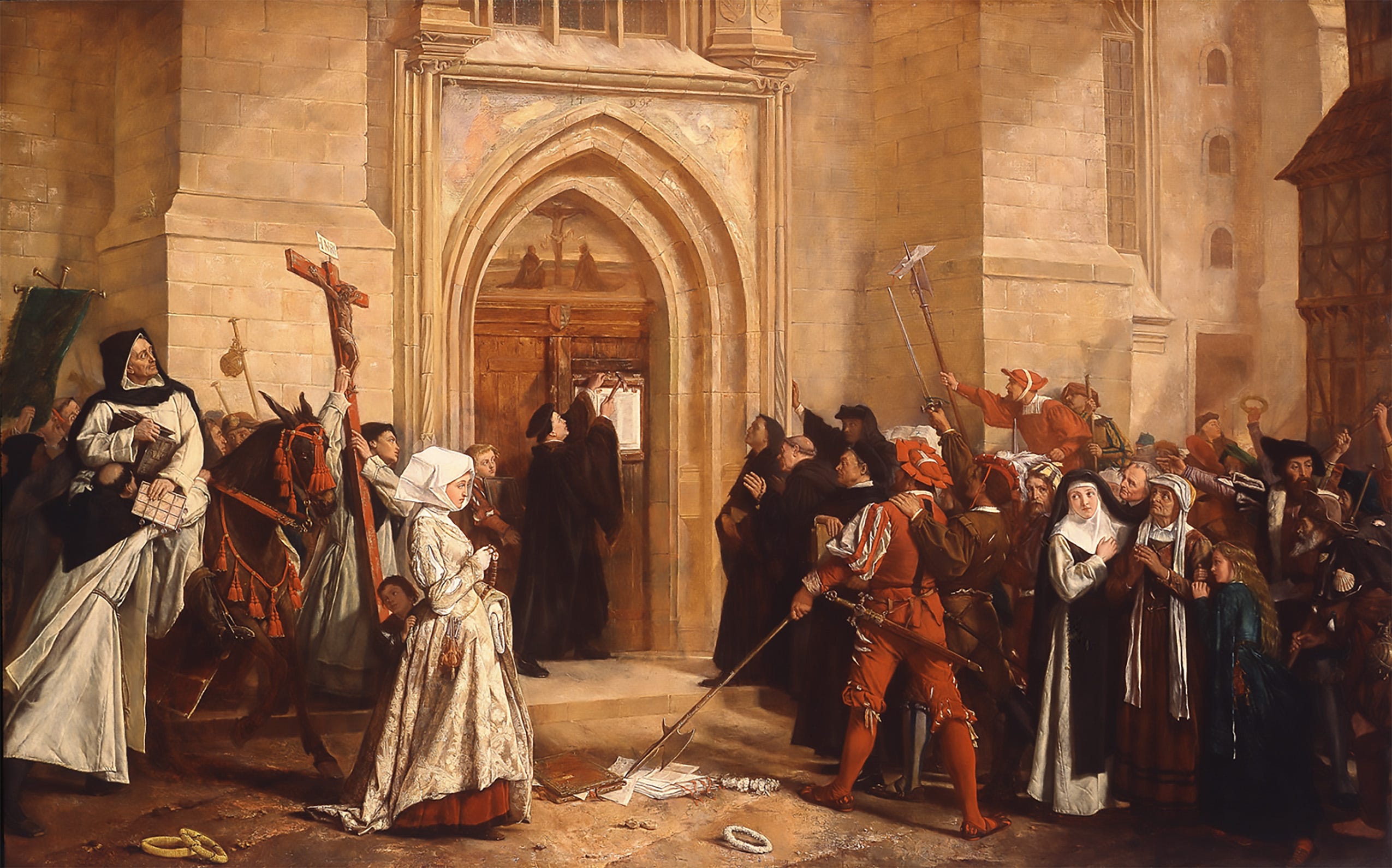
But as the church grew and the Jews were not converting in large numbers, attitudes started to change. Figures like Origen (c. 185–254 AD) and John Chrysostom (c. 349–407 AD) expressed frustration. Martin Luther (1483-1546 AD) is the most famous example. Early on he encouraged Jewish evangelism (Second Lectures on the Psalms, 1513–1515) and wrote books like That Jesus Christ Was Born a Jew (1523) in an attempt to convert them. But when they resisted and after he suffered personal loss from the death of his daughter Magdalena in 1542, he wrote On the Jews and Their Lies (1543). Yet, days before his death on February 18, 1546, he included a call to treat Jews “with Christian love and to pray for them, so that they might become converted and would receive the Lord” (Luther’s Works 51, 1).
As the Reformation spread, so did more literal interpretations of biblical texts along with an optimism that ethnic Jews would be restored to both their Messiah and their historic homeland. Interpretations that applied the blessing and cursing dynamic (or “protection clause”) to the way Christian countries treated ethnic Jews accompanied this optimism beginning around the 17th century.
Edward Nicholas (1593-1669), the Secretary of State to Charles I, believed England was under judgment for expelling the Jews in 1290 (Crome, Christian Zionism and English National Identity, 1600–1850, 2). Puritan pamphlets that supported Oliver Cromwell’s readmission of Jews to England spread the news that England should take advantage of God’s promise to Abraham to bless friends and curse enemies by dealing favorably with ethnic Jews (Crome, 99). Puritans Hugh Broughton and John Harrison tied this blessing specifically to evangelism (Crome, 39-41).
Eventually, Edward Bickersteth (1786–1850), an influential Anglican rector influenced the British government toward a favorable view of Jewish settlement in Palestine. In his book The Restoration of the Jews to Their Own Land (1841), he argued that while the Jews did not have a valid claim to the Holy Land given their general unbelief, Christian nations should nonetheless help them return to the region in fulfillment of the prophecy that they would experience spiritual restoration in the process and that the Christian nations who helped them accomplish this would prosper. He stated: “Any aid . . . that we can nationally render to their peaceful return (without injustice to others) . . . [God] will bring down blessings on the country rendering such aid.” (The Restoration of the Jews to Their Own Land, xcv–xcvi)
There were varied reasons in the nineteenth and twentieth centuries that diaspora Jews were permitted to immigrate to Palestine including this application of the protection clause, sympathy toward persecuted Jews, and the desires to reduce local Jewish populations by sending them to Palestine. Under the Turks and then the British, Jews in Europe joined Jews who had remained in the land culminating in the modern state of Israel in 1948.
What it Means
Prominent Protestant theologians like John Calvin and Matthew Henry interpreted the protection clause as applying to the church, since the children of Abraham by faith constitute the “Israel of God.” However, the New Testament writers do not apply this language to the church directly. Instead, the church is promised ultimate victory over hell (Matthew 16:18) but she endures persecution despite faithful conduct until Christ returns (2 Timothy 3:12, John 15:20; 1 Peter 4:12–13).
Throughout the Old Testament, pagan leaders such as Abimelech (Genesis 20:14-18), Pharaoh (Genesis 47:7-10), and Cyrus (Isaiah 45:1-5) explicitly receive blessing for their treatment of Israel, even in exile. From Cyrus’s decree allowing a return to Jerusalem (538/537 BC) to national repentance under Ezra (458/457 BC) is a period of about eighty years.
Without knowing exactly how God is working in current circumstances, but recognizing the possibility that He could be setting events in sequence that will culminate in a full restoration for ethnic Israel as well as the church’s final spiritual victory, here are some practical conclusions:
In both Genesis 12 and Numbers 24 the promise to bless and curse is applied to Abraham and then to Israel before settlement in Canaan. If this applies today, it would apply to the people of Israel broadly, most of whom are not living in the modern nation state.
At the very least, blessing Israel would include evangelism, since the way God blesses both Israel and Gentiles, who are grafted into Israel’s spiritual root, is through what Peter in Acts 3:25 calls “turning every one of you from your wickedness.” Prayer and evangelism are the main ways Christians can bless Israel today, because it is in connection to their Messiah that they will receive all available blessings.
The Larger Westminster Catechism encourages believers to “pray that the kingdom of sin and Satan may be destroyed, the gospel propagated throughout the world, the Jews called, and the fullness of the Gentiles brought in.” Many of our Protestant forebears emphasized this special ministry. Matthew Henry said “[Jews] should be brought to believe in Christ the true Messiah whom they crucified, and be incorporated in the Christian church, and become one sheep-fold with the Gentiles under Christ the great Shepherd” (A Commentary upon the Holy Bible, 80). Spurgeon believed that Christians “do not attach sufficient importance to the restoration of the Jews” (The Church of Christ, 1855) and said that “those who work among the seed of Israel . . . have the honor of having helped to gather together the ancient nation to which our Lord himself belonged” (The Whole-Heartedness of God in Blessing His People, 1888).
There is good reason to pray the way Paul did in Romans 10:1 that Jewish people would be saved with an eye toward the prophetic significance of Romans 11:25-27 where the fulness of the gentiles comes in and all Israel is saved. In 1649, John Owen preached to the House of Commons and mentioned the “millions of prayers” on behalf of “the bringing home of [God’s] ancient people to be one fold with the fulness of the Gentiles, raising up the tabernacle of David, and building it as in days of old” (The shaking and translating of heaven and earth).
There is nothing in Scripture requiring Christians or Christian-influenced countries to support the modern nation state of Israel politically in order to receive a blessing. It is unknown whether or not the state of Israel’s success is leading to a spiritual restoration.
However, it is impressive that the modern state of Israel exists in the first place and has been victorious against overwhelming odds numerous times in seemingly miraculous ways. It is natural for Christians to have an affinity for the country that protects biblical sites and shares a respect for a common historical and biblical heritage. It is also possibly strategic to maintain an alliance that offers stable benefits in regional dominance. But it is not known whether or not this will, like the eighty year process that brought about repentance during the return from the Babylonian captivity, also bring about repentance.

I have not mentioned any dispensational theologians yet, but I will mention two who did not believe the modern state of Israel qualified as the restoration because of their lack of repentance. Charles Ryrie, who compiled the popular Ryrie Study Bible, said that while the modern state of Israel could be leading to a future fulfillment of prophecy, the present situation was a “political and or racial and or religious phenomenon, not a spiritual one.” The popular Presbyterian pastor and radio host J. Vernon McGee also claimed that Israel had “never returned to the land” because they had not returned to God.
Though ultra orthodox Jews disagree with Christian theologians on many matters, they also share a similar critique of the modern state of Israel, which is why many of them refuse to serve in the IDF.
Americans’ primary concern should be the protection, preservation, and stewardship of their own country as ordained by God for all nations. Only if an alliance with Israel fits into this can it be thought of as prudent under a Christian framework, especially without a divine assurance that God has ordained the current government to lead to a restoration under the Abrahamic Covenant.
What is clear and expressly forbidden under the protection clause, is hating Jewish people. In Deuteronomy 30:7 God says that He “will inflict all these curses on your enemies and on those who hate you, who persecuted you.” In Romans 11:18-20, Paul says: “Do not be arrogant toward the branches [Jews]; but if you are arrogant, remember that it is not you who supports the root, but the root supports you. You will say then, ‘Branches were broken off so that I might be grafted in.’ Quite right, they were broken off for their unbelief, but you stand by your faith. Do not be conceited, but fear.” Paul goes on in verse 28 to say that even unbelieving Jews “are beloved [by God] for the sake of the fathers.” This is the only nation in the Bible treated this way.
In other words, hating, being arrogant toward, and persecuting Jews is forbidden in Scripture. Yet, currently on social media, even among self-proclaiming Christians, I cannot think of a group more rhetorically provoked, lied about, and subjected to unequal weights and measures than Jewish people. There are obviously legitimate reasons to oppose Jewish people in justified ways when they pursue public evil, just like any other group, but that is not what I am referring to. I do not care how popular hatred for Jews becomes, I do not want that on my conscience before God.
This is the lesson that Haman learned while Jews were under judgment in the Assyrian Empire, as recorded in the book of Esther. He tried to destroy the remaining Jews who had not to return to Canaan, but still lived in Assyria and he ended up forfeiting his life. This serves as a warning today for what it means to curse Israel.
Who are the Real Jews?
In light of the recent war between Israel and Gazans, there is a movement to discredit Jewish claims to Palestine by showing through DNA research that Palestinian Christians are more genetically linked to ancient Levantine populations than their Jewish neighbors are. These studies are not establishing lineage through Isaac, but rather connection to Bronze and Iron Age populations from 3,000–4,000 years ago, which would include Canaanites, Philistines, and various Semitic groups. There is also increasing popularity to the claims that modern Jews are somehow not really Jews at all, but rather Eastern European Khazars or Edomites.
This is a worthwhile discussion for Christians, because if there are no modern Jews, then this has implications for our theology. It would mean that Paul was wrong in Romans 11 because there would be no pending “fullness of the Gentiles” or salvation for Israel. Jews would have died under a partial hardening. The prophets Jeremiah (Jeremiah 31:31–34) and Ezekiel (Ezekiel 36–37) would also be wrong to associate this salvation with a future kingdom. There would be no valley of dry bones (Ezekiel 37) and no ingathering to Jerusalem (Zechariah 12–14). This would challenge the accuracy of Scripture directly.
First, many of the theories today about Jewish identity, including ideas that modern Jews are imposters who are actually Eastern European Khazars or Edomite descendants, do not exist before the 19th century and were not popularized until after World War II. The Khazar theory was first proposed by Ernest Renan, a higher critic who challenged orthodox teaching. The Edomite theories are found in British Israelism, Black Hebrew Israelism, and white identitarian circles. The first time I encountered this was as a teenager evangelizing in NYC around Black Hebrew Israelites.
Throughout church history, no one questioned who the Jews were, not even Martin Luther. They are denoted by both ancestry and custom. A genetic study (Skorecki et al., 1997, Nature, with follow-up in Thomas et al., 1998) on the Cohens and Levites traces them both back to a “Y-chromosomal Aaron” who lived 3,000 years ago. Half of Ashkenazi ancestry comes from the Levantine region (according to this study). Sephardic Jews, who make up half of Israel’s population, are more closely tied to the Levant, with most studies showing 50–70% Levantine ancestry.
It is also important to remember that while genealogical lines are tremendously important, Israel was never fully monolithic. The mixed multitude that left Egypt, along with biblical figures like Caleb, Rahab, Doeg the Edomite, Ruth, and Uriah the Hittite, shows there was a practice of assimilation into Israel’s bloodline.
This is true for most populations throughout history. For example, modern Persians have significant Turkic admixture (20–40%). Yet, they still think of themselves as Persian. English people are a fusion of various groups such as Celts, Anglo-Saxons, Normans, Romans, and Vikings. The incredible thing about Jews is how they have held on to their identity by maintaining a close cultural connection despite 2,000 years of captivity.
The Jews that Paul was concerned about evangelizing were kinsmen according to the flesh, but they also kept a religious element in their “zeal for God, but not according to knowledge” (Romans 10:2). Paul was talking about branches who were broken off, who had forsaken their Messiah, like modern Jews do. Thus, the difficulty of recognizing modern Jews has always had a religious component that makes it a complicated identity, but no one ever considered that a major problem until recently.
For those who want to go deeper on the genetics, I recommend checking out my friend Razib Khan’s Substack. He is not Jewish or religious and does not share Christian theological assumptions, but he does good work in genetics.
Conclusion and Warning
As we have seen throughout this reflection on biblical covenants, church history, and practical ethics, it is reasonable to conclude that God’s plan for the Jewish people includes a restoration in fulfillment of God’s promise to Abraham. The nature of this restoration has been conceived of in various ways by Christian theologians, but there is broad agreement that it will happen, and Christians bear a responsibility in extending evangelistic kindness and withholding hatred toward Jews. Part of the reason this must be said, in addition to reinforcing essential doctrines such as the truth of Scripture, the character of God in keeping his promises, and the human identity of the Messiah as the Lion of the Tribe of Judah, is that there is a developing attack online that undermines these doctrines.
There are four emerging elements that Christians who adopt online anti-Jewish ideology seem to start embracing.
First, there is a belief that Jews presently represent a universal evil, with some going so far as to claim they are without the hope of restoration. Some refer to this as a permanent supercessionism. We see this reinforced in reinterpretations of passages such as 1 John 2, 1 Thessalonians 2, and Revelation 2–3 to claim that the spirit of anti-Christ is unique to Judaism, that the Jews are the enemies of mankind in a universal cultural sense, and that the synagogue of Satan encompasses all non-Christian Jews. Some voices claim the term “Jews” is also used in an exclusively negative sense in Scripture, such as in John’s writings. This approach to Scripture threatens our hermeneutic more than it does anything else.
1 John is writing to false teachers who were previously part of the Christian community but were never truly believers (1 John 2:19). These false teachers denied the incarnation and that “Jesus is the Christ,” but still claimed to follow Him (1 John 2:22, 1 John 4:2–3) as Christians (1 John 3:14). They are able to deceive believers precisely because they claim to be believers themselves (1 John 2:26). While it is true that Judaizers threaten the gospel, the proto-Gnostic false teachers of 1 John pose a unique deception that John wanted us to be aware of. The spirit of anti-Christ is a false Christ who cannot save, and many religious cults commit the same kinds of Christological errors that those in 1 John did.
Paul, in 1 Thessalonians 2:15–16, claims that the Jews who “killed the Lord Jesus and the prophets, and drove us out . . . are not pleasing to God, but hostile to all men, hindering us from speaking to the Gentiles so that they may be saved.” Verse 16 continues by foreshadowing how they will be judged in the impending destruction of Jerusalem. However, in verse 14, Paul tells the Thessalonian Christian Gentiles that “they also endured the same sufferings at the hands of their own countrymen, even as they did from the Jews.” In other words, Paul is talking about a specific group of Jews who prevented the spread of the gospel and were punished for it, just as Gentiles in Thessalonica prevented the spread of the gospel. It is in this sense that they are “hostile to all men,” not in a universal sense because of participation in modern liberal causes or social influence.
In Revelation 2 and 3, John writes about the “synagogue of Satan” persecuting the churches of Smyrna and Philadelphia. John attacks them by claiming that they say they are Jews, but they are not (Rev 2:9; Rev 3:9). This is best understood as a denial of religious Jews spiritual legitimacy, as evidenced by the fact that they are attacking the true Jewish religion, which is Christianity. John is encouraging these churches under persecution from Jews that Satan is the one ultimately motivating these circumstances. It is not a universal statement that all ethnic Jews are being used by Satan to persecute the church.

The term “Jew” is used in various ways throughout John’s writings to describe unbelieving Jewish leaders (John 5:16–18; John 7:1; John 9:18), unbelieving Jews (John 6:41; John 8:48), believing Jews (John 8:31; John 11:45; John 12:11), and Jesus himself (John 4:9). John says that salvation is from the Jews in John 4:22. So, to claim that the term “Jews” is always used in a negative sense is not accurate.
There are plenty of passages refuting the Judaizer heresy and demonstrating that Christianity is the fulfillment of Jewish prophecies despite their denial. It is best to use those passages, in the ways they were applied, when refuting modern Judaism. The open distortion of New Testament passages in order to use them as universal cudgels against ethnic Jews reveals a different motivation, though.
This brings us to the second concerning element. There seems to be a lack of Jewish evangelism while, simultaneously, there is a rise in hatred for Jews. This is a peculiar situation, especially in light of the fact that even figures like John Chrysostom and Martin Luther never completely gave up in working toward Jewish conversions. A concern for erroneous or dangerous beliefs that religious Jews hold should produce a zeal reflecting Jesus’ and Paul’s motivation to share the gospel with Jews. The absence of this focus is revealing, and we cannot cater to it.
I live not far from Hasidic communities that have caused local frustrations for the ways they politically operate. There are efforts to prevent them from taking advantage of religious loopholes for tax purposes and to counter their political influence. These are perfectly understandable actions for Christians wishing to preserve the character of their communities. But part of our interactions, even when Jewish groups pose social threats to the way of life we cherish, is to continue to invite them into our churches and as co-heirs of Christ (Galatians 3:29).
The third troubling element of developing online anti-Jewish ideology among Christians is the tenuous way in which it treats Christ’s Jewish identity and return. Not everyone engaged in the first two elements engages in this, but I have started to see multiple examples of a shift toward accommodating the belief that Christ was not Jewish. There is also a growing interest in a version of Preterism that claims Christ’s return happened in AD 70, which leads to the belief that there are no promises left for the Jews.
Both of these claims are wildly out of step with orthodox confessional teaching though. The Nicene and Apostle’s Creeds affirm the belief that Christ is of the Virgin Mary and roots his identity in Jewish fulfillment of prophecy. The Belgic Confession of Faith (Article 18) explicitly confesses that “Christ is a fruit of the loins of David according to the flesh . . . a branch of David; a shoot of the root of Jesse; sprung from the tribe of Judah; descended from the Jews according to the flesh; of the seed of Abraham.” The Second Helvetic Confession reiterates this as does the Westminster Confession of Faith. All of these creeds and confessions also consistently affirm a future Second Coming, bodily resurrection, and final judgment yet to occur.
The fourth element of this recent anti-Jewish push involves a chipping away at the authority of the Old Testament, whether it is the denial of the authority of the Hebrew Old Testament, which Jesus would have honored (Luke 4:16-21), teaching that Old Testament ethics are somehow in conflict with the New Testament, such as claiming the Jews were bloodthirsty and administered group punishment, but the New Testament teaches judging individuals and being kind, or complete denials of the ongoing authority of the Old Testament, which has not taken place except among those who have converted away from Christianity because of its Jewish flavor, but if history is any guide, will likely happen if unchallenged.
I have a folder on my computer now of former Christians who deconstructed because they claim that Christianity is too Jewish.
So where does that leave us? We should remember what God told Moses in Deuteronomy 4:30–31: “In the latter days you will return to the Lord your God and listen to His voice. For the Lord your God is a compassionate God; He will not fail you nor destroy you nor forget the covenant with your fathers which He swore to them.”
As Gentile believers, we ought to recognize what Paul argued in Romans 11, that the same God who has not revoked his promises to Israel will not revoke his promises to us (Romans 11:29: “For the gifts and the calling of God are irrevocable”). We need to stand with our Christian forefathers in defense of God’s word, Christ’s humanity, and our responsibility to bless Israel with the gospel.
— This article first appeared at From the Desk of Jon Harris, which you should follow.
See Also:

Recent Articles:


 | A guest post by
|
Well done
You assumed what you needed to prove.
Romans 9 explicitly says “not all who are descended from Israel belong to Israel,” for it is those who are children of the promise, not ethnicity who belong to the Lord. Galatians 3 proves Christ as the sole heir of Abraham, but Christ is pleased to share this inheritance with His sheep. He alone is the true fulfillment of the promise.
Romans 11 does not require a future national restoration, especially considering when it was written. “All Israel will be saved” can naturally refer to the full number of God’s elect (Jew and Gentile together), or to a large-scale Jewish conversion into the Church. The idea of a separate covenantal program or land promise must be presupposed when studying this text.
The appeal to an “unconditional” land covenant ignores how the New Testament expands inheritance language. Abraham wasn't promised just Judea and Samaria, but "the world." How hypocritical of us to focus on his minor blessing and not his greater blessing! Physical land was actually fulfilled in Joshua 21/23, stating explicitly "So the Lord gave Israel all the land he had sworn to give their ancestors... not one of all the Lord’s good promises to Israel failed; every one was fulfilled." What remains is a far greater, typological fulfillment of the coming Kingdom.
Also, your overview of Church history is highly selective. Overall, the dominant Roman Catholic, EO, and Reformed positions understand Israel’s promises as finally fulfilled in the Church.
Last, there exists no command to treat modern Israel as theologically distinct. The Church is now the “holy nation” (1 Peter 2:9). Ethnic distinction has no bearing on Christ's covenant.
Christ is the promised seed of Abraham and through His shared inheritance are God's people blessed. There is but one people of God.