


This analysis is free, but with Premium Membership you get MORE. Join today.
Our full discussion transcribed after the break:
by Rod D. Martin and Jeff Schreve
September 4, 2026
My discussion on American Family Radio’s "Real Truth for Today with Pastor Jeff Schreve". Sign up NOW for the AFR YouTube channel and don’t miss a single episode!
Jeff and I discuss:
How China is weaponizing (and funding) America’s data-center panic
Why we could build ten times more compute and still fall short
The Texas answer: Bring your own power. Bring your own coolant.
Why Elon plans to put the cloud in orbit
PLUS the Fourth Amendment answer to Flock cameras and mass surveillance
It’s 14 minutes you won’t want to miss!
Nothing is more important than educating the next generation. My friends at the Herzog Foundation are expanding access to Christian education. Watch this short clip and visit HerzogFoundation.com
Our Full Discussion:
Jeff Schreve: Well, it is a privilege for me to welcome to the program a familiar guest, Rod Martin, founder and CEO of Martin Capital, anti-communist, part of the team that started PayPal. And he has his website, RodMartin.org. We want to talk about a host of things that you’ve been reading about in the news.
Rod, welcome to the program this morning.
Rod D. Martin: It’s great to be here, as always.
Jeff Schreve: Well, I appreciate you coming on, my friend. Right off the bat, I want to talk to you about something that’s big news in Texarkana, Texas, and that is data centers.
When I was a kid growing up, my dad worked for the Shell Data Center in Menlo Park, California. Nobody thought much about it. I think that thing was probably built in the ‘60s or something like that. This was in the late ‘60s, where he worked when he worked there in the early ‘70s.
Data centers have been around for a long time, but they’ve become a hot-button topic in the last couple of years. So I’ll just ask you a very open question, Rod, because I know you’ve touched on this before and written articles about it: What’s the big deal about the data center? Is it a noise pollutant, a water guzzler, an energy consumer? Is it something that we need to shun, or we need to embrace?
Rod D. Martin: Mostly, it’s a threat to China. And China is spending a ton of money to spread propaganda in the United States to stir people up and scare them.
It’s exactly as you said. We’ve had data centers since before I was born. It is true we’re building more now, because we’re using more compute now.
You used to have movies on VCR tapes or on DVDs. Now we stream all of them. You used to watch broadcast TV. I can’t remember when I last watched broadcast TV. If I watch broadcast TV, I stream it through YouTube or something. All of that requires data centers. This interview this morning is using Zoom, which utilizes data centers. There is just nothing we do now that doesn’t require them.
So if you think, “Oh, there’s all this explosive growth in data centers,” yes, it’s exactly the same as the explosive growth in the need for oil once somebody invented the car.
For decades, they were producing oil mostly for kerosene lamps. Who the heck has a kerosene lamp now? And they took the gasoline that came out of the refining process and just threw it on the ground. Nobody wanted it. Nobody could buy it. Now it’s the most important issue for most people all the time: “Got to get that price of gas down.” Well, that means you’ve got to refine a lot more oil.

If people want to do all the things they obviously want to do, they absolutely have to have more data centers, because basically a data center is just a great big server farm. When you say that you’re keeping your files in the cloud, what do you think the cloud is? An actual cloud up in the sky? No, it’s a data center. “Cloud” is just marketing terminology, and we’ve been using it for 20 years. But as you point out, we were using data centers for decades before that: we just hadn’t come up with the term “cloud” yet.
This is something we all use. We all need. And as AI becomes much, much more important to, for example, shooting down incoming missiles that have been fired at a school, preventing some kind of terrorist incident, or whatever it is that you need from a defense perspective, AI is essential.

The enemy has it. The enemy is shooting forward really fast on it, and they want to use our political system to disrupt our ability to keep up with them. That’s something we need to combat.
Building Compute Without Burdening Communities
Rod D. Martin: I’ll just say, in Texarkana, you guys should be happier than anybody, because Governor Greg Abbott just announced rules that require these things to bring their own coolant, bring their own power, and do everything right, where it is entirely beneficial to and not at all burdensome on the local communities. We’ve done a lot of that here in Florida too.
You’re absolutely right to want these things to be within reasonable constraints. The President’s talked about that too. He’s got an executive order to make sure that happens.
But the truth is, when people talk about water, we’ve been building data centers for 40 years that doesn’t use any water, or that use a limited supply of water that it takes in basically once and just reuses over and over again. You can air-cool these things. You don’t have to use water at all. You do that by air-conditioning the place and really pumping up the chillers. That takes more electricity, so sometimes water-cooled makes more sense, but it’s a choice.

The President wants to make them build their own power stations. And a lot of them are already doing exactly that.
There are things we want to do to make this better for everybody, but we don’t want to throw the baby out with the bathwater. This is a really, really important civilizational advance.
A Market Starved for Compute
Jeff Schreve: Okay, Rod, this might be a dumb question, but I’m thinking in my mind: You’re Company X and you build a data center. How do you sell what you just built? How do you market that? We talk about the cloud. It’s kind of nebulous in terms of, “I build a data center. Who’s buying from me?”
Rod D. Martin: Oh my gosh, we don’t have enough. That’s the thing. And it’s right that you should mention X. Although you meant it as a variable, I’m going to mean it as a company.
SpaceX built the biggest data center in the world, and they couldn’t use all the capacity immediately, so they just rented it out to one of the other AI companies. They’re going to make about two billion dollars a month just off of that. I mean, it’s an insane amount of money, and it’s only going to grow. It’s so much so that, in five years, a rather large portion of SpaceX’s entire monthly earnings is going to be coming from renting out compute in these data centers as the demand just skyrockets.
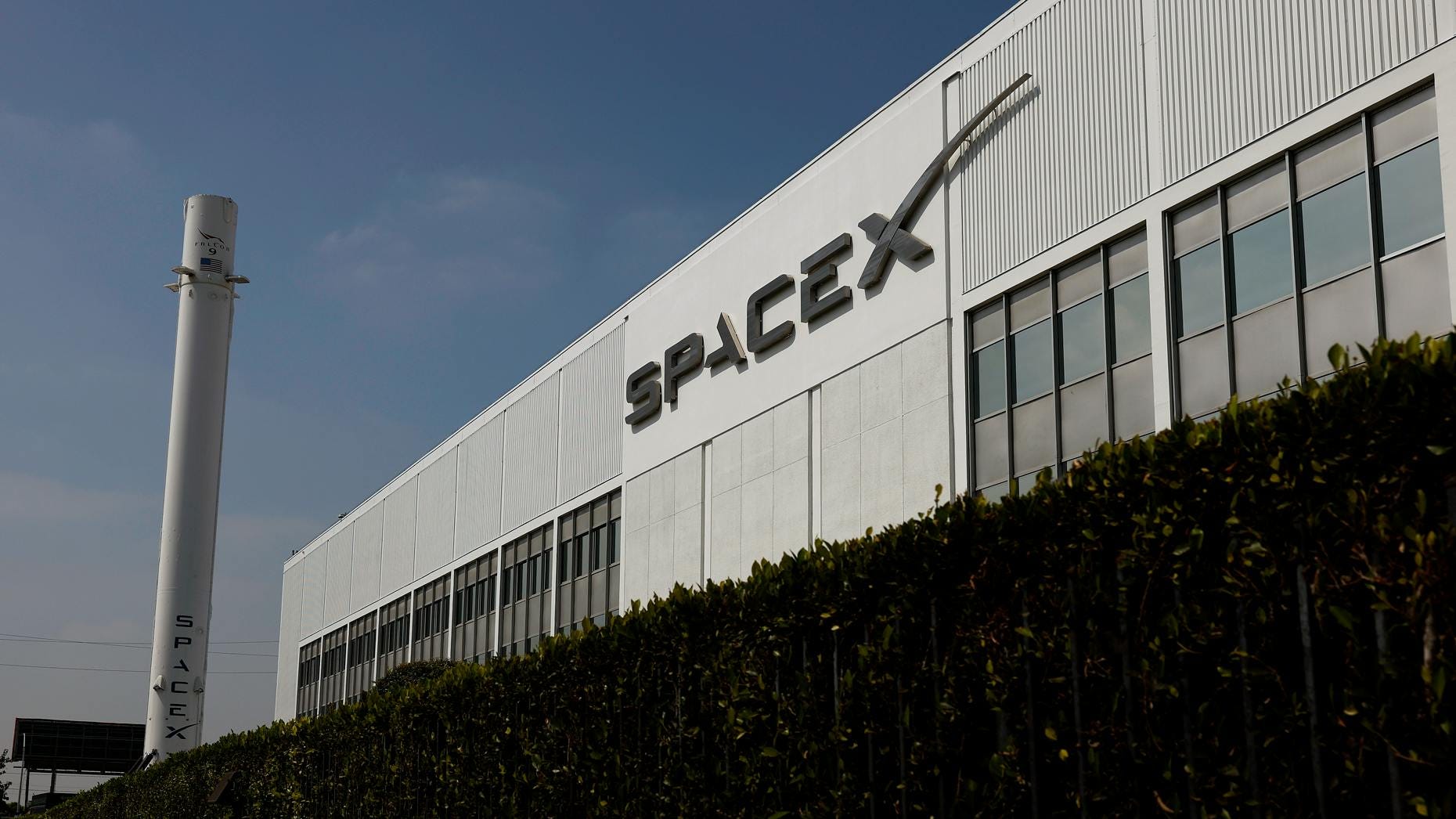
This is actually a really good point. I’m so glad you brought it up. People seem to think that these things are disconnected from the rest of reality. No. Nobody is building a data center if it isn’t needed. Nobody is going to invest that kind of money if it isn’t profitable. And the truth is, we could build ten times as many as we are and not meet the demand that’s going to exist just five years away.
Data Centers in Space?
Rod D. Martin: This is exactly why Elon, by the way, is planning to build data centers in orbit, which ought to make everybody happy. But I’m sure they’ll find a reason why that’s a bad idea too.
In orbit, you’ve got unlimited solar power. Solar isn’t that smart on Earth a lot of the time, because we have this crazy new thing called nighttime, and we have rainstorms, and we have all these things that obscure the sun. In space, you can make it line-of-sight to the sun, where you just convert power all day long for the cost of the equipment to generate it. That’s way cheaper than building a nuclear plant in Memphis or something.
So that’s the future. I know a lot of people thought Elon was just talking out of his hat on that. Well, first, you should never, ever do that, because his timeline is sometimes wrong, but his predictions are almost always right.

Second, Morgan Stanley came in and did a big analysis of this data-centers-in-orbit idea, and they confirmed it 100 percent. They’re like, “The technology exists or is currently being developed to do this en masse at an economical price, and it’s going to solve everybody’s problem.”
The data centers we’re building right now? Of course we need them. Of course we will continue to need them. But that massive spike in demand is going to increasingly be absorbed and served from space, where nobody currently lives and nobody has to worry about what it does to their community.
Build the Future or Become a Colony
Jeff Schreve: Okay, so if we say as Americans, “Hey, we don’t want that. We don’t want these data centers,” and the activists get going and vote it down and that kind of thing, what is the result? America just gets left in the dust?
Rod D. Martin: Yes, exactly that. I mean, it’s like if we just decided not to industrialize during the Industrial Revolution. It’s the exact equivalent of saying, “Well, we don’t want steel mills. We don’t want cars. We don’t want phones. We want to live just like Little House on the Prairie.”
Well, guess what? The rest of the world isn’t going to make that decision. So the world races past us, and eventually we’re their colony. It’s just dumb. It’s needless. It’s pointless.
Privacy Is a Constitutional Question
Rod D. Martin: The one thing that I think people are really worked up about that really has a lot of validity is the use of Flock cameras and other surveillance systems, all of which are data-center-reliant, to do mass surveillance on the American people.
But that’s not a technology issue. If you have an issue with Flock cameras, that’s a Fourth Amendment question. That’s a Fifth Amendment question. Litigate it.
The Supreme Court on which Donald Trump appointed a majority came down with a fantastic ruling just this year limiting the use of technology for exactly that sort of thing because of Fourth Amendment protections, which prior courts hadn’t been willing to apply.
So the solution to Flock cameras isn’t getting rid of data centers. That’s like trying to get rid of murderers by eliminating oxygen. That’s just silly.
The solution here is stronger privacy protections in the law. And we have them in our Constitution. We just haven’t sufficiently applied them to modern technology, and the Supreme Court is starting to catch up.
Jeff Schreve: Well, we're talking to Rod Martin. When we come back from the break, we'll be taking your calls at 888-589-8840. If you have a question or comment, you're listening to Real Truth for Today with Pastor Jeff Schreve here on American Family Radio. We'll be right back after the break.


