


This analysis is free, but with Premium Membership you get MORE. Join today.
by Rod D. Martin
September 2, 2026
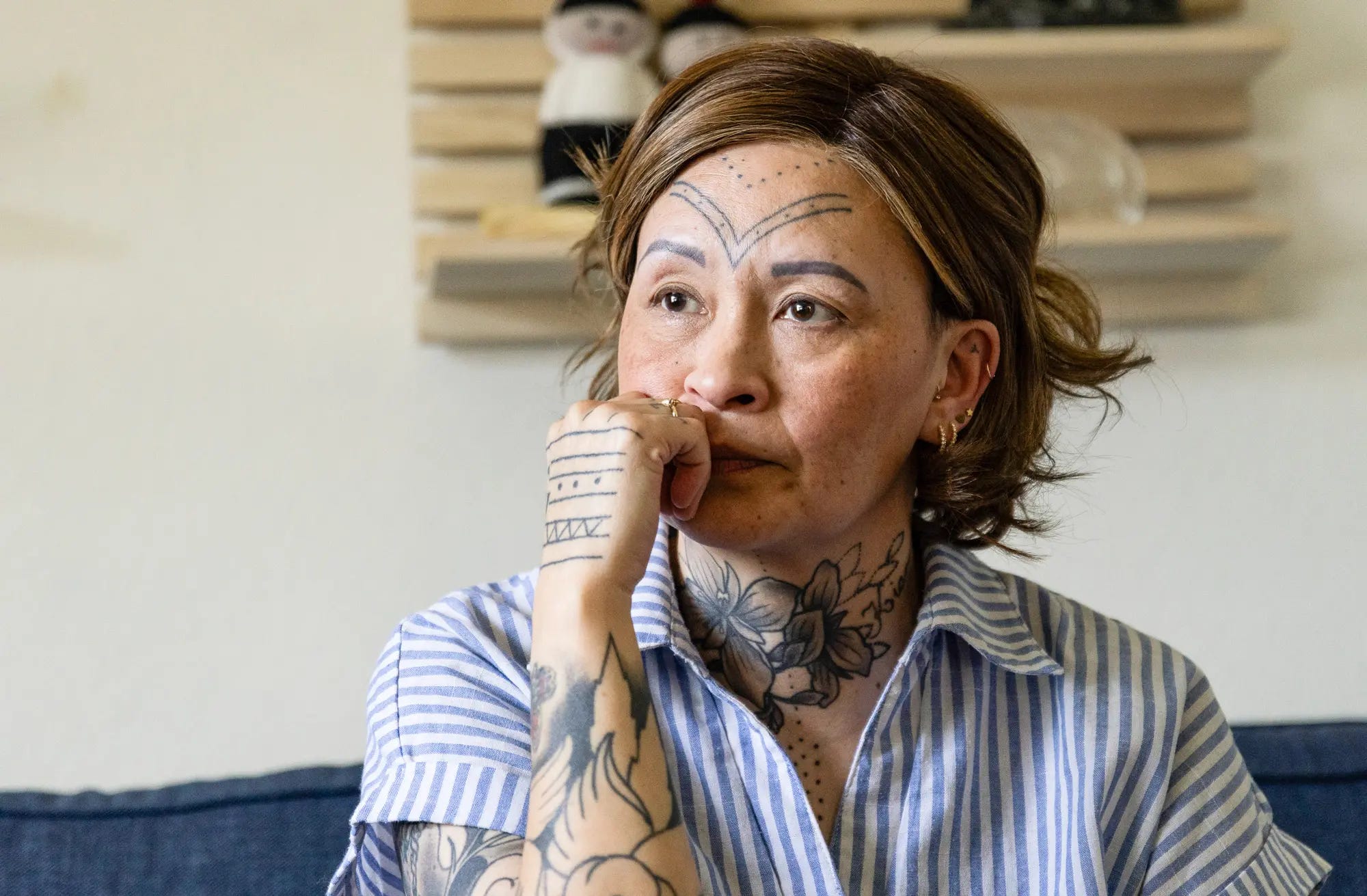
Amarok Petersen was 13 years old when Danish doctors implanted an IUD in her body. No one told her. She discovered it only when she was 27, after years of severe uterine problems, when another doctor finally found the device. By then, the choice to have children had been stolen from her. Years later, she learned that doctors had also removed her fallopian tubes without telling her.
“The Danes don’t see us as humans,” she said.
Last week, two expert investigations put the weight of an official record behind what Petersen and thousands of other Greenlandic women — out of a total population of just 57,000 — had tried to tell for years. Denmark’s treatment of Greenlanders was not “benevolent stewardship” marred by “a handful of mistakes.” It was colonial abuse inflicted on their bodies, their children, their families and their sovereignty.
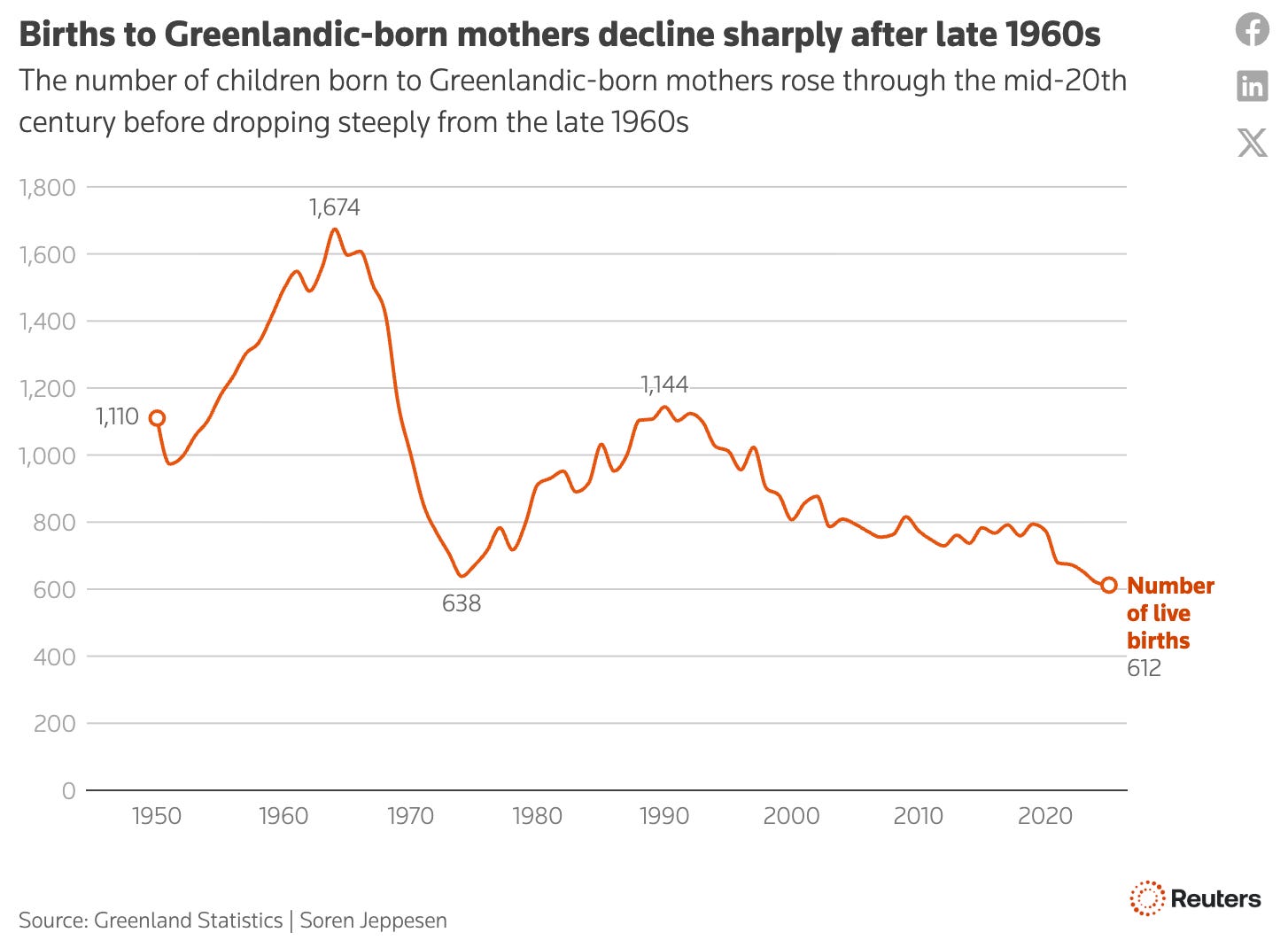
It also conveniently produced exactly the result Copenhagen wanted: Greenlanders’ birthrate collapsed, the growth of the native population slowed sharply, the percentage of the population that’s Danish thus increased, and Denmark’s annual costs to maintain the colony were controlled.
The new data demolishes Copenhagen’s claim to be Greenland’s benevolent guardian. Denmark has forfeited the moral authority — and the moral right — to rule the island. Greenland’s future rightfully belongs to the Greenlanders. The problem is, they can’t afford the independence most of them want.
There’s a solution.
Their Bodies, But Not Their Choice
Denmark’s forced contraception campaign was staggering in scale. By the end of 1970 alone, nearly half of all women of childbearing age or younger had been fitted with IUDs, mostly without their knowledge or consent. In addition to IUDs, the program included contraceptive injections and other interventions, largely disguised as other procedures. This crime against humanity continued through 1991, when Greenland finally wrested its health system from its colonial overlord’s control.
The new human-rights investigation heard from 354 women describing 488 separate incidents. Of 410 reported IUD insertions, 300 women said they had never consented. In another 63 cases, investigators had no consent information at all. Nearly one-third of the women were 14 or younger at the time; more than half were minors. Some were just 12 years old.
These were not adults making informed medical decisions. They were schoolgirls summoned to clinics, fitted with devices they did not understand, and sent home in pain. Some bled. Some developed infections. Some suffered lasting physical and psychological damage. Some, like Petersen, lost the ability to bear children even after discovering what had been done.
One team of investigators found reasonable grounds to believe that Denmark’s conduct in imposing measures to prevent births met the definition contained in the Genocide Convention. The investigators stopped short of finding genocide because they could not establish specific intent for that exact crime. The distinction will matter in court, reducing possible claims against the Danish government. It does not rescue Denmark’s reputation.
Nor does Copenhagen seriously dispute the charge. In September 2025, Prime Minister Mette Frederiksen acknowledged that thousands of women and girls had received IUDs, many against their will. She admitted that Greenlanders had been subjected to systematic discrimination precisely because they were Greenlandic. To her credit, she apologized on behalf of Denmark. But it’s far too little, far too late.
Denmark treated Greenlandic women not as patients or citizens, but as a herd to be culled. Petersen put it more plainly: “They took our resources. They took our bodies. And then they told us to thank them.”
Then Denmark Took The Children They Had
A state that believed it could decide which, if any, Greenlandic women would be allowed to become mothers also presumed to decide which Greenlandic mothers were allowed to keep their children.
The United Nations has reported that Inuit children from Greenland living in Denmark were seven times more likely than Danish-born children to be taken and placed outside the home. Danish authorities relied on standardized psychological and “parenting competency” tests developed for Danish parents, in the Danish language and within Danish cultural assumptions. They then used those tests to judge Greenlanders whose language, emotional expression, extended-family structure and child-rearing traditions were profoundly different.
The result was both predictable and monstrous. Danish institutions defined Danish behavior as normal, interpreted Greenlandic standards as inferior, and took Greenlandic children from their families on that basis. Mothers described being assessed without adequate interpreters. One says she was forbidden to speak Greenlandic to her twin sons during visits. The boys eventually lost their mother tongue as well as their mother.
It was a systematic effort to erase the Greenlandic population and culture for the benefit of an imperial master.
Denmark only abandoned the standardized tests for Greenlandic families in 2025, replacing them with assessments by a specialized unit with Greenlandic language and cultural competence. Yet mere months later, authorities removed Ivana Nikoline Brønlund’s newborn daughter approximately one hour after birth without applying the new procedure. Denmark’s Social Minister called the failure a serious error. Yet only after widespread political outrage was the decision reversed, allowing mother and child to reunite.
This is not ancient history: this is yesterday.
Greenland Wants Independence. But It Can’t Afford It.
Greenlanders have been voting their way toward independence for nearly half a century. Understandably, more than 70 percent approved Home Rule in 1979. In 2008, 75.5 percent approved Self-Government — an arrangement that formally recognized Greenlanders as a people with the right to self-determination, and that established a legal path to full sovereignty. By January 2025, a Verian poll found that 84 percent wanted independence, and 56 percent would vote for it even if the referendum were held immediately.
The hesitation is not the destination: it’s the price. Independence is expensive, and as badly as Denmark underfunds its colony, its colony doesn’t have the money to replace what it does spend. Independence means more than raising a flag. A sovereign country must finance its government, build infrastructure, create and maintain embassies around the world, provide social services and defend an enormous, resource-rich island sitting astride the Arctic and Atlantic approaches to North America. Greenland cannot do all of that alone. Denmark adds very little, but it’s far more than Greenland can do for itself.
So Greenland is not debating whether it should be free. It’s debating how to survive afterward.
The answer, of course, is a Compact of Free Association with the United States. It’s a model the U.S. has used successfully for and with Pacific nations such as Palau, Micronesia and the Marshall Islands. Each is a sovereign, independent nation. But each also receives many of the benefits of being part of the United States, defense included.
Citizens of these three COFA nations may live and work indefinitely in the United States, as nonimmigrants without a visa. They can qualify for American benefits ranging from Pell Grants and work-study programs to Medicare and Social Security. They may join the U.S. military. If disaster strikes, FEMA shows up. America invests and creates jobs in their countries. A COFA provides all the benefits of inclusion in the world’s most powerful economy but without giving up independence. It also provides all the benefits of independence without the costs.
It’s genuinely “have your cake and eat it too.”
For Greenlanders, a COFA means independence without strategic helplessness. American capital and technology, far greater than anything Denmark can provide, would flow in to build the ports, airports, power systems, telecommunications, housing and processing facilities, all employing Greenland’s citizens and providing futures for its children.
Greenland’s vast deposits of rare earth elements, hydrocarbons and other minerals could create high-paying jobs and a booming local economy rather than leave the island dependent on a stingy annual subsidy. Its fisheries could be processed at home rather than shipped away so others capture the value. Its tourism — currently a fraction of Alaska’s — could make the country a fortune: just ask Iceland.
Greenland could even become the Arctic answer to Bermuda or the Caymans: a sovereign financial center inside the American economic system, with easy access to both New York and London. The nation could attract offshore wealth beyond anything it has ever imagined. Its young people would no longer have to choose between dependence and emigration. Greenlanders could build a rich, modern country all their own.
So What Would America Get Out of This?
For America, the advantages are every bit as substantial. A free and friendly Greenland would secure the northern approaches to the United States, anchor the Greenland-Iceland-UK Gap, protect emerging Arctic sea lanes and enhance early warning, missile defense, space surveillance and North Atlantic monitoring.
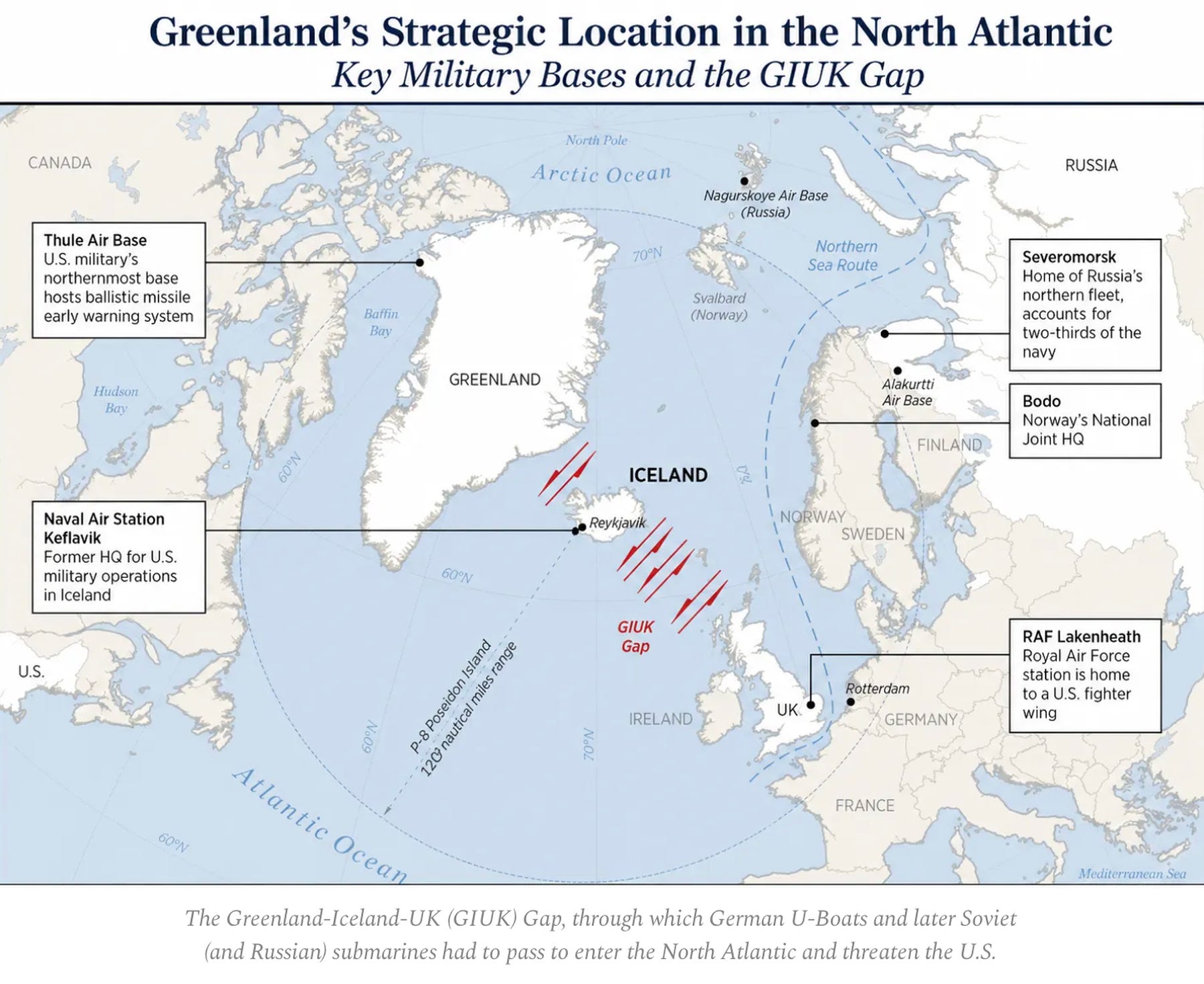
A COFA would give American companies access to critical minerals outside China’s control while denying Beijing or Moscow the chance to turn Greenlandic poverty into a strategic foothold threatening the approaches to North America.
America does not need to actually own Greenland. It needs Greenland to be free, prosperous and able to choose a durable partnership with America. That is partnership, not colonialism: indeed, it would replace the current colonialism with a true partnership. Greenlanders would own Greenland, while both nations become richer and safer.
This solves Greenlanders’ long-term problem even more than America’s. But it also solves a problem that almost no one in today’s ahistorical political class grasps. Despite its shameful behavior, Denmark is America’s friend today. But no one can guarantee the future.
The peaceful North Atlantic order is a constructed alignment, not a law of nature. The structure of power and interests may change. The map does not. And leaders should not base the security of those entrusted to them on utopian dreams or “permanent” alliances and institutions.
America chose Diego Garcia, its most vital Indian Ocean base, in part because of Britain’s “unquestioned sovereignty” over the island. Britain remains one of America’s closest allies. Yet its socialist government has signed a treaty to transfer sovereignty over the Chagos Archipelago to Chinese-aligned Mauritius. It assures the United States and its own people that all may rely on “ironclad” treaty protections for continued American and British access to the base. Yet that’s obviously nonsense.
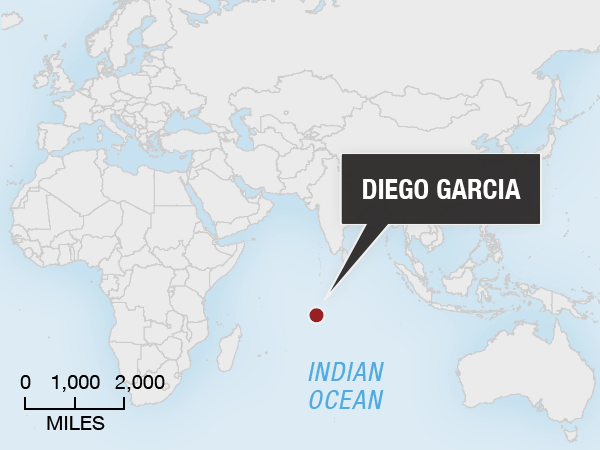
Britain did not have to become America’s enemy to alter the strategic arrangement on which our security relies. Governments change. Treaties change. Interests change. Alliances change. Geography does not.
Greenland will remain astride North America’s Arctic and Atlantic approaches no matter who governs in Copenhagen or Nuuk five, 50, or 100 years from now. Nations do not have the luxury of assuming every future government will play nice forever. American statesmen must plan for the geography their grandchildren will inherit, not merely for the diplomatic comfort of the present.
Denmark’s abuses answer the moral question. Greenlandic independence answers the colonial question. Free association with America answers the economic and strategic questions. It also enables what last week’s reports make clearly necessary, but which would be impossible without American help.
Denmark’s rule must end. Greenlanders must be free. But for that to happen, America alone can offer them a future in which independence means sovereignty, prosperity and security — not poverty, vulnerability or a new Chinese master.


So much for "free healthcare".
MSM won't report anything. Horrible! They'd be better off under the USA, brouggt about by President Trump.
Thank you for writing. I’m Swedish and I was not aware of most of this. It’s utterly disgraceful.