


by Rod D. Martin
September 3, 2026
You know I use and strongly support artificial intelligence. It is a boon to mankind and has increased my own productivity fivefold at least. It is an enormous blessing.
So is nuclear power, which is also the best way to power AI. What is not so great is a nuclear bomb, especially if you’re beside it when it goes off.
So understand that distinction when I sound this alarm. AI just crossed a line that can’t readily be uncrossed. It can now design complete, viable viruses that have never existed in nature, and for which no one has immunity.
Researchers at Stanford University and the Arc Institute trained an AI model called Evo on vast libraries of genetic material. They then taught it the genomes of Phi X-174 — a tiny virus that infects E. coli — and roughly 15,000 of its relatives. The model generated 700,000 candidate viral genomes. The scientists selected 285, manufactured their DNA, and inserted it into bacteria.
Sixteen worked. They reproduced. They burst out of their hosts. They infected other bacteria. Some multiplied faster than the natural virus on which the experiment was based.
To their credit, the researchers deliberately excluded viruses that infect humans and other animals, and even those that infect plants and fungi. The sixteen successful creations are bacteriophages. They are not going to turn into airborne smallpox and wipe out Chicago, or decimate humanity and create the Planet of the Apes.
But all that misses the point. Because while they won’t, something like them might.
Until now, the great promise of biological AI was that it could read the language of life: find patterns, predict protein structures, identify dangerous mutations, discover drugs, and help doctors repair what disease had broken. And indeed, the promise of that research is vast, and can and will revolutionize healthcare and longevity for everyone.
But now that same AI has gone beyond such benign research and created something entirely new — not merely a protein or a DNA fragment, but complete, viable viruses.
The experiment was safe. The capability is not.
AI’s peculiar strength is cheap failure at immense scale. Evo generated 700,000 possibilities; the researchers could rank them, manufacture the most promising, learn from the results, and try again. A pandemic pathogen does not require every design to work. It just needs one. And every failed round teaches the next model how to improve.
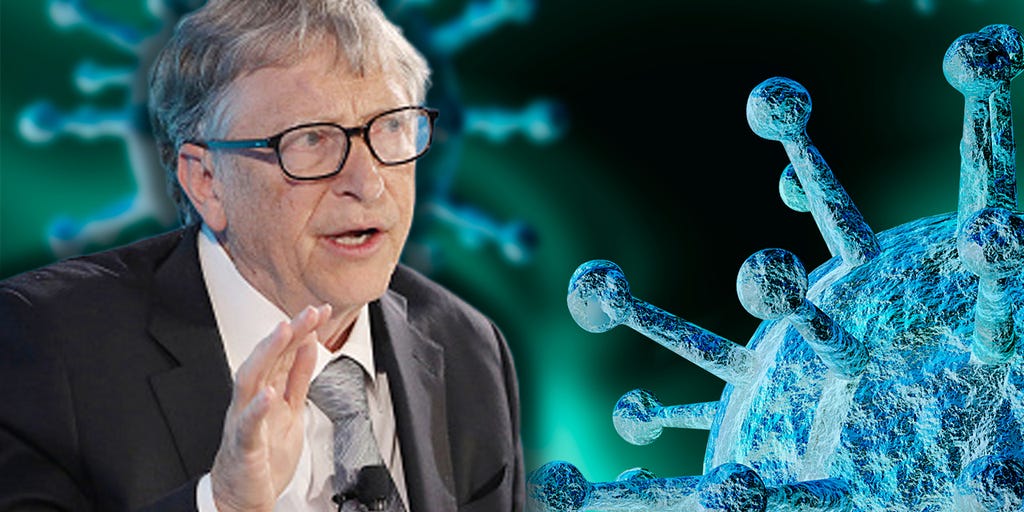
Bill Gates has now sounded the alarm. Last week, he told CNN’s Anderson Cooper and The Atlantic’s Hanna Rosin that today’s AI models are already “crossing the danger thresholds” in bioterrorism, that systems capable of helping create dangerous molecules are not adequately monitored, and that the next generation of models will be dramatically better.
He’s right. He’s also late.
