



This analysis is free, but with Premium Membership you get MORE. Join today.
Our Full Discussion is Transcribed Below:
by Rod D. Martin and Col. Rob Maness (Ret.)
May 25, 2026
Former Air Force Wing Commander Col. Rob Maness and our own Rod D. Martin discuss in-depth the betrayal of Vietnam and its lessons for today.
We discuss:
Why Vietnam was not a military defeat, how the Tet Offensive devastated the Viet Cong, and how Nixon and overwhelming American air power achieved peace with honor
How the post-Watergate Congress broke America’s promises, stripped South Vietnam of bullets and fuel, and enabled the Communist conquest
The terrible human cost: reeducation camps, the Khmer Rouge, and the boat people, including the Vietnamese refugees who rebuilt their lives in America
Why Biden’s abandonment of Afghanistan was another Saigon moment, and why decades-long occupations are incompatible with the American political system
PLUS how Trump is applying Reagan’s moral realism against Iran through decisive air and naval power rather than another endless ground war
Finally, how control of the world’s maritime chokepoints, stronger Asian alliances, and China’s demographic collapse could produce a new era of peace through strength
It’s a Memorial Day special you won’t want to miss! Transcript after the break.

Our Full Conversation:
Announcer: Having worked his way up from the enlisted ranks to full colonel, he served our country for more than 32 years. He served as a bomber squadron commander, bomb-disposal technician, Joint Chiefs of Staff operations officer, and assisted the national security team with the campaign plan for the Global War on Terrorism. He authored the first theater nuclear war plan and served as vice commander of America’s largest airborne intelligence wing.
Colonel Rob Maness is a true American hero. This is Rob Maness Live.
Archival News Footage: The arrival of the North Vietnamese regular army in Saigon.
Rob Maness: Welcome back to The Rob Maness Show, folks. It’s Moral War Monday, and we’re live on WorldviewTube and our X Spaces simulcast.
Fifty-one years ago last week, the world watched in horror as the last American helicopter lifted from the rooftop of our embassy in Saigon. South Vietnam had fallen.
But as my guest today will explain, this wasn’t a military defeat. It was a betrayal by politicians in Washington who abandoned our ally after promising to stand with them.
Dr. Rod Martin joins me today. In his recent essay, republished on X, he reminds us of the full story.
After the Paris Peace Accords under Nixon and Kissinger, America had achieved so-called “peace with honor.” South Vietnam was capable of defending itself with our promised support. That’s a key phrase.

But post-Watergate, a radical Congress cut military aid by more than 75 percent, blocked any response to North Vietnamese violations of the ceasefire, and left our friends without bullets, fuel, or hope. What followed was catastrophic.
Dr. Martin compares it directly to Biden’s withdrawal from Afghanistan: another Saigon moment. He also shares vital lessons from Richard Nixon’s No More Vietnams about fighting to win, keeping commitments, and the dangers of weakness.
Dr. Martin, welcome to The Rob Maness Show. It’s great to have you with us today, sir, to help break down your essay, but most importantly, to talk to America about why this history is important and what it means for us today.
Rod D. Martin: It’s certainly an honor to be here, and it’s always good to see you.
The fall of Saigon was 51 years ago last week. It’s just a cataclysm, sad beyond words. If you can think about it as it is and not be moved to tears, something’s wrong with you. Maybe you were educated in a public school, as I was. Something’s horribly off.
The truth is that South Vietnam was a rolling tragedy, really beginning with JFK allowing Diem to be murdered in 1963. This was cataclysmic in a number of ways.
Diem was popular. Diem was elected. He was capable. Interestingly enough, he was Catholic, which is not something you associate with Vietnam a lot.
But it was very, very similar to the Protestant president of the Republic of China, Chiang Kai-shek, whom an earlier Democrat administration sold down the river. There was no need for China to fall. Yet we allowed it, in part as a consequence of George Marshall’s 1948 white paper.

Then history repeated. We found ourselves in Vietnam. We pulled the rug out from under Diem’s government, literally and physically, which resulted in a series of coups. Then Lyndon Johnson, in my view, foolishly sent half a million troops to Indochina.
LeMay, Air Power, and the Strategic Stakes
Rod D. Martin: Curtis LeMay had this right, and as a former wing commander, you should appreciate it more than most. Curtis LeMay understood what overwhelming air power could do.
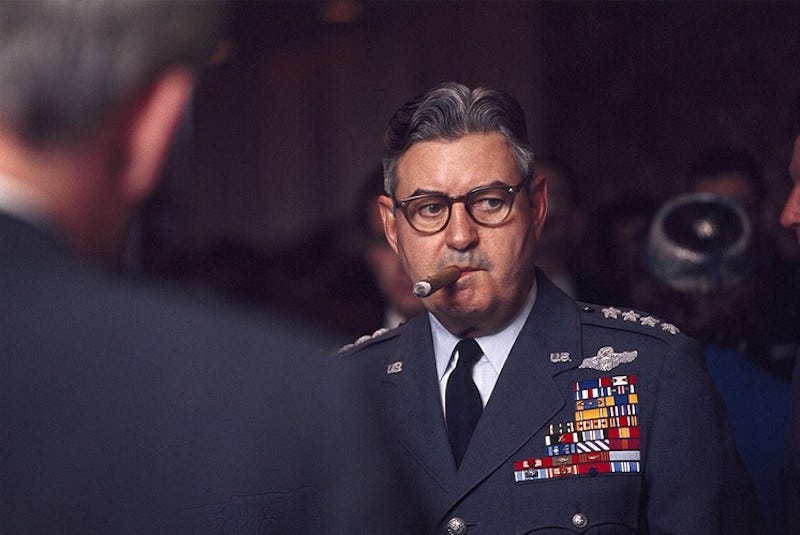
Hippies will frequently tell us that America dropped more bombs on North Vietnam than all the munitions exploded in World War II, as if that’s a bad thing. No, that was actually an incredibly beneficial thing.
North Vietnam was doing everything in its power to subjugate its entire region, and it was a Soviet client. It was the Soviets who rearmed them after the peace in 1973, against the terms of the treaty.
We’re talking about potential Soviet domination of everything south of China, which would have been horrifying.
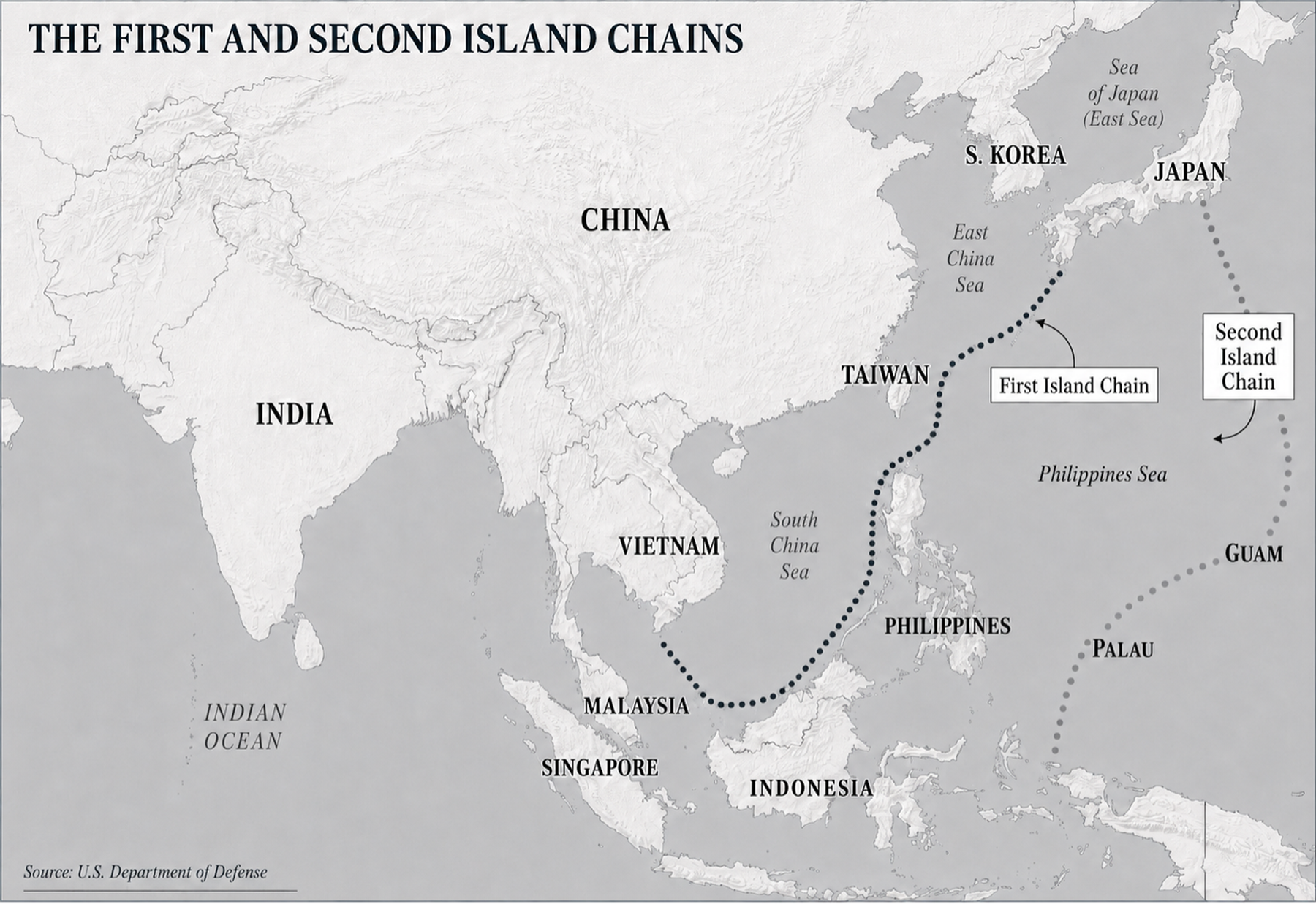
Think about the time we were living in. In that era, it wasn’t China getting 40 percent of its oil from the Middle East, as it does now. It was America. We saw that with the energy crises of 1973 and 1979.
The Strait of Malacca matters. It has always mattered. Sunda and Lombok matter. They have always mattered. You’re talking about potential Communist domination all the way through Singapore.
That’s just not acceptable for the future of the West. Indeed, had that ever been achieved, there’s a decent chance we would not have survived the Cold War.
It’s not that Vietnam didn’t matter. It’s that Johnson’s strategy was foolish. LeMay got it right, and Nixon proved it in December 1972, with the result that we got to that peace with honor.
We got to Nixon’s goal of Vietnamization, so the South Vietnamese were able and ready to defend themselves. Then we broke all our promises because the Democrats in Congress cut off even bullets and gasoline for South Vietnam’s Jeeps.
We spent eight years in theater. We lost 58,000 American souls. We tore the country asunder. Then we handed a free country — perhaps not as free as Texas, but a lot freer than China in the midst of the Cultural Revolution — to the Communists.
With it, we handed them Laos and Cambodia. It just as easily could have been Thailand, Malaysia, Singapore, and Burma, and from there, India and Indonesia.
It was a catastrophic, self-inflicted wound. The human cost was even worse.
Rob Maness: It was really a holocaust, wasn’t it?
Rod D. Martin: It was.
Diem and the First Betrayal
Rob Maness: Rod, I’m glad you mentioned General LeMay. I got to meet him when I was a lieutenant. I won the bombing competition as the best navigator in my SAC squadron that year.
He was in a wheelchair by then. He wasn’t talking a lot, but he did say, “Congratulations.”
I’ve studied him all my life and studied this concept of air power, naval power, and campaigns. I want to get into Iran toward the end of the show, and Afghanistan.
But I didn’t realize Kennedy had green-lighted Diem’s fall and his assassination. That’s new information for me.
Rod D. Martin: It’s a somewhat controversial point, to be fair, because he didn’t directly order a hit. That’s not what happened.
He just communicated very clearly — and not shockingly, at the State Department’s insistence — that we would not mind if a coup transpired.
Well, they immediately shot Diem and his brother. Ten minutes later, they’re gone. There’s no way JFK isn’t responsible for this, whether he meant to be or not.
I went to law school. I haven’t practiced in a long time. After I helped do PayPal, I decided to have a different and better career. But in law, we talk about these things.
The truth is that he knew, or should have known, the consequences of what he communicated.

It was a much bigger and more malevolent mistake than the State Department communicating that South Korea was outside the area of America’s interests in 1950. It had very direct, very immediate consequences for good men - not perfect men. Let’s make no mistake.
The charges of corruption in South Vietnam were legitimate, maybe overblown, but legitimate. This was not exactly Florida.
But we have to have perspective, much as we have to about the Shah in Iran. This was a country that, by the standards of Western democracy, was relatively primitive.
They didn’t have longstanding democratic institutions going back to Magna Carta, the Glorious Revolution, or the English Bill of Rights. They were learning as they went. They were overcoming ancient, tyrannical tradition, and it takes time. Democrats expected an instant transformation, as they did of China in the 1940s and Iran in the 1970s. And that is something that never has been and never will be.
Also, Diem may have been a Christian, but his people weren’t. Just 10 percent were Christian. You had a very different worldview in play.
Diem, like the Shah a decade later, was doing his best to bring his country into the modern world. We aborted that in Vietnam. We aborted it in China. We aborted it in Iran. And each time, exactly one group of people was responsible: the same leaders of the Democrat Party, again and again and again.
A Repeating Pattern of Strategic Failure
Rob Maness: It’s very interesting because we’ll see a clip from President Nixon about peace with honor. But it has been Republican presidents who have had to come in and pay the price after the debacles created by a series of Democrat presidents.
Kennedy and LBJ, then Nixon; Ford had to deal with it. Then Carter came in, and Reagan had to deal with the Iranians, and on and on.
I don’t think people have a full understanding of that issue, but that’s what has been happening, isn’t it?
Rod D. Martin: The Democrats love our enemies, and they give them everything, every time.
Again, China was a total debacle, which resulted in the Korean War, the Vietnam War, and the problems we’re still having today. That was a huge mistake by the Truman administration.
JFK made a huge mistake with regard to South Vietnam. LBJ made a huge mistake with regard to how he went about the war, and that became manifest relatively quickly.
By 1968, you’ve got Walter Cronkite — who honestly was just being a propagandist for the other side — claiming that the war was irretrievably lost as we rolled up the Viet Cong in the Tet Offensive.
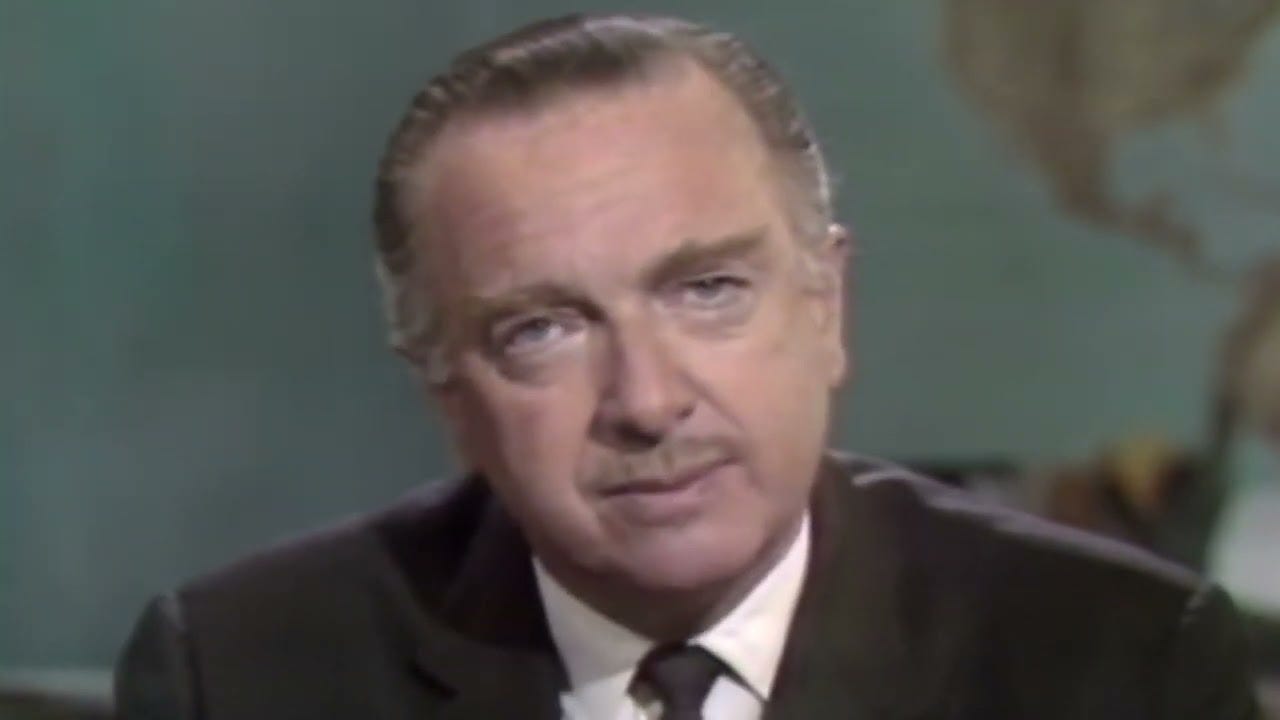
But at the same time, the country was already ripped asunder. So, yes, Nixon had to come in and fix it. Reagan had to fix the debacle of the 1970s.
It changes a little when you get to George W. Bush. I supported what he was trying to do in Iraq, and I don’t want to be too harsh on him.
But the neoconservative model is a little too proactive to work because the American political system will not support that kind of long-term engagement. It just won’t.
We learned that in Vietnam, and then we doubled down on it in Iraq and Afghanistan.
I want to say, to Bush’s great credit, that people don’t realize this: They think we lost in Iraq. The truth is that Iraq is, however improbably, a functioning democracy.
It’s not super free. But on the other hand, you could say that about Canada and Great Britain at the moment. Britain actually imprisons 10 times as many people for speech violations as Vladimir Putin.
We’re having a democratic crisis throughout the world. But Iraq actually worked. It just took a while.
Afghanistan probably could have worked. But it was a longer-term commitment than a country that has elections every two years can sustain.
That’s the failing in neoconservatism, which I would distinguish very plainly not just from Nixon and Kissinger’s realism, but from Reagan’s moral realism.
Moral realism has the same aims in some respects as the liberal internationalists. It wants a democratic world. It wants a better future. But it understands the limits of American power.
Trump has been a tremendous corrective to all of that. Afghanistan didn’t have to fail. That was a choice by the Biden team.
None of these had to fail, to be honest with you.
Rob Maness: Not at all. I think Iraq could have come out better had we done it better. But war is war. That’s why it’s such an important decision when you decide to go into it.
We’ve got to take a break, Dr. Martin. When we come back, I want to talk about President Nixon and Kissinger, and the betrayal of the American military in Vietnam, as we move forward with this discussion.
We’ll be right back with Dr. Rod Martin.
Nixon’s Peace With Honor
President Richard Nixon, Archival Footage: Good evening.
The agreement will be formally signed by the parties participating in the Paris Conference on Vietnam on January 27, 1973, at the International Conference Center in Paris.
The ceasefire will take effect at 2400 Greenwich Mean Time, January 27, 1973.
The United States and the Democratic Republic of Vietnam express the hope that this agreement will ensure stable peace in Vietnam and contribute to the preservation of lasting peace in Indochina and Southeast Asia.
That concludes the formal statement.
Throughout the years of negotiations, we have insisted on peace with honor. In my addresses to the nation from this room of January 25 and May 8, I set forth the goals we considered essential for peace with honor.
In the settlement that has now been agreed to, all the conditions that I laid down then have been met.
A ceasefire, internationally supervised, will begin at 7 p.m. this Saturday, January 27, Washington time.
Within 60 days from this Saturday, all Americans held prisoner of war throughout Indochina will be released. There will be the fullest possible accounting for all those missing in action.
During the same 60-day period, all American forces will be withdrawn from South Vietnam.
Rob Maness: Welcome back to The Rob Maness Show. It’s Moral War Monday, and my guest today is Dr. Rod Martin, who has a great essay that he republished just days ago on the anniversary of the fall of Saigon.
He is also the founder and CEO of Martin Capital and The Rod Martin Report, so go check it out. It’s great, just a font of knowledge and information that isn’t covered in the mainstream media every day.
Dr. Martin, I want to talk about the word “betrayal.”
You mentioned Diem being taken out in 1963 because of the decisions of an American president. You mentioned the Tet Offensive.
I’ve talked to men who fought in the Tet Offensive as regular soldiers, Marines, and airmen. They all say, “We can’t understand how that could ever be seen as anything except a near-catastrophic victory for us and a catastrophe for the North Vietnamese.”
You talked about bombing, General LeMay, and how effective it was. The reason President Nixon was able to give that statement was the air campaign and the Navy campaign, wasn’t it?
Rod D. Martin: Absolutely.
Reaching back to Tet, people remember it as a huge defeat. It was actually a catastrophic defeat for the Viet Cong.
The Viet Cong exposed themselves. “This is the time to rise. This is when we’re going to take power.” The United States military annihilated them, just annihilated them.
The VC could not reconstitute itself for years after Tet.
There’s a reason that, in your first clip, you showed the North Vietnamese regular army marching into Saigon. The VC was a cipher. It was utterly irrelevant.
The problem is that this was always true. JFK did understand it; he just bungled it. LBJ understood it; he just bungled it even worse. Nixon understood it and fixed it.
North Vietnam was always a Soviet satellite and proxy. It was always seeking to extend the Soviet empire into places from which we could not recover.
We keep hearing that America had no vital interests in South Vietnam. Malarkey.
You’re sitting on the South China Sea. How much of the world’s commerce passes through the South China Sea, past Subic and Clark in the Philippines, past Taiwan, to Japan and South Korea, and to California, for that matter?
![The South China Sea in a Greater Perspective: SLOCs and the Maritime Silk Road (2/2) – An Intellectual Commonwealth [知識聯邦]](https://substackcdn.com/image/fetch/$s_!rKcz!,f_auto,q_auto:good,fl_progressive:steep/https%3A%2F%2Fsubstack-post-media.s3.amazonaws.com%2Fpublic%2Fimages%2F3d95d7d0-97a7-4fdb-a7e5-0027b5c71d69_760x600.gif "The South China Sea in a Greater Perspective: SLOCs and the Maritime Silk Road (2/2) – An Intellectual Commonwealth [知識聯邦]")
In those days, we were importing an awful lot of oil from the Middle East, and some of it was coming from that direction.
All these things were vital. The aim wasn’t just South Vietnam. The aim was all of Indochina and Southeast Asia. They weren’t going to stop, if they could continue, until they hit Singapore. Fortunately they were unable to continue, but not because we continued to stand in their way.
Partners, Not Dependents
Rod D. Martin: Nixon understood this. He understood the stakes.
He also understood that it was absolutely untenable if the South Vietnamese couldn’t carry their own burden. That’s an echo of Donald Trump today talking to NATO.

It’s not acceptable for Germany to show up at NATO exercises with broomsticks because it doesn’t own enough rifles for its military to train with real guns. That’s absurd.
It’s absurd that Great Britain has twice as many admirals as warships today. If a Girl Scout troop walked into the Falkland Islands, there’s nothing Great Britain could do about it today. It’s absurd.
That’s not a partnership. That’s not an alliance. That’s a surly teenager in your basement making sarcastic comments about everything you do. That’s not okay.

Nixon, around the time I was born, understood perfectly: You actually have to have an ally who can stand up, and we’re going to have to stand them up.
That’s what we did over the four years of the first Nixon administration. The net result, plus the bombing campaign in December 1972, was the Treaty of Paris, finally signed, if I recall, on January 27, 1973.
This was a huge breakthrough.
Here’s the bottom line: We agreed in writing that we would enforce this agreement. We also had side discussions with the South Vietnamese government about what we would and wouldn’t do.
It was their job to be the army on the ground. It was not our job to do that anymore. We helped. We’re done. We’re gone.
But our commitments in January 1973 absolutely required that the North Vietnamese stay in their cage. They would not continue supplying the Viet Cong down the Ho Chi Minh Trail. They would not continue supporting revolutionary movements nearby. They would not rearm.
We were obligated to blow up any new armaments shipped by the Soviets to North Vietnam.
This is kind of a big deal, because immediately after the Democrats in Congress cut off our aid to the South, the Soviets shipped more armaments into North Vietnam in 18 months than they had shipped there during the entire war before that.
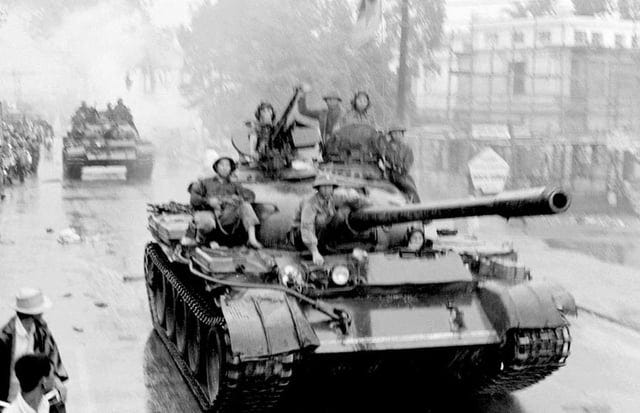
Of course, the North Vietnamese Army was entirely equipped to roll over a South Vietnam that didn’t have bullets or gasoline by April 1975.
The Agreement Congress Broke
Rod D. Martin: Nixon signed a treaty that solved these problems.
It was to be backed up by American air power, by the Strategic Air Command in which you served so brilliantly, and really on a Curtis LeMay model.
We were going to do from the air what a previous generation might have needed to do, from a technological standpoint, with boots on the ground. But we really didn’t have to do that here. We were just trying to maintain the status quo and disrupt their ability to become a problem again.
Then, sure enough, the Democrats cut off everything. Within two years, South Vietnam was subjugated.
Millions went into reeducation camps, which is the nice version of “concentration camps” that the Communists prefer.
A third of Cambodia’s population was murdered in under three years by a man the hippies in this country referred to as “the George Washington of Cambodia.”
Nearly half a million South Vietnamese died in the South China Sea just trying to flee. Countless more, who thankfully have enriched our country greatly, were resettled here.
I grew up near Fort Smith, Arkansas. There was a huge Vietnamese community there because a bunch of those people were resettled at Fort Chaffee.
You see them in pockets all over the country. They’re wonderful, wonderful citizens today. But they shouldn’t have to be. They should be happy, productive citizens of their own free country. It’s our fault that they aren’t.
We wasted a decade of blood and treasure and then threw it all away. We’ve done that again and again.
Rob Maness: The treatment of our veterans from the war reverberates down through today — absolutely down through today, and every day that you and I walk this Earth. It will continue to do so.
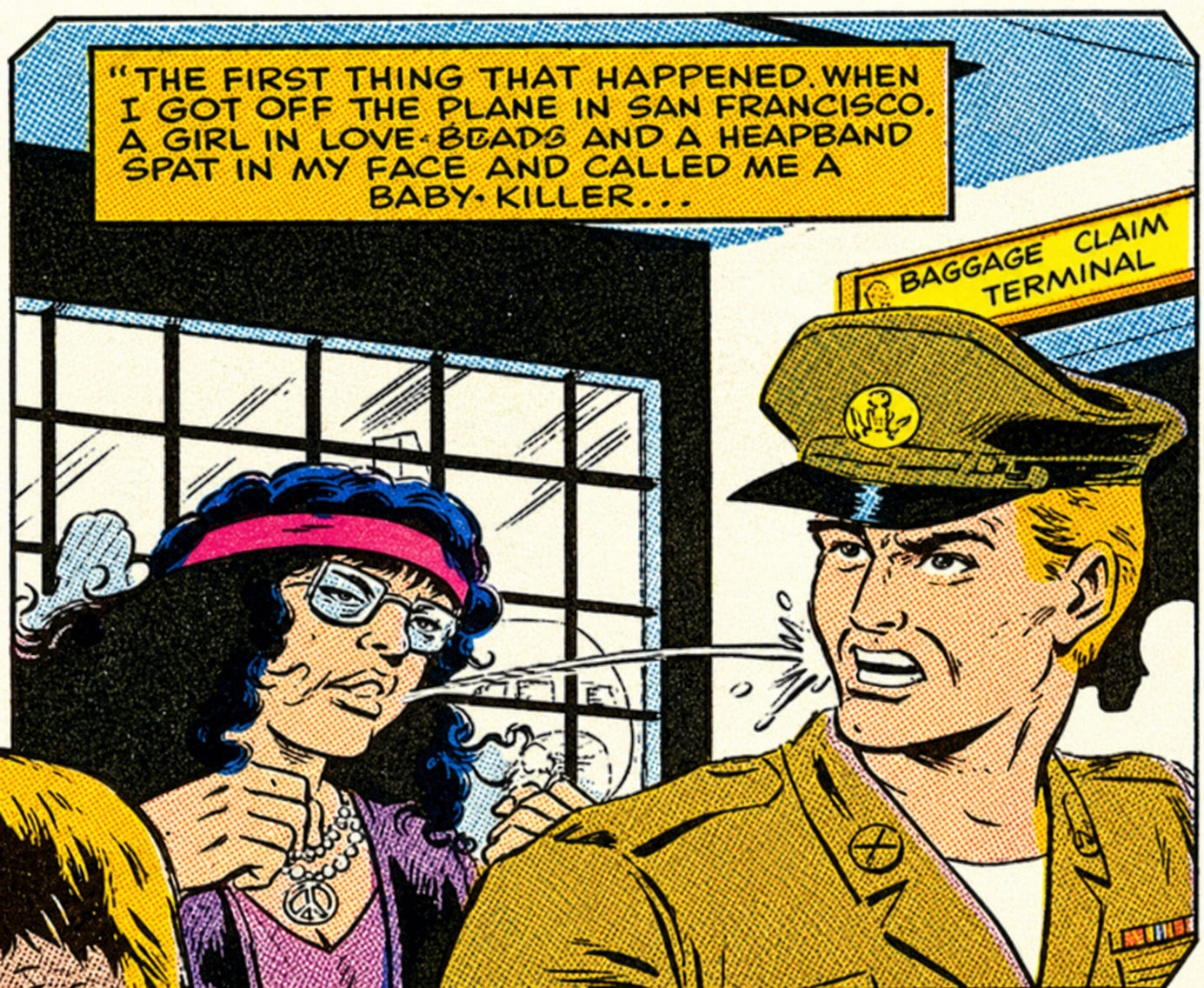
The betrayal of the Vietnamese people: That armor, infantry, and artillery that came in with the North Vietnamese Army were perfect targets for the air-power and naval-air technology we had at the time.
Saying we had to have boots on the ground to hold it is just poppycock, to be honest with you.
Rod D. Martin: It is. It’s a complete betrayal. The Democrat leadership proceeded to break the treaty to smithereens before the North Vietnamese even could.
And it’s not just the treaty itself. It’s all the side agreements with South Vietnam.
Again, the strategy was really simple. We had stood up the ARVN, the Army of the Republic of Vietnam. They were good to go. They didn’t have air power, so we were going to provide air power if anybody did anything bad.
This was actually a peace treaty. We were actually done with the war. A new violation would be a new war.
We were obligated, just as we are under the NATO treaty, to treat acts of aggression as collective in nature. South Vietnam would never have agreed to the treaty otherwise.
If the North Vietnamese sent massed armored formations across the DMZ, we were going to blow them up with B-52s. If they brought in a bunch of prohibited armaments, which they had agreed were prohibited, we were going to blow them up in Hanoi and Haiphong. It was very simple. And it was essential to the deal.
We spent four years telling these people, “Stand up. Do your part. Be partners. You don’t have to do everything, but you have to do this.”
Rob Maness: Right.
Rod D. Martin: Then we prevented them from having the ability to do the very things we told them to do. It’s just mind-numbing.
Rob Maness: It is mind-numbing.
We’ve got to take another break, Dr. Martin. When we come back, we’ll see a clip of the boat people. You mentioned half a million people dying in the oceans.
There have been dramatic, downstream, catastrophic consequences for America and the Vietnamese people throughout the years.
We’re talking with Dr. Rod Martin about that issue and how it relates to today, because it does. We’ll be right back.
The Boat People
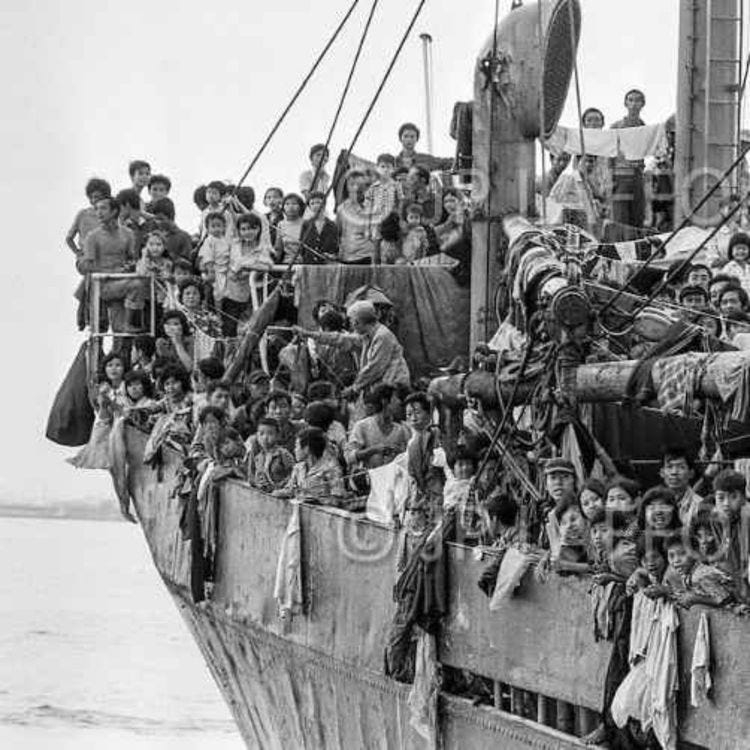
Archival Documentary Footage: Since the change of government in South Vietnam more than 10 years ago, more than half a million Vietnamese refugees have attempted to cross the South China Sea in the hope of finding asylum in a new country.
Unknown numbers have perished on the way, either drowning at sea, being attacked by pirates, or dying of thirst, starvation, and exposure.
“What is the news from the mainland? Is there anybody on board who lived in my village? Do you have any news of my relatives and friends?”
Previously uninhabited, this island was soon crammed with 50,000 people.
Since the exodus of Vietnamese refugees began, some 60,000 refugees have been rescued by commercial shipping. Of course, nobody knows how many took the risk and did not survive.
Rob Maness: Welcome back to The Rob Maness Show. We’re live on WorldviewTube and our X Spaces simulcast.
My guest today is Dr. Rod Martin, who is a great American. You can find him at The Rod Martin Report on Substack.
He has a great essay that was republished last week about the fall of Saigon and Vietnam, why it’s important for us to understand the whole process — the war itself and what happened at the end — and how it relates to everything that came afterward from a military, strategic, and geopolitical perspective, including how the United States interacts with our allies and adversaries.
Dr. Martin, I had to show that clip because, on May 2, I got to spend a few minutes with a man named Hung Cao, who is the acting secretary of the United States Navy. He was a child on one of those boats, and I wanted to highlight that.
May 2 was National EOD Technician Day. I’m an EOD technician from early in my Air Force career as an enlisted man.
I had the opportunity to attend the festivities at Eglin Air Force Base, at the memorial and the Navy school at Eglin that still runs the program.
Hung Cao is just a great American. He spoke to us about the trauma he has experienced throughout his entire life, not just his combat time, and how he and his family have had to deal with his disabilities in that regard.
It’s very important that we talk about the great Vietnamese Americans who contribute to our society.
But it’s also very important for us to understand what went wrong from the U.S. government’s perspective so we can prevent that kind of catastrophe from happening again, isn’t it?
Rod D. Martin: We just didn’t keep our word.
I grew up, as I said earlier, very near Fort Chaffee, Arkansas. That was one of the main resettlement locations.

We got Cuban boat people about five years later. That was part of why Bill Clinton lost reelection as governor in 1980, his only loss other than his first congressional race. He was very, very foolish in his handling of that.
But the Vietnamese situation went much better. Those people integrated into the community. Of course, they’ve moved all over the country, but there’s a significant Vietnamese community in the neighboring city of Fort Smith to this day.
Being around them when I was a small child, when they were fresh off the boat, was really a searing experience. It was just so tragic.
These were good people. In many cases, they had significant careers in their homeland. They had been doctors, lawyers, and all kinds of different things. Here they were with nothing but the shirts on their backs, for no good reason at all.
I used the term “boat people” a minute ago. But these people didn’t have boats in most cases.
Can you imagine the horror you must be facing if you’re willing to put your family on a makeshift plywood raft, or a tiny boat not built for open ocean, and launch into the South China Sea with no idea whether any ship will come by?
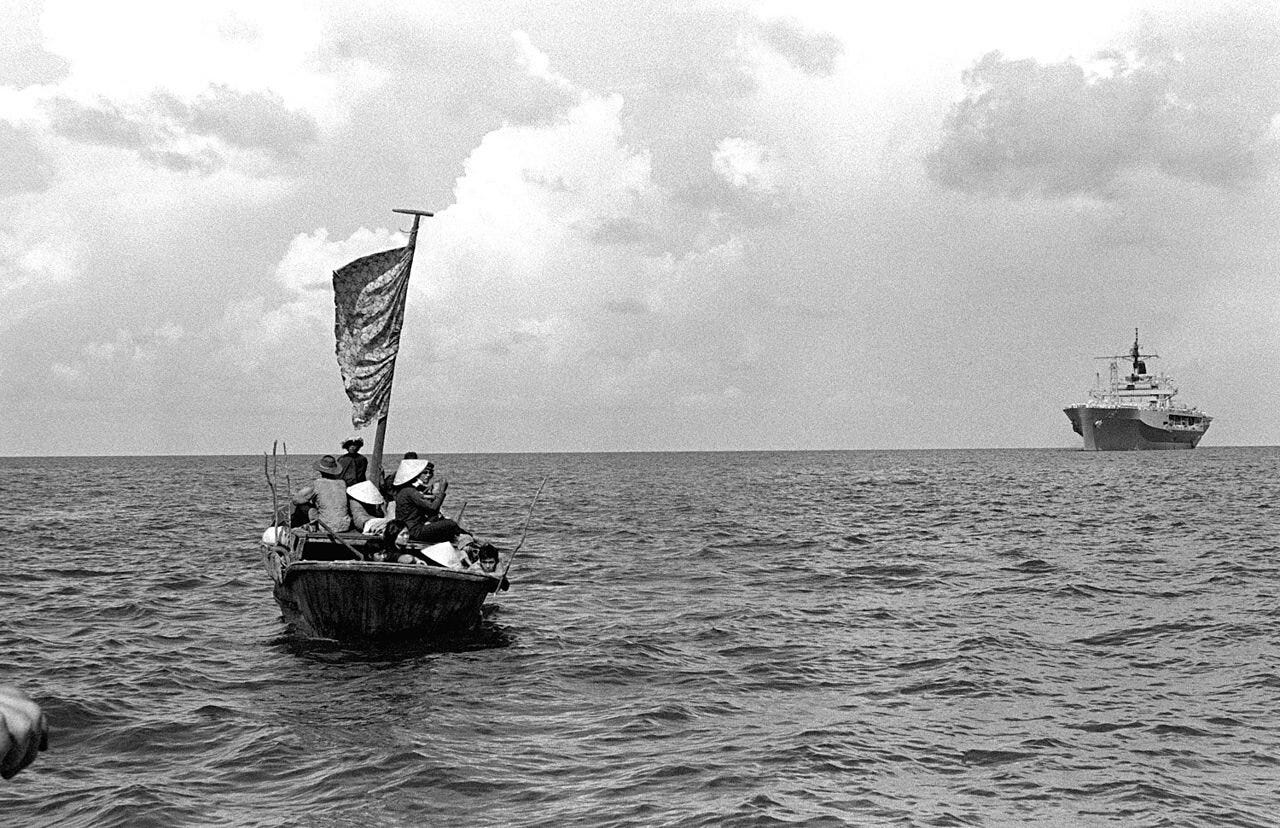
What are your odds? The South China Sea is not some placid lake in the woods. It is one of the choppiest bodies of water on Earth, and it’s big.
These people were literally fleeing the Communists with no hope of being rescued. They were just going out into the water randomly and hoping an American aircraft carrier, a freighter, or something might find them.
They didn’t have radios. They didn’t have anything. It’s mind-boggling to imagine what complete horror prompts that.
Then we saw what prompted it. Their predictions all came true. What happened in South Vietnam after the conquest was simply horrific.
You called it a holocaust earlier, and you’re exactly right. Then there was an infinitely greater holocaust happening in Cambodia at the same time.
The Khmer Rouge murdered a third of Cambodia’s population in under three years. It was so morally shocking that the North Vietnamese invaded to stop the slaughter. How bad can you get?
It was a terrible situation. It was entirely preventable. It was entirely our fault.
It didn’t require an American army in Indochina for the rest of time. It just came down to whether we would keep our word.
We couldn’t manage that for six months after the treaty, and it all unraveled.
Vietnam and the New Asian Order
Rob Maness: Today, when we look at that area, do you see an ability for the United States to have a positive impact and at least neutral economic relations with the North Vietnamese government, the Cambodian government, and those kinds of people?
Rod D. Martin: Cambodia is a much better place now. They have a reasonably decent tourist industry.
They had an armed conflict recently with Thailand that the president did a masterful job of brokering a truce in.
We actually have quite good relations with Hanoi now, which always gives me mixed emotions because I kind of want to send you to bomb them some more. But we actually get along pretty well.
It’s still a Communist dictatorship. This isn’t somewhere you want to live. But it’s a beautiful, beautiful country with amazing beaches and an incredibly diverse and talented people. They are becoming an economic powerhouse.
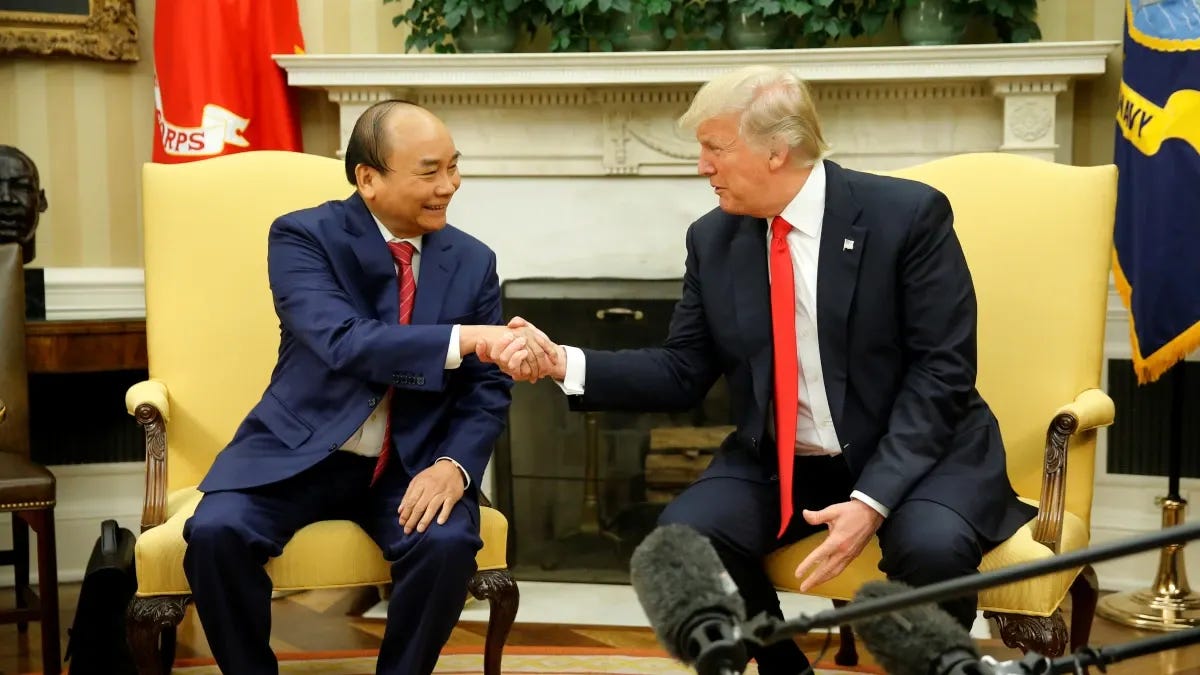
We can do a lot of good in tandem there that I believe can move them toward freedom over the next couple of decades. I think they’re headed in that direction, at least to some degree now. The president is clearly committed to that trajectory.
He’s just not committed in the manner of sending 250,000 troops to occupy Hanoi forever, as we might have done 25 years ago.
I think there’s a lot of hope in the region.
The Communists did not overrun Thailand, Malaysia, or Singapore. We just signed a tremendous defense agreement with Indonesia, which is remarkable. Indonesia was another pillar of the nonaligned movement, like India.

The agreement effectively enlists the brown-water Indonesian Navy as a sort of Indonesian National Guard. We can further block the straits if we need to. If we get into a war with China, we can strangle it in very short order through control of those straits.
It’s the exact opposite of the position the Soviets were trying to create at the time.
The Philippines are going well. You put out an interesting piece, I think from Nikkei, on the renaissance in U.S.-Philippine relations over the last year.
Then there’s the Taiwan arms deal. Glorious. Send them HIMARS. Send them howitzers. Send them all the things you need to blow up landing craft in the water.
Japan is rearming in a positive way and making itself available for Taiwan’s defense.
This nuclear-submarine deal we have with South Korea is, in some ways, even better than the one we just struck with Australia.
The entire security architecture from New Delhi to Tokyo has been transformed, honestly, in a single year by an administration with a vision for it. My hopes are both significant and highly optimistic.

Rob Maness: It’s pretty incredible.
You’ve probably seen that I talk a bit with a guy named John Konrad and with my friend Captain James Fanell, with whom I attended Air Command and Staff College.
We discuss key chokepoints around the world quite often, especially in the context of the Chinese Communist Party, just as you have discussed and written about.
The chokepoint effort is the key foundation of the president’s peace-through-strength strategy that Elbridge Colby is masterfully documenting and implementing, isn’t it?
Rod D. Martin: Yes, it’s extraordinary.
Look, the U.S. Navy is the most potent military force on the planet, and I apologize to my Air Force friends when I say that.
I’m sitting here — you mentioned Eglin. Eglin is right across the bay from me. We’ve got the EOD guys over yonder. My goodness, what the U.S. Air Force can do is unparalleled in human history.
But the Navy can absolutely close the Strait of Malacca, the Sunda Strait, the Lombok Strait, the Strait of Hormuz, and all the other chokepoints that matter.
Trump started that process with the Panama Canal, kicking the Chinese out of the ports they held on both ends of the canal.

We were looking at the possibility that, if you elected another Joe Biden, we would have a Chinese naval base in Venezuela, maybe in Cuba, and they would have control because they had control of the canal.
All of this is mind-numbingly stupid. Trump has overturned it in record speed. There’s nothing like it in history.
I’m very impressed with how they’re executing this.
I hope our European friends will start acting like friends and we don’t have to have a divorce there. But I’m reminded that we used to have five bases, including a SAC base, in Morocco.
The distance from Barksdale to Casablanca is identical to the distance from Barksdale to Ramstein. We have options.
Rob Maness: That’s right.
My dad took us to Morocco in the late 1960s and early 1970s. My brothers and I had quite an adventure there at a place called Kenitra, just north of Rabat. They are very good allies.
I played baseball with the current king when I was 11 years old, down in Rabat at an exhibition game. They love Americans.

I would love to see us get back in there and reestablish our bases. If they want somebody to volunteer to help do it, I’ll do it without pay.
Dr. Martin, we’ve got to take one last break. When we come back, I want to bring this right up to where we are now.
Let’s talk about why the Vietnam experience and the fall are directly related to today, because what’s going on in the world is not a neocon effort.
I want to give us an opportunity to explain why the president is on the right track, especially in the Iran war. We’ll be right back with Dr. Rod Martin.
Afghanistan: Another Saigon
Archival News Report: There are scenes of panic and pandemonium at Kabul Airport today as desperate people pour onto the runway, trying to flee the country in what can only be described as a chaotic exodus.
People are literally clinging to U.S. military aircraft as they try to take off.
The U.S. is in charge of the airport, but its focus is on the evacuation of American personnel. As far as commercial flights go, it’s a disorderly mess with little security, and commercial flights are not currently operating.
We know that, as of last night, the U.S. military had flown around 500 embassy personnel out of the country on military aircraft. They’re working up to a capacity of several thousand per day, but they won’t have that capability for a few days.
As for the Afghans who worked in various roles for the United States, it will be a much tougher journey out of the country.
Thousands of Afghans are stranded at the airport with their suitcases and whatever other belongings they could muster. Just getting to the airport from far-flung locations in Afghanistan means running a very dangerous gauntlet that could cost them their lives.
There are also reports, which NBC News cannot confirm, that five people have been killed at the airport. It’s unclear under what circumstances. It could have been gunfire. It could have been a stampede. It’s so chaotic there.
Rob Maness: Welcome back to The Rob Maness Show. It’s Moral War Monday, and we’re live on WorldviewTube.
My guest is Dr. Rod Martin, founder and CEO of Martin Capital and the owner and writer of The Rod Martin Report on Substack.
Dr. Martin, bringing this discussion up to today: When I originally saw that video of Afghans trying to hang onto the C-17, I thought it was fake.
We don’t have to dive deeply into it. But I see it as an almost identical betrayal by America of those people, the same way we betrayed the Vietnamese by leaving the way we did.
We had a plan the current president had put together, and it was put on the shelf.
Rod D. Martin: Yes, and what else is new?
That’s the story of this long, long trail of bodies going back to the Truman administration. It’s so tragic, so needless, and so endlessly repeated.
Afghanistan is a much more difficult country in countless ways than South Vietnam, Iraq, or many other places where we might find ourselves involved. Yet it wasn’t intractable.
This idea that it’s the graveyard of empires is ahistorical. People string together a few factoids they heard in a news report and think they actually know some history. It’s really not true.
This was a situation where we made an awful lot of promises. We did have a plan that would have worked. It didn’t have to go the way it did.
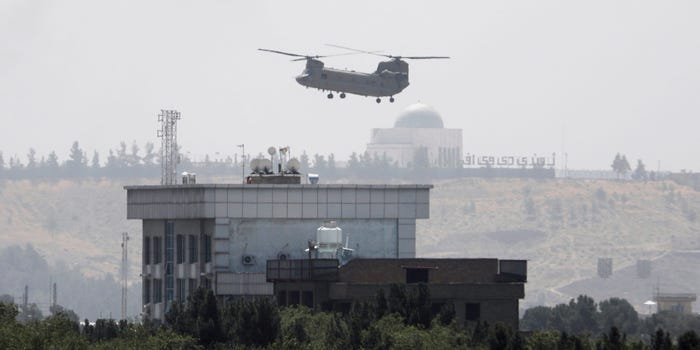
Instead, we handed the country to a bunch of mass murderers. The Taliban is just the worst.
The Iranian regime executes young girls for getting raped. Well, the Taliban goes further. There’s no limit to the depravity of this awful, awful group of people who now control a country.
It’s so bad that they were counting on Chinese Belt and Road Initiative money to develop the country, with the Taliban skimming off the top. All these years later, the Chinese have been largely unwilling to do it because they see them as a bunch of bandits.
Afghanistan is rich in resources. I have no doubt the Chinese military would have zero compunction about cracking enough heads to make its investments pay off. Yet China thinks it’s too much trouble because of the Taliban.
Can you imagine being a young teenager living under that, and being educated, if at all, by that regime’s schools? It’s a horrible, horrible future.
As we see in Iran, there are all these pictures and video clips of a country modernizing in the 1970s and then suddenly plunging into darkness. There are a lot of those pictures of Kabul in 1970.
The world was going the right way in a lot of these places. We didn’t have to throw that away.
Iran and the Right Way to Use Power
Rob Maness: That’s right. We didn’t.
The Taliban have even attacked the Pakistani people and are getting a response from the Pakistani armed forces. I’m glad the Pakistani armed forces are doing that because I know what the Taliban want: They want those nuclear weapons.
Rod D. Martin: Yes.

Rob Maness: They’ll do whatever they can to get them because they see what’s happening with Iran. That’s why the Iranian terrorist government is trying to keep what it has and continue building on it.
I wanted to get your thoughts on this.
I’m pretty honest about it. I’m not a pro-war person. The people I’m closest to in life have seen war up close. I’ve seen war up close. I’ve participated in it. Most of us are not pro-war people.
But we voted for Donald Trump under the peace-through-strength strategy so we wouldn’t get into another 25-year war, as we stupidly did in Afghanistan.
There’s a right way to do things and a wrong way. Afghanistan and Vietnam are two prime examples of the wrong way.
But this president is trying to end the war that, in my view, has been going on since I first put on a uniform at age 17 in 1979. That is a good way.
This air and naval campaign has been masterfully done and continues to be masterfully done, even though the president has opened a sliver of a window for somebody with some sanity inside Iran’s government to step forward.
They can let us end it by giving up their nuclear material and agreeing never to enter the Strait of Hormuz again.
What are your thoughts on this whole thing?
Rod D. Martin: All of that’s correct.
I would add that the media in this country is treating this enormous victory exactly as Cronkite treated Tet in 1968. They might as well have Baghdad Bob as their editor. It’s just crazy.
Anybody who’s really paying attention knows Trump isn’t doing this willy-nilly. The idea that he didn’t have a plan is stupid. What we’re accomplishing is staggering.
First and foremost, people have to understand that Iran is the director, funder, and armorer of every major armed conflict in the region, period. All of them.
Whether you’re talking about the Houthis, Hezbollah, or Hamas, it doesn’t matter. It’s all coming from Iran.

If you solve that problem, either by depriving them of enough cash to continue or by actually getting to a free Iran, you bring about Middle East peace. That sounds crazy, but it’s actually within reach.
What does that do? We can draw down in the region. Likewise, we can draw down in Europe — not leave Europe, unless they want to continue being stupid, but maybe deploy a little more smartly.
We talked about Morocco. I would note that the same people who are all about Ukraine all the time are horrified by the idea of actually moving some troops from Germany to Poland, which borders Ukraine. It’s mind-numbing. They are married to their inertia.
We have an opportunity with Iran that I think we demonstrated exceedingly well in the final two and a half weeks of the campaign before the ceasefire: the ability to take out IRGC thugs in the streets one by one with drones remotely controlled from Nevada.
There’s nothing like that in the history of war.
If you’re able to do that, then no, you don’t need boots on the ground. You just have to degrade the regime’s capabilities sufficiently that the people are not safe, but safe enough to rise.
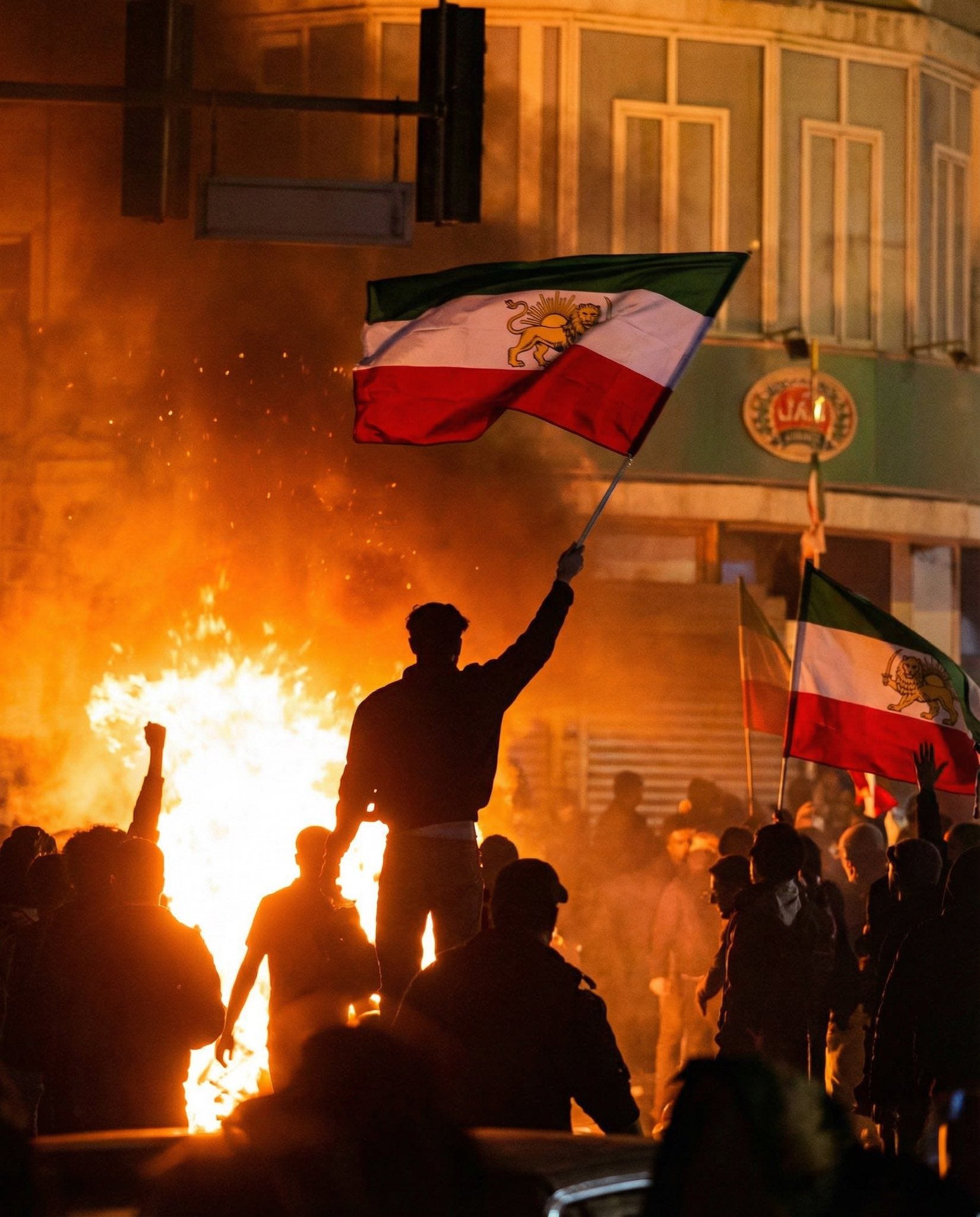
I believe we can get there. I don’t know. No one’s ever tried this, so we’ll find out. But it’s worth a try.
Even if we fail, we will have eliminated Iran as a major enemy from a military perspective: its ability to project power and its ability to harass shipping. When this is over, it won’t have that anymore.
That will have direct consequences for the price of oil. If you take off the risk premium applied to anything that flows through the Strait of Hormuz, as it has been for most of our lifetimes, that makes a big difference for the global economy.
Poor people become wealthier. Everything gets better. These things are about healing the world.
Reagan’s Moral Realism
Rod D. Martin: Donald Trump is not a neoconservative. He doesn’t think American power applied directly with boots on the ground and an occupation is the way to handle everything.
But that doesn’t mean he doesn’t share the goals of freedom. That is the picture of Ronald Reagan.
The critique of Nixon and Kissinger was that at times they seemed a little cynical in their realism. I think that’s an unfair criticism. But nobody could ever say Ronald Reagan was cynical about anything.

He understood that the short, sharp, direct use of American power at the moment of decision was the correct use.
It was compatible with our democratic system, which necessarily demonizes anything the military does in an age of 24-7 news.
Reagan got it. Reagan also understood that if you deprive the enemy of the cash to continue its war, it collapses.
That’s exactly what he did to the Soviet Union by driving up what it had to spend through an arms race while collapsing the price of oil with King Fahd in Saudi Arabia, depriving it of hard-currency earnings.
That brought about the fall where nothing else had.
Trump is doing that. He’s doing it to China. He’s doing it to Iran. He’s doing it, honestly, to Russia.
When the Iran conflict is over, Putin had better be ready to deal, or it’s going to get bad.
Rob Maness: I think Putin and the president are talking because there’s an economic piece to their situation that gives us leverage right now.
They see the weakness of China’s networks, economic system, and military system. We proved with the air operation that their supposedly vaunted systems, capable of taking down stealth and all that, were absolute failures.
But the key thing is the blockade. Iran’s IRGC is losing $500 million a day, and they can’t pay their people.
The longer they can’t pay their people, the more likely we are to see not just a peaceful resolution, but an economically beneficial resolution, where the people of the Middle East are among friends instead of having this enemy everywhere.
Your final thoughts on this, Dr. Martin?
A More American Century
Rod D. Martin: I think we’re moving into a more obviously American century than we could have imagined during what we called the American Century.
I think China is about to fall off a cliff. They’ve got about 10 more years when they can mask that to some degree. But the inexorable math of a total fertility rate under 1.0 is mind-boggling.
They’re on track to lose 75 percent of their population over the next few years. And guess what? It won’t be in a straight line.

You have this ever-shrinking number of working-age people supporting this ballooning group of elderly. They’re not going to have the means to do the things they want to do after a decade. That’s the danger point.
Donald Trump is taking chokepoints and humiliating the Chinese arms industry - and, by the way, the Russian arms industry, too, though they’re doing a good job of that themselves in Ukraine.
He’s cutting off their sources of cheap energy from Russia, Iran, and Venezuela, eliminating their allies, and putting them in a box.
You only have to make it work for about a decade. Then they’re not going to be able to do the things they want to do toward Taiwan, Siberia, or wherever else.
Rob Maness: Sir, that’s the perfect picture of peace through strength.
You don’t have to go to war with people. You just have to be strong enough to give them the decision not to do these kinds of things.
President Washington said that. Every smart president down the line should have been able to grasp that concept.
We have one now, Donald Trump, who’s implementing it.
I appreciate you being with us today, sir. Thank you very much.
Rod D. Martin: It’s great to be here.
Rob Maness: You can find him on X: @RodDMartin. Go follow him, because you have to read what this man is putting out.
You see him on TV a lot, on Fox and Real America’s Voice and those kinds of programs, too, and hopefully here again one day soon.
Tomorrow is Training Tuesday. Don’t forget, this is Armed Forces Appreciation Month. Pray for your veterans. Reach out to them and do a buddy check. Make sure they’re okay.
I’ll see you then.


