


This essay is free, but with Premium Membership you get MORE. Join today.
by Rod D. Martin
August 22, 2026
On Wednesday, both crude terminals at Kharg Island stood empty.
Kharg Island is the beating heart of Iran’s oil-export-dominated economy, the place from which the mullahs sell the petroleum that pays for everything else. On August 19, eighteen dark tankers sat offshore. Two days earlier, 20.7 million barrels of oil waited aboard loaded ships in the anchorage with nowhere to go.
Trump hasn’t closed the Strait of Hormuz: indeed, the U.S. is moving millions of barrels per day through the Strait, some days more than the pre-war peak.
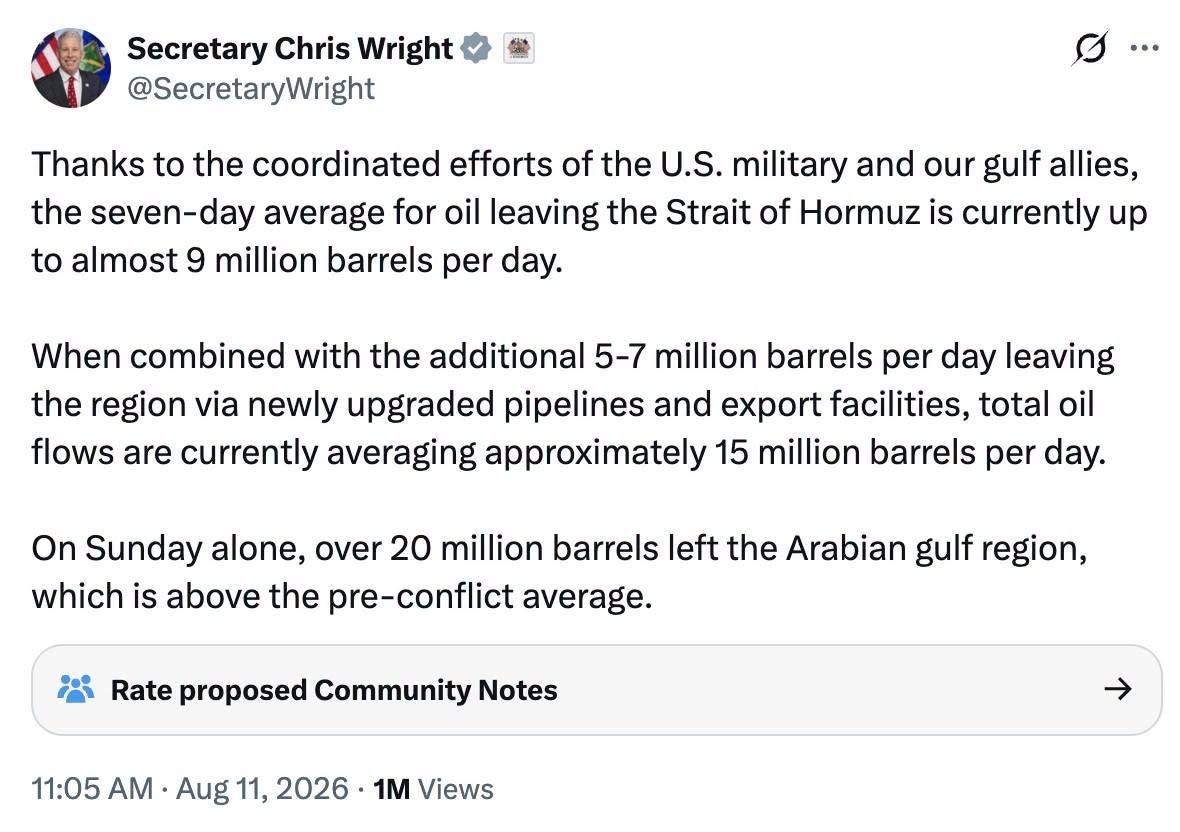
What he’s closed is Iran.
Ships may still pass between non-Iranian ports. But no vessel enters or leaves Iran’s ports in the Persian Gulf or Gulf of Oman without American permission. During the first phase of the blockade, CENTCOM redirected more than 140 ships. Trump reimposed it on July 14 after renewed Iranian attacks, and dozens more have been turned away since.
During the first phase of Trump’s blockade, Iranian crude and condensate exports collapsed from nearly two million barrels a day to less than 300,000. Daily oil revenue crashed from roughly $166 million to $27 million. Add the trade that has stopped, the factories that have closed, the finance that has disappeared, and the shipping and insurance costs that have gone through the roof, and Iran is bleeding $500 million every day.
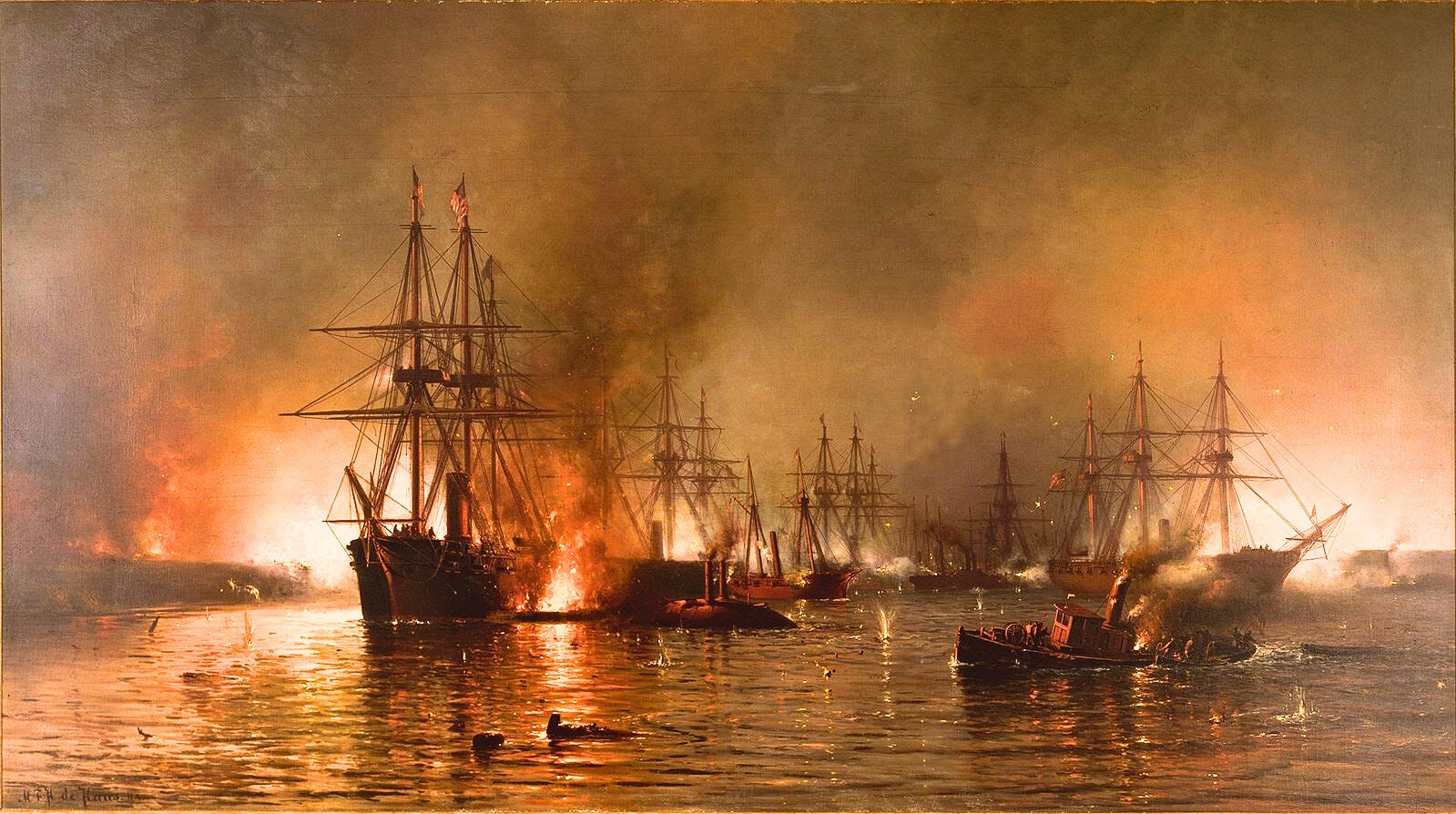
America has used this strategy before. At the beginning of the Civil War, after the fall of Fort Sumter, President Abraham Lincoln declared a blockade of Southern ports, the beginning of a strategy of sealing the Confederate coast and steadily strangling its ability to trade, move, and fight. General Winfield Scott developed that into an operational strategy the press mocked as “the Anaconda Plan.”

Hillsdale College’s wonderful “The Story of America” series is now FREE for you to watch! Learn about the most important episodes in America’s Founding.
Click here for the full series!
But Lincoln and Scott understood the principle. A blockade need not stop every ship to break an enemy’s will and ability to continue the fight. Depriving the South of exported cotton, imported arms, and the hard currency earnings needed to avoid hyperinflation was essential to victory, and ultimately ensured it.
That is exactly what Trump is doing to Iran.
The South’s Fatal Miscalculation
Secession rested on an illusion. The South believed that cotton, courage, and brilliant generalship could overcome the North’s overwhelming industrial strength. Its leaders were certain that “King Cotton” would force Britain and France to intervene. They believed Northern businessmen would choose profits over Union, Northern workers would refuse to fight, and one or two spectacular Confederate victories would send Lincoln begging for terms.
But a free society had outbuilt a slave society.
The North had more than twice the South’s population, the overwhelming majority of its factories, and virtually all of its locomotive production. As a result, it also had most of the nation’s railroads, most of its merchant shipping, a robust banking system, enormous shipyards, and a deep pool of mechanics, engineers, machinists, and skilled labor.
The South possessed vast wealth, but much of it was locked up in land and human beings. Mississippi was the richest state before the war, and the poorest after it, because its wealth was almost entirely in slaves. Those slaves were useless in a factory setting, factories the South did not believe it needed. It was the world’s top producer of cotton, by far Britain’s most important import and one of France’s also.

In 1860 the South produced five-sixths of those imports. With the currency it earned from that trade, it imported much of what a modern war required. It did not need domestic industry. Or so it thought.
Lincoln’s genius was to upend that logic. The first and most essential instrument was the blockade.
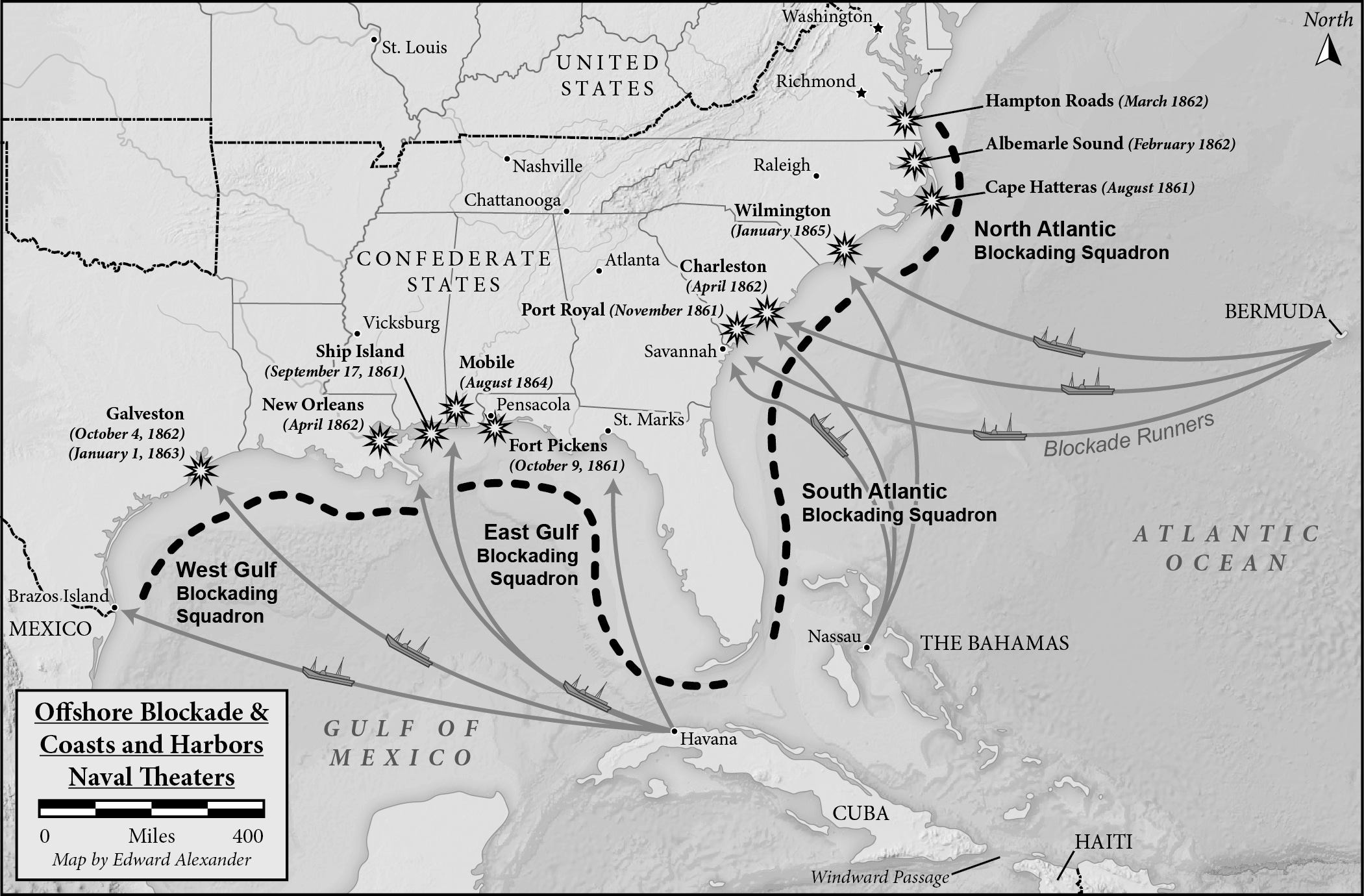
On April 19, 1861, Lincoln ordered the ports of the rebellious states closed. Eight days later, he extended the blockade to Virginia and North Carolina. General-in-Chief Winfield Scott then gave the emerging strategy its memorable shape: seal the Atlantic and Gulf coasts, seize the Mississippi, divide the Confederacy, and steadily constrict its ability to trade, move, eat, and fight.
Southern leaders believed Lincoln’s blockade was a joke — a “paper blockade” — and that European powers (especially Britain) would refuse to respect it or intervene to break it. They were certain business would continue as usual, and they planned accordingly.
Their mockery was understandable. In the beginning, the plan did indeed look absurd. The Confederate coastline stretched 3,550 miles and included 189 harbors, inlets, and navigable river mouths. The United States Navy had just forty-two ships. Barely a dozen were immediately available for blockade duty.
But Lincoln didn’t need the wall to appear overnight. He needed it to grow. And he had the industrial capacity — capacity the South decidedly lacked — to make it happen, and to make the blockade very, very real.
The North bought merchant ships. It converted ferries and steamers. It laid down new warships. It expanded the Navy’s manpower more than fivefold. By the end of the war, the United States had more than 650 vessels in commission, which — in case you missed it — is almost three times the number our Navy has today.
The snake tightened, one harbor at a time, till it strangled the South.
The Wrong Denominator
Confederate blockade runners often got through. That is the fact most commonly used to minimize the Anaconda’s success—and the fact that best explains why Trump’s blockade of Iran is working.
Along the Carolina coast, a staggering 84 percent of attempted blockade runs succeeded. Sleek British-built steamers, painted for concealment and piloted by men who knew every shoal and inlet, raced past Union ships at night. They brought rifles, ammunition, medicine, cloth, machinery, and other desperately needed supplies into the Confederacy. On the outbound run, they carried cotton to Nassau, Bermuda, and Havana.
An 84 percent success rate sounds like a failed blockade. But it wasn’t. It was the wrong denominator.
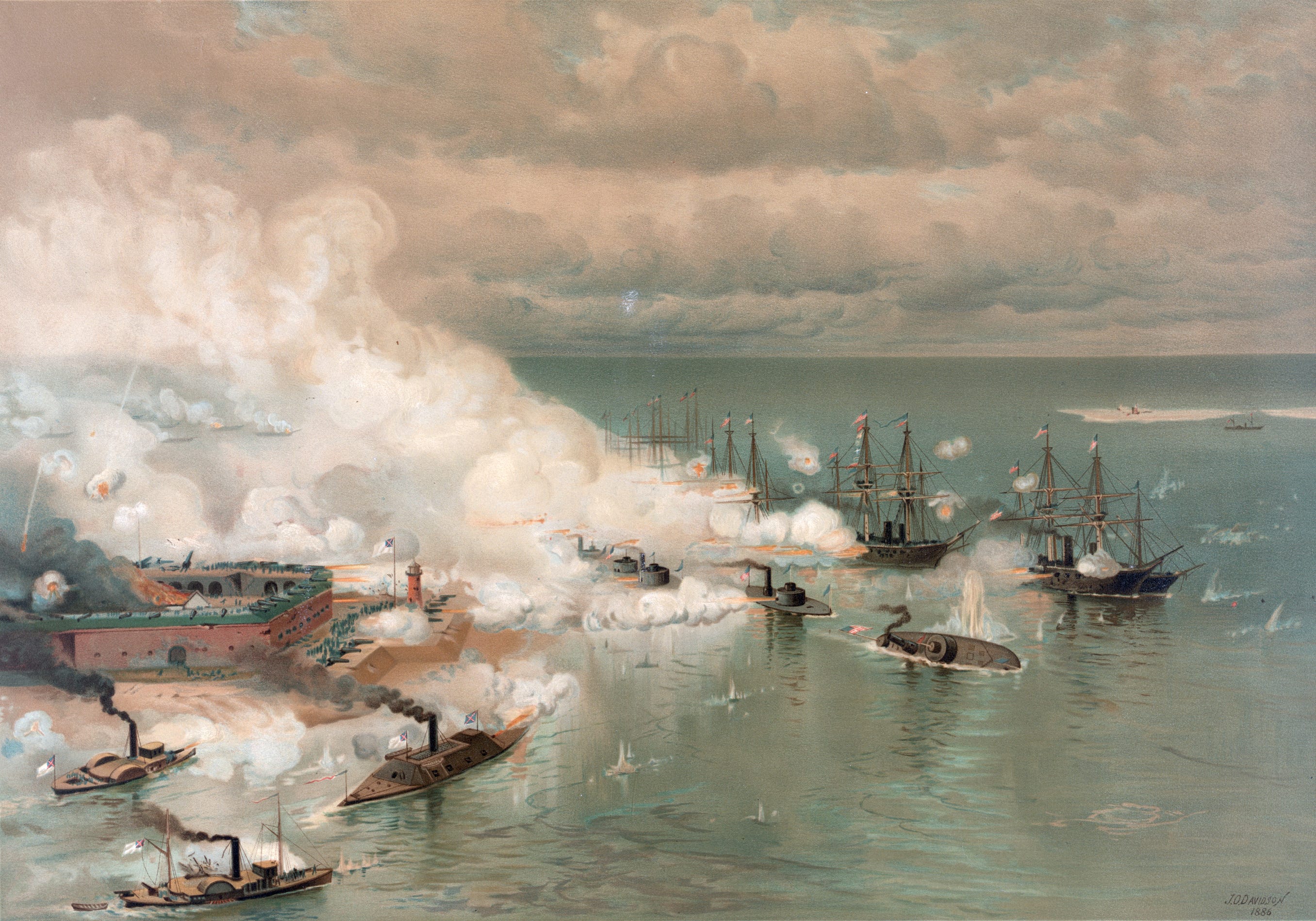
Before the war, Southern ports recorded roughly 20,000 ship entrances and clearances each year. During the war, that number fell to about 2,000. The daring little steamers that remained were built for speed, not volume. They carried goods valuable enough to justify extraordinary risk: rifles instead of plows, medicine instead of iron rails, luxury goods for the rich instead of the vast bulk cargoes on which an economy depends.
The blockade did not have to catch every runner. The danger, cost, and limited capacity of blockade running eliminated most voyages before they were ever attempted.
Cotton tells the story. Before the war, the South exported nearly three million bales a year. During the first year of the war, barely more than 50,000 escaped. Confederate leaders helped create the initial collapse by withholding cotton in the delusional belief that Britain and France could be blackmailed into intervention. But by the time Richmond discovered that Lancashire would not send the Royal Navy to save slavery, the blockade was tightening fast, and foreign buyers were finding cotton elsewhere.
Those buyers kept buying elsewhere, especially from Egypt and India, long after the war. Southern production eventually recovered, and rising European demand allowed it to sell more cotton than before. But the contracts and supply chains created during the blockade never went away. When the South supplied five-sixths of the entire market, it was able to set its own price. When its customers could buy from Egypt, India, and Brazil, it had to take the price on offer.
The South recovered its production. It never recovered King Cotton’s power or control over its own market.
As tankers stream toward the Gulf of America, the Persian Gulf energy producers would do well to take note.
But in any case, from 1862 through 1865, Southern cotton exports averaged just 5 percent of their prewar level. The blockade runners who got through made fortunes. They also made wonderful newspaper copy. But the actual measure of the blockade was the millions of bales that never left, the hard currency the Confederacy never received, the machinery and armaments it could not import, and the ordinary commerce that simply ceased to exist.
The economic consequences compounded. The government, unable to tax or borrow enough to finance the war, was forced to print money. Hyperinflation was the result: prices rose nearly fortyfold by 1864. In North Carolina, a barrel of flour that cost about $18 in 1862 cost roughly $500 by 1865.
Grant, Sherman, Farragut, and the Union armies delivered the blows. The Anaconda Plan determined what those blows would mean. New Orleans could not be replaced. Vicksburg could not be replaced. A locomotive destroyed by Sherman could not be replaced. Each defeat narrowed the South’s remaining choices and made the next defeat more likely.
By the time Fort Fisher fell in January 1865, closing Wilmington to blockade runners, the Confederacy was still full of brave men. But it lacked nearly everything brave men need to keep fighting.
Courage did not manufacture locomotives. Determination did not reopen ports. Patriotism did not make Confederate money worth anything. Defiance did not feed Lee’s army.
The South had not lost its will. It had lost its capacity.
Trump’s Iranian Anaconda
Trump already delivered the blows. The blockade is making them permanent.
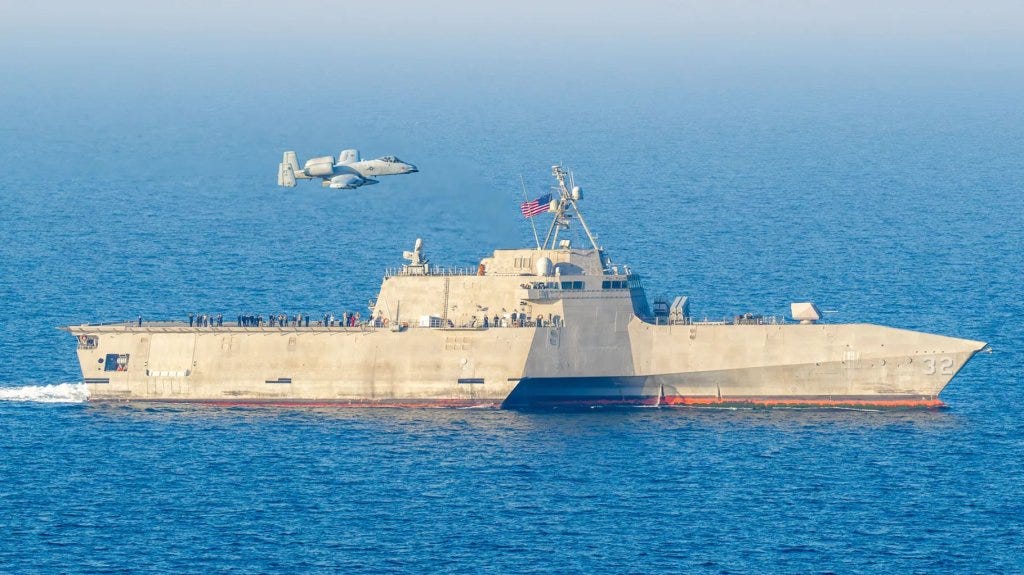
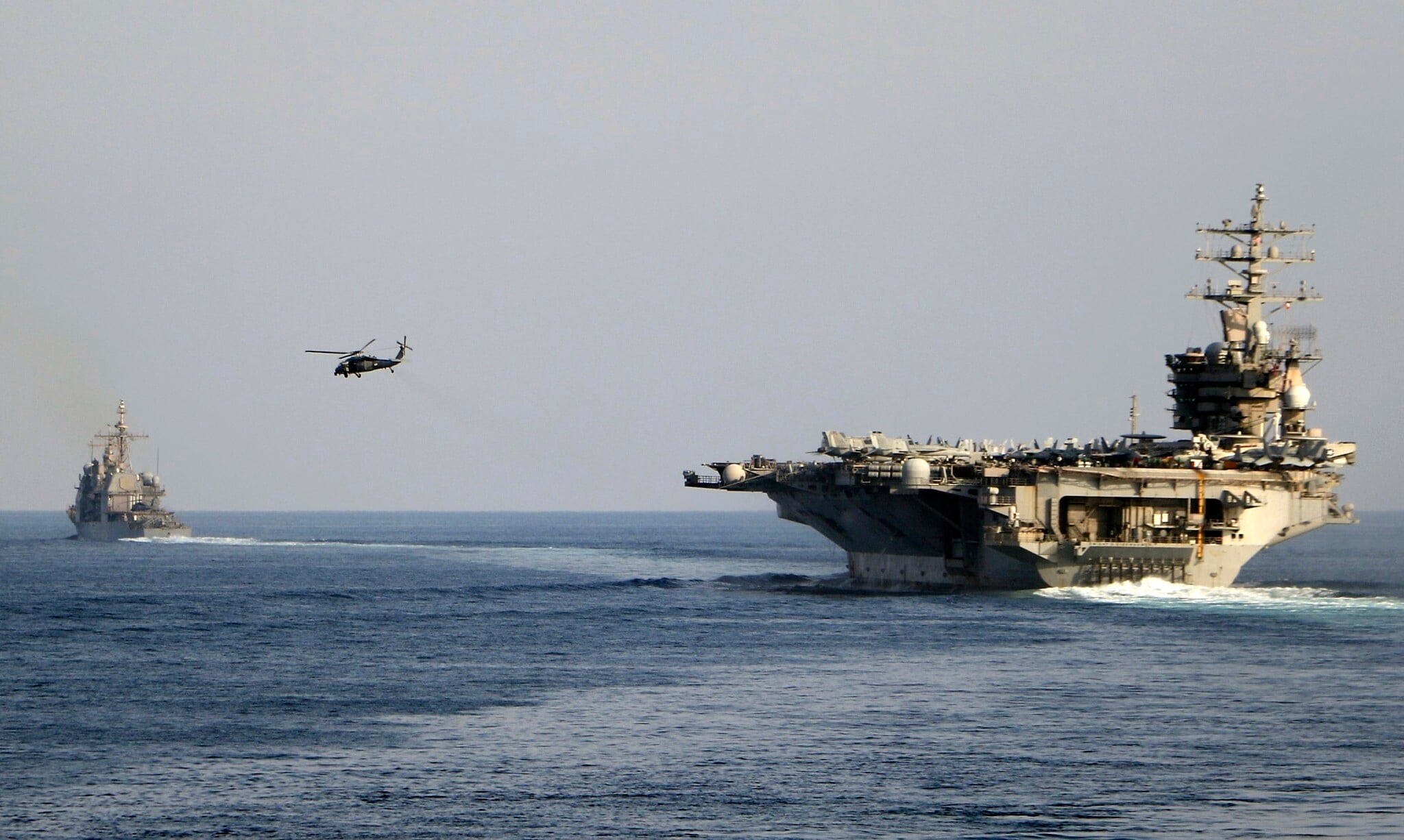
American and Israeli forces have demolished Iran’s nuclear infrastructure, shredded most of its missile force and drone production, sunk its Navy, and decapitated its command structure. The U.S. Navy fully controls Iran’s access to the sea: today’s fleet is smaller than Lincoln’s, but radically more effective. Scott Bessent’s Treasury is dismantling the banks and front companies that turn smuggled oil into spendable money.
Oil can’t get out of Iran. Weapons and money can’t reliably get in.

Trump faced a danger that could no longer be postponed. In February, Iran bragged to Steve Witkoff’s negotiating team that it had accumulated enough highly enriched uranium for eleven nuclear weapons, even as it built toward 20,000 ballistic missiles. Its attempted attack on Diego Garcia covered 4,000 kilometers — enough range to threaten Western Europe, and about half a step from an ICBM that could hit Kansas City.
With the 20,000 missiles Iran was fast building toward, the mullahs’ missile force would have become too large for any missile defense to stop. Tehran would thereby have a shield behind which to finish its nuclear program and hold half the world hostage. Specifically, our half.
It was act now or reap the whirlwind. So Trump acted.
But the war was never just about centrifuges and missiles. Iran directly armed, funded, and directed every current armed conflict in the Middle East. It financed Hamas, built Hezbollah, vassalized Syria, armed the Houthis, and controlled militias throughout Iraq — a de facto Persian Empire from Bandar Abbas to Beirut, from Abadan to Aden.
That empire is gone. It’s not coming back.
Hamas has been shattered. Hezbollah has been beaten into submission. Syria has flipped from Iranian proxy to active enemy. Iraq is suddenly dismantling its pro-Iranian militias.
The blockade keeps Tehran from buying it all back. Taking Iran off the board clears the way for Trump to expand the Abraham Accords and establish a general peace. If he’s successful, the world will never be the same.

But the blockade also destroys Iran’s greatest source of long-term leverage. For forty years, the threat to close the Strait of Hormuz has added a $10 to $20 risk premium to every barrel of oil, enriching the Gulf and impoverishing us. Now the mullahs have finally used that weapon — and discovered it’s a wasting asset. Their foolish overreach has pushed everyone to spend the money they didn’t want to have to spend, to build pipeline networks that bypass the Strait entirely. Iran’s leverage will never, can never, return.
The UAE is doubling both production and pipeline capacity to the Arabian Sea. Saudi Arabia is expanding routes to the Red Sea, and possibly the Mediterranean through Israel. The new anti-Iranian Syrian government has signed deals with a consortium led by Chevron to connect Iraq and the Gulf to Baniyas on the Med.
Global oil demand will continue to rise, and Persian Gulf production will rise with it. But the pipelines being built around Hormuz, and the twenty-year supply contracts now shifting to Louisiana and Texas, will long outlive this war. The Gulf may eventually sell more oil than before. It will never control the market, or pricing, again.
Those new contracts mean more American oil, LPGs, and LNG shipped to the world. The mullahs tried to make the Strait the center of the world. Instead, they are helping Trump move the global energy market’s center of gravity from the Persian Gulf to the Gulf of America.
The same is true for maritime insurance. Lloyd’s failed when it mattered. Trump answered with a $20 billion American maritime-reinsurance backstop. The U.S. Navy has long been the real insurer of global trade. Now much of the profit that enables will shift from London to America.

America’s enemies spent twenty years studying Iraq and Afghanistan, certain they could lure us into an occupation, survive until the next election, and bleed us for a generation. Whether they realize it yet or not, Trump is teaching them that America can destroy an enemy’s military, seal its ports, cut off its money, dismantle its proxies, and wreck its ability to rebuild, all without occupying its capital or fighting a war of attrition.
That’s a rude awakening for much of the world.
Heads Trump Wins, Tails Iran Loses
Trump has been warning about Iran since 1980, and for at least fifteen years he has insisted that the mullahs must never be allowed to have a nuclear weapon.
But the cold-blooded slaughter by IRGC thugs of more than 42,000 innocent, unarmed protesters over two days in January was different. The President was clearly, deeply moved. He promised the Iranian people that help was on the way. And then he sent it.
Needless to say, the best possible outcome is a free Iran, liberated by the Iranian people rather than occupied by Americans. A free Iran could become a First World country in a generation, a natural American ally, and perhaps the greatest investment opportunity of the 2030s.

Trump has been crystal clear that there will be no invasion, and has been careful not to make regime change an explicit war aim. He does not need to. He wins either way.
If the regime falls, the Iranian people get their country back, and the world gains a powerful, prosperous ally at the center of Eurasia.
If the regime accepts Trump’s terms, it surrenders the nuclear, missile, proxy, and maritime machinery that made it a threat.
If it refuses, the blockade leaves it isolated, impoverished, incapable of rebuilding any of them, and subject to renewed bombing at any time of Trump’s (or Israel’s) choosing.
Contrary to the TDS-ridden morons on CNN, regime survival is not the same thing as “strategic victory.” Nor would anyone have believed such a thing in any prior war. Iran has no need of its own “Baghdad Bob”: it has the American media to serve that role.
Dictatorships run on money and fear. The regime must pay the Basij, the IRGC, the police, the informants, and the jailers who keep Iran in chains. They don’t do it for free, and they too have mouths to feed at home. At $500 million in lost revenue every day, there will necessarily come a point when the regime can no longer pay or arm all of them — or even convince them that the men above them will survive.
Greater armies than Iran’s have melted away under such circumstances.
The Anaconda Plan did not require every Confederate to surrender in his heart. It destroyed the logistical chain that continued resistance required. Trump’s blockade does not require the Ayatollah (if he’s even alive) to become reasonable. It requires Iran’s ports to remain empty, its oil unsold, its customers gone, its proxies unfunded, its missiles unbuilt, and its instruments of repression unaffordable.
That is what Lincoln taught Trump: make the enemy’s losses impossible to replace until its government can no longer continue the fight. In a lower-tech era, Lincoln had to invade the South to make it stick. Trump has no such need.
Tighten the noose. Deny the replacements. Let time do the rest.
At some point, even the most determined enemy just can’t carry on. That’s the difference between breaking their will and breaking their capacity.
Lincoln proved it. Trump is proving it again.


One of your best. And timely.
👏👏👏 A tremendous article and a fascinating and insightful historical analogy, Dr. Martin