

by Jonathan Leake
August 12, 2026
Saudi Arabia and the rest of the Gulf’s energy producers have a major problem.
The main shipping routes to export their barrels of oil and tanks of gas — the Bab-el-Mandeb Strait and the Strait of Hormuz — have become war zones. Ships transiting Hormuz alone carry 20 percent of the world’s oil. On that hang the economies of both the buyers and the sellers.
The situation has left Saudi Arabia, as well as some of the region’s other key oil producers, searching for a solution. Now, many think that could come from the unlikeliest of places: Israel.
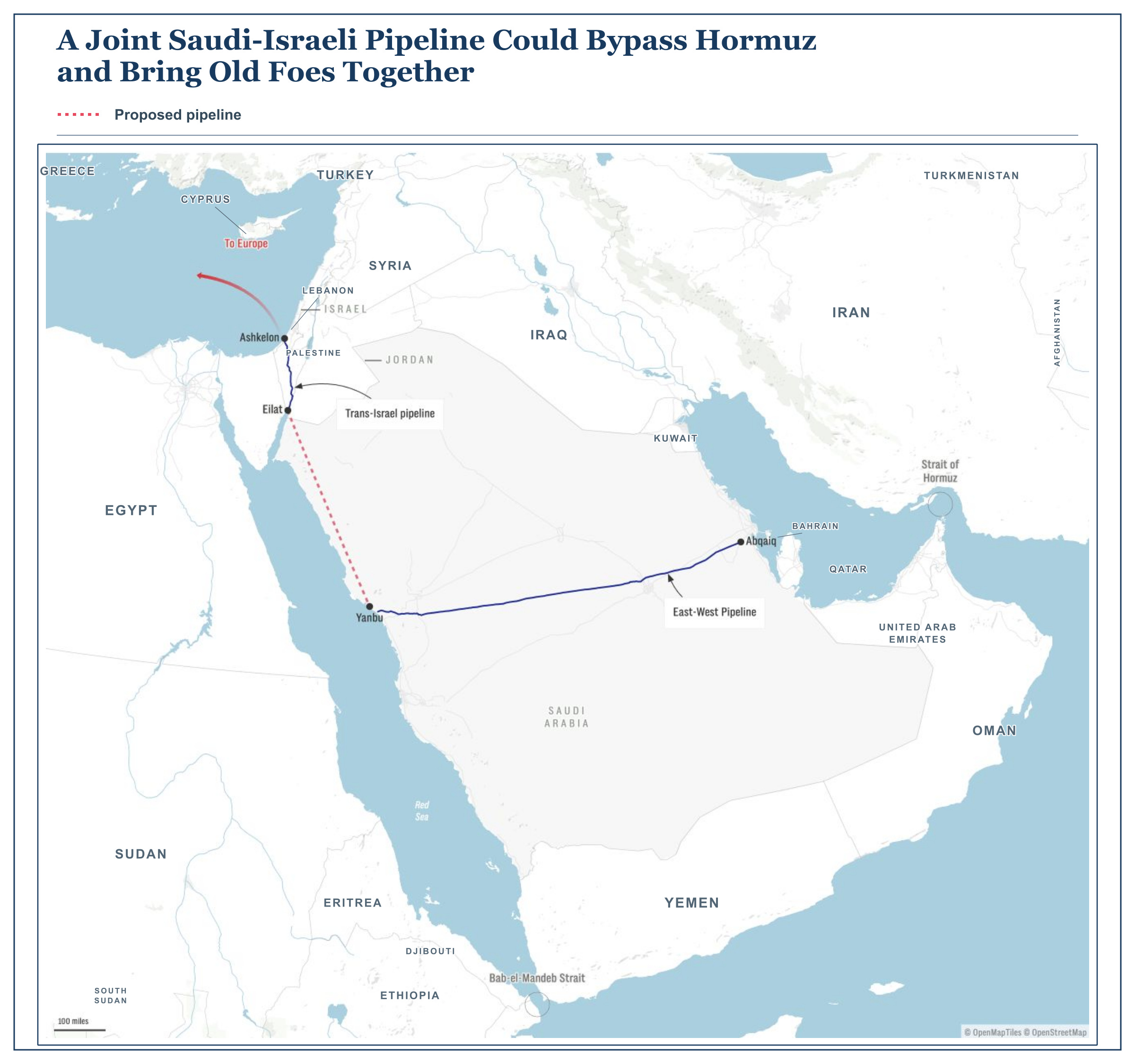
Israel and the region’s oil powers have been enemies for decades, but are drawing up plans to use an overland pipeline to render the straits irrelevant. The proposal would see a pipeline built across the Saudi desert to the Israeli border, where a second pipeline built through Israel in the late 1960s — ironically in partnership with the Shah to carry Iranian oil around the then-closed Suez Canal — would carry it north to ports on the Mediterranean.

Hillsdale College’s wonderful “The Story of America” series is now FREE for you to watch! Learn about the most important episodes in America’s Founding.
Click here for the full series!
If it worked then it would create a new export route, bypassing both the Red Sea and the Strait of Hormuz. The Gulf Arab states are intent on removing Iran’s leverage, building or expanding pipelines (with U.S. investment) from the UAE to Fujairah on the Omani coast, from the oil-rich Saudi Eastern Province to Yanbu on the Red Sea, and from Iraq to the Mediterranean by way of Syria.
Even so, more capacity — and more routes — are needed. And there are real hopes that binding Israel and the Gulf together through mutual energy dependence could have greater consequences. Could a pipeline expand the Abraham Accords and help bring peace to the Middle East?
Brief details of the scheme have been released by Eli Cohen, Israel’s energy minister.
