

This essay is free, but with Premium Membership you get MORE. Join today.
by Peter Hague
August 21, 2026
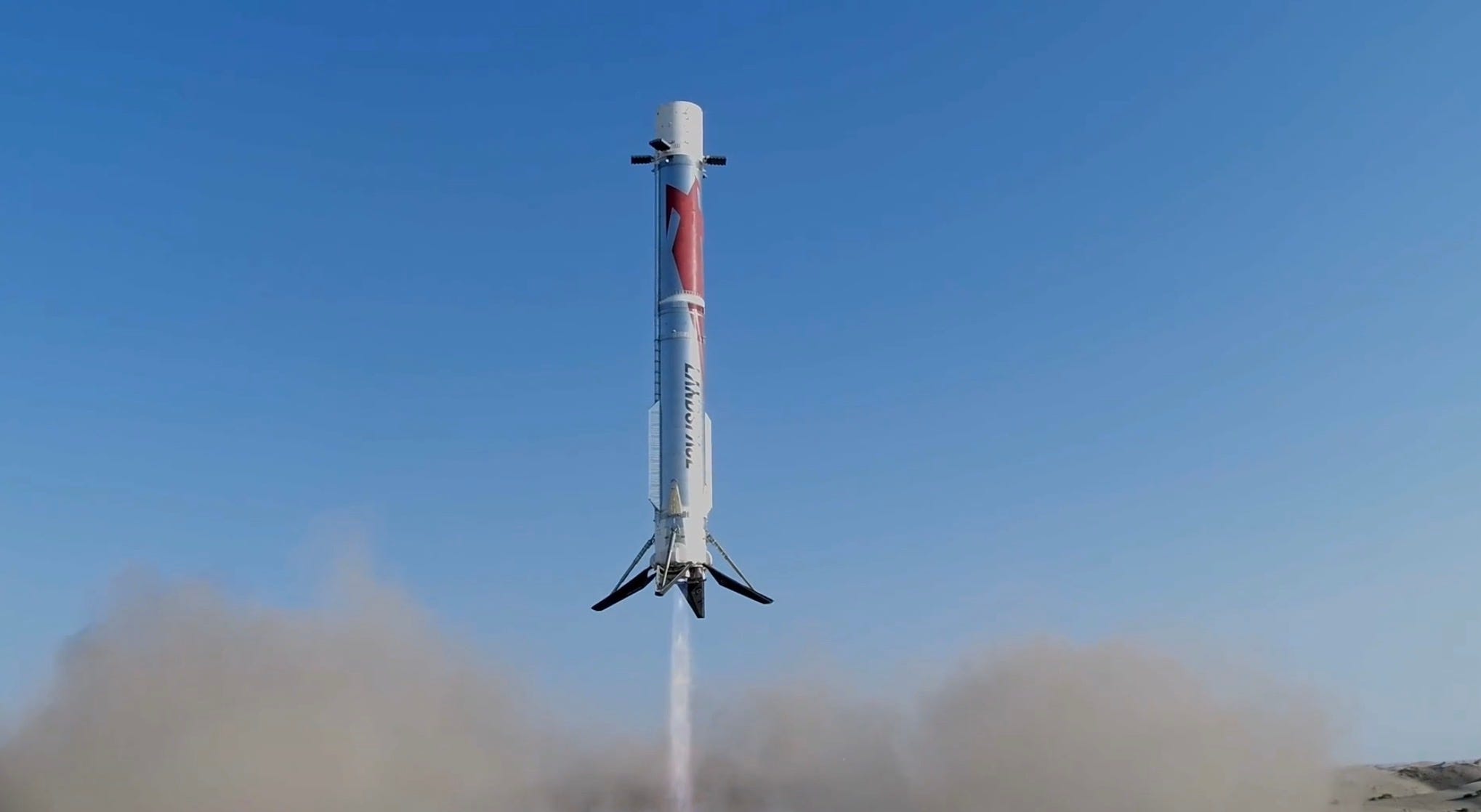
The second launch of LandSpace’s Zhuque-3 rocket has concluded with a successful first stage landing, although there are some reports that a post-landing fire damaged the booster. Regardless, for a second flight and second landing attempt, this is impressive — SpaceX had a whole blooper reel worth of landing mishaps to get the Falcon 9 to where it is today.
This private launch vehicle follows the successful recovery of a Long March 10B first stage by the state-owned launch company CALT. China now has two separate entities demonstrably capable of recovering a rocket, and nobody else outside the United States is close to the capability.

China is also considered a serious competitor for the U.S. in getting back to the Moon, and will be soon launching their Chang’e 7 probe to the lunar South Pole, which will no doubt cause much handwringing in Washington. It remains the fact that SpaceX retains an overwhelming lead in reusable rocket technology and mass delivered to orbit. Even with the advantages they provide, Chinese competition in space is routinely raised in political debates around NASA.
What western lead remains in spaceflight is almost entirely due to one company, SpaceX, and downstream of that one man, Elon Musk — whose journey to being a space magnate is unlikely to be repeatable. It is worth taking a step back and looking at how we got to this point.

Hillsdale College’s wonderful “The Story of America” series is now FREE for you to watch! Learn about the most important episodes in America’s Founding.
Click here for the full series!
The Crown in the Gutter
In 1969, when the U.S. amazed the world by landing men on the Moon, China was a desperately poor economic basket case. Reeling from the disastrous Great Leap Forward, and suffering under the chaos of the Cultural Revolution, it had a GDP per capita of around $100, on par with that of Ethiopia. Only a handful of Soviet-derived nuclear weapons and a massive conscript army let it rank as a power at all. At the time someone suggesting that China might challenge the U.S. for the Moon would have been dismissed out of hand.
But the U.S. abandoned its lunar program. It gutted funding for NASA. It pursued the Space Shuttle as a cheap option — and even then underfunded its development, ensuring that it could never meet its lofty goals.
As the Shuttle prepared for its maiden flight, China began its economic reform under Deng Xiaoping. Its economy was a tenth the size of the U.S. (at purchasing power parity), and per capita almost 50 times smaller. But the introduction of private enterprise triggered a process by which it would quickly close much of the gap, economically at least.
In 1992, China had grown to a fifth the size of the U.S., and it initiated its Project 921 human spaceflight program. The U.S., meanwhile, had lost interest in spaceflight. The Challenger accident had shown the promises of the Shuttle as a rapid and cheap means of space access to be hollow, President Bush’s Space Exploration Initiative had flopped in the face of high projected costs and disinterest from Congress, and the American people expected a peace dividend from the end of the Cold War.
Thereafter, NASA settled into low-cadence Shuttle flights, a space station program in collaboration with the Russians, and a “Faster, Cheaper, Better” ethos of space probes. The Moon and Mars were off the table.
The U.S. finally turned its eyes back to the Moon in 2005, in the aftermath of the loss of another Space Shuttle and the understanding that something needed to replace that vehicle. The Constellation program promised to use Shuttle-derived launch vehicles to return to the Moon by 2020.
Meanwhile, China was now a successful industrial power, a member of the World Trade Organization, and had an economy around 45 percent the size of America’s. They were flying their first Shenzhou missions with humans on board, learning the ropes of safe human flight, EVAs, and docking.
The Constellation program failed, producing only one suborbital test launch of an Ares 1 rocket with a boilerplate upper stage, while spending a huge amount of money. It was canceled by the Obama administration, and after wrangling with Congress, the SLS was born, as a means to fly the Orion capsule to the Moon.
As part of this process, almost as an afterthought, NASA was directed to use commercial providers to send crew to the ISS. Had this decision not been made, the U.S. today would have no means of sending people to space at all. The Shuttle retired in 2011, leaving the U.S. dependent on the Russians for Space Station access. Meanwhile, the Chinese space agency began a series of increasingly complex space station missions on their own.

Finally returning to beyond Earth orbit human spaceflight with Artemis II in April of 2026, the U.S. now faces a competitor with a robust industrial base, a near-peer economy, and a space program that maintains a continuous human presence in Low Earth Orbit. Now with reusable rocket technology, China has launched the majority of unmanned landers to the Moon this century and returned the only samples since the 1970s, and is well into the development program of its human lunar systems.
Most likely the next astronauts to leave Earth orbit will be Chinese. The U.S. still has a chance to get boots on the surface again before China does, but only due to SpaceX and, to a far lesser extent, Blue Origin — NASA and its traditional contractors do not have the capacity to get from lunar orbit to the surface at all.
In summary, the political choice to abandon the Moon, and the clear possibility that Apollo could have led into a more long-term program of lunar development, left the chance to take the lead in lunar development wide open to more or less anybody who had the patience and the will — which China does.
Second Mover Advantage
Many observers look at Long March 10B and Zhuque-3 landings and assume these vehicles are mere cheap copies. Physics does only allow a limited number of ways to do things, but indeed there likely is some “inspiration” going on, if not outright industrial espionage.
Yet this doesn’t diminish what China has achieved — because Europe, Russia, India and Japan have all been watching what SpaceX does, and have had a decade to do it themselves. None of them have flown an operational rocket of this type.

This shows implementation is far from trivial, even when you know what the goal is. But where it does help is giving direction to government procurement: leaders who generally lack deep technical knowledge can point to a technical achievement in another country and say “build that”.
Indeed, this has happened before with the Space Shuttle. The Soviet leadership, in their paranoia, decided it was a weapon and demanded their space industry build one of their own to maintain parity. This effort gave birth to the ill-fated Buran program. Rather than being an integrated stack, the Soviet Shuttle launched on the side of a self-contained heavy-lift vehicle called Energia (the vehicle the engineers in charge actually wanted to build), which only superficially resembled the solid boosters and external tank of the American Shuttle.
In the case of reusable rockets, what is being copied is agreed by the leadership and by the engineers to be a good and useful thing, so the end product of this is not going to be some confused and expensive mess like Energia/Buran. And while it is easy to mock the second mover for copying, bear in mind that the process does allow technical growth which will ultimately spawn indigenous development.

The first generation of Chinese space capsules and station modules had a not-coincidental resemblance to Russian spacecraft. But their newer modules and Mengzhou spacecraft are clearly novel designs. Once Chinese companies are comfortable flying their own version of the Falcon 9, they will likely come up with their own original designs.
This has consequences. As Joseph Trevithick put it in The War Zone:
At the same time, it is hard not to see this continued push toward new reusable space launch capabilities having huge impacts on Chinese military and other national security activities outside the Earth’s atmosphere. A mature, reliable reusable space launch capability would drastically accelerate China’s access to space across the board while also lowering costs. This is especially vital for the deployment of new large distributed constellations.
This would also increase China’s ability to compete on price in the commercial space launch market globally. As noted, the United States currently enjoys a decided competitive advantage in this arena worldwide, thanks largely to SpaceX and its reusable launch options. The benefits of securing a greater share of this market could easily feed back into Chinese national security applications by helping further spread cost burdens and fueling accelerating development of this class of space launch systems.
In the meantime, the Chinese government has already been expanding its space-based intelligence gathering and other capabilities at a breakneck pace using non-reusable launch options.
“I think the ongoing greatest challenge is just the speed at which China is moving to rapidly improve their space capabilities and the breadth that that potentially poses,” U.S. Space Force Gen. Stephen Whiting, head of U.S. Space Command, said at the annual Space & Missile Defense (SMD) Symposium last week, at which TWZ was in attendance. “China is moving breathtakingly fast.”
The Question of Will
The European Space Agency agreed a three-year budget of €22.3 billion this year, or €7.4 billion per year. This is roughly one thirtieth of one percent of the GDP of its member states. Meanwhile, the Chinese space program is estimated to spend at least €17 billion each year, decidedly not including its military space program. Applying a purchasing power factor of 1.4, that means the Chinese budget is about three times that of the European one. Unsurprising that, even factoring out different political choices in what to do with the program, Europe lags behind.
But increasing the budget to match that of China would be a very small effort, still keeping the overall commitment at a tenth of a percent of GDP. Europe has the scientific and technological base, for sure, and could have entered this race at any point — and still can. Similar arguments could be made for other space powers, or even those who are not space powers.
Consider the UK; applying the 1.4 factor and converting to pounds, it would cost us around £20 billion a year to match China. The annual growth in our welfare budget is already £18 billion a year — not through new commitments, but merely the automatic updating of existing ones. The NHS spends around £20 billion every single month. Our spending on debt interest alone is more than 5 times the annual Chinese space budget.
It might be difficult to find that kind of money, but it’s clearly not outside the scope of what we spend on just treading water. Not doing so is a political choice, not one bound by fundamental economic constraint. Similar spending arguments could no doubt be made for France, Japan, Germany, and a host of other developed nations.

Decline or greatness are not things that happen to a nation. They are choices. And with sufficient will, nations can make different choices.
Some may look at SpaceX and think that they can just wait for their own Elon Musk to solve the problem for them — and somehow for another SpaceX to survive and scale without the government contracts the original got — but this is foolish, relying on historically contingent events that are unlikely to be repeated. The great powers of the 22nd century will not be those who are fortunate, but those who opted in to the future.
— This analysis first appeared at Planetocracy, which you should follow.


The typical Instapundit commenter is far too complacent about Chinas tech as nothing but shallow copies.