


This analysis is free, but with Premium Membership you get MORE. Join today.
Our full discussion transcribed below:
by Rod D. Martin
July 31, 2026
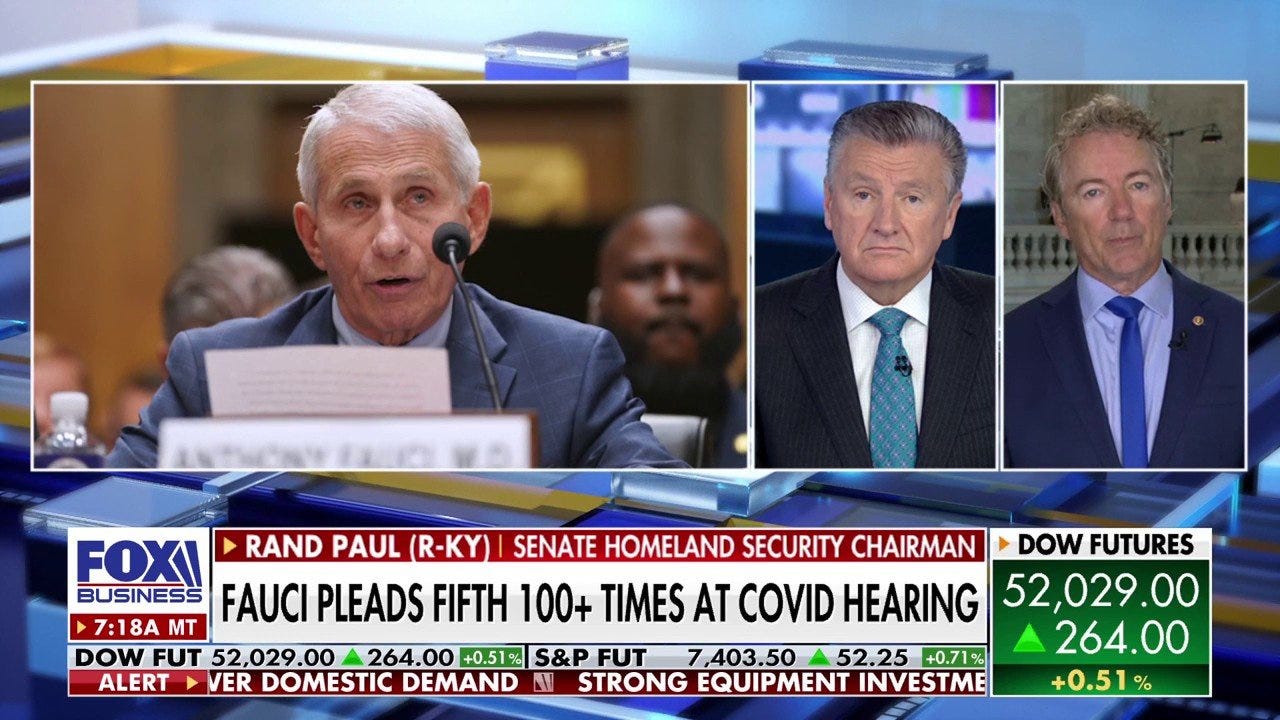
I appeared on NTD Good Morning with Cary Dunst to discuss the latest strikes in Iran, China’s reported weapons shipments and what that means, PLUS the aftermath of Fauci’s astounding 111 times taking the Fifth.
We discuss:
Iran’s rejection of diplomacy and the strengthening U.S. regional alliance
The (very limited) extent of China’s support for Iran, and the Taiwan angle
Closing off Iran’s supply routes
The American fifth column: the Enemedia
PLUS, Fauci’s Fifth Amendment problem
It’s 15 minutes of the analysis you need. Watch the interview, and pass it along!
Nothing matters more than educating the next generation with the values we cherish. The Herzog Foundation is making that possible. Learn more here.
Our full discussion:
Don Ma: U.S. Central Command carried out a heavy wave of strikes on Iran after a roughly five- to six-day pause. Joining us now to discuss this is Rod Martin, geopolitical analyst and founder and CEO of Martin Capital.
Rod, good afternoon. Thank you for being here today.
President Trump gave diplomacy another chance with Iran. I guess we shouldn’t be surprised, but why would Iran choose to throw that away and restart a fight it cannot win?
Rod D. Martin: Iran can’t ever agree to a deal. It’s just not going to happen short of a surrender, and Donald Trump understands that perfectly well.
But you see what’s beginning to coalesce. First of all, we struck these Iraq-based, pro-Iran militias alongside the Saudis, which is just extraordinary. The Saudis have kept their noses out of this all along the way, and now they’re actually doing joint missions with us on foreign soil to deal with Iran.
We have had significant increases in cooperation from Kuwait, the UAE, and others. What Donald Trump is doing here is not so much negotiating with people who really can’t be negotiated with as he is negotiating with all of Iran’s neighbors, who absolutely can. We’re seeing that.
We saw it in the case of the 123 deal, which is about civilian nuclear power for Saudi Arabia. The president expressly conditioned it on peace with Israel, joining the Abraham Accords, and becoming part of a regional peace.

We see that in Syria. The Syrian leader is talking about coming to some kind of peace agreement with Israel. The Israelis, with Marco Rubio’s help, just worked out a deal with the Lebanese government to regain control of their country and kick out Hezbollah.
All across the region, you have somewhat intransigent Arab governments that Iran is actually helping us negotiate with to accomplish a better postwar world.
The president needs to show that he’s reasonable. He needs to show that he’s willing to negotiate, because none of these guys in the region has much stomach for going all-out against Iran. But they’re getting there. They’re getting there every single time Iran attacks a hotel, a water plant, a sewage plant, or some other civilian infrastructure in countries that aren’t even part of this war. They’re all beginning to see this has to stop, which is to say, Iran has to be stopped.
The Extent of China’s Support for Iran
Don Ma: I was just going to ask whether Saudi Arabia’s actions could mean that it’s aligning more closely with the United States, but it seems like that’s what’s happening. The United States, as you pointed out, is making more friends, alliances, and partnerships in the region.
But it seems Iran is getting help, too. According to a Reuters report, if true, China could be supplying Iran with shoulder-fired missiles. What would be the significance of that? Would it put U.S. aircraft in danger?
Rod D. Martin: It probably wouldn’t be a meaningful threat that the U.S. Air Force and naval aviation couldn’t contend with. But it’s annoying, and it’s needlessly provocative.
I probably know what the Chinese are thinking, but rhetorically speaking, what the heck are they thinking? We’ve got a trade negotiation going on. We’ve got a bunch of irons in the fire with them, and they’re stirring up trouble here.

Again, this is kind of pinprick trouble. We’re not talking about them shipping advanced stealth fighters to Iran. It’s really important for your viewers to understand that this has been true all along. The Chinese have talked a big game about their BRICS alliance and all of these different things, but China hasn’t shown up with the goods.
China has refused to give Iran, at any price, advanced modern fighters. That just hasn’t happened. When the Iranians have asked for them, the Chinese have basically laughed at them. They literally told them, “The Israelis will have those destroyed before we can deliver them.”
They’re not helping. They’re not going to send troops. They’re not going to do the things you would expect from an ally.
The important point is that a lot of people here are going on and on about how Trump is getting us into World War III. No, he absolutely isn’t, partly because the Chinese can’t project power at that scale into a region distant from their shores, and partly because they just don’t want to.
My guess is that what we’re seeing with the MANPADS — the shoulder-fired missiles you’re talking about — is a response to Japan’s military buildup, its transfer of frigates to the Philippines, its sale of frigates to Australia, and the U.S. arms deal with Taiwan.

They’re probably seeking leverage going into the next summit to try to get Trump not to help Taiwan as much as he would like to. I think that’s really all we’re seeing there.
Closing Iran’s Supply Routes
Don Ma: You mentioned that you may know what China is thinking with this move. Could you go a bit deeper into that thinking?
China and the United States have deals and negotiations underway, so China must have weighed the pros and cons. What is China’s stake in this war? Why are they doing this? What are they thinking?
Rod D. Martin: The biggest single thing, as I said, is Japan and Taiwan. They are not linking one to the other explicitly in their press statements, but they clearly are linking them. I don’t blame them for that. We’d do it. There’s no question.
They’re not sending Iran the things it really needs to be successful in this fight. What will probably happen from here is that we will start closing off the land routes into Iran.
When hostilities recommenced, one of the first targets we hit was a key bridge that brings supplies overland through Uzbekistan into Iran. That doesn’t exist anymore.
There are certainly land corridors in various places that can be shut by a determined U.S. Air Force.
There’s a third element of this, and it’s really fascinating. Zelensky was just at the White House, the same day Netanyahu was, in fact, and had a great meeting.

One of the reasons it was a great meeting was that Zelensky had just hit an arms shipment in the Caspian Sea coming from Russia to Iran. Of course, the Iranians deny that it was an arms shipment, and so do the Russians, but we know better.
The fact that Ukraine is actually being helpful in a kinetic way at this point definitely increases Zelensky’s standing in Washington.
There are a lot of interlinked things here, but the bottom line remains that Iran can’t stop anything we’re doing. There’s absolutely nothing they can do to prevent our airstrikes or anything else we choose.
The real issue is how long this regime can last in power before its power is diminished so much that the people can rise up and overthrow it. I think we will see that. We probably won’t see it next week, but it’s coming.
Media Pressure and the Iran War
Don Ma: To your point that Iran cannot stop the United States from doing anything, I’ve been talking to a number of experts on the Iran war, and they say one of Iran’s strategies is to inflict political pressure on the United States and President Trump.
If that is the case, are media outlets that report negatively or unfairly about this war indirectly helping Iran’s strategy to put political pressure on Trump?
Rod D. Martin: Of course they are, in the same way that the same media did the same things in Vietnam, Iraq, Afghanistan, and basically anywhere a Republican president has engaged in my lifetime.
Of course, they were doing it to Lyndon Johnson, and he wasn’t a Republican. But the Democrats in control now hated Lyndon Johnson in their youth, so that doesn’t really mean a lot.
The media is always going to demonize these things. They’re going to talk about the War Powers Act, the 60-day limit, and all this different stuff.

But when Obama went to war in Libya, he went on for 222 days, and they didn’t cry boo. When Bill Clinton also exceeded his 60-day limit by a lot in Kosovo, they didn’t care. They didn’t see a problem with it.
Yes, the media is very partisan. They do not think politics stops at the water’s edge. They’ll do anything they can to undermine this administration.
That’s a terrible mistake, because Republican and Democratic administrations alike have understood — even if some of their approaches to dealing with it were dumb, like Obama’s — that Iran is a danger to the world. It’s a danger to us. It has to be dealt with, and only Donald Trump has had the courage to really do it.
Fauci’s Fifth Amendment Problem
Don Ma: You would think this would be a bipartisan issue and that the media would treat it as such instead of taking sides.
Before you go, Rod, I have one final topic. It’s not related to the Iran war; it’s related to Dr. Fauci and his testimony yesterday.
It wasn’t much of a testimony because he pleaded the Fifth Amendment more than 100 times. He didn’t even answer basic questions. At one point, a senator asked him the color of his tie, and he pleaded the Fifth. Any final comments on that?
Rod D. Martin: Tony Fauci has a real problem.
First and foremost, he has a presidential pardon, which means he must testify. He cannot invoke the Fifth Amendment. If he does, then he’s guilty of obstruction of a congressional investigation.
That’s a crime, and it’s not covered by the pardon because the pardon is retrospective, not prospective. It doesn’t apply to new crimes.
On the one hand, he’s in real danger there, and Rand Paul has made clear that he means to see him prosecuted.
Second, if Fauci does testify — if he cures that problem by coming back and saying, “Oh, mea culpa. I’m sorry. Let me tell you what I have to say” — then he’s got a completely different set of problems.
One is that, if he doesn’t speak completely truthfully, he flirts with perjury, which we’ve seen him do in congressional testimony before. The record is now really, really clear.
It’s a good thing he got that pardon. That’s before we even examine whether the pardon was valid. Let’s just assume for argument’s sake that it is.
If he shows up and testifies, he’s in danger of perjury again or, in the alternative, shredding his own reputation, which the diaries have pretty much already done, and fingering a bunch of his lieutenants. One of those is already under indictment for these very things.
That’s before we get to state-level prosecutions or civil suits by attorneys general. Florida is all over that. Texas is all over that. They probably won’t be the last.
I imagine his lawyers told him, “You actually can’t avoid testifying by pleading the Fifth because you’ve got a pardon. But it may be your best bad option under the circumstances.”
We’ll see where it goes. I don’t think it’s going to go anywhere good for Tony Fauci.
Don Ma: Do you think states could actually prosecute him?
Rod D. Martin: Very possibly. You have to have a good state-law cause of action, and we have some very creative attorneys general, particularly in Florida and Texas. If they can find a way to do it, they will.
They might very well have a civil case as well. The civil case would be very similar to a civil rights case.
Normally, you can’t sue the government. We have this thing called sovereign immunity. We inherited it from the British: you can’t sue the king. Normally, that’s the rule, and that’s enshrined in the Eleventh Amendment.
However, there are cases where you can sue if the court finds that the person was acting illegally and was only able to do so by virtue of his public office. He is “acting ultra vires, under color of state law.”
That could be an avenue for these state attorneys general to go after Fauci. If they can find a way to do it, they absolutely will.
Don Ma: Rod, let’s leave it there for today. I always enjoy your comments. Thank you very much.
Rod D. Martin: Thank you.


