

Behind America’s New Industrial Revolution
Defying all predictions (except the President's and ours), the United States is now outpacing the world in growth and productivity.
This analysis is free, but with Premium Membership you get MORE. Join today.
by Emel Akan
March 4, 2026
The U.S. economy grew faster than many predicted over the past year, outpacing other advanced economies, especially in Europe, where growth has nearly stalled.
President Trump’s pro-growth policies, combined with a surge in investment in artificial intelligence, have further strengthened the country’s economic momentum. Central among these are the President’s permanent tax cuts — the One Big Beautiful Bill Act signed into law last year — and a record $18 Trillion in new foreign investment into the United States recruited by the President since he took office last January.
The United States is “at the doorstep of a new industrial revolution,” said Stoyan Panayotov, a financial adviser and founder of Babylon Wealth Management.
He said the country’s strong capital base, skilled workforce, and shareholder-friendly environment make it more attractive to investors than other markets.
S&P 500 companies are reporting earnings that beat market expectations. More than 70 percent of companies recorded positive earnings surprises in the fourth quarter of 2025, according to FactSet data.
On Feb. 6, the Dow Jones Industrial Average surpassed 50,000 for the first time — after the S&P hit 7,000 on Jan. 28.
During his State of the Union address on Feb. 24, Trump credited these milestones to his economic policies, particularly tariffs. In a Truth Social post on Feb. 6, the president also made a bold prediction: “I am predicting 100,000 on the Dow by the end of my term. Remember, Trump was right about everything!”
Strong corporate earnings, technological innovation, and a positive economic outlook all have contributed to the U.S. stock market’s appeal.
Despite the recent market volatility, entrepreneur and investor Kevin O’Leary believes the United States remains the “most trusted” investment hub for global investors.

Despite the fact that America has just 4 percent of global population, O’Leary told a Jan. 28 summit about “Trump Accounts” for newborns that “You’ve got to realize, 52 cents of every dollar created on earth is invested in the American stock market.”
“It’s the most liquid and most successful economy on earth,” the “Shark Tank” star said. “It provides consistent returns.”
On Independence Day last year, Trump signed the One Big Beautiful Bill Act into law, which included pro-business measures aimed at boosting capital spending and encouraging the onshoring of factories.

Among its provisions was the permanent restoration of 100 percent bonus depreciation for qualified assets. The policy allows businesses to immediately deduct the full cost of new factories, factory improvements, capital investments such as machinery and equipment, and software, as well as domestic research and development. Many companies are leveraging bonus depreciation to reduce tax liability and reinvest in growth.
The manufacturing footprint is expanding, and the AI boom is increasing demand for energy, data centers, and commodities. Despite concerns about an AI bubble, U.S. technology giants Alphabet, Amazon, Meta, and Microsoft plan to invest collectively about $650 billion in 2026, mainly to expand their AI infrastructure.
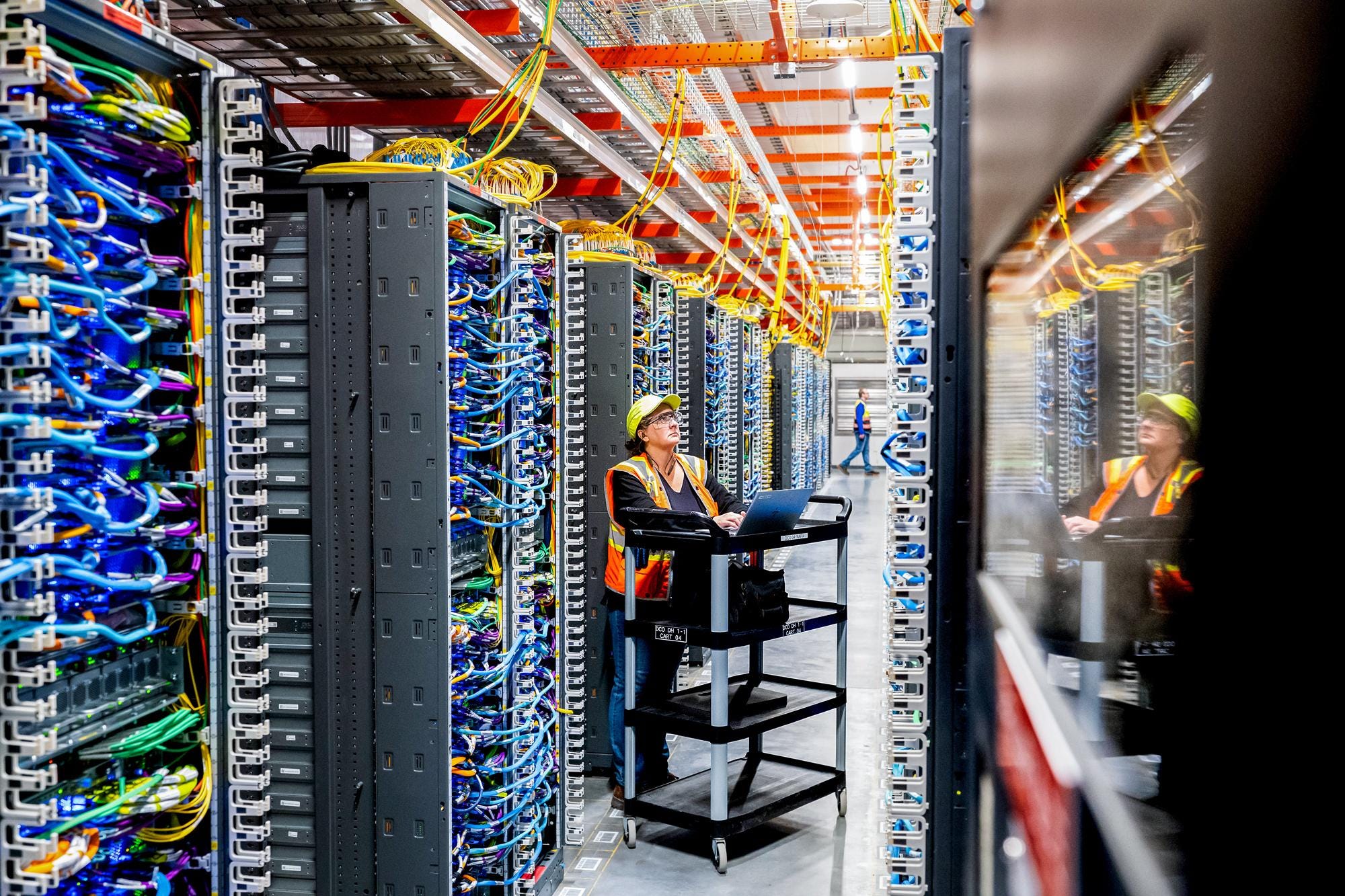
These trends are driving renewed investor optimism, according to Panayotov.
Growing Productivity Gap
Recent data show U.S. businesses are also becoming more efficient, with nonfarm productivity jumping by 4.9 percent in the third quarter of last year. Productivity measures how efficiently companies produce goods and services using given input such as labor and capital.
While U.S. productivity has increased rapidly since 2019, productivity growth in the UK and eurozone has remained mostly stagnant, according to the Organisation for Economic Co-operation and Development. The growing productivity gap between the United States and Europe is largely explained by the tech sector.
Economists note that most innovation over the past few decades has occurred in the United States, while Europe has lagged behind, primarily because of excessive regulation.
“The EU is weak in the emerging technologies that will drive future growth,” a 2024 report by the European Commission stated. “Only four of the world’s top 50 tech companies are European.”
The outlook also appears favorable for the United States. A recent Financial Times survey found that more than three-quarters of economists expect the United States to keep or increase its productivity lead over other countries. They point to AI, strong capital markets, and lower energy costs as the main reasons.

“Productivity growth is good for everyone and keeps inflation at bay,” Nancy Tengler, CEO of Laffer Tengler Investments, said in a recent note to clients.
Cutting Red Tape
Reducing regulatory barriers is central to the Trump administration’s economic agenda. The administration aims to lower business compliance costs, thus allowing companies to reinvest capital, increase productivity, and create more jobs.
Since taking office in January, the President has eliminated 129 regulations for every new regulation issued. It’s a record that surpasses every prior administration, including Trump’s own first term, by at least sixfold.
According to economist Daniel Lacalle, deregulation has been a key driver of the U.S. economy’s strong performance in recent quarters relative to other advanced economies.
In his view, deregulation alongside lower taxes has delivered an “immediate boost to production, economic growth, and private investment.”
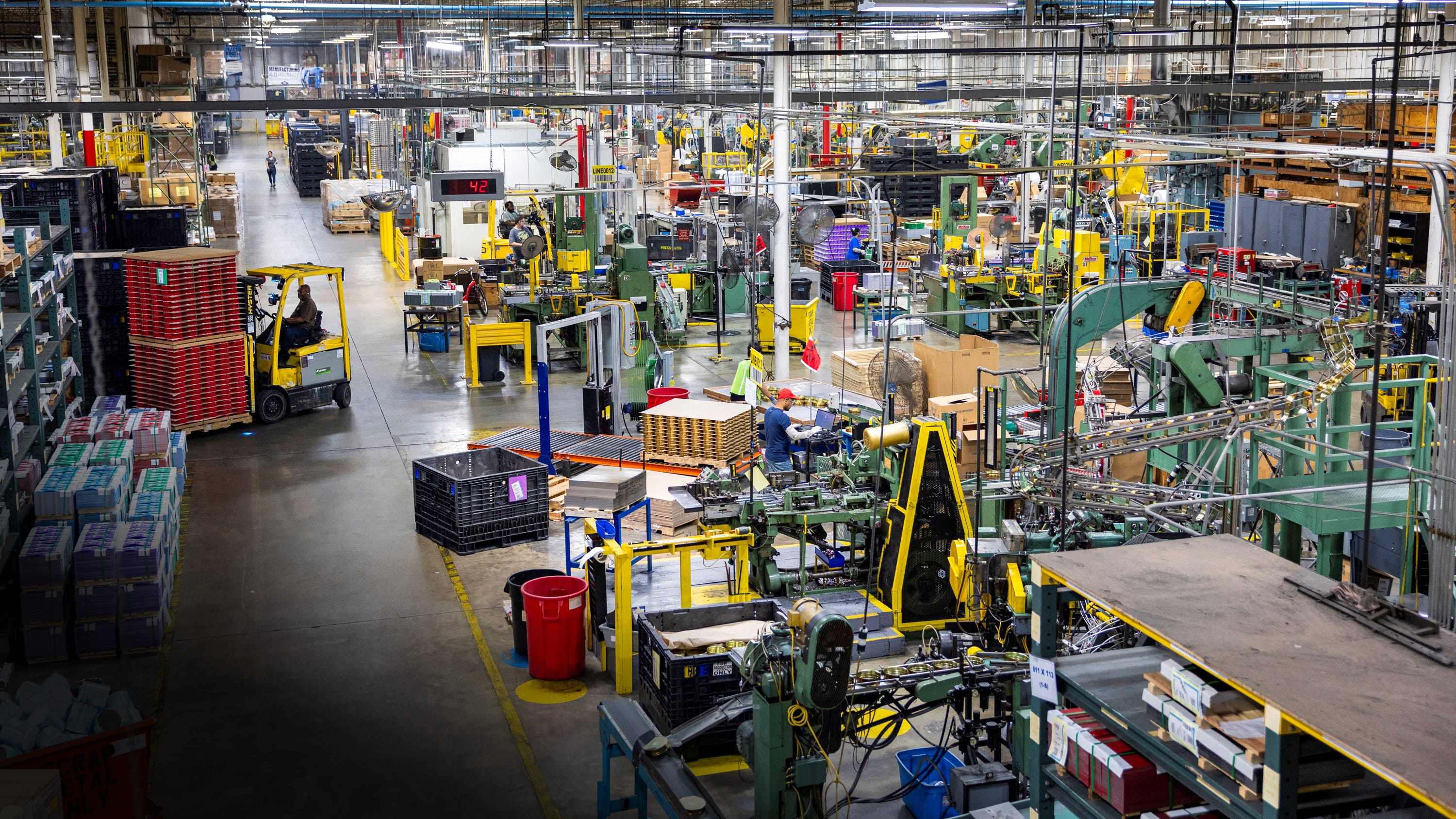
U.S. manufacturing activity expanded in January for the first time in 12 months. Typically, developed countries experience growth in services while manufacturing remains stagnant, Lacalle said.
The United States is the only major economy implementing reforms, such as deregulation, tax cuts, and tariffs, to encourage manufacturing and investment, he said.
Since returning to office, Trump has rolled back regulations across sectors including finance, energy, and technology.
In December 2025, the White House Office of Management and Budget announced that federal agencies eliminated 646 regulations while introducing only five new ones in fiscal year 2025. That amounts to 129 regulations removed for every new one issued, far exceeding the 10-to-one goal set by the president. The White House estimates that these efforts have generated $212 billion in savings, or more than $600 per American.
“Deregulation is unleashing innovation in every sector,” Cathie Wood, founder and CEO of Ark Invest, said in her 2026 outlook report.
More recently, Trump announced the repeal of the Obama-era “endangerment finding” that imposed greenhouse gas emissions restrictions on U.S. industries. The White House described the move as “the largest deregulatory action in American history,” estimating that it will save the American people $1.3 trillion.
The change is expected to benefit the fossil fuel and automotive sectors as well as energy-intensive manufacturers and power plants.
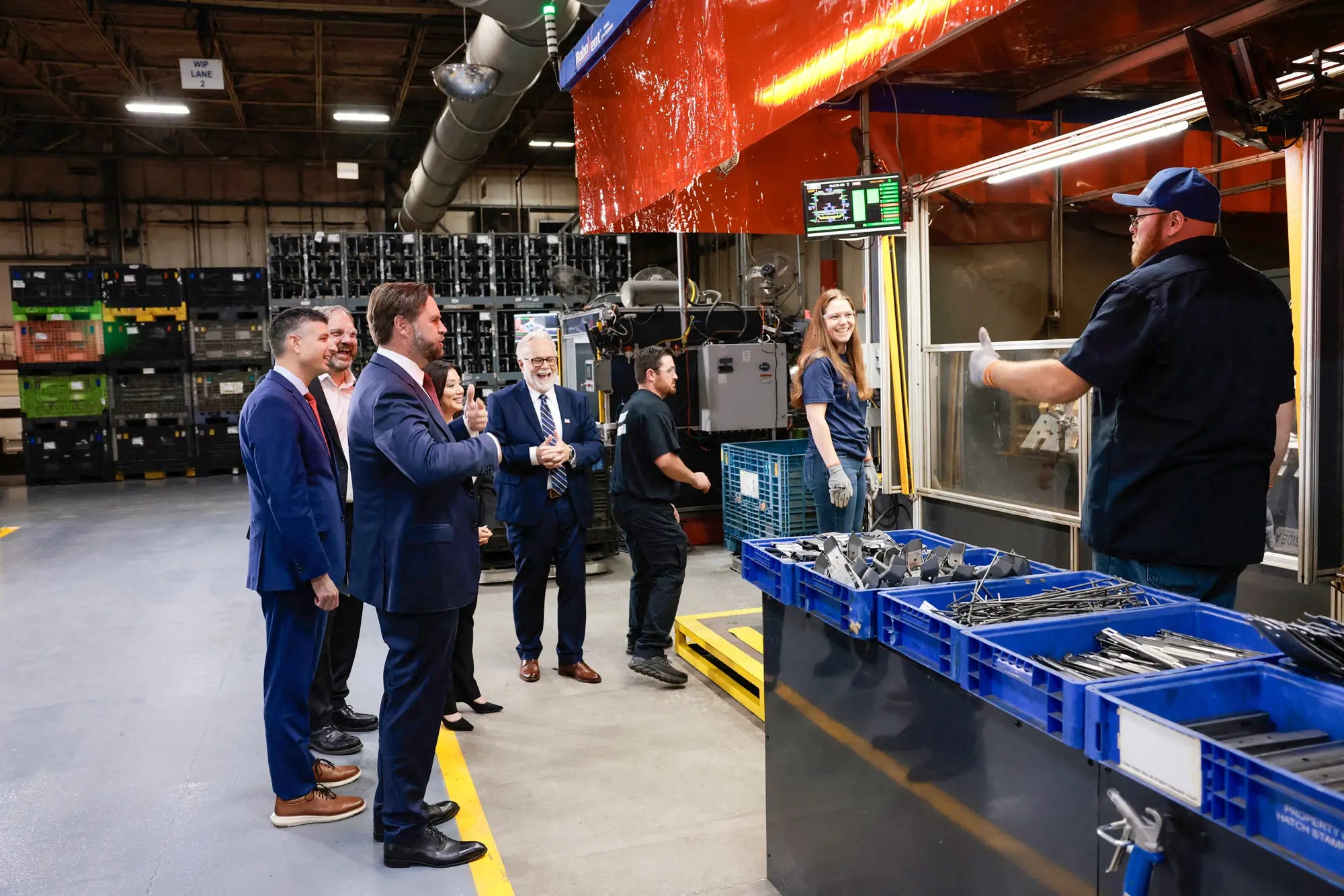
Regulations function like a “hidden tax” on consumers and businesses, John Berlau, a senior fellow at the Competitive Enterprise Institute, said.
He noted that, in addition to the direct costs of complying with regulations, companies also face significant indirect expenses, including hiring staff and outside advisers to navigate these complex requirements.
According to a Competitive Enterprise Institute report, federal regulations cost $2.2 trillion in 2024, or about $16,016 per U.S. household each year.
Berlau also argued that regulations can be “insidious” because agencies are often granted broad authority to interpret and implement the rule.
He emphasized that a predictable regulatory environment is essential for businesses to invest and expand.
Tengler said she believes that deregulation is also reshaping the banking sector. She said she expects banks to increase lending rather than park funds in Treasury bills — potentially unlocking more capital for business investment and growth.
Together, all these things are creating a U.S. manufacturing boom. For a generation, politicians in both parties said that was impossible, that U.S. workers were simply to expensive and “those jobs will never come back.”
Yet here we are. Trump’s trade deals, combined with a low-tax, low-regulation business environment is creating exactly the kind of jobs that were never supposed to return, all while reshoring key industries vital to national security.
And that’s after just one single year.
— This analysis is published in cooperation with The Epoch Times.


Now, to outpace ageless government grift.
Short Story. Its Nov. 1997 I start working at Donaldson inc co. "I apply polymer coating to filter media". Now on an average shift I'm processing around 4-5000' of filter media. Lets fast forward 10 years. My tag team partner Dangerous Dan & I are processing 60-70 000 a shift. I got laid off in 2012. I'd make a small wager they have a line ow that does 100-150 000 feet.
Point is The Days of making a good living with (as we used to say) "A Strong Back And A weak Mind" They're gone.
https://substackcdn.com/image/fetch/$s_!lD0j!,w_1456,c_limit,f_webp,q_auto:good,fl_progressive:steep/https%3A%2F%2Fsubstack-post-media.s3.amazonaws.com%2Fpublic%2Fimages%2F8e6cda57-b76c-448b-bbe9-d5422bb58cc5_3000x1688.jpeg
https://substackcdn.com/image/fetch/$s_!FjjI!,w_1456,c_limit,f_webp,q_auto:good,fl_progressive:steep/https%3A%2F%2Fsubstack-post-media.s3.amazonaws.com%2Fpublic%2Fimages%2F88fe7a89-26ba-4522-b5da-1518f572d7b8_2000x1334.webp
Something you don't see, A lot Of People.