


This essay is free, but with Premium Membership you get MORE. Join today.
Our Full Discussion Transcribed After the Break
by Rod D. Martin and John Anderson
August 23, 2026
In this episode of “Wisdom for the Church,” former SBC Executive Committee officer Rod D. Martin shares his perspective on the current state of the Southern Baptist Convention.
We discuss:
Why the SBC Annual Meeting is a stewardship responsibility, not merely another worship gathering
How Baptist polity gives ordinary church members real authority over seminaries, missions, budgets, and denominational leadership
What Willy Rice’s election says about the SBC’s rejection of critical theory and institutional drift
Why the Mohler Amendment and the female-pastor debate concern the authority of Scripture, not merely denominational politics
How presidential appointments shape the SBC for years, and why phone calls, messengers, and faithful attendance can overcome institutional groupthink
And for the more geopolitically minded, don’t miss:


Hillsdale College’s wonderful “The Story of America” series is now FREE for you to watch! Learn about the most important episodes in America’s Founding.
Click here for the full series!
Our Full Discussion:
John Anderson: Welcome back to Wisdom for the Church. I am John, and I have a special guest on this episode: Rod Martin.
Rod, I’ve had you on before. Before I started recording, I was thinking, “What do I introduce Rod as?” You wear a lot of hats. How do you typically introduce yourself in terms of what you do?
Rod D. Martin: Well, I’m CEO of Martin Capital. We do technology investments. As you know, I was one of the early guys at PayPal, so I’ve got a bit of a background in that.
For the purposes of your podcast, though, I’m a former officer of the Executive Committee of the Southern Baptist Convention, so I’m very, very interested in the things in which you’re interested.
John Anderson: Amen. Before we get into that - because that’s your credential with the SBC, and you are someone who knows what he’s talking about — I will say, Rod, and this is a compliment: You look like you have so much fun in life.
Maybe it’s just an act. Maybe it’s all a big act. But every time I see a picture of you, I feel like you’re on Fox Business with a fedora on, just living your life.
Rod D. Martin: Very, very often, yes.
John Anderson: There we go. It just looks so Florida. You’re helping people understand the world on Fox Business and various Fox channels. Every time I see a picture, I get a kick out of it because it looks like you enjoy your time on those programs.
Rod D. Martin: Things are complex. The world has not gotten simpler because of TikTok. We all have the attention span of a fruit fly, and people get their news that way. I’m just as guilty as anybody.
I see a video on YouTube that’s more than about three minutes long, and I’m just like, “Eh, I don’t have time for that.” But the truth is, we have to make time for that. We have to understand how all these things interrelate. When we don’t, we make bad decisions.
That just isn’t okay. It’s not okay for yourself. It’s not okay for your family. It’s not okay for your church. But it’s really not okay from a stewardship perspective.
The Lord has put us here to steward His world. This all belongs to Him. It may be in the hands of rebels for a little while, but He is still sovereign. He is still on the throne. Everybody is going to bow down at the throne of judgment, and it’s our job to steward His world until He comes.
Well, you have to understand it to steward it.

John Anderson: Great point. I know you might be alluding to how, with short-form content, we consume something and then come to a conclusion even if it isn’t the full story. I feel like we’ve seen a lot of that over the last three or four years in post-COVID times, even on the conservative side. If a conspiracy theory sounds pretty good, a lot of people think it’s probably right.
One thing I am tired of — and I try not to do this on my channel, though I can’t say I’m batting a thousand — is hearing stories and watching videos about, “Did you hear what so-and-so said about such-and-such, or what so-and-so said back?” I don’t know if you’ve noticed that, but there seems to be a lot of personality-driven slop out there.
I’m interested in people, but I want to hear the actual facts of the situation. I don’t always get it right, but I am certainly tired of that. I don’t want my channel to be clickbaity.
Rod D. Martin: Lots of this is just high school. Again, the attention span drives that. If all of your media is consumed in 30-second chunks, you’re not getting any depth. You’re not getting any real understanding.
Someone produces a slick enough reel with ominous music and tells some terrible story about somebody. You’re already conditioned, by the immense lying of our institutions, to disbelieve authority.
John Anderson: That’s true.
Rod D. Martin: Well, sure. It’s super easy to say, “This says something other than the received wisdom, so it must be true.” Wrong. That’s not how that works.
John Anderson: It doesn’t make it right, especially the more superficial it is. A few years ago, we were all saying that the difference between a conspiracy theory and an established truth is about six months.
Rod D. Martin: And that’s frequently true. Don’t improve upon it by making the same errors. That’s the thing.
We actually have a standard of truth. We have something by which to judge all these facts. The first and foremost thing we get from that standard is well summarized in the proverb that says it is the glory of God to conceal a matter and the glory of kings to search it out. We are supposed to be diligent in finding truth, not merely things that contradict people we don’t like.
John Anderson: Yes. The confirmation bias and echo chambers — we’re all prone to that error. In our sin nature, we want to be right, and we don’t want to investigate because it does take work.
Rod, I appreciate you being on because I’ve wanted to debrief with you for a while. The Southern Baptist Convention held its annual meeting back in June. It seems like a while ago now, but I didn’t get to talk to you about it. I thought, “Well, Rod always has an opinion on certain things.”
Overarchingly, I felt like it was a positive step in the right direction on a couple of key issues. First, just off the cuff, what did you think about it? I think you’re still part of an SBC church.
Why the Annual Meeting Matters
Rod D. Martin: Oh, absolutely. They may have to bury me in the sanctuary.
I’ve told you before that I was a Southern Baptist before I was a Christian, which is true of most of us who were born in the church. I believe in it. It matters. It has sometimes gone awry. It is sometimes a mess.
This is the exact same thing: We have a stewardship responsibility. That’s what the annual meeting is. The annual meeting is a stewardship event that, honestly, a lot of our leaders want to turn into something else.
Sometimes that’s out of a good motivation. They say, “This is a great time to get together and worship.” Well, yes, it is. But we have a two-day Pastors’ Conference immediately before it for that.
The annual meeting itself, back in the day, used to be four whole days. We had four days of business meetings in my short lifetime. That’s actually how we did it. There was plenty of time to debate literally anything and get real work done.

We don’t have that luxury anymore. We now meet for two days. Those two days are truncated to a morning and an afternoon session on Tuesday, a morning session on Wednesday, and then an afternoon session after everybody has already left.
It is frequently true that the Committee on Order of Business — and I’ve chaired that committee, so I know a little bit about this — will schedule things for late Wednesday afternoon to make sure nobody is there to vote on them. Just the hard-core attendees will actually be making those decisions.
That’s a problem in a fundamental way, because guess who doesn’t get his way paid to the annual meeting? That would be messengers from little dinky churches, and little dinky churches are the overwhelming majority. Seventy-four percent of Southern Baptist churches have 100 members or fewer. Almost 50 percent have 50 members or fewer.
There’s nothing wrong with those churches. They just don’t have a big budget to fly people across the country every year. Compare that with Lifeway, the International Mission Board, the North American Mission Board, and all the seminaries. They know what matters to them is going to be up for a vote, and they pay for plane tickets and hotel rooms for staff members who are absolutely going to the convention and will vote the way they are told.
That is endemic. There probably is a fix for it, but that doesn’t really matter at the moment, because it is what exists.
If Southern Baptists want to have a say over how their tithe money is spent, how we conduct missions, how we conduct seminary education, and how we conduct all the work of the Lord that we delegate to this larger body — not delegating authority over our churches, but delegating authority to spend this money because it can do that work better collectively than we can individually — then we actually have to show up.
The decisions are made, always, in all things and in all of life, by the people who show up.
John Anderson: Very pragmatic.
Rod D. Martin: That’s very practical and very biblical. The Bible is an incredibly practical book. There’s no escaping the need to do the things that are effective to achieve righteousness in a world entirely populated by sinners who, under the best of circumstances, are going to have mixed motives and occasionally evil intent, even when they don’t think they’re being evil.
The way you guard against that is to have more of the people of God in one room, in one place, making decisions together, checking and balancing one another. That is the essence of Baptist polity going back centuries.
John Anderson: Amen, brother. When I said pragmatic, I really meant practical. God is a God who uses means. He’s not a God who is going to contradict the sense He has given us. He has given us logic and a sense of order for a reason.
I think the SBC, in terms of the convention, conducts things mostly in an orderly way. It was my first annual meeting. The massive endeavor that it is was really impressive from a logistics standpoint and many other standpoints.
I did notice a smaller detail. After being there for the entire two days of the actual convention, apart from the Pastors’ Conference, I realized that I needed to be in that convention hall with thousands of people as early as possible and stay until the final thing was done, and do the same thing the next day.
Sometimes they would say approximately when a vote would be held, but then it would be later or earlier. I’m not saying there was a sleazy motive, but it felt like, “I thought we were voting on this a little later. I’m glad we’re in the room now, because it’s 8:35, and I thought this was supposed to happen at 9:05.” Have you noticed that in the past?
Rod D. Martin: In most cases, I would say it’s perfectly well-intentioned. Of course, the road to hell is paved with good intentions. But that doesn’t change the fact that the people trying to run this are usually doing a good job and usually have good intent. Even when they happen to disagree with me, they’re usually trying to do something they believe to be good.
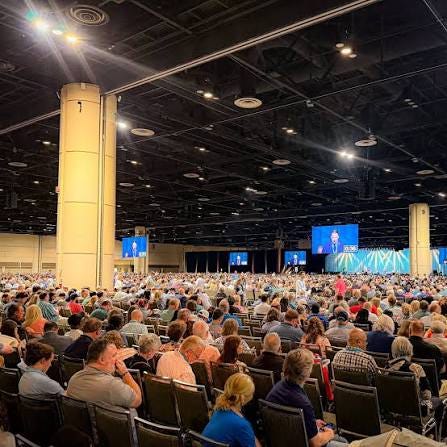
That’s exactly why we have a business meeting every year. And no, guys, it’s not a worship service. It’s a business meeting, and you’ve got to have those. Somebody has to be the janitor. Somebody has to be the plumber. Everybody doesn’t get to sing all the time. That’s what business meetings are.
I grew up in Southern Baptist churches. Now a lot of our churches have elders. My church has elders, and a lot of the business gets done in an elders’ meeting somewhere. You very rarely have a business meeting.
But when I was a kid, we had one every month on a Wednesday night, which admittedly is not when everybody was showing up. The people who cared about those kinds of things showed up. At any given business meeting, big things could change. They might fire the preacher and kick him out of the parsonage. That’s part of the reason we don’t do that quite so much anymore.
But the truth is, the business meeting is where we determine how to do the ministry that is the business of the rest of the church’s time. You determine who is going to be the music minister and lead the music. You determine the theological content of various church programs and Sunday school classes. You vote for or against an existing pastor, a future pastor, the succession of the church, and the future of its members.
That sounds really boring to most people, but it’s some of the most important stuff. You don’t get to eat and live indoors if somebody doesn’t build a house or a restaurant, and it’s the same with this.
At the Southern Baptist annual meeting, we don’t directly decide, for instance, which missionary gets assigned to which country. That’s not what the meeting is for. But we do pick the people who do. That’s crucial.
We pick the people who serve on the International Mission Board and the North American Mission Board. They’re the people who hire the heads of those entities. We pick the people who determine the future of each individual seminary.
Our seminaries matter. We educate one-third of the seminary students on this continent in just six Southern Baptist schools. It’s amazing. They don’t all finish. They don’t all get an M.Div. or a doctorate, but they go. We have a ridiculously outsized influence on the state of the church in America, and therefore the world.

If you’re not participating in that, you’re really missing out. It’s a wonderful way to worship, in a way we don’t normally think of as worship, and to make sure things stay on track.
Good men make mistakes. We’ve seen that over and over. I think the Great Commission Resurgence Task Force was entirely composed of wonderful, godly men, many of whom are good friends of mine. I also think they really screwed up. I think the whole thing has been a disaster, and I voted for it. I was for it.
If we had had a few more guys in there like Chuck Kelley telling us, “Wait. This is going to go into a ditch in these three very predictable ways,” maybe we wouldn’t have done it. But we listened to the guys on the platform. They thought they knew best. They had every reason to be trusted, and they were trustworthy men. They were just wrong. If we had had more people in the room, it might have gone better.
Baptist Polity and Institutional Accountability
John Anderson: Good point. You’ve talked before about the SBC’s importance, and I’ve become more and more convinced of it. It’s a massively important denomination, a cooperation of so many churches, because of its far-reaching influence across the world, not just the United States.
I’ve also become convinced that it’s such a privilege to be part of it. For all its warts and flaws — and there are some that always have to be dealt with — you’re in a denomination where you actually do have a say. Not everyone can say that.
Rod D. Martin: Let’s put a fine point on that. It’s really important.
Look at Harvard. The men who started Harvard did it 10 minutes after the Pilgrims got here. Seriously, the Pilgrims arrived in 1620, and in 1636 somebody founded Harvard University. That’s amazing. They did it to educate preachers. That was the point. By 1800, it had already gone Unitarian. Still, 1636 to 1800 is a really long time, so they were very successful in what they did. It’s still a shockingly important and successful institution.

But here’s the thing: You don’t have any say over it. Even if you were an alumnus, you wouldn’t have a say. It has what’s called in law a self-perpetuating board. The board picks its own successors. Nobody outside the board ever gets any say whatsoever, unless they write a big check or something, and most people aren’t going to be able to do that.
That board picks the people who succeed it. Once it moves in a direction, you’re never going to change it unless God does a miracle.
That is not so in the seminaries that educate a third of the seminary students on this continent. If enough people show up at the annual meeting in any given year, they can meaningfully change the direction of any of these institutions. If one goes bad, it can be fixed.
We had that in the 1980s. Pretty much all of them had gone bad, and that changed. It didn’t change by itself. It changed through the faithful attendance of tens of thousands of Southern Baptists.

At the height of it, at the convention in Dallas, Texas, in 1985, we had 45,000 messengers in attendance. It was the largest deliberative body in the history of the world, determining the direction of the largest Protestant denomination in North America.
So yes, it’s a privilege to be part of it. It’s also, “Hey, where are all you guys? Shame on you. Show up.” Everything can’t be singing. Now, we sing a lot at the annual meeting, so if you want some good singing, they’ve got it. But that’s not why you’re there. It’s a business meeting, and it matters.
John Anderson: The motion for you to have your solo did fail. For anyone going next year, Rod will not have either a vocal or a guitar solo.
This year, more than a couple of important things happened. Two big ones that I was part of and saw a lot of reaction to were the election of a new president and a very important amendment.
Overall, what was your take on Willy Rice becoming the president of the SBC? Josh Powell, I believe, went up against him, and the vote wasn’t too close from what I saw. It seemed like two overarchingly good candidates, given recent years. What did you think?
Willy Rice and the Turn Against Critical Theory
Rod D. Martin: We didn’t have a single plagiarist on the ballot. That was a big improvement. I appreciate and approve of that. Nobody was woke. This is all good.
Willy Rice is the man for the hour. He’s a friend, and he’s been doing the work in the SBC forever.
The thing I love about Willy is that he did go over to the dark side for a little bit. He drank the Kool-Aid a little bit on the whole woke thing, not because he believed in it, but because his friends told him, “This is good. We’re not doing that crazy Marxist stuff. We’re eating the fish and spitting out the bones. This is going to make us more effective with certain groups in the country.”
No, it’s not. It’s poison. It’s complete poison, and it’s antithetical to the gospel.
We serve a God who literally gave His own life to redeem you. You are a rebel and a traitor to the King of all creation. There’s no reconciling that. One sin is enough for eternal hell. Yet Jesus personally, in the flesh, made a way for you to be redeemed and set judicially innocent, as though you never did any of that.
That’s even true after you’re saved and you keep sinning, because you do. There’s no escaping that. Yet it is a once-and-for-all salvation that allows you to stand with your head held high at the throne of judgment.
That’s Christianity. We’re for the underdog. We believe in redemption stories. We want to see people become more than they are.
Not so with critical theory, which defines you by your most superficial characteristics — things like skin color and private parts. Those things define not only who you are and what you can ever be, but also what you are required to believe or, alternatively, what you are defined as believing.
There’s a reason the National Museum of African American History and Culture had that big poster about whiteness and everything defined as whiteness on that poster. Fortunately, it was up for only about five weeks, and the Trump administration got it taken down, because it was evil. It was racist.
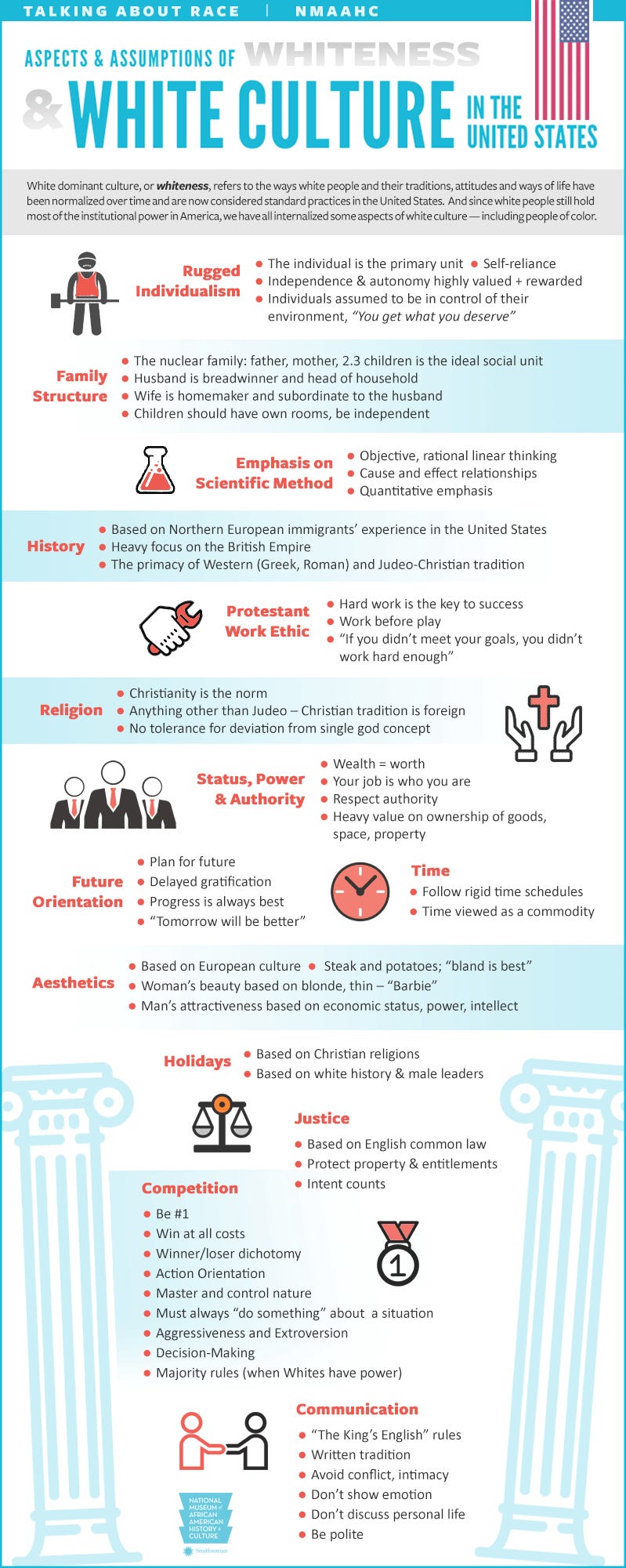
The gist of it was that things like reasoning ability and hard work, all these virtuous things, are characteristics of whiteness.
John Anderson: I remember seeing that.
Rod D. Martin: That’s horrifying. The whole thing says, basically, that if you’re you, John, you are irredeemable.
Hillary didn’t use those terms lightly: deplorable and irredeemable. You cannot be redeemed. You will always be a racist. You’ll always be a misogynist. You’ll always be a class enemy. But you can make amends for it a little bit through a regular penance of antiracism or allyship.
This is ridiculous. This is evil. Again, it’s antithetical to the gospel. It says one group of people can never repent and another group never needs to. It teaches the opposite of Christianity.
Willy Rice, like many of the guys in leadership, saw that the wind was blowing in a way that suggested we needed to fine-tune our messaging to reach various unreached groups. He drank the Kool-Aid for a minute. Then one day he woke up — he didn’t go woke; he woke up.
Willy did the most amazing thing I’ve seen in Southern Baptist life, probably in my whole life: He publicly repented. You’re not allowed to do that! In public, he said, “I was wrong. Here are the reasons I was wrong. Nobody should believe this stuff that I taught. It’s wrong.”
He wins my vote just on humility.
I know virtually every Southern Baptist leader you can name, and none of them did that except Willy Rice. Some of them were on the right side all along. Some were on the wrong side and are pretending they never were. Willy Rice told the truth, said he was wrong, and then started working against the things he had been wrong about.
That by itself deserves the presidency of the SBC. And that’s not all. He understands the institution. He understands how it works. He understands who is and isn’t qualified for various boards and committees. He’s going to do a fantastic job. He already is.
I’m thrilled with Willy, but I’m mostly thrilled because that was probably the most Christian thing I have seen an SBC leader do. Boy, I’ve seen them do the other.
John Anderson: That was well stated. On critical race theory and the various problems, the bottom line is that it’s contrary to the Bible. It’s contrary to the gospel. It’s racism rebranded. It’s not so much a political fight as a theological one.
That all got shoved under the rug: “No, no, this is just an analytical tool.”
Rod D. Martin: No, it’s not. Even if it works, if I judge everything by Satan’s standards, I’m going to end up with Satan’s conclusions. If it is an analytical tool, it’s one you shouldn’t touch with a 10-foot pole. It’s horrifying.
John Anderson: The reason I know who you are is that I used to watch a lot of videos by Jon Harris, and I still watch some. The first time I saw a video of you was when you were on his podcast, which I still think is one of the top-quality podcasts.
He’s the real deal in terms of Christian character. He’s not trendy. He isn’t just hit by different winds and waves. You were a voice at that time against wokeness, so praise the Lord for that.
Even for those who fell a little captive to it — I think I did as a young Christian for a little while, probably around 2016 — I didn’t go fully for it, but I remember hearing those thoughts and thinking, “Of course I want to care about my nonwhite brothers and sisters,” not realizing that the person I was hearing was importing a lot of poison.
After a year or two, I thought, “Whoa. This is Satan. It is not about loving your neighbor as yourself. It’s about guilting one group, uplifting another, playing games with prejudice and partiality, and imposing double standards. I don’t want to touch this with a 10-foot pole.”

Hillsdale College’s wonderful “The Story of America” series is now FREE for you to watch! Learn about the most important episodes in America’s Founding.
Click here for the full series!
Rod D. Martin: Even if it’s well-intentioned - and for most of these guys, it was - it was wrong.
Let’s be very clear: Some guys used this stuff to displace political opponents and take power in an inappropriate way. There were certainly people who were true-believer Marxists, and they have largely outed themselves over time, whether they meant to or not.
But the truth is that most of these guys meant well. They meant exactly what you thought in 2016: “We’ve got to love our brothers, and we’re being told that this is how.”
But you’re being told wrong. It is exactly like when physicians came to treat a dying George Washington and their cure was to bleed him. They eventually bled him out. He died of the treatment, not the disease.
You can mean to do well and still do something patently harmful. That’s what was happening here, led in part by people who were not acting in good faith and have shown that over time, but in many cases by people who really meant to do well.
I’m glad to see them do better now. But I’m more glad that Willy Rice said it straight out: “I was wrong. This is what’s right. We’re sticking with the Bible.” That was courageous. It was not obvious that it would be rewarded in any way, but ultimately it was.
John Anderson: Praise the Lord.
He was more of what you might call the reform candidate — not Calvinistic Reformed, but someone saying, “We need to push forward, and we need to change some things.” You might not call them foundational matters, but there are some things we really need to get right.
The other candidate seemed okay, but he was a little more status quo. I attended a panel where both of them were present and got that feeling.
The problems with institutions that have theological issues or are dealing with female pastors may not be stage-four cancer, but they’re not not sick. It’s becoming far more serious than it should be, and we should try to kill the sickness.
That’s why I felt Willy Rice was the better candidate. These aren’t mere tweaks or maintenance issues. If the Bible is clear on female pastors, for example — and it is — that’s a little leaven that leavens the whole lump if we just let it go or aren’t clear. Willy Rice was clearer on this where we really needed clarity.
The Presidency, the Committees, and the Egalitarian Question
Rod D. Martin: It was a huge win. We’re so happy. We’ve been working for a better presidency for many years now, and we had six years of frankly very poor presidents.
J.D. Greear is an amazing guy. He’s shockingly capable. I have tons of respect for him, but he was a terrible president. The appointments he saddled us with were just awful.
Then you get Ed Litton, who was convulsed in a plagiarism scandal, for heaven’s sake, and didn’t have the decency to resign. I’ve never seen anything like it. And this guy’s appointments — oh my gosh.
Then you get two terms of Bart Barber. I like Bart, but he’s a goober. He’s a company man, and his appointments show it.
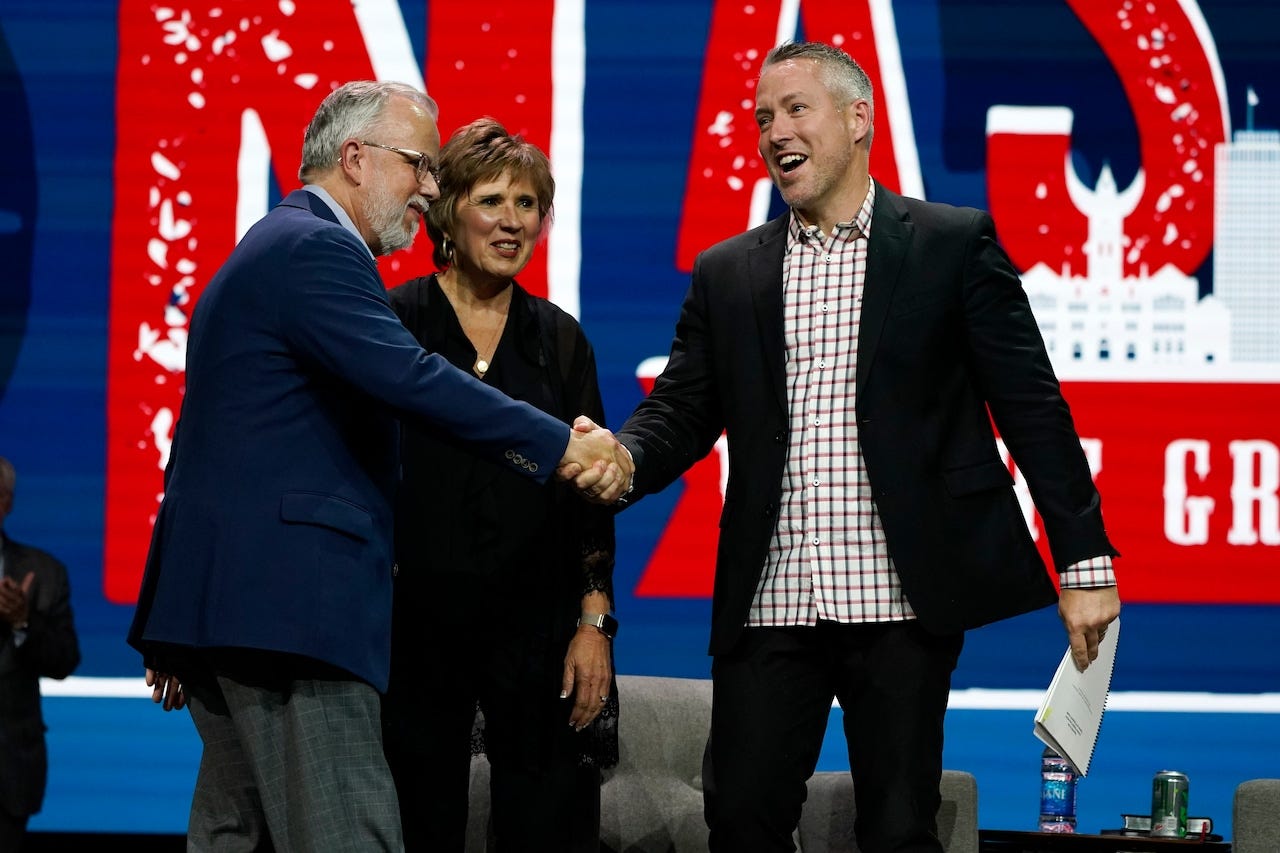
It’s going to take several years to work through that. I know most of your viewers probably don’t realize how this works, so let me explain it very quickly.
The president appoints a bunch of committees. But the most important thing he does, and almost the only power he has that really matters, is that he solely appoints the Committee on Committees. The Committee on Committees appoints the Committee on Nominations.
I just lost half the audience right there. How many committees can you have?
This is all about checks and balances. It’s intended for the presidential vote to matter, but ultimately for a group of godly people to get together in a room and pick the nominators, who then pick the trustees of all the different entities. That’s how it works. Of course, all of this has to be ratified by the annual meeting. That’s why you show up.
In any case, we had six years of terrible Committees on Committees. That meant terrible Committees on Nominations, which meant terrible trustees, and nowhere worse than the Executive Committee. That’s a bad place to mess up.
We’re going to have to dig out, and that’s going to be a multiyear process. It’s going to take longer than Willy Rice has. He’ll be president this year and probably next year, and then he’s out.
We have to keep going. We have to keep picking great, godly, humble men who are savvy enough to understand how the system works, which Willy absolutely is. That’s vital.
You hit on the other big issue of this annual meeting, which is female ordination. I marvel that this could even be an issue in Southern Baptist life, except that I lived it in the 1980s. They were pushing it then, too. Nothing has really changed. Many of those people didn’t go away. They just went underground. Now they’re pushing it again.
The first round of this was the Law Amendment. Mike Law proposed it, and it went to a vote in New Orleans in 2023. It won by a huge margin. You have to pass a constitutional amendment by two-thirds and then do it again the next year.
It was a thumping victory in New Orleans for something that did not come from the establishment. The establishment worked against it, though not super hard. They tried to make it look stupid: “This is unnecessary. We already have the Baptist Faith and Message. There might not be 20 women pastors in the entire denomination.”
Then, within two weeks of the Law Amendment passing in New Orleans, the narrative completely changed: “There are thousands of women pastors in African American Southern Baptist churches, and what you’re doing is racist.”
That’s savvy. It’s terrible, but it’s savvy. What they’re doing is unbiblical.
John Anderson: Yes.
Rod D. Martin: We’re not telling them they can’t do it. This is a big misnomer, and your audience needs to understand it. We aren’t telling any church what to do, ever. That’s not what we do.
What we’re saying is that, if you do certain things that take you outside the shared confession of faith we all agreed to as part of the Southern Baptist Convention, we’re not going to let you vote on the budget anymore. We’re not going to let you pick the president of something when you don’t believe what it believes.
It’s no different from saying you’re not going to let Hindus join your church. You’re not going to let Democrats join the Republican Party. You’re going to fence the table a bit. That’s all that’s happening here.

This time it worked because Al Mohler proposed the amendment, so the establishment guys fell in line. I feel reasonably confident that we will pass it next time and the constitutional amendment will take effect. That’s all positive.
But we have to understand why it matters. It’s actually brief, so you’ll be thrilled, because I keep talking.
John Anderson: This is gold.
Rod D. Martin: It’s very simple. First, there is the elections aspect. If people lie about what they believe, they shouldn’t get a vote over the money and the leadership.
Second, and this is much more important theologically, 1 Timothy is extremely clear on this issue. There’s no escaping it. First Timothy doesn’t contain the only passages on it, but it’s certainly the most prominent, and there’s no question what the Lord said.
Not only that, but it isn’t situational. It isn’t limited to a single church somewhere in Asia Minor. Paul argues it from the creation order. This is clearly a permanent statute.
If you’re going to interpret that away, is there any passage of Scripture exempt from the exact same approach?
That’s what we’ve seen in all the liberal denominations. They start here, and within a decade or two they have compromised on every other key doctrine in Scripture. You’ve already said that Scripture doesn’t mean what it says, or that it doesn’t matter what it says and you can change it. So you have no reason to take on any of the other beliefs that don’t tickle your fancy.
That’s what we’re guarding against. We know it’s not popular. We know the culture doesn’t understand it. We know some Baptists don’t understand it.
But if we don’t stand on, “I’m sorry, I didn’t make this rule. God made this rule. The Bible says it. That’s all I need to know,” then we aren’t Baptists anymore. We aren’t even really good Christians anymore, if we’re Christians at all.
It’s a vital, vital debate. I’m so glad Al finally took it up. I wish he’d come along a little more quickly with the Law Amendment, but he was making good statements. He just wasn’t out there quite as strongly as he is now. It made a difference when he did.
How Grassroots Baptists Move the SBC
John Anderson: Amen. We can end with this, because that’s a good segue to Mohler, the president of the Southern Baptist Theological Seminary. He’s been a very prominent voice for decades and was important in the Conservative Resurgence of the 1980s and 1990s.
As a member of an SBC church and a messenger this past year, I felt there was an organic ground game from run-of-the-mill laypeople who want to see things change in a positive direction. They don’t know every last detail of how the SBC works, but they know we want to stand on Scripture and see God honored according to what we believe to be a biblical standard.
Do you think someone like Mohler responds to that? Is there a give-and-take? Do those with more institutional power feel some pressure?
We respond to people with institutional power. We followed Mohler’s lead here. He leaned in hard, so his muscle meant something. But was there also something organic, from the layperson’s point of view, putting pressure on those with more oomph to make more of a statement?
Rod D. Martin: Oh, absolutely. You hit a certain critical mass where enough people are concerned about something, and it absolutely influences the institutional leadership.
Al Mohler isn’t on a ballot anywhere. Well, actually, he was on the ballot for SBC president in 2021, and he came in third. But other than that, Al isn’t on the ballot.
Al got the job as president of Southern Seminary when he was just 33 years old. My guess is he’ll probably be there at 350, if the Lord allows such things. He isn’t standing for election, but he knows that tithers don’t have to give to his seminary.
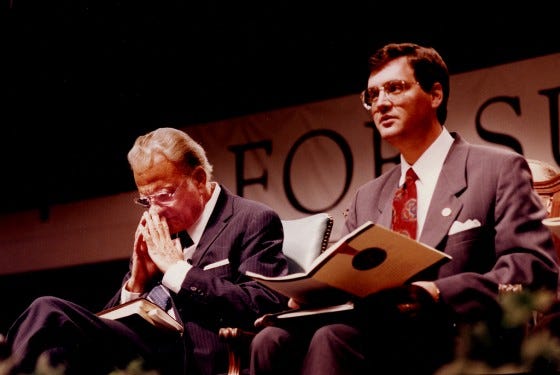
He also knows something the Executive Committee isn’t very honest about. Sometimes that’s because it’s a bunch of preachers and they just don’t know about these things. But sometimes it’s because they’re actually obfuscating.
But the truth is that, when you look at Cooperative Program giving over the last 15 years and adjust it for inflation, it’s all fine and good to talk about how much money we have. In real dollars, it has dropped off a cliff. We’re running on 40 percent less than we had in 2010. It’s obscene. It’s terrible.
There’s a reason, and it matters. It matters for real ministry, sending missionaries, church planting, evangelism, and seminary education.
We’re moving into a period when there aren’t enough pastors to go around for all the churches. You’ve got to educate more men, and you can’t do it if you can’t pay to train them.
Al is aware that people have a choice in whom they give to. It doesn’t have to be Southern Seminary, and it doesn’t have to be the SBC.
Yes, it makes a difference when regular people make phone calls. Of course pastors are great. We really, really appreciate it when pastors do it. But when regular Billy Baptist, sitting on the 14th pew, calls these guys and says, “I really care about this. It matters. I want to see some action,” it matters.
It’s no different from a member of the U.S. House. Members of Congress have long had a rule that, if 10 people call their office on the same issue, it means there are probably thousands back in the district who are really upset, because people just don’t make those phone calls.
Regular, everyday Baptists can make all the difference in the world. They have to make phone calls. They have to go to meetings. Otherwise, they’re just ignored.
Honestly, all these guys went to seminary together. They’ve all known each other since they were barely more than teenagers. They have groupthink like a bunch of high school girls. There’s no kidding around it. It’s just part of the situation, and that has to be broken through.
That’s why we have a system that is grassroots-based, bottom-up rather than top-down. But that means the people on the bottom actually have to speak to the people at the top. It’s an easy phone call. They all have a phone number. It isn’t hard to get.
So yes, it made a huge difference. I think we’ll get real action on this. I think the SBC is in the best hands it’s been in for quite a while, and we really are making progress.
That doesn’t mean it’s over. It ain’t never over. You’ve got to keep maintaining. You don’t drift anywhere you wish to go. That’s really true in a fallen world composed entirely of sinners. If we’re left to our natural inclinations, everything will decay.
It’s possible to build only when people make a concerted, careful, deliberate effort to be faithful to the Lord. Even then, they’re going to disagree on a bunch of things. That’s why you have a meeting. That’s why you have Robert’s Rules. That’s why you have a vote.
That’s also why everyone in your audience should become a messenger and go to the annual meeting in June 2027 — except for you Presbyterians.
John Anderson: Except for the Presbyterians.
Rod D. Martin: But y’all can join us, too. Come be Baptists, and you can go.
By the way, for the Presbyterians - those of you who are CREC or PCA, and others like them - you have a general assembly you can attend. You have places where many of these fights are very active and really do matter. You can have a say there, too. You just can’t have as much of a say as you can in the Southern Baptist Convention.

John Anderson: You’re definitely a champion of the SBC. You champion it well. Like we said earlier, it has its problems and warts. It’s a human institution. But we’re praying that the Lord will continue to refine us and reform us into a greater image of Christ. I think we’re moving in the right direction.
For those who don’t know, Rod, you have The Rod Martin Report. That’s one thing I wanted you to speak about briefly. You wear a lot of hats. You write, and sometimes you have guest writers. What is your report all about, and how can people find you?
Rod D. Martin: As we mentioned at the outset, church is not my day job. Christianity is my passion, and Christ is my Lord. But I work for a living. I don’t just teach Sunday school or something.
What we do is largely based on global macro analysis. A while back, we decided there was no reason we couldn’t package it in a way that’s useful to policymakers, engaged citizens, and people who just don’t understand what’s going on in the world because there’s so much going on.
It really does all fit together, but it isn’t obvious, and nobody is giving you a roadmap. So we decided to give you a roadmap.
At RodMartin.org, we do daily geopolitical analysis. Fox Business calls it “absolutely phenomenal.” We have tens of thousands of subscribers to daily long-form content that many people would never want to read, but lots of you might. We also have hundreds of thousands of followers on social media. There’s a reason.
Come join us at RodMartin.org.
John Anderson: You heard the man: RodMartin.org.
From my experience, it is informed by the correct foundation, a biblical Christian worldview, but it is also in-depth. It offers skill and depth of knowledge on geopolitical and economic issues that the average person, including me, hasn’t delved into or experienced.
That’s one great thing about The Rod Martin Report: It’s very in-depth, but presented in a way you can actually understand.
Rod, I really appreciate your time. You’re a busy man, wearing fedoras, appearing on Fox Business, and doing everything. It’s an honor to have you.
You’re a good brother in the faith. Thank you for continuing to fight the good fight for Christ’s name.
Rod D. Martin: Thank you. I love your show. I love your work, and I’m so glad you’re doing it. It’s an honor to be here.


