
When Scandal Became Strategy: The SBC Abuse Crisis Power Play
Shocking documentary probes how insiders used the SBC’s abuse crisis to engineer a denominational meltdown...and a transfer of power to themselves.
This analysis is free, but with Premium Membership you get MORE. Join today.
by The Baptist Report
May 10, 2026
A new documentary by CrossPolitic examines the Southern Baptist Convention’s (SBC) abuse crisis through a sharply different lens than the one that dominated national headlines in 2019. According to the filmmakers, the story the public heard—predators in pulpits, institutional indifference, and long‑awaited justice for survivors—misses the deeper procedural and political forces that reshaped the nation’s largest conservative Protestant denomination.
The film traces its origins to July 23, 2019, when Founders Ministries released a trailer for By What Standard. The trailer briefly included a blurred image of attorney and abuse survivor Rachel Denhollander. Within days, three board members resigned from Founders Ministries, a moment the documentary now frames as an early indicator of the cultural pressure surrounding the SBC’s unfolding crisis. As the narrator recalls, “They did not want to be associated with questioning that woman.”
Four years later, the documentary argues, court filings would reveal what it calls “massive conflicts of interest” surrounding the SBC’s internal investigation—an investigation that ultimately cost the denomination more than $13 million and contributed to the sale of its Nashville headquarters.
A Five‑Phase Playbook
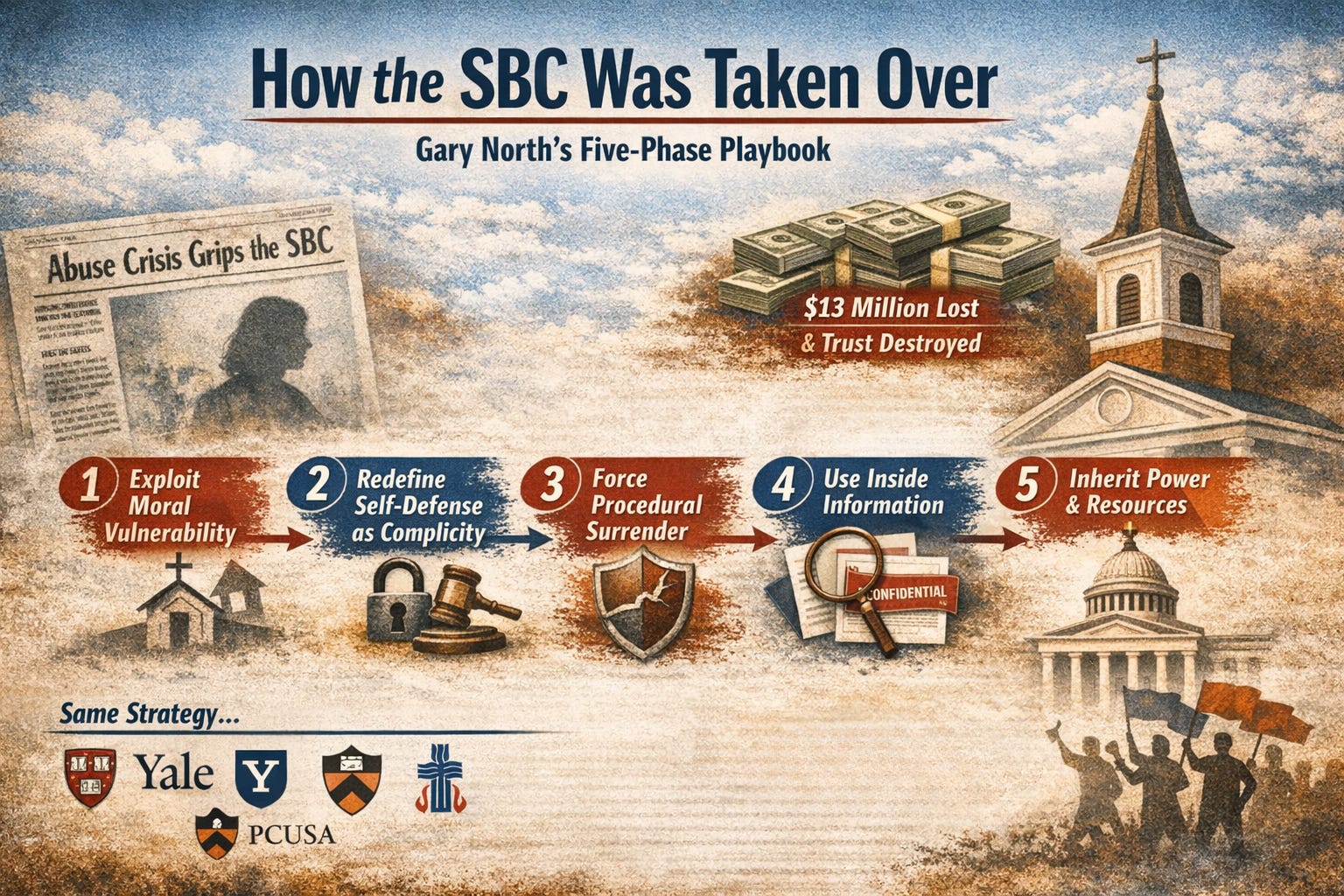
The film’s central thesis draws from economist Gary North’s 1996 book Crossed Fingers: How the Liberals Captured the Presbyterian Church, which outlined a five‑phase strategy for ideological capture within religious institutions. The documentary asserts that the SBC followed this pattern “step‑by‑step,” not through theological debate but through procedural leverage.
According to the documentary, the phases unfolded as follows:
Phase One: Exploit a moral vulnerability.
The filmmakers argue that years of public apologies over racism and social justice concerns conditioned the SBC to accept guilt on terms set by outside activists.Phase Two: Redefine the threat.
Institutional self‑defense — particularly around legal protections such as attorney‑client privilege — was reframed as complicity in abuse. The documentary highlights a 2021 statement from Southern Seminary president Albert Mohler urging the SBC Executive Committee to waive privilege, warning that the denomination would “long remember” those who resisted, all while refusing to do so at his own institution.Phase Three: Force procedural surrender.
Under intense pressure from pastors, denominational leaders, and survivor advocates, the SBC Executive Committee voted to waive attorney‑client privilege during an outside investigation. Twenty-four members resigned in protest, including longtime SBC attorney Jim Guenther, who wrote that he could not advise a client willing to abandon “this universally accepted principle of confidentiality.” At the same time, even the Biden Justice Department — which later cleared the SBC of wrongdoing — ordered U.S. Attorneys not to request waiver of attorney‑client privilege due to its manifest unfairness.Phase Four: Use the surrendered weapons.
The documentary cites a 2025 compliance audit by attorney and former Air Force officer Amy McDougall, which concluded that the SBC’s chosen investigative firm, Guidepost Solutions, lacked required licensure and departed from standard investigative practices. McDougall’s report also documented extensive conflicts of interest, including Denhollander’s simultaneous roles as attorney for a key accuser, advisor to the task force, contributor to the abuse hotline, and editor of the final report.Phase Five: Inherit everything.
With leadership turnover, depleted reserves, and ongoing litigation, the documentary argues that the SBC was left structurally weakened while the investigative process empowered a new ideological faction within the denomination.
A Crisis Reframed
The documentary revisits several high‑profile cases, including the allegations brought by former and now deceased SBC employee Jennifer Lyell. While Lyell described a 12‑year abusive relationship with seminary professor David Sills, the documentary notes that no criminal charges were filed and that Sills was never interviewed by Guidepost. The film argues that the case became a “pressure point” used to force institutional change.
The filmmakers also highlight the Department of Justice’s 31‑month investigation into the SBC, which concluded in 2025 with a single charge unrelated to abuse or cover‑up. The SBC spent more than $2 million responding to the inquiry.
Broader Institutional Patterns
CrossPolitic situates the SBC’s turmoil within a wider historical pattern, comparing it to the theological and procedural shifts that reshaped Harvard, Yale, Princeton Seminary, and the Presbyterian Church (USA). The documentary suggests that the same dynamics — moral leverage, procedural restructuring, and leadership realignment — are now at work in other conservative denominations.
A Media Project With a Mission
Produced by CrossPolitic, the documentary reflects the media organization’s stated mission to “put Jesus over politics” and build a new ecosystem of Christian media. The group describes its work as a response to what it sees as a progressive tilt in mainstream journalism and a need for “bold, joyful, biblically grounded” reporting.
Watch the CrossPolitic documentary below:
— This article originally appeared at The Baptist Report, to which you should subscribe.


