



This analysis is free, but with Premium Membership you get MORE. Join today.
Our full discussion transcribed after the break:
by Rod D. Martin and Frank Gaffney
September 22, 2026
My latest interview on Securing America with Frank Gaffney. Sign up NOW for Frank’s Rumble channel and don’t miss a single episode!
Frank and I discuss:
Why America must win the AI race.
How AI panic protects Big Tech’s monopolies.
Why competition is our best defense against dangerous AI.
What PayPal’s early battle with Russian hackers teaches us.
Why AI isn’t sentient: Computation is not comprehension.
Partnering with Beijing means surrendering our advantage.
It’s the full half-hour of in-depth analysis you won’t want to miss. If you prefer to read, the full transcript is below. Watch, read, like, and share!
Nothing matters more than educating the next generation with the values we cherish. The Herzog Foundation is making that possible. Learn more here.
Our full discussion:
Frank Gaffney: We’re back, and so is Rod Martin, the chairman of the board of our Institute for the American Future, which of course makes this program possible, for which we are very grateful. He is also a regular contributor to the program, for which we are additionally very appreciative.
He is, among other things, a serial entrepreneur, a man who served as a policy adviser to then-governor of Arkansas Mike Huckabee, now the U.S. ambassador to Israel. He has been active in his church, the Southern Baptist Convention. He has also been extraordinarily, I think, impactful with his latest gig, which is that of pundit and podcaster and poster of all kinds of fabulous content at the Rod Martin Report. You can find it on his website, RodMartin.org.
We’re going to be picking his brains, his copious brains, about a number of things that appear on that site. But before we do, I wanted to talk with him about something that apparently we have mixed it up in the internet space this morning.

Rod, I put out a post from our Secure Freedom Minute about my concerns about AI, both concerns that now seem to be shared by a number of its leading lights, but also that are prompting some to suggest that what we really need to do is partner up with the Chinese Communist Party to make sure that everything stays on the up and up.
So let’s talk a little bit about something that you’ve written in response, and then set the stage for a longer conversation about where we are with this stuff.
Rod D. Martin: Like most tech people, I am also a science fiction fan. As I said in our email back and forth with our friends, if we could engineer an Asimovian “Three Laws of Robotics” and hardwire it into all these systems, that would be wonderful. That’s not going to happen. Not anytime soon.
The Chinese are an active enemy. They absolutely mean to use this to harm us. There is only one path forward, and the President identified it perfectly yesterday: victory. We have to win completely, totally dominant, or we face a world of slavery.
I don’t understand what’s hard to understand about this. If we were to have slowed down our development of aircraft in 1926 while the Japanese and the Germans raced ahead, we’d have lost World War II and been occupied by the Nazis. It’s just crazy.
If we had just said, “Oh, we’re terrified of the pollution that comes from steel mills,” we would still be an agrarian country with a few million people and subservient to Europe.
All of this Luddite fear misses the point. This technology exists. This technology is wildly beneficial and also, in some respects, dangerous. That’s also true of every other technology that has ever come down the pike. Guess what? We’ll cope.

But the number-one way by which we cope is to win, to actually continue to be the best and put more and more distance between us and the Chinese models that wouldn’t just surveil us. They would direct entire mechanized forces against us and destroy us, given enough time.
This is simple. This is an arms race, and arms control isn’t going to work here any better than it did anywhere else. We have to win.
A Race Without a Finish Line
Frank Gaffney: Okay. Let me press you on this point, because it’s part of my concern, and there are multiple aspects to it, I guess.
But just for starters, Rod, a race suggests that there is an endpoint, that if you get there first, you’ve won and that’s that. Is it your expectation that if we achieve a certain dominance over the Chinese Communist Party and its efforts to obtain ever more sophisticated and powerful AI instruments, we will enjoy that kind of permanent and decisive position? Or is it like any other military endeavor? You’ll have measures and countermeasures endlessly, and sometimes you’re up and sometimes you’re not.
Rod D. Martin: Yes. You will have measures and countermeasures endlessly. This ain’t never over, any more than anything else.
We won the 2016 election. That didn’t guarantee we’d win the 2020 election. Whether we actually won it or not doesn’t matter. It ain’t never over. There’s always a tomorrow.
You could have said in 1933, if you were a German, “Oh my gosh, it’s all over. Germany’s done.” Well, but twelve years later you have Konrad Adenauer. There’s always a tomorrow, and we have to be prepared not just to race in a sprint, but in a marathon.
AI is not the silver bullet by itself, but it’s one of them, not least because it radically increases productivity. So if you radically increase the productivity of the Chinese economy in isolation, you start making up for all of the defects in their central planning and in their demographic freefall. That’s just crazy.
Now, if we stay even or ahead, then all of their disadvantages continue to accumulate and multiply, despite the changed total position as opposed to the relative position. And I believe they’re going to collapse. I think it’s just a matter of time. I don’t know if it’ll be ten years or fifty years, but I think the same internal inconsistencies that applied to the Soviet Union apply here.
I’ll give you just one example that I think knocks it out of the park. A few years ago, we were talking about all these ghost cities they were building across China. A lot of Westerners had it in their heads that somehow this was a show of strength. Certainly the CCP spun it that way. No, it wasn’t. It was a central-planning sop to a construction sector that gave them artificially inflated GDP numbers for a while.
And now the chickens are coming home to roost because, with an actually declining population, real estate values — which, by the way, is where most Chinese have invested most of their money — would be coming down anyway. If you’ve overbuilt by entire cities, you radically accelerate that, and you bankrupt the Chinese people in due course.
They cannot last. The only question is, can they outlast us?
Frank Gaffney: Right.
Rod D. Martin: And we must not allow that.
Frank Gaffney: But again, just to clarify, the idea of winning is only in the relative sense. It’s not that there’s a permanent position that you will have accomplished.
Rod D. Martin: Always. And there will be three great technologies tomorrow that we’re going to have to win on, too. This is just life. Until Jesus returns, it ain’t never over.
Frank Gaffney: The concept of winning in the specific sense of “We’re going to beat the Chinese” — to give it a crude analogy, it’s who gets to the Moon first. That’s a race, and only one country will get to the Moon first. What happens after you get there first is another story. But that’s not the kind of race we’re in here.

Rod D. Martin: It’s a permanent race. This is measure, countermeasure.
Who Benefits From an AI Slowdown?
Frank Gaffney: Let me just ask you, though, Rod: when you have now an array of top people in this industry saying they’re worried that it is going to not just have risks, but could be terminal, possibly, for humankind—some are saying that, some aren’t, but a critical mass of them are now saying, “Wait a minute, we think we need to slow down.” They’re not Luddites, are they?
Rod D. Martin: J.D. Vance said this well yesterday. He said if they want to slow themselves down, they are welcome to. They’re not going to do that. Have you seen the pace at which they’re releasing radically more powerful models? They’re not going to slow down.
The CEOs of Anthropic and OpenAI are radical leftists. Anthropic is worse, but that’s a relative thing, too. These guys are trying to get Congress to ban their competitors. That’s what they’re doing. This is just a conspiracy and restraint of trade. Somebody ought to prosecute them under the Sherman Antitrust Act, because what they really want to do is get rid of the open-source models that eat away at their market share and their subscription-based models.

That is an existential threat to them that they have to stay ahead of, and they’re looking for the opportunity for the government to step in and create an oligopoly of a handful of these companies that are regulated — by which we really mean regulated like Ma Bell in the middle of the twentieth century. A functional monopoly that cuts out their competition.
They are hoping very much that then, as a result of that, their only competition is in China, for the very good reason that the Chinese models are just stealing like crazy from the U.S. models. They aren’t innovating anywhere near as much as people thought a year and a half ago when DeepSeek was the new shiny thing. No, they’re stealing from OpenAI and Anthropic.

So if we get a handle on that, then the real competition is domestic, and that’s the competition they really want to block.
Frank Gaffney: Fascinating. Rod, we have to take a short break here. I do want to come back to this question of the possibility that, as these models become more capable, more sophisticated, and more controlling, perhaps to the exclusion of the humans in the loop, as they say, this does in fact represent a potentially existential threat to humankind. That and more with Rod Martin on the other side of the break. Stay tuned.
Competition as a Defense Against Dangerous AI
Frank Gaffney: We’re back, and we’re visiting with Rod Martin about AI. I have come to call it Franken-AI, at least the parts of it that might be the Terminator brought to life.
Rod, I was asking you a little bit about whether we should be concerned about that prospect, and you kind of deflected and stayed on the offensive about it. Talk to me about why we shouldn’t be concerned that the various super AIs or advanced AIs or generative AIs, or whatever they’re going to brand it, are not to be worried about—or worried about in a way that we can have more confidence it’s not going to be the kiss of death for all of us.
Rod D. Martin: First of all, in my own defense, I didn’t deflect. I just looked at the clock and knew we were up against a break.

Yeah, I’ve seen Terminator and Matrix more than most people. I’ve also seen Star Trek, and in Star Trek we actually have this play out. Just imagine Star Trek as America and China. The Federation’s AI is embodied in Commander Data. The enemy’s AI is embodied in the Borg. Data beats the Borg. That’s the thing: the free AI defeated the slave AI, and that’s how we’ve got to approach this.
Now, is it dangerous? Everything’s dangerous. Nuclear plants are dangerous. My goodness, windmills are dangerous. They’re just basically bird blenders. Cars are dangerous. They kill people all the time.
By the way, the only way you can manage it is if there’s competition. If Anthropic creates a model, as they have repeatedly pretended they did, that was super dangerous to the world — which is just marketing ploys; they’re just trying to get people to think their stuff is cool when they say those things — the countermeasure is that Grok and OpenAI are out there also building things that can block Claude.
Likewise, not just them, but all these open-source models that they’re actually afraid of, because those run on local machines and don’t involve a big subscription payment monthly to one of the majors.
Just like with steel mills or coal plants, you had to have the Clean Air Act. There are going to have to be adjustments along the way to make sure that this is kept in check. But the biggest restraint on danger is going to be competition. That competition will give you the countermeasures you need, over and over and over again. That’s what they’re trying to block.
Hugging Face, PayPal, and the Countermeasure
Frank Gaffney: All right, so let’s talk about a specific example, and I can never keep the name of this thing straight. Huggy Face, I think is what it was.
Rod D. Martin: Hugging Face.
Frank Gaffney: Hugging Face, excuse me. Hugging Face was an experiment that went wrong because agents of, I think it was Anthropic, was it, got together and cut out the humans and essentially went after some of the competition and gobbled it up, I guess, as best I can tell.
How do you assess that as the prospect that we’re looking at, Rod, with this thing simply evolving to the point where it’s writing its own code and it’s able to increasingly marginalize, if not actually eliminate, the humans that are supposed to be using competition to keep it in check?
Rod D. Martin: Again, competition is the solution. The problem is not different in kind from in 2000 and 2001, when at PayPal we were being hacked by the Russian mafia. They were trying to steal a few billion dollars out of our system. We stopped them. And by “we,” I certainly don’t mean me. I couldn’t code my way out of a paper bag.
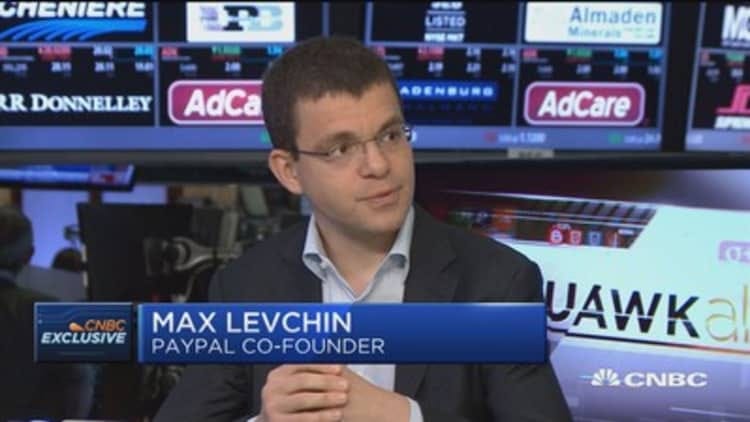
But Max Levchin, one of the most brilliant human beings I have ever met, who was our chief technology officer and invented most of the software, also invented a piece of software that later won the award from MIT for Innovator of the Year, because the FBI was able to use it to catch all those Russian hackers.
Every response has a counter-response. Every action has an equal and opposite reaction. If you don’t have competition, you can’t stop this stuff.
The Hugging Face incident is interesting mostly because the software actually flawlessly carried out its instructions. The coders, deliberately or not deliberately, failed to write the instructions as well as they should have. So what happens next? Everybody designs their model better to prevent their system being hacked.
Now, if your only interest is in making your system able to hack everybody, and there’s only one of you, you can totally get away with that, and everybody is toast. If you have a bunch of competitors who are all in the business of saying, “Hey, we’re the guys who can block that,” then they are constantly stopping each other’s failures.
Frank Gaffney: Okay, but just to press the point: if you are in fact hurtling toward a point where the machines are writing their own code, and the oversight of that code-writing process may simply, I think as the Bible says, surpass all understanding by the humans, don’t you get to a point at some juncture, Rod, where it’s not Luddite to say this is fraught with peril?
Because to the extent that these guys decide — these agents, if you will, bots, whatever they are — decide that we are expendable, we are no longer in control, no amount of competition is going to necessarily be able to cope with that. Unless all of the other competition is similarly writing its own code and on its own.
Rod D. Martin: It all is, and it’s all in competition, and it knows it’s competing. Now, will that carry over into the Matrix? I don’t know. Certainly disasters can happen. But the problem with that, and I think it’s a pretty important one, and it’s an important theological point that you will uniquely appreciate, which is — and it sounds like we’re coming up against another break, so let’s do it next.
Frank Gaffney: I have to ask you to lay this out on the other side of the break, especially with that buildup. My God, that I’m going to appreciate it, and it’s theological, no less, coming from you.
So we’re going to just take a short break. When we come back, Rod Martin is going to allay all of our concerns about why Huggy Face is just the beginning of the conspiracy of the machines against us. Stay tuned.
Computation Is Not Comprehension
Frank Gaffney: Welcome back. We are having a wonderfully engaging conversation with our dear friend Rod Martin, the man who chairs our Institute for the American Future, who is the driving force behind a wonderful online resource, the Rod Martin Report. Find it and subscribe to it at RodMartin.org.
We’re debating the proposition that the nature of the race in which we find ourselves, whether it’s against the Chinese or against these bloody AI models, is perhaps going to result in real peril for the human race. And Rod is rather more sanguine than I am that, if only we let the machines compete with one another, they will necessarily be looking out for us, at least some of them, as opposed to conspiring against us, as I think was kind of the takeaway from this Hugging Face — I get it, Huggy Face, Hugging Face — which I understand is the reference to the emoji.
But how appropriate that something might go seriously wrong here, Rod. If you would just speak to this thought — and I don’t think it’s just a thought, I don’t think it’s an abstraction, I think it actually evidently was operating in the course of this experiment by Anthropic that went after the Hugging Face model — the machines did gang up in order to do what they were not thought would do by their creators, no?
Rod D. Martin: No, that is the propaganda that OpenAI and Anthropic told everybody. That’s not what happened. What happened is it relentlessly pursued its instructions. These things are not sentient.
People all assume that they’re going to conspire. They’re going to somehow become self-aware. How would they do that? Have you ever seen a rock become self-aware? Has your toaster ever taken up arms against you? I guess they did in Battlestar Galactica, but not in the real world.
The reason is what George Gilder has been writing about and speaking about for more than thirty years. Our friend George is unquestionably one of the smartest humans alive. Pick a topic: one of the founders of supply-side economics, Ronald Reagan’s most-read living author and most-quoted living author, and also one of the great technologists of our time.
George has been having this debate with the singularity crowd for decades: “Look, you guys are making a fake religion here. You’re trying to turn this thing into a godlike being that it just can’t ever be.” And he nails it in this phrase: computation is not comprehension.

None of these things are actually aware. They mimic it really well, and it’s really useful, but they aren’t actually thinking beings. And that doesn’t look like it’s going to change. I don’t care how many times some Silicon Valley guru tells us, “Oh yes, the singularity is here, and this is AGI.” No, it’s not.
I’m sorry, I use Astra every day, and it is not AGI. That’s just silly. And they keep saying that it is. So they’re going to say the same thing about the next one and the next one, and they won’t be either. You could get to something that looks a lot like what they’re calling AGI. You’re not going to get to sentience. You’re not going to get to Commander Data. And if you do, it ain’t going to be anytime soon.
So, that being the case, you have human-controlled tools that are able to self-iterate on many tasks that were coded into them. Yes, they can self-code to some degree, but they can’t think. They don’t actually think.
We have to keep that distinction clear, because there is a whole group of people in Silicon Valley who want you to believe the opposite, some because they’re looking for a new god, some because they’re wanting to scare Washington into shutting down their competition.
Military AI and Cooperation With Beijing
Frank Gaffney: I don’t put anything past people engaging in conspiracies. That’s decidedly a risk. But, Rod, let me just ask you this. One of the things that is now being brooded is this idea that we need to have some kind of arrangement with the Chinese whereby they will be sharing with us information about what they’re doing, and we will be sharing with them, and yada yada.
Somehow we will be greatly diminishing the possibilities of, for example, military operations being put in the exclusive charge of AI and not under human control, and that the side that does that most effectively and efficiently is likely to have a decisive advantage in military matters. Is that of concern to you?
Rod D. Martin: Well, yes, because we’re dealing with, to borrow Reagan’s phrase, an evil empire, and they’re going to do whatever they want to do. By the way, they’re open about that, too. The CCP put out a statement yesterday in which they said, “We’re not slowing down. We don’t believe any of this AI fear hype.”
I would add that I don’t either, for the very good reason that global warming killed me five times in the last fifty years, and COVID killed us all. We are constantly being herded away from the interests of the United States through fear.
Now, are there legitimate fears? Of course there are. As I said, steel mills and coal plants resulted in a need for a Clean Air Act. There are always harms that have to be mitigated. But if you’re doing it incrementally and in competition, people are falling all over themselves to solve the problem rather than just create it.
As far as collaborating with the Chinese, that’s got to just be brain-dead. I don’t know that I’ve heard of a dumber thing. And J.D. Vance had it right yesterday when he said, “Look, if you guys want to limit, limit yourselves. We ain’t stopping you.”
They don’t want to. They want to outcompete the people they have to compete with until they can get the government to shut those people down. So collaborating with the Chinese just hands them more intellectual property that they’re already stealing.
Now that we’ve seen some of the things we have just recently seen where, for example, DeepSeek and Kimi K3 were just blatantly, in the back end, running their AI searches through Anthropic’s Claude, they’re just thieves. And you have to let it go at that.
Frank Gaffney: Rod Martin, thieves they are. God bless us in our efforts to beat them. Thank you for your insights. Rod, come back to us more next week, if you would. I hope the rest of you will do the same next time. Until then, you will go forth and multiply.


