


by Rod D. Martin
November 23, 2026
This ain’t the sexiest analysis I’ve ever written. But it may be among the most important.
Many conservatives fret unendingly about the demise of the dollar, or usually more precisely, its reserve currency status. They typically express concern about the foreign nations that hold U.S. debt, including $1.06 trillion by Japan, $986 billion by the UK, and $564 billion by China.
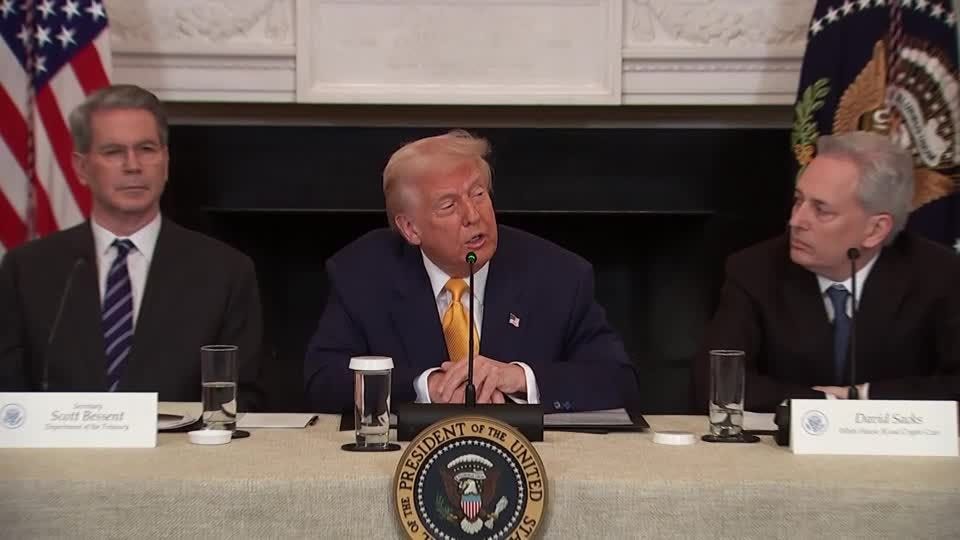
But Donald Trump and Scott Bessent don’t fret. They act.
I’ve spent a lot of time on why dollar dominance is here to stay, on specific means by which the Treasury Secretary is entrenching it, and the vulnerabilities of key rival currencies. I even addressed it at some length in my new book (in stores now).

The dollar is an essential pillar of American power. It deserves attention, and its unique role in the global economy deserves maintenance and improvement. Reindustrializing, shifting energy dominance from the Persian Gulf to the Gulf of America, and world-beating technological innovation do much to achieve that.
But perhaps the single biggest innovation since Kissinger invented the petrodollar leverages the blockchain — and the new GENIUS Act — to make dollars the world’s most-used currency, not just for global trade and central banks but by billions of regular people in their daily lives.
Monetary saber-rattling from BRICS? Suddenly that moves from nerve-wracking to irrelevant to laughable. Dollar hegemony in the new system will rest not on the goodwill of central bankers but on the self-interest of billions of individuals.
Call it hyper-dolarization. It’s a revolution. And so far, it’s almost completely under the radar (well, except here).
Entrenching Dollar Dominance
Can you imagine living in Luzon, or Luanda, or Lahore? Do you trust your currency? Better question: do you trust your government, with its propensity to inflationary policies far in excess of anything Americans experience (just a few years ago, Pakistan was running at 31 percent; in Angola it was 4,145 percent). Do you trust it not to devalue your currency in the dead of night, as Mexico and Argentina did in the 1990s, robbing their helpless populations? Do you trust it not to slap on currency controls, as all these countries have or have had (with no one worse than China)?
These are all problems very much on the minds of the founders of PayPal back in the day. And PayPal has been incredibly effective at alleviating these and many other problems. What it hasn’t done is free end users from the legacy banking infrastructure and all that goes with that. In the Third World especially, that’s a problem.
A normal person needs a currency that (1) holds its value in relative terms (no fiat money holds its absolute value: that’s a different matter); (2) is readily and widely accepted; (3) carries as few fees as possible; and in much of the world, (4) is at least somewhat off its government’s radar.

Enter stablecoins, the sleeper crypto asset you probably haven’t thought about even once, if ever. Turns out, Scott Bessent and David Sacks have thought about it. A lot.
