

This analysis is free, but with Premium Membership you get MORE. Join today.
by Clouted
July 2, 2026
Yes, this administration has a plan.
Yes, there is going to be a reset to the global financial system.
Yes, it is already being executed.
No, it is probably nothing like what you think.
Over the last fifteen months, a series of seemingly unrelated moves, tariffs, military operations, legislation, regulatory shifts, defence pacts, have been playing out across different theatres at the same time. Most people are watching each one in isolation. The tariff people are talking about tariffs. The military people are talking about Iran. The crypto people are talking about stablecoins. The economists are still saying so much but nothing at all. Almost nobody is connecting them.
This article aims to connect them. What follows is the full picture of what is actually being built, how each piece locks into the next, and why the result is a new global financial architecture that will define the next fifty years of American power. By the end, you may gain clarity on something that most of the world has not figured out yet.
Every couple of generations, the architecture of global money gets torn down and rebuilt. In 1944 the United States built the first version at a hotel in New Hampshire. Dollars were backed by gold. Every other allied currency was backed by dollars. It was called Bretton Woods, and it ran the world until…
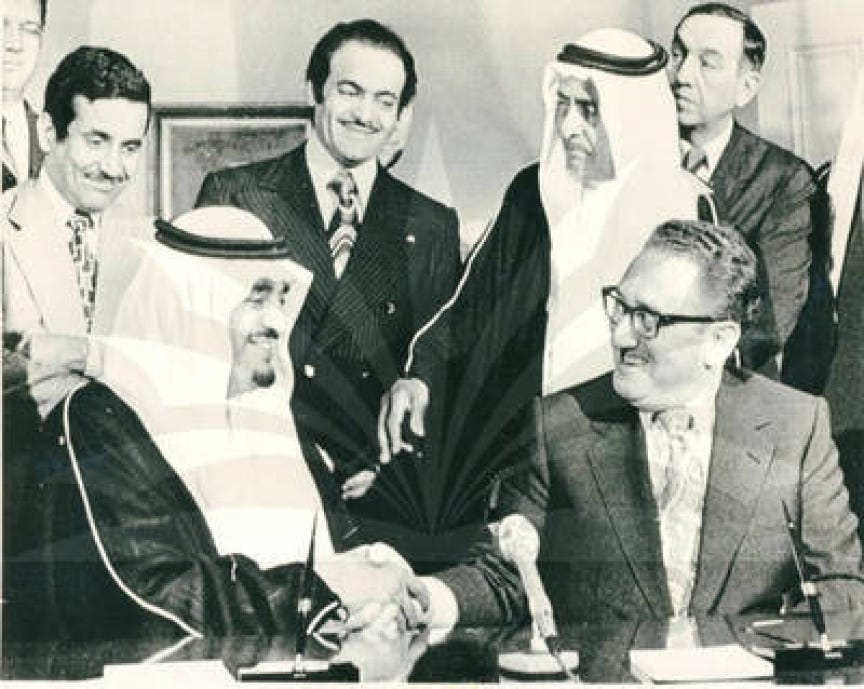
In 1971, Nixon closed the gold window. Three years later Henry Kissinger flew to Riyadh and cut what has been dubbed “the deal of the century”. Permanent American military protection for the Saudi oil fields in exchange for one thing: oil would be priced in dollars, and the proceeds would be recycled into U.S. Treasuries.1 OPEC followed. If you wanted oil, you needed dollars. This was called the petrodollar system, and it ran the world up until now.
That system has been dying for some time now. The dollar itself has not. China buying oil in yuan, Russia selling in rubles, Iran and Venezuela running crypto barter, BRICS summits about an alternative reserve currency. Central banks dropping Treasuries for gold. Every macro pundit on Twitter wrote the obituary. They were right that the old system was finished. They were completely wrong about what comes next.
Because while everyone was eulogising the United States’ hegemony, a new architecture was already being built. The petrodollar system may be ending. The dollar is about to get stronger than ever. This is what we can call “Bretton Woods 3.0”.
I. The Physical Layer
The petrodollar worked because if you wanted oil, you needed dollars, and that need was reinforced by America’s dominant position in global maritime security. But dominant position and direct control are two different things.
There are four critical waterways through which the world’s energy supply physically moves: the Strait of Hormuz, the Panama Canal, the Strait of Malacca, and the Bab el-Mandeb at the entrance to the Red Sea. For decades, the United States provided general security for these routes as part of its global naval posture.
What has happened over the last twelve months is qualitatively different. The United States has moved from background security provider to active gatekeeper of three of those four, through a combination of port acquisitions, insurance control, and military access agreements.
In March 2025 a BlackRock-led consortium announced a 22.8 billion dollar deal to buy 43 ports from CK Hutchison, the Hong Kong conglomerate that had operated the terminals at either end of the Panama Canal for nearly thirty years.2 This was the critical chokepoint between the Atlantic and Pacific, and it had been run by a company headquartered in a Chinese jurisdiction.

Trump told Congress he was reclaiming the canal. When China tried to block the sale through antitrust review, Panama’s Supreme Court annulled the original concessions entirely and handed the terminals to Western shipping operators Maersk and MSC.3 Chinese-linked operators were removed from the most important maritime corridor in the Western hemisphere.
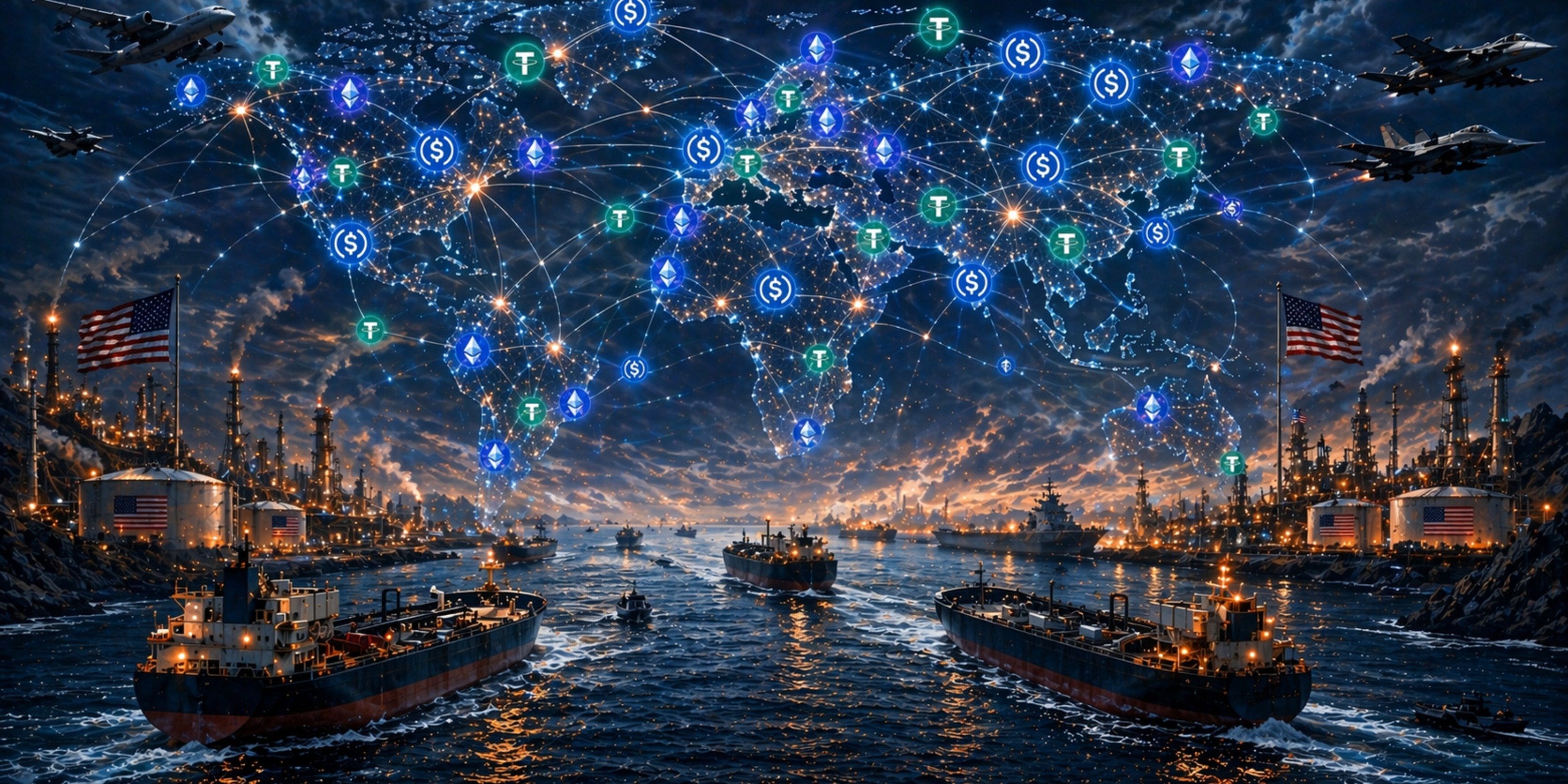
Then Hormuz. The Iran conflict that began in March 2026 is the most active and fast-moving piece of this whole picture, and the situation on the ground is evolving by the week. The strait is opening now but has been effectively closed. What matters for this analysis is not the day-to-day military updates but the end state the administration is clearly steering toward. Mere days into the conflict, the U.S. Development Finance Corporation had already announced a $20 billion reinsurance backstop in partnership with Chubb to underwrite maritime transit through the strait.4

That tells you what the post-conflict objective is. When the war ends, America intends to be the entity that decides the terms under which the world’s most important oil chokepoint reopens, who gets to move through it, under what insurance, and at what cost.
Then in April, the third one: Indonesia. On Monday, Secretary of War Pete Hegseth and Indonesian Defence Minister Sjafrie Sjamsoeddin signed a Major Defence Cooperation Partnership.5 The real content is that American military aircraft now get blanket overflight access to Indonesian airspace.6 Surveillance and maritime patrol aircraft can now cover the Strait of Malacca at will. A quarter of all global trade and 35 percent of internationally shipped oil flows through that strait. Most of it is going to China. Now there is an American sensor net over it.

Three out of four chokepoints in twelve months. Same playbook, three theatres, one year.
Controlling the chokepoints is only half of the energy picture. The other half is making sure there is no alternative supply outside the system. For decades, two countries had been the main oil producers selling outside the petrodollar: Venezuela, sitting on the largest proven reserves on Earth at roughly 300 billion barrels, and Iran, with the world’s third-largest reserves. Both were selling crude at discounts to China, often in yuan or barter, specifically to bypass dollar settlement. They were the two biggest exit doors from the dollar oil system, and the administration has been closing them both.
In January 2026 U.S. forces captured Nicolas Maduro in a predawn raid on Caracas and flew him to New York to face narco-terrorism charges.7 Within days, Venezuelan oil sales were being routed through American-controlled accounts. Marco Rubio announced the U.S. would seize between 30 and 50 million barrels of already-produced crude and sell it on the open market itself.8 The world’s largest oil reserve base went from running outside the dollar system to being administered by it in the span of a long weekend.

Iran is the harder one and it is still being fought. The regime is under pressure it has not faced in forty years, and the conflict is ongoing. Iran matters not just for the oil. It has been the central economic and military lever for any power that wanted to challenge the American order: funding terrorism from Lebanon to Yemen, sending drone components into Russia for the Ukraine war, and serving as China’s most important strategic partner in the region for twenty years. Pulling Iran out of that role closes a financial exit from the petrodollar system and strips China of a military lever in the same move. This is the hardest and most consequential piece of the whole architecture, and the administration is only a few months into it.
Assume the obvious outcome. The two main non-petrodollar oil exporters fold back in. The exit doors are bricked up. America controls the chokepoints, the insurance market, and the last remaining supply outside the system. If you want oil, you deal with the United States. Which means you need dollars.
But that’s just the beginning.
