

This analysis is free, but with Premium Membership you get MORE. Join today.
by Joshua Hoffman
September 30, 2026
In June 2025, Israel launched one of the most audacious military operations in its history. Israeli aircraft crossed enormous distances and struck targets across Iran — nuclear infrastructure, missile facilities, air-defense systems, military leadership.
Over the course of the 12 Day War, Israel attacked hundreds of targets and achieved a degree of freedom in Iranian airspace that would have seemed almost unimaginable only a few years earlier.
Iran is not Gaza. It is not Lebanon. It is more than a thousand miles from Israel, with a large military, ballistic missiles, radar installations, and Russian-built air-defense systems specifically designed to make operations like this extraordinarily difficult. And yet Israeli aircraft kept coming.
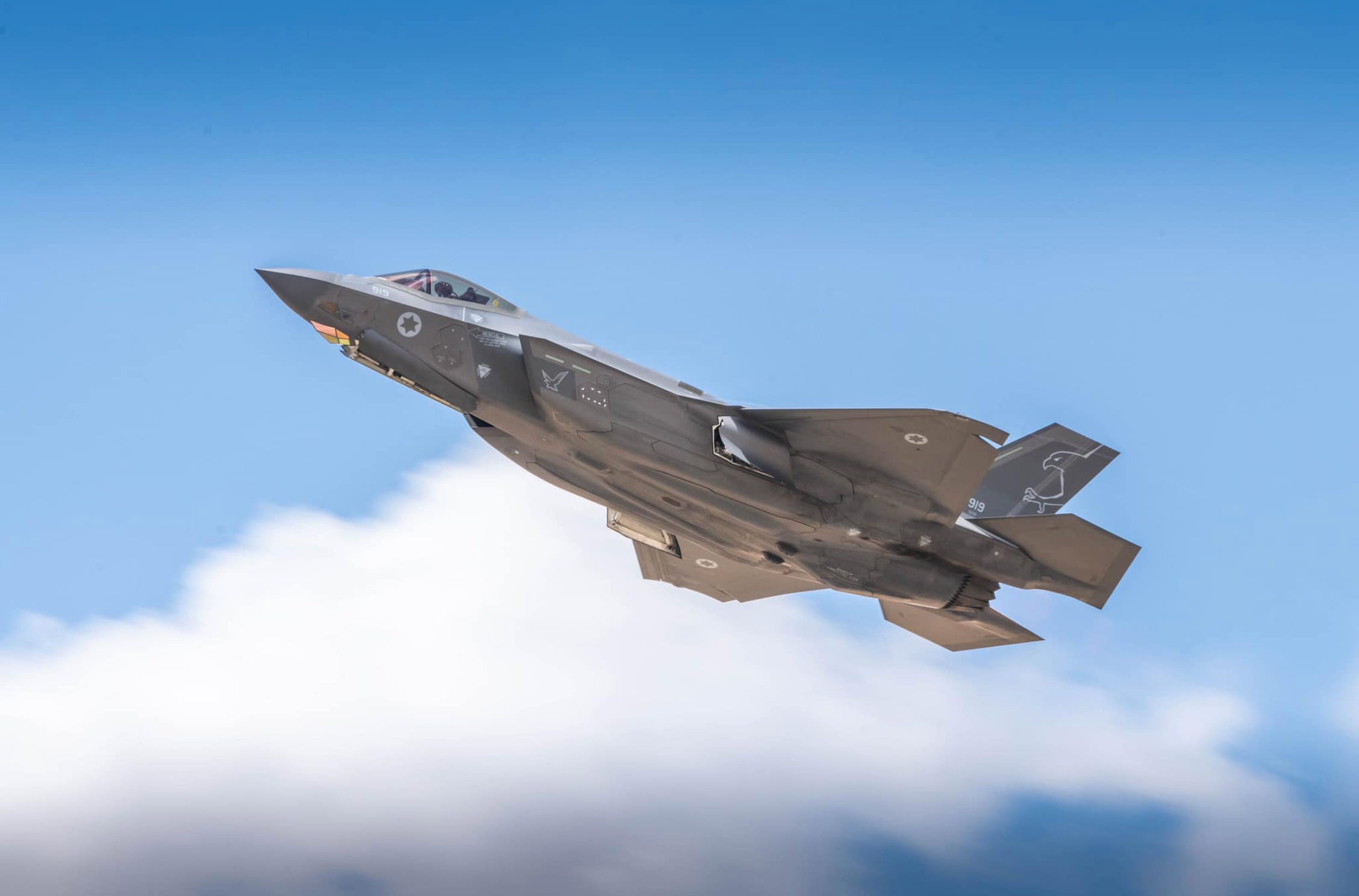
That is where the story of one particular airplane becomes fascinating: the F-35. Or, more precisely, Israel’s F-35I Adir.
Adir means “mighty” in Hebrew. The name is appropriate, but the most interesting thing about the Adir is not that Israel possesses one of the most advanced fighter aircraft ever built. It is what Israel did with it — because Israel has a habit of taking things invented elsewhere and making them unmistakably Israeli, and sometimes better suited for the job.
The F-35 is an American achievement. Lockheed Martin developed an extraordinary fifth-generation aircraft combining stealth, advanced sensors, electronic warfare, communications, and the ability to collect enormous amounts of information about the battlefield around it.

But Israel understood something very early: an aircraft designed to fight America’s wars would not necessarily be perfectly configured to fight Israel’s wars. America must prepare for almost everything: China, Russia, the Pacific, Europe, the Middle East, carrier operations, coalition warfare, expeditionary warfare.
Israel has a much narrower problem: The Jewish state needs to survive. Its military requirements are therefore brutally specific: Israelis need an aircraft capable of operating against Hezbollah in Lebanon today, Iranian weapons shipments in Syria tomorrow, and nuclear infrastructure nearly a thousand miles away the day after that. They need systems capable of adapting quickly when the enemy changes radar frequencies, develops new missiles, or deploys a new electronic-warfare system.
Israel did not simply want F-35s. Israel wanted its F-35s. And, unusually, America allowed it.
Israel’s version received accommodations for Israeli command-and-control, electronic-warfare, and weapons capabilities. Israel Aerospace Industries developed a unique C4 system for the Adir, while the Israeli Air Force has continued working to integrate additional domestically developed technologies into the platform.
Israelis did not rip out everything Lockheed Martin built and replace it. The reality is more sophisticated: They built Israeli capabilities around one of the most sophisticated American technological foundations ever created. That may be the better metaphor for the U.S.-Israel relationship itself: America provides extraordinary scale, Israel provides extraordinary specialization.
Then Israel did something even more important: It used the airplane, a lot. The Israeli Air Force declared the Adir operational at the end of 2017. Israel subsequently became the first country to publicly acknowledge using the F-35 in combat. That matters because military technology does not exist in PowerPoint presentations. Weapons become truly valuable when pilots, intelligence officers, engineers, and commanders learn what they can actually do.
Every operation generates information. Every encounter with an enemy radar teaches something. Every mission reveals weaknesses. Every failure creates an engineering problem. Every success creates a new tactic. And Israel exists in something close to a permanent military laboratory.

Israel would undoubtedly prefer Switzerland’s security environment. It simply does not have Switzerland’s security environment. So Israeli technology evolves differently. It has to. Israel does not have the luxury of developing military systems for hypothetical wars 20 years in the future. Its engineers frequently know the soldiers using their technology today.
Sometimes the feedback loop between battlefield and factory can be measured in weeks. The Adir became part of that system.
Then came Iran.
In April 2024, Iran launched an enormous direct attack against Israel. In October, Israel responded to another Iranian missile attack by striking military targets inside Iran. Israel later said the attack eliminated Iran’s remaining Russian-supplied S-300 batteries after another S-300 battery had previously been destroyed.
For decades, countries like Iran purchased sophisticated Russian and Chinese air-defense systems partly because those systems were supposed to create protected bubbles around critical infrastructure. Then Israel demonstrated that those bubbles could be penetrated and dismantled.
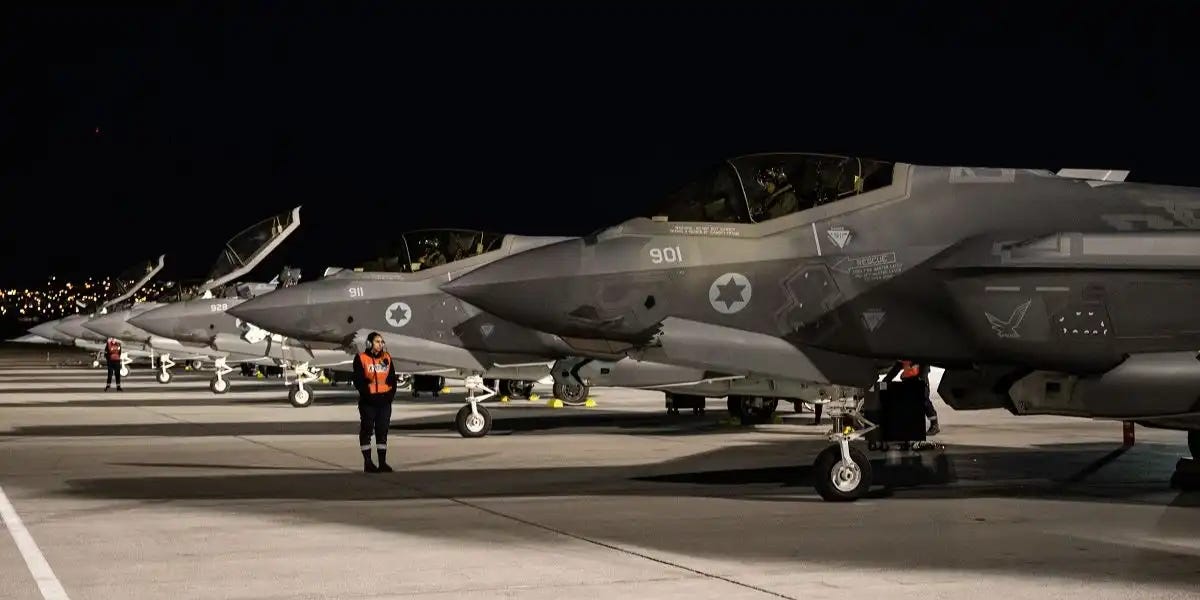
Public information does not tell us precisely which aircraft destroyed which radar or which weapon penetrated which defense system. Israeli operational details remain deliberately secret. And the F-35 did not conquer Iranian airspace by itself. Israeli intelligence, electronic warfare, long-range weapons, drones, clandestine activity inside Iran, and other Israeli aircraft certainly played their parts, as did important U.S. cooperation.
The Israeli Air Force operated as a system, which is actually the more impressive story, but the F-35I sits near the center of that network.
By June 2025, Israel was ready to demonstrate what years of preparation had produced. The opening attacks of Operation Rising Lion badly damaged Iranian air defenses. Within days, Israeli aircraft were operating with extraordinary freedom over portions of Iran, including around Tehran.
For decades, Iranian strategy rested partly on geography: Iran could surround Israel with proxies, Hezbollah could threaten Israel from Lebanon, Hamas could attack from Gaza, the Houthis could launch weapons from Yemen, and Iran could finance and arm them all while remaining safely hundreds of miles away.
That assumption no longer exists. Israel demonstrated that distance works both ways: Iran can reach Israel with ballistic missiles, but Israel can reach Iran with aircraft (and aircraft can return). This created an entirely different kind of strategic equation.

It also created an especially uncomfortable question for Russia, which has spent decades selling air-defense systems as some of the most formidable in the world. The S-300 and S-400 became symbols of Russian military technological prowess and power.
Then, like the U.S. in Venezuela and Iran, Israel repeatedly operated against and outmaneuvered environments protected by Chinese and Russian-designed systems.
That is a much larger problem for Moscow because Russia does not merely sell missiles; it sells confidence. Countries buy an air-defense network because they believe it can make certain targets extraordinarily difficult to attack. Israel just shattered that entire assumption.
There is also something deeply Israeli about this entire story: Israel is a country of approximately 10 million people. It cannot outproduce China, outspend America, absorb casualties like Russia, or build its defense strategy around numerical superiority. So Israel has spent most of its history trying to turn intelligence into a substitute for size, speed into a substitute for depth, technology into a substitute for manpower, and creativity into a substitute for resources.
The F-35I Adir is almost the perfect embodiment of that philosophy: Take the best platform you can obtain, understand it obsessively, modify what you can, connect it to your own technology, train relentlessly, use it, learn from it, and then do it all again. Israel has already ordered enough F-35s to eventually operate a fleet of 75 aircraft, with deliveries for its third squadron scheduled to begin in 2028. And so the evolution continues.
Israel’s enemies have spent decades discovering an uncomfortable characteristic of the Jewish state: Israel is small, but once Israelis conclude that something represents an existential threat, they can become extraordinarily difficult to deter from confronting it.
That is ultimately what the Adir represents: a doctrine. If Israelis believe something threatens their survival, distance will not protect you. Air defenses will not protect you. International pressure will not protect you. Israel will find a way.
For nearly 2,000 years, the Jewish People could see threats approaching but had no real ability to stop them. Today, somewhere above the Middle East, an Israeli pilot can climb into an Adir. That may be one of the most remarkable Jewish advancements of them all.
— Joshua Hoffman is an entrepreneur and author who lives in Tel Aviv. This article first appeared on his genuinely excellent Substack.


Interestingly this isn’t the first time this happened. Sometimes the US participates, sometimes they permit, and sometimes they just stand aside and pretend it’s not happening.
When I first went to work for the Haze-Grey Navy I worked on the E-2C program. A couple years earlier, we’d sold some of them to Israel—they figured prominently in the Bekaa Valley operations in 1982—and the Israelis wanted to modify the radar to allow them to detect and track low-velocity, low-altitude targets—ships at sea and aircraft on takeoff. We thought that was fine and we worked closely with them to achieve their goals.
A few years later I happened to be in a conversation with a guy I knew who worked on Harpoon. He told me that there were three variants: the A variant which we—the US—used, along with Great Britain; the B variant, which we sold to our other NATO allies, Japan, and Australia; and the C variant, which we sold to everyone else.
Israel was on the C-list. But apparently they’d come in and said, OK, we reverse-engineered our missiles and now they’re as good or better than the A version. So how about you just put us on the A-list and everyone benefits? Apparently—according to my friend—there was vigorous discussion about this and eventually we said no. But we didn’t tell them to stop doing what they were doing, either.
I suspect the Israelis have done similar things with pretty much every weapon system they’ve ever acquired—whether from us or elsewhere—and we just kinda pretend it’s not happening to avoid unnecessary diplomatic issues with the Arab world.
It is inspiring to see how focused use of resources and innovation can make a seemingly impossible task become reality.