


This analysis is free, but with Premium Membership you get MORE. Join today.
NOTE: We republish this essay every Christmas to give you hope. Enjoy. — RDM
by Rod D. Martin
December 21, 2025
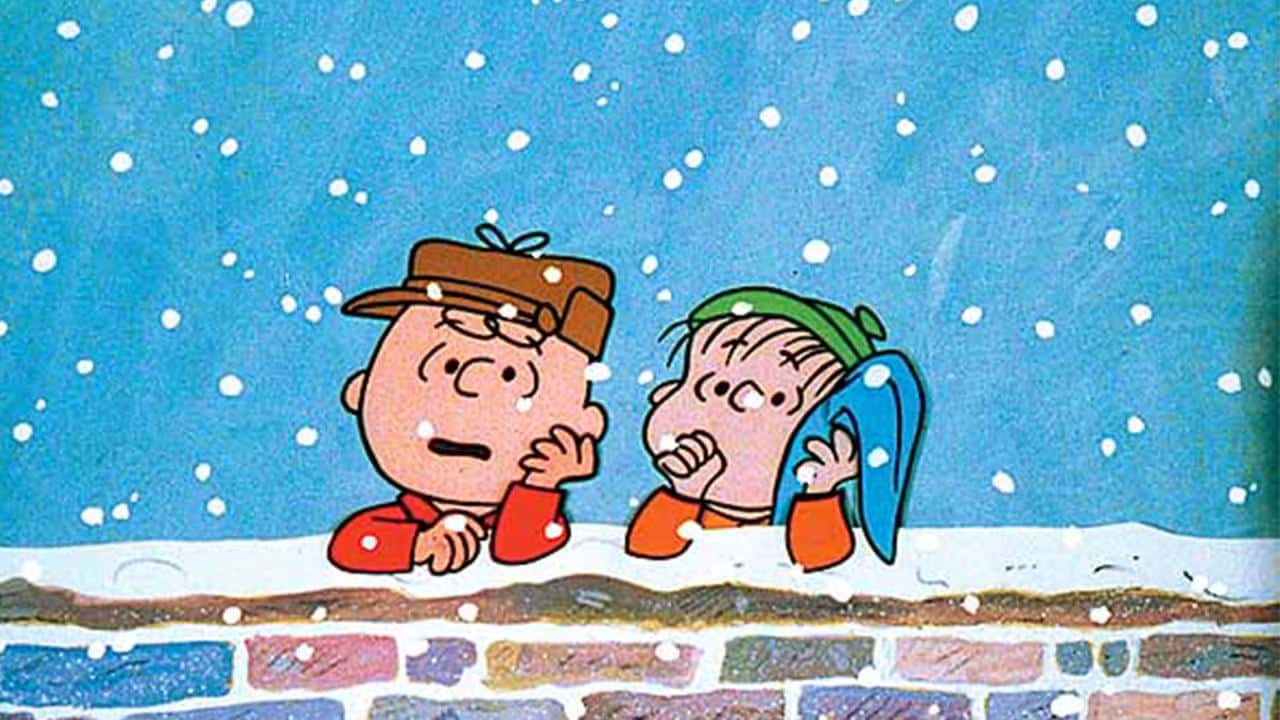
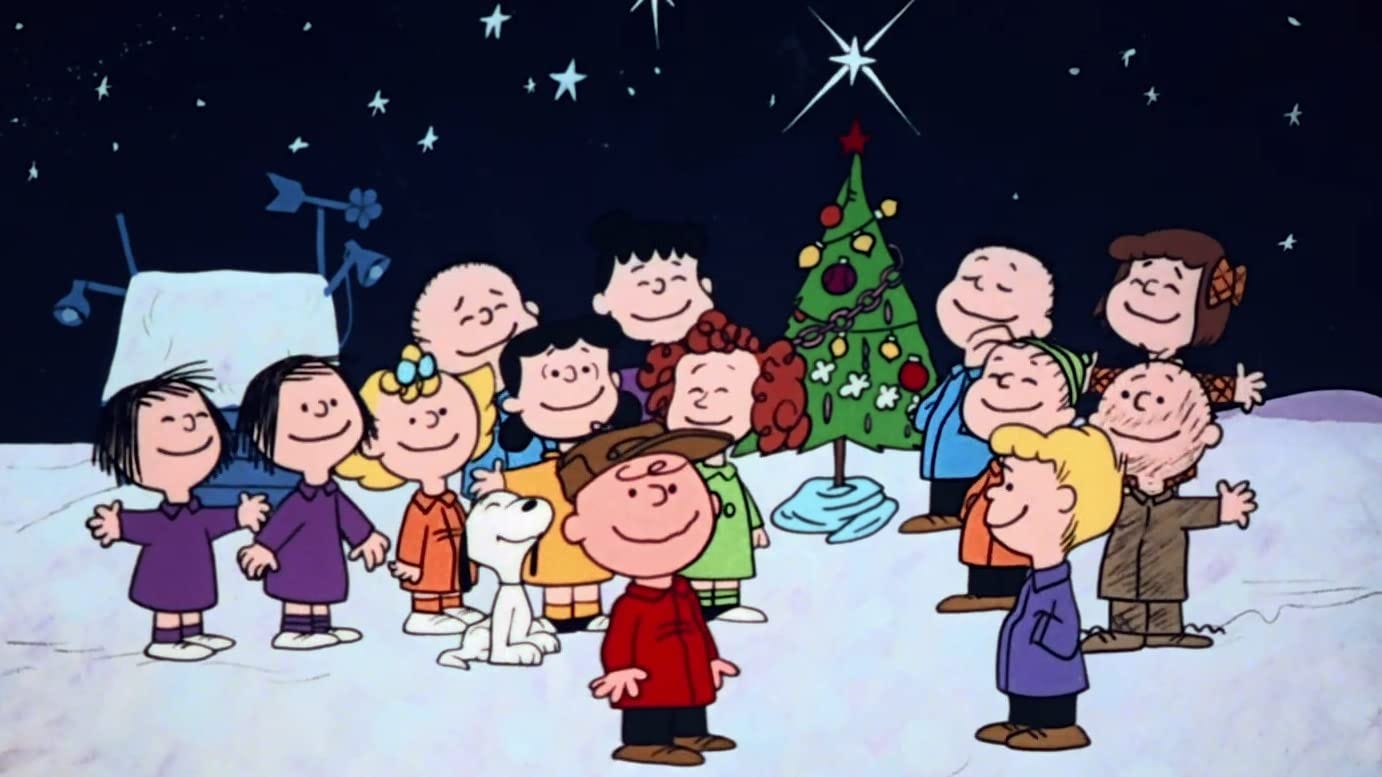
In the perfectly delightful A Charlie Brown Christmas, perhaps the most Christian twenty-five minutes of television ever, everyone’s favorite Round-Headed Kid unendingly decries the “commercialism” of Christmas.
And this is one of oh so many reasons Charlie Brown is rightly called a blockhead.
Commercialism is not, of course, the “real meaning of Christmas.” But the fact that Linus has to tell Charlie Brown what that true meaning is tells the rest of the story. Most people complaining about Christmas’s commercialism don’t know anything about Christmas’s “true meaning” either: they’re just complaining, as they always do, about everything.
And complaining is the exact opposite of Christmas’s true meaning. Christmas is about grace. And grace, once received, is about gratitude.
As I’ve written before, Christmas is an absolutely singular holiday: there is nothing else like it. Independence Day is nice, but there is no “Fourth of July Season.” Ditto Halloween or St. Patrick’s Day. Christmas dominates an entire portion of the year. Secularists relentlessly attempt to redefine it into “the holiday season,” lumping it together with Thanksgiving and Hanukkah and the New Year so as to drain the meaning from all of them; but this is a relentless failure.
How much so? Several years ago I spent Christmas in Communist Beijing. We could not walk three feet without tripping over and practically being impaled upon a Christmas tree, strangled in garland, blinded by Rudolph. There were even Christmas trees at the Great Wall (and not even Communists called them “holiday trees”).

Christmas is unique. It is the most explicitly religious of holidays, celebrated around the world by countless millions who don’t even believe in Christ. In a very real sense, the whole calendar revolves around our Savior and His day.
But how they celebrate it is even more remarkable. Everywhere and always, Christmas is selfless. And our observance, one of the most visible attributes of our culture and our influence upon the world, centers upon precisely that selflessness.
After all, doesn’t the complaint against Christmas center upon the accusation that we are piling up things for ourselves? But who ever buys a Christmas present for himself?
Our culture’s celebration of Christmas – like that of the Wise Men – entails working long hours entirely for other people’s gain. It focuses even unbelievers upon “doing unto others as you would have them do unto you.” It emphasizes the goodness in out-giving others, frequently anonymously, not for any gain to self but for their pure benefit and joy.
What’s more, it particularly highlights “the least of these”: children certainly, and in an age when the very young are routinely discarded once born or murdered even before that; but also on the jobless, the homeless, the shut-ins, the widows, all of those whom society might normally ignore.
Christmas – even in its most secular interpretation – focuses hearts and minds upon Christian virtue, Christian action, Christlikeness.
The so-called “commercialism” Charlie Brown laments serves only to promote that.
In focusing ire on the merchants and advertisers we make the tail to wag the dog. Every ad reminds us of Christmas; every one of them reminds us to give, not keep, not take. Every commercial promotes the idea that others are more important than me, that my money and my work is better spent – voluntarily, and with a pure heart – to make the world a little better, whether to produce delight in a child or a meal in a shelter.
Not only that, each product suggested is an opportunity for me to refine my giving, so that my wife gets the dress she wants and not the vacuum cleaner I oafishly think she needs. What is decried as commercialism is actually a great service: first, promoting Christian thought and action, and second, helping me to actually serve in an effective, thoughtful way.
Some who accept my assessment of their effect will still question the advertisers’ motives. But that entirely misses the point. Capitalism is a system that encourages right action even from impure hearts. It incentivizes sinners to follow the Golden Rule. That is an incredible achievement, a brilliant advance upon the savage selfishness of most of human history.
And it’s baked into the cake of Scripture, from the Law to the Gospel. It’s God’s achievement, through us and in spite of us.
And speaking of Law and Gospel, is Charlie Brown’s complaint itself not uncharitable, even un-Christian? Is it not covetous in its essence, to envy and look askance at someone for providing that very thing which you seek? And when a parent buys a toy, or a church member gives a meal, isn’t the checker or the store manager very likely the next person on your pew? Are they evil for making a living? Indeed, are they not enabling everyone else’s good works?
Isn’t all of this a reflexive virtue signal, and a way to feel superior to our fellowman?
And therein we discover the Satanic lie at the heart of this never-ending attack on the “commercialization” of Christmas. It is a giant guilt trip, an assault on the giving (which requires purchasing), on the volunteering (promoted by the ads), on the legitimacy of the honest and decent work of the sellers, but above all, on the relentless focus given to Christ’s birth even by the godless around the world.
Satan would enjoy nothing so much as the diminishing of Christmas and all the hoopla around it, because with that diminishment would come a hardening of hearts, a subtraction of hope, and millions if not billions fewer opportunities every year to tell and to hear “the old, old story.” It is, after all, still Christmas they are celebrating, and one cannot be touched by Christmas without having to confront, in small ways or large, Christ Himself.
The “commercialization” of Jesus’s birthday is in reality a giant ad campaign for Christ, for the Gospel and the Golden Rule, paid for without a cent of tithe money or offerings. We should not lament or look down upon it. We should be grateful, to our Father Who turns the hearts of kings, and orders all things to the glory of His Son.
Merry Christmas.
— An earlier version of this article was originally published as part of my "Beyond the Church Door" series in the Florida Baptist Witness.


An epic piece, Dr. Martin that no one at the New York Times or the Washington Post could ever write anything comparable to! Charlie Brown is the lovable, well-meaning and goofy bald headed kid we all love but he’s a blockhead just as Lucy always pegged him as. There are many reasons for this. Chief among them is he just doesn’t get Christmas. Linus explains to him very well what the meaning of the season is but there is more Charlie Brown is wrong about than just that. The commercialization of Christmas isn’t a problem, it’s a blessing from God! No other holiday has a whole season dedicated to. Not Halloween, not Easter, not Thanksgiving, not St. Patrick’s Day, not Mardi Gras, not Independence Day, none! That’s because Christmas is in addition to being a celebration of the birth of Jesus Christ to Mary and Joseph, is about gratitude, kindness, giving, charity, and helping the poor, the downtrodden and the less fortunate. It’s a time when even the most greedy and avaricious folks are forced to find their moral compass.
Even the most secularized version of Christmas still reflects a very Christian message and advocates Christlike behavior toward others. By the way, what’s wrong with the commercialization of Jesus’s birthday? It’s basically as Dr. Martin points out, a giant ad campaign for Christ, for the Gospel and the Golden Rule, paid for without a cent of tithe money or offerings! Furthermore, let’s not forget giving requires purchasing and the volunteering which is promoted by ads and based on the legitimacy of the honest and decent work of the sellers, but above all, on the relentless focus on Christ’s birth even by the godless around the world such as in Communist China where despite state-sanctioned atheism, Christmas trees were everywhere.
We should absolutely be grateful for the commercialization of Christmas which is our Father who turns the hearts of kings, and orders all things to the glory of His Son. We should all give thanks to God for capitalism which helps in exporting his message and the values he seeks to instill in us to people all over the country and all over the globe in an endless number of ways! This article deserves to go viral and be read by every American and every Christian. It’s the Christmas season, NOT the holiday season. Nothing against Hanukkah or Kwanzaa, but they don’t have a whole season dedicated to them. Christmas does and that’s for good reason. Christmas is a time to open up our hearts to lessons that God seeks to teach us!
Well said. Merry Christmas Rod! God bless you and your family.