


This analysis is free, but with Premium Membership you get MORE. Join today.
by Fred Fleitz
September 26, 2026
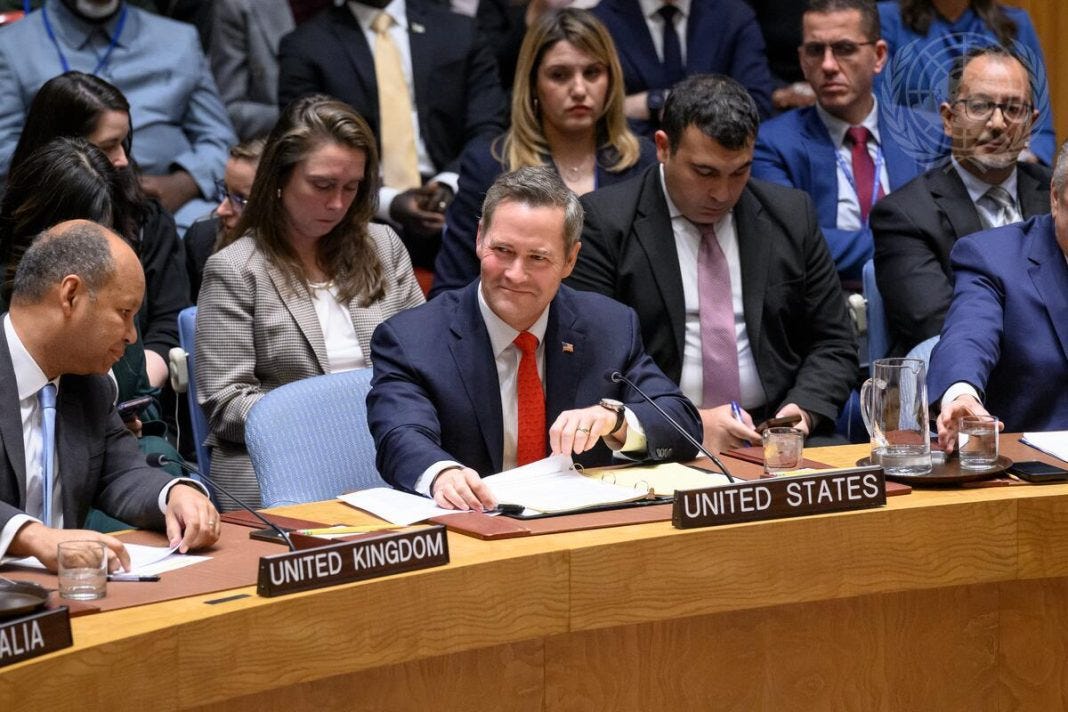
For decades, Americans have rightly complained that the United Nations is a politicized, anti-Western organization that wastes hundreds of millions of dollars in U.S. contributions. Presidents and ambassadors have tried to fix it and failed. President Trump and Ambassador Mike Waltz finally have a plan that is producing results.
Trump has told the United Nations to do less, do it better, and make every American taxpayer dollar count. After a year on the job, Ambassador Waltz and his deputy for management and reform, Jeff Bartos, have turned that directive into results. They helped secure the deepest cut to the UN’s regular budget in decades, withdrew the U.S. from hopelessly politicized agencies, and treated America’s UN dues as leverage rather than tribute.
In doing so, they are reviving a strategy that President Ronald Reagan pioneered and learning from the times it failed.
Waltz is a former Green Beret, congressman, and national security adviser who knows a lot about missions. Bartos is a Pennsylvania businessman who knows incentives, reimbursements, pensions, and warehouses. Neither is a career diplomat, which is proving to be a distinct advantage. Senator John Fetterman, a longtime friend of Bartos from across the aisle, has praised the pair for holding the UN accountable.
In December 2025, the UN General Assembly approved a 2026 budget of $3.45 billion. That is about $270 million, or 7 percent, below 2025, and about $570 million below the budget originally planned for 2026. The UN Secretariat abolished about 2,900 posts—nearly one job in five. The U.S. share of the regular budget fell by about $126 million a year. Waltz has also pushed changes in how the UN reimburses troop-contributing countries for equipment, ending payments for gear that sits unused.
UN peacekeeping is shrinking even faster. In fall 2025, the UN announced it would cut roughly a quarter of its peacekeeping troops and police and reduce peacekeeping spending by 15 percent. Missions that have run for decades without an exit strategy are being downsized.
The UN budget has tripled over 25 years. World peace has not. There’s a reason.
These cuts did not happen because the General Assembly suddenly discovered thrift. The reforms were packaged in UN Secretary-General António Guterres’s “UN80” initiative, named for the organization’s 80th anniversary, and were driven by a cash crisis. Washington’s unpaid dues were the largest cause of that crisis, along with late payments from China and Russia. Defenders of the UN call that sabotage. I call it leverage, the same leverage that Reagan used.

The Trump administration withdrew from the UN Human Rights Council, a body that routinely seats serious human rights abusers while treating Israel as a permanent defendant. Its investigators are now accusing the United States of war crimes in Iran but never said a word about Iran’s state sponsorship of terrorism or its grisly human rights record at home.
Trump officials announced America’s third departure from the UN Educational, Scientific and Cultural Organization (UNESCO), effective at the end of this year. In January, the president ordered withdrawal from 66 international bodies, 31 of them UN entities.
The administration also cut off the UN Relief and Works Agency for Palestine Refugees in the Near East (UNRWA). Congress had already frozen the agency’s funding in 2024 with bipartisan support after Israel accused UNRWA employees of taking part in the October 7 Hamas massacre against Israel. UN investigators later found that nine UNRWA staff members may have been involved, and UNRWA fired them.
Asked whether UNRWA would help deliver aid in Gaza, Secretary of State Marco Rubio was blunt: “UNRWA’s not going to play any role in it. The United Nations is here. They’re on the ground. We’re willing to work with them if they can make it work, but not UNRWA. UNRWA became a subsidiary of Hamas.” The UN disputes that characterization. But when a UN investigation accuses a UN agency’s employees of joining a massacre of civilians, U.S. taxpayers are entitled to walk away.
Waltz’s UN reforms are not without precedent. The Reagan administration treated the UN as a politicized, anti-Western forum that lavishly spent American money without American consent. Ambassador Jeane Kirkpatrick liked to point out that the countries that pay the bills do not have the votes, and the countries with the votes do not pay the bills.
Reagan withdrew from UNESCO effective the last day of 1984, citing politicization, hostility to a free press and free markets, and runaway budget growth. In 1985 Congress passed the Kassebaum-Solomon Amendment, capping the U.S. share of the UN’s assessed budget at 20 percent, down from 25, until the UN adopted weighted voting on budget matters.
Weighted voting never came. But in 1986 the UN adopted consensus budgeting, an informal veto for major contributors that produced the longest stretch of budget restraint in the UN’s history. The UN also cut Secretariat staff and limited the practice of governments seconding their own officials into UN jobs. In September 1988, satisfied with the progress, Reagan released $188 million in withheld U.S. dues and pledged full funding.
George H.W. Bush, a former U.S. ambassador to the UN, took a more cooperative path. His administration began paying down Reagan-era UN debts and largely stopped withholding dues as a weapon. This helped score some important wins, such as a Security Council resolution authorizing the liberation of Kuwait and a 1991 General Assembly vote that repealed the heinous 1975 “Zionism is racism” UN resolution.
But there was a high cost. Once U.S. reform pressure eased, UN mandates multiplied and budgets resumed surging.
John Bolton’s tenure as UN ambassador in 2005 and 2006 taught the opposite lesson. He tried to cap the UN budget to force management reform, but the G-77 Third World bloc responded by breaking budget consensus and voting him down. Bolton’s cap was lifted with most of the reforms unmet. Without a cash crisis, the G-77, which pays for less than 11 percent of the regular UN budget and less than 4 percent of peacekeeping, will vote down any serious UN reforms and budget cuts.

Waltz and Bartos learned from both episodes. The consensus rule the Reagan administration won made this year’s cuts possible, and the UN’s current financial crisis means the G-77 cannot simply ignore the largest contributor and vote for ever-larger budgets.
Critics claim Trump’s UN budget cuts and withdrawals from UN bodies are destructive to U.S. interests. The facts prove this is not the case. The UN Security Council endorsed President Trump’s Gaza peace plan in November 2025, 13 to 0, with Russia and China abstaining rather than wielding a veto. UN coalitions are still forming on crises in Haiti and Sudan. The U.S. is still an active member of the UN Security Council, the General Assembly, and the budget committee.
Washington has simply stopped writing blank checks to bodies it considers unreformable.
Bartos has a special perspective on what is at stake. In refugee camps in the Central African Republic near the Sudanese border, he watched UN aid workers risk their lives for strangers. The lesson he took was not that the UN should grow. It was that those workers deserve a competent and efficient institution that supports them, rather than a corrupt headquarters that swallows dollars and dispatches politicized envoys who bash Israel and make excuses for Hamas. Financial reform, he says, is the easy part. Culture is harder.
Ambassador Waltz has succeeded by building on the accomplishments of President Reagan and Ambassador Kirkpatrick. Their leverage at the UN worked because U.S. demands were concrete and Washington was willing to pay once they were met.
The United States now owes the UN billions. Having won a historic cut, Washington should set out clear conditions for how and when it will pay these arrears. This could lead to lasting reform rather than a one-time shock that the next Secretary-General can quietly reverse.
If the UN backslides on these reforms, Ambassador Waltz should be prepared to repeat the words of Ambassador Kirkpatrick’s deputy, Charles Lichenstein, who famously said in 1983, “The United States strongly encourages member states to seriously consider removing themselves and this organization from the soil of the United States. We will put no impediment in your way.” Members of the U.S. Mission, he added, “will be down at the dockside waving you a fond farewell as you sail off into the sunset.”
— Fred Fleitz is a co-chair with the America First Policy Institute, and previously served his country as a CIA analyst and as Chief of Staff of the National Security Council. This analysis first appeared at American Greatness.


Leadership