

This essay is free, but with Premium Membership you get MORE. Join today.
by David Hoile
August 27, 2026
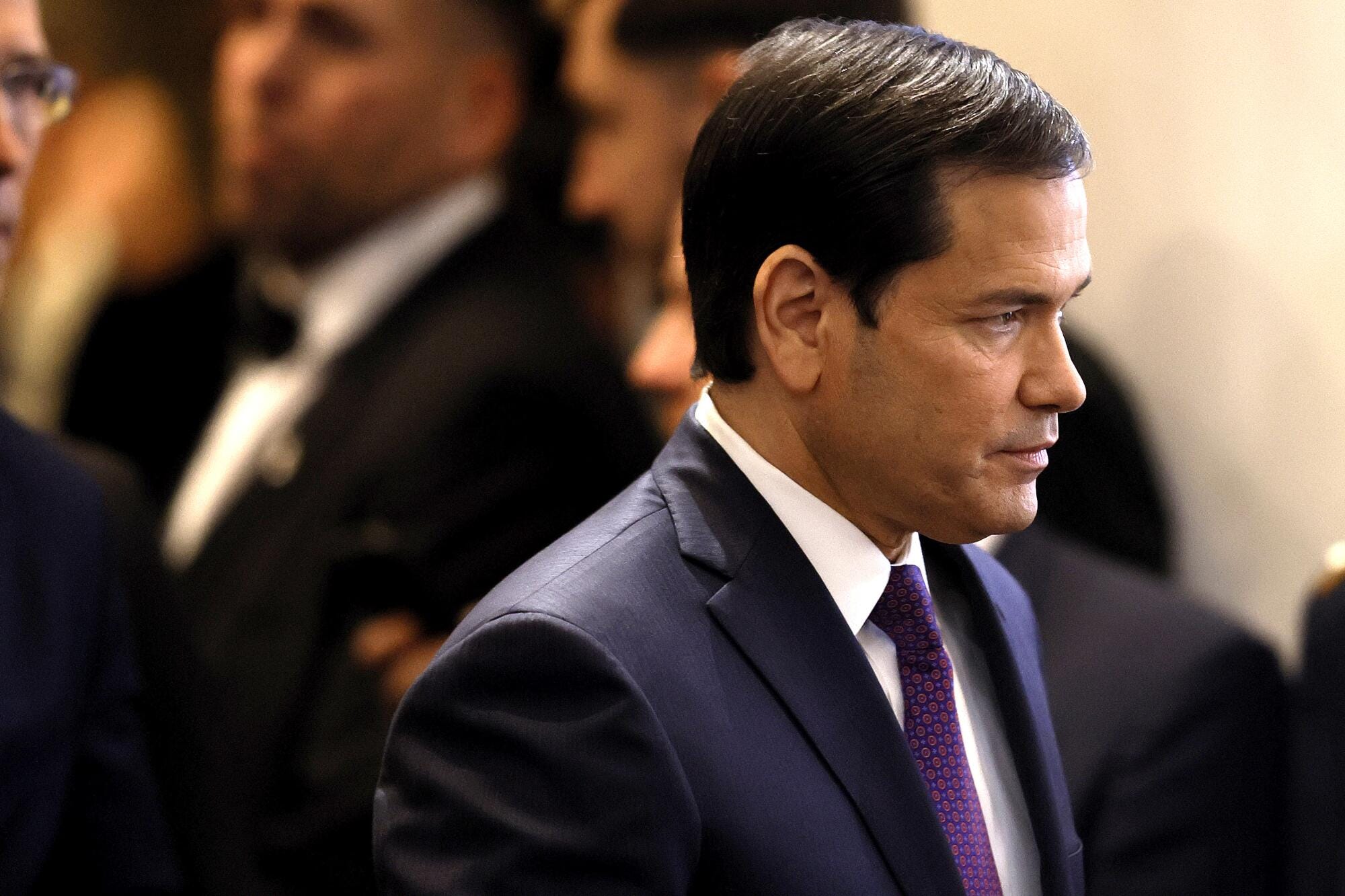
The Trump administration’s recent declaration of war on the International Criminal Court (ICC) is a welcome advancement toward the rule of law. Secretary of State Marco Rubio’s critique of the ICC is on target and should be shared by anyone who has monitored the activities of this so-called court over the years.
The ICC is fruit of the poisonous tree. The “court” is a creature of both the European Union — by way of conception or adoption and funding — and of unaccountable (and largely EU-funded) international and national non-governmental organizations, which, amongst other things, vet judicial candidates for the ICC bench.
Following the money is easy. The court is inextricably tied to EU countries, which provide up to 70 percent of its funding, making it a less-than-subtle instrument of European foreign policy. He who pays the piper really does call the tune.
The reality is that the ICC, which opened its doors in 2002, has emerged as a sham court peddling ersatz international law. It is not the international court: the United States, India, Pakistan, Indonesia, Israel, Turkey, Hungary, the Philippines, China, and Russia are just a few of the 70 countries — representing two-thirds of the world’s population — that do not recognize or enable the court’s alleged jurisdiction.
It isn’t even a real court, as we will see below. Secretary Rubio is right to say it is an intolerable threat to sovereignty. It forms part of the architecture of unelected power, together with other “international tribunals,” designed by the political left to short-circuit national sovereignty and bypass democratic domestic legislatures and civil rights in pursuit of an unaccountable Woke “internationalism.”
The ICC, together with its ideological sibling, the European Court of Human Rights, is also part and parcel of the lawfare aimed at emasculating Anglosphere armed forces, most notably in Britain and Australia, peeling away America’s most trusted and enduring allies.
For a quarter century, federal statute has repudiated ICC jurisdiction over any American citizen anywhere in the world. In fact, it authorizes the president to use “all means necessary” to free any citizen in court custody, including literally invading the Netherlands — a NATO ally — to free U.S. citizens the ICC might detain. The law prohibits any federal agency, state, or local government from cooperating with the ICC in any way.
The ICC is well and truly off the reservation upon which its creators (with an exaggerated wink and a nod amongst themselves) had promised it would confine itself. Secretary Rubio’s observation that the ICC has deliberately moved from being a “narrow backstop” charged with prosecuting “only the gravest offenses … when a nation’s courts were unable” is absolutely accurate. The ICC suffers from a deliberate, premeditated, and utterly predictable mission creep.
The ICC is a treaty-based organization, superficially committed to prosecuting the most serious of atrocities, genocide, crimes against humanity, and war crimes — within those states that signed and ratified the Rome Statute in 1998. President Bill Clinton signed the Rome Statute for the United States, but the Senate did not ratify it. President George W. Bush “unsigned” it in 2002. President Obama all too predictably played footsie with it.
Despite declaring itself an independent entity publicly committed to the rule of law, the ICC is political to its very core and has shown no compunction about bending and repeatedly breaking the very Statute it was meant to enforce. The reasons are political.
Israel is a case in point. It was never an ICC signatory state. Yet the Court has ignored its own governing Statute to issue illegal indictments of Israeli Prime Minister Benjamin Netanyahu and former defense minister Yoav Gallant after Hamas’ October 2023 attack on Israel that killed about 1,200 people.
If they get away with that, U.S. soldiers, commanders, and political leaders will be next.
The ICC’s current prosecution of former Filipino President Rodrigo Duterte provides another prime example of this behavior. At the heart of the ICC Statute is the principle of “complementarity” alluded to by Secretary Rubio. If a signatory state is unable or unwilling to prosecute its own citizens for serious crimes, then the Court can step in to do so.
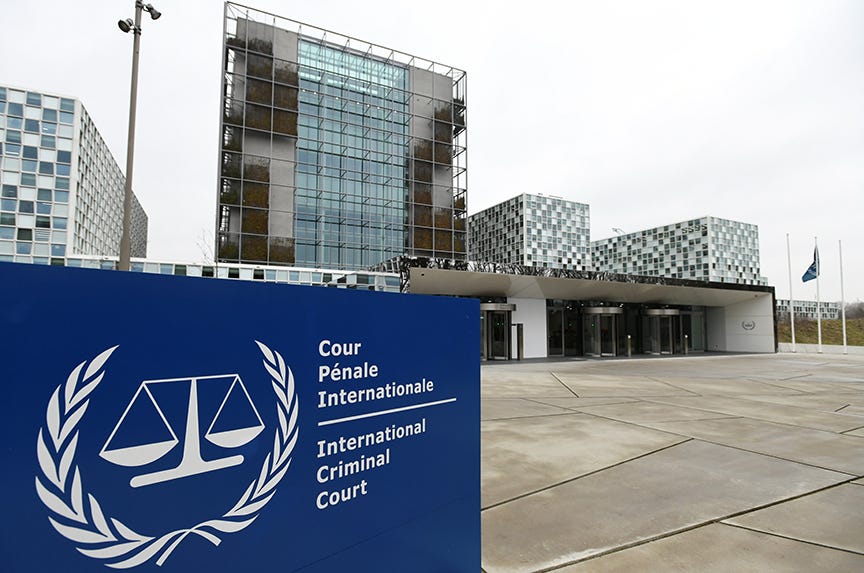
Despite the Philippines’ robust legal system with which to try Duterte, incumbent President Bongbong Marcos and the ICC illegally colluded to offshore Marcos’ political rival to The Hague on questionable charges — and this despite (or because of) Duterte having taken his country out of the ICC in 2019.
Yes, you read that right: the Philippines is not a party to the treaty and is not subject to the ICC’s jurisdiction. But it just didn’t matter.
The ICC had its own political reasons for detaining Duterte. It needed to divert attention from a sorry record. Rightly accused for years of a racist, Africa-only focus (more later), the Court was only too willing to accept Marcos’ offer to sideline his rival. There is little doubt that both the Israeli and Filipino indictments were forced through by the ICC’s Chief Prosecutor Karim Khan in a desperate bid to offset the scandal, which he knew was about to break, concerning allegations of his own sexual misconduct. The ICC finally removed Khan over a sex scandal last month.
If anything, Secretary Rubio’s critique does not go far enough. The bait-and-switch merchants behind the ICC rely on the essential decency of many law-abiding observers who accept at face value the ICC’s claim to be a court. This claim is simply false. In their attempt to replace accountable institutions with the rule of judges, they haven’t even been able to maintain the façade of a real court or real judges.
Why should anyone accept being judged by a court some of whose judges have never even been lawyers, let alone judges, before they were appointed to the bench to rule on incredibly complex matters of international law? Unsurprisingly, what has ensued has been described even by sympathizers as “slapstick comedy.”
ICC judges are politically vetted by NGOs and elected by corrupt FIFA-esque vote-trading. This game elevates Woke-compliant mediocrities over legal competence. A vice president of the Court candidly even admitted that interns draft key legal documents. ICC prosecutors routinely override the presumption of innocence and show a willingness to hide exculpatory evidence from both judges and the defense in trials. Even the pro-ICC Economist termed these trials “bumbling,” “chaotic,” and “near-farcical.”
The ICC has wrecked peace processes in Africa, artificially prolonging and extending devastating civil wars. If allowed to proceed, the ICC will hinder peace in Ukraine.
Secretary Rubio’s pledge to dismantle the ICC brick by brick will be easier to execute than many may think.
The ICC is rotten to the core, irretrievably damaged by its racism, blatant double standards, hypocrisy, corruption, and serious judicial irregularities.
Even friends of the ICC admit the Court is politicized, broken, and dysfunctional. Amnesty International has noted the ICC’s “questionable credibility,” warning that “the court’s legitimacy risks being eroded by an increasingly selective approach to justice.” Human Rights Watch has observed deepening “perceptions of politicization in the court’s work” and warned that “The ICC’s legitimacy . . . is at risk.”
Similarly, ICC-friendly international law experts have said the following of key ICC decisions: “spectacular failures,” a “fiasco,” “obvious shortcomings,” “deeply misguided … very dangerous and unwise,” “confusing,” a “mess,” the “worst possible solution,” and a “spiral of absurdity,” with ICC prosecutors said to be “poorly prepared,” “angry, threatening” and “autocratic” with a “coercive or dictatorial management style” and a “recurring pattern of evidentiary problems.”
The ICC’s overfocus on Africa is a matter of record. Despite its growing list of indictments elsewhere, the Court has only ever actually convicted black Africans — convictions that blatantly served European foreign-policy interests. An ICC judge summed up the problem neatly: European countries paid “the bills for the ICC,” and Africa provided “the suspects and the accused” for the Court.
African Union leaders have accused the Court of “racist hypocrisy” and “double standards.” Rwandan President Paul Kagame stated that the ICC reflected “colonialism, slavery, and imperialism.” An Ethiopian prime minister accused the ICC of “hunting Africans” because of their race. African discontent culminated at the January 2017 annual African Union heads of state summit in Addis Ababa when the African Union called for the mass withdrawal of its member states from the court.
Most African countries did not withdraw, however, because of unsubtle EU blackmail: No ICC membership, no EU trade deals, and no economic assistance or aid. The Kenyan parliament, for example, has twice voted to leave the ICC only for Europe to yank Kenya’s financial chain.
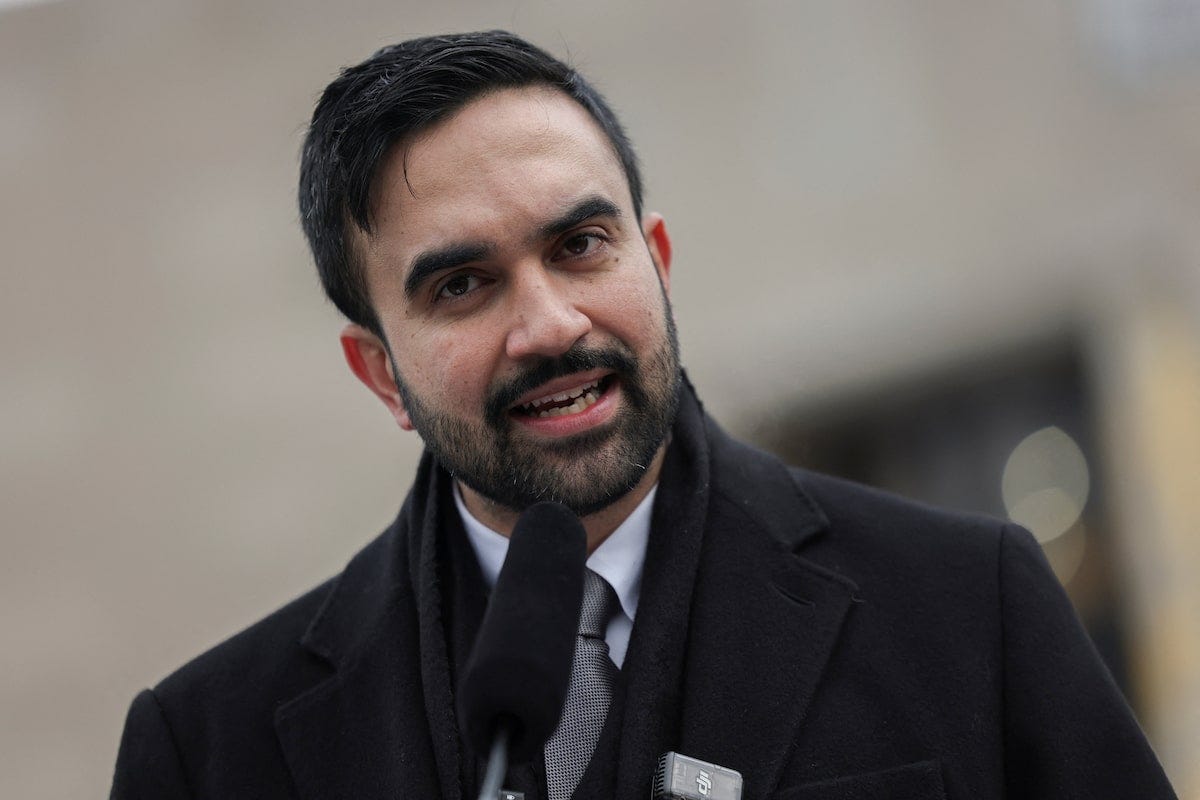
Yet as the Court attempts to extend its reach to countries over which it has no jurisdiction, partly to deflect attention from its African obsession, partly to pursue European heretofore crazy leftist wishlists in other parts of the world, the plot thickens. Can an unelected, unaccountable body impose its fiat on countries that never gave consent? Can it encourage leaders like New York Mayor Zohran Mamdani to exceed his legal authority and violate diplomatic immunity to arrest leaders like Netanyahu and turn them over to a foreign body?
And what if the Court should seek to arrest American soldiers whom the Taliban, or the Ayatollah, accuses of “war crimes”? What if it should detain Secretary Rubio, or even some future President? And regardless of their rank, may any American citizen be forcibly removed from America, deprived of their Constitutional rights, and tried and imprisoned in a country other than their own?
How is that not a kidnapping, or perhaps a hostage-taking?
Senator Tom Cotton (R-AR), chairman of the Senate Intelligence Committee, said it well: “The ICC is a kangaroo court… Let me give them all a friendly reminder: the American law on the ICC is known as The Hague Invasion Act for a reason. Think about it.”
The Emperor is truly naked. The sharpest critiques just scratch the surface. The ICC should be seen for what it is: an EU-funded NGO masquerading as a court. There were serious questions about its longevity long before the very welcome attention of the Trump administration.
Time to finish it off.
— Dr. David Hoile is the author of Justice Denied: The Reality of the International Criminal Court. This essay first appeared at American Greatness.


America 250 Film Club 🇺🇸🫡❤️🤍💙🎆🎇📽️🎞️🎬🎥 This Edition: The African-American Experience
• 12 Years A Slave
• In the Heat of the Night
• No Way Out
• 10,000 Black Men Named George
• A Lesson Before Dying
• Malcolm X
• Do The Right Thing
• For Us The Living
• Mississippi Burning
• Murder in Mississippi
• Jasper, Texas
• Mississippi Masala
• Coming to America
• Higher Learning
• Glory
• Blood Done Sign My Name
• The Great Debaters
• The Express
• Selma
• Hidden Figures
• The Color Purple
• The Butler
• King
• Driving Miss Daisy
• Rosewood
• The Autobiography of Miss Jane Pittman
• Backstairs at the White House
• Roots
• Roots: The Next Generations
• 42
• Boycott
• Ruby Bridges
• Loving
• Deacons for Defense
• Sins of the Father
• Ghosts of Mississippi
• A Time to Kill
• Perfect Harmony
• The Long Walk Home
• Freedom Song
• Selma Lord Selma
• The Watsons Go to Birmingham
• The Rosa Parks Story
• A Woman Called Moses
• Miss Evers’ Boys
• Something the Lord Made
• Gifted Hands
• Alex Haley’s Queen
• Separate But Equal
• Race
• The Long Walk Home
• Carolina Skeletons
• Rosewood
• Marshall
• To Sir, With Love
• Guess Who’s Coming to Dinner
By the way, I left two comments on your post before this one with Frank Gaffney, Dr. Martin!