

This analysis is free, but with Premium Membership you get MORE. Join today.
by Prakash Nanda
July 14, 2026
Yesterday (July 13), a damning report, surprisingly, appeared in the state-controlled Tehran Times:
“The Strait of Hormuz remains Iran’s most valuable asymmetric leverage against Washington, but repeated disruption of traffic through the waterway carries a rising cost, including damage to China, Iran’s top oil customer, and a stronger push by coastal Gulf States and Turkey toward pipeline alternatives that could erode the chokepoint’s strategic value”.
The above report is based on the interview that Silvia Boltuc, the Managing Director of “SpecialEurasia” (a media and consulting agency that provides region‑focused intelligence on Eurasia), gave to the Tehran Times.
A relatively underreported ongoing geopolitical and geoeconomic development in the Middle East is the emergence of war-ravaged Syria as an important trading center. The new Syrian government is taking full advantage of its geographic position due to the war in Iran, with the full blessing of the Trump Administration.
Ironically, Tehran’s closure of the waterway has thrown an economic lifeline and strategic advantage to an enemy, interim Syrian President Ahmed al-Sharaa, who ousted the Iran-allied Assad regime in December 2024.
With its rail, road, port, and land links between continents, Syria could become a center of new trade and energy corridors, with help and support from not only Gulf Arab states, Jordan, and Turkey but also the United States and France, to circumvent the Strait of Hormuz.
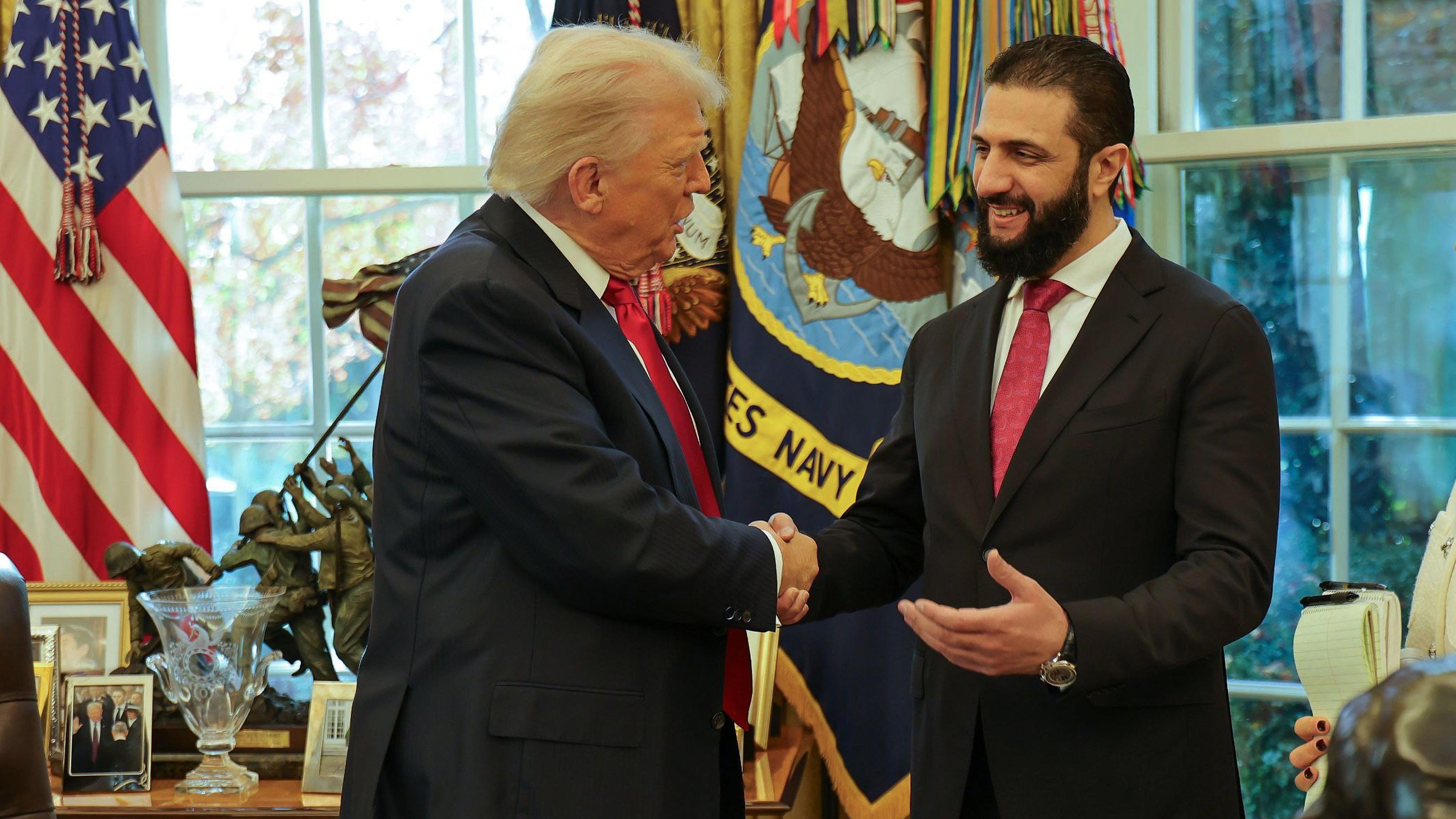
Ahmed al-Sharaa once had a $10 million (£7.5 million) U.S. bounty on his head. But now he has become US President Donald Trump’s firm favorite to find a way to loosen Tehran’s chokehold on a key conduit for shipments of gas and oil.
During the NATO summit in Ankara last week, Trump described the Syrian ruler as “fantastic”, who, according to him, has done a “great job” bringing together a country that was “a real mess, very disjointed”.
He announced that the U.S. would remove Syria from a list of designated state sponsors of terrorism — on top of lifting sanctions last year — after meeting Sharaa on the sidelines of the NATO summit in Turkey. The deal will help pave the way for American businesses to invest in Syria, which the U.S. government has encouraged by issuing an investor guide with specific guidance for the oil, gas, electricity and banking sectors.
Just before the NATO summit, French President Emmanuel Macron conducted a historic official visit to Damascus, becoming the first Western European leader and head of an EU state to visit the nation since the rebel-led ouster of longtime ruler Bashar al-Assad. Accompanying him was a massive delegation of French business investors.
During this visit, the French President emphasized France’s interest in maintaining and bolstering its support for Syria’s development through a “partnership with a lasting impact” and “the construction of a regional hub for energy corridors”. He cited the tensions in the Strait of Hormuz as an example of the need to diversify trade and energy routes, which opens up opportunities for French companies and investors.
Syria’s strategic location — with a large stretch of Mediterranean coastline and a land mass connected to oil-rich Middle Eastern nations — makes it ideal to connect to global trade, if there is proper security, and with it, infrastructure to truck or move energy supplies through dedicated pipelines to coastal ports where goods can be loaded onto commercial vessels bound for Europe and further afield.
Using this route would allow countries to bypass maritime trade through the Strait of Hormuz, reducing what remains of Iran’s leverage.
And this is precisely what has started happening in Syria. Here’s how:
