



NOTE: Many people fear job loss due to robotics and AI. But what happens when a whole industry can’t find enough people?
That’s the situation in agriculture. In countries like Japan, rapid depopulation is leaving countless farms unworked, as farmers age out and die. In the United States, over 47% of farm workers are illegal aliens. That labor source is going away.
How do you feed humanity if you can’t staff the farms? Turns out you don’t need a permanent underclass of helots (the Democrats’ solution, as usual). I have argued repeatedly that rather than destroying jobs, robotics and AI will increase the number, quality, and value of them, as humans lead teams of AI agents and robots to achieve a level of productivity we can barely imagine. But it will also fill the gaps our foolish societal choices have created.
The depopulation crisis is real. And technology can only help us to a point, because robots don’t buy cars or houses. Yet it can and certainly will help. In some areas, like agriculture, it will be the difference-maker. — RDM
by Rod D. Martin and Autumn Spredemann
February 11, 2026
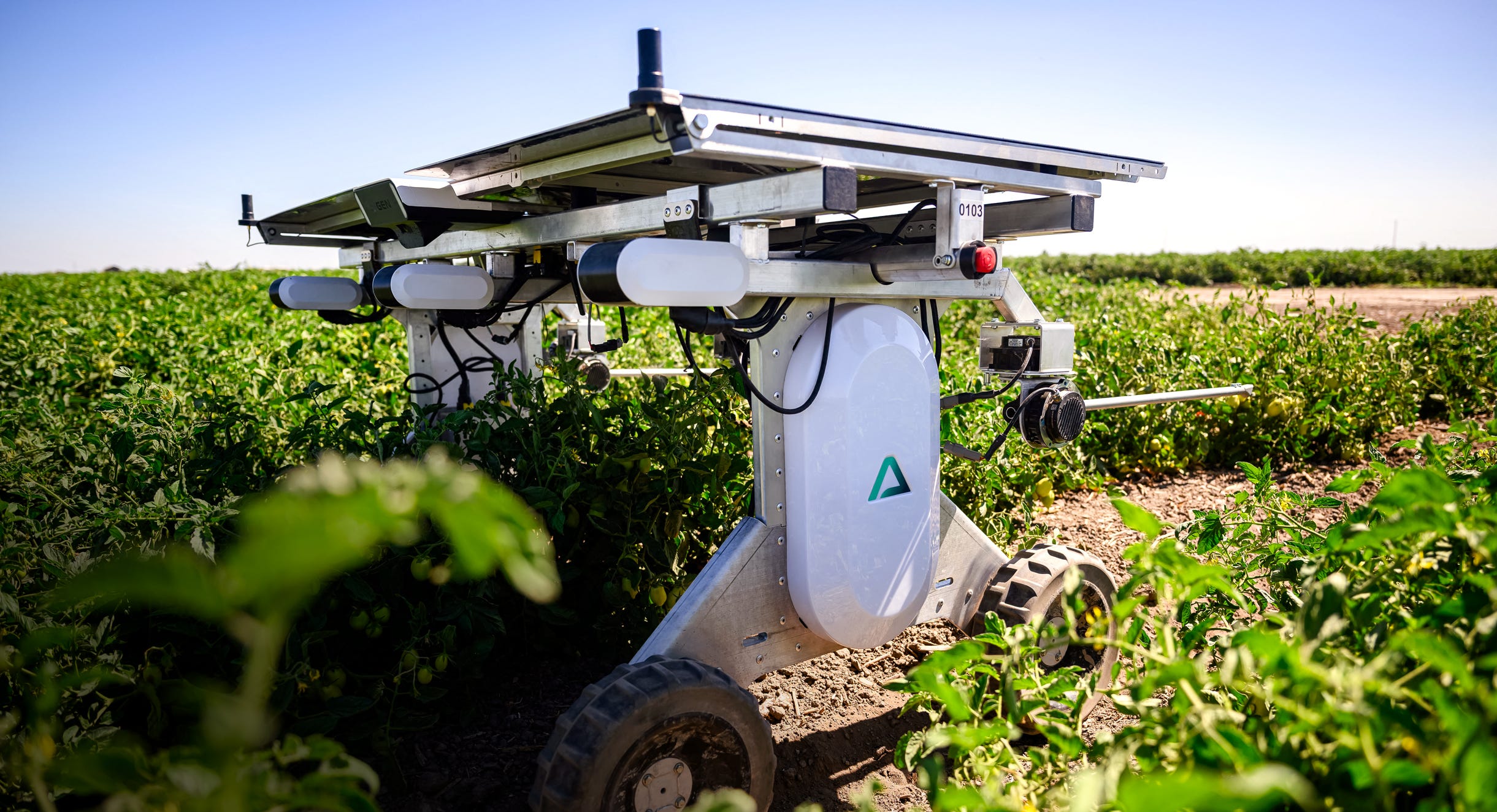
As the capabilities of robotics evolve, many jobs that once required human hands are being delegated to machines. Some AI developers working on integrating this technology into U.S. farms say early data support the possibility of a major farm labor force reduction in an era in which farm workers are increasingly scarce.
Harvesters, drones, and precision farming systems powered by artificial intelligence (AI) are quickly entering the mainstream of U.S. agriculture. At its core, the technology promises efficiency and sustainability and carries a potential solution to a decades-old farming problem: the need for physical labor.
The American Farm Bureau Federation estimated that 17 percent of all U.S. agricultural labor in fiscal year 2024 consisted of temporary migrant workers brought in under the H-2A visa program. There are also millions of illegal alien workers, who, according to the Department of Agriculture (USDA) and the Kaiser Family Foundation, made up 47 percent of farmworkers from 2020 to 2022.
Roman Rylko, chief technology officer at Pynest, said his company has worked with vegetable growers in the Midwest to deploy AI systems.
“We built the onboard model that lets an autonomous weeder separate spinach seedlings from pigweed in real time. A single rig now clears a 50-acre block in about eight hours. Before, that job meant a crew of 10 walking the rows for two days.”
Rylko’s firm works with growers to implement machine-learning models into field-deployable robotics. “Autonomous tractors won’t kill field labor; they’ll move it up the stack, from stoop work to sensor maintenance and fleet orchestration,” he said.

“Our growers cut seasonal hand-weeding hours by roughly 70 percent, yet hired two techs to keep cameras clean, retrain the model on new cultivars, and swap battery packs.”
But the question isn’t whether this technology will destroy jobs, or even if it will improve them. The question, in depopulating countries like Japan and in an America where 47% of farm workers are illegal aliens in the process of being deported, is whether this technology can be rolled out fast enough.
Rylko cited data from a recent AI-powered machine trial.
