

by Petr Svab
March 17, 2026
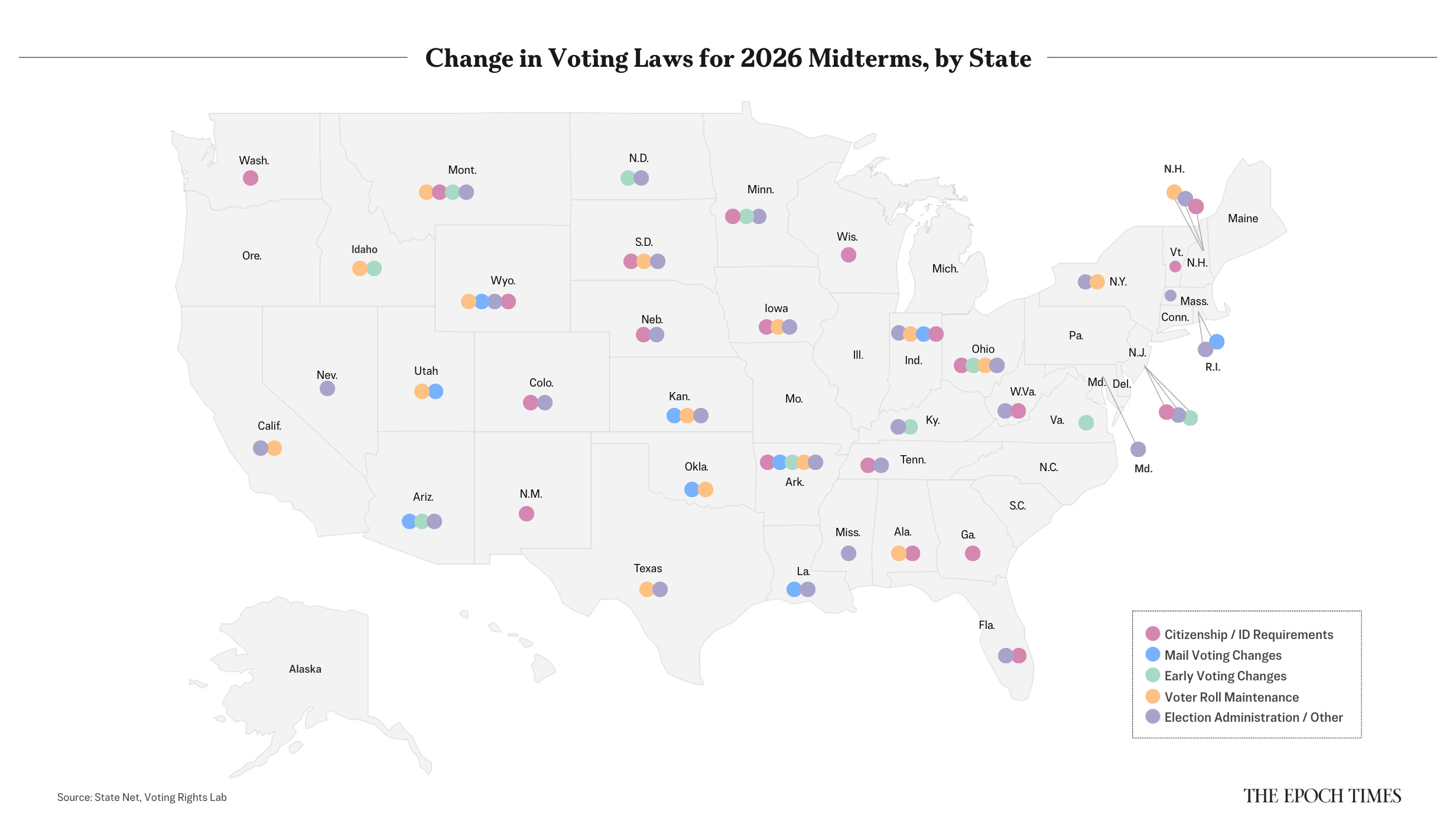
With the midterm election primary season beginning, voters will need to consider how voting rules have changed since 2024. Many states have passed laws relaxing or tightening requirements, including laws regarding how and when to vote by mail and making changes to early voting.
Nearly 200 bills affecting elections were passed by state legislatures in 2025 and so far in 2026. Here are the ones that most affect the 2026 midterms, based on a review by the Voting Rights Lab, an advocacy group.
Alabama
Alabama passed a law that says driver’s licenses issued to noncitizens aren’t valid voter ID.
Another new law requires more frequent voter roll maintenance and bans the use of the Electronic Registration Information Center, Inc. (ERIC), a nonprofit focused on election integrity, for determining address changes. Many Republicans have criticized the use of ERIC data for voter registration outreach because of concerns about the privacy and confidentiality of voter information.
Arizona
Arizona moved its primaries from August to July. It also increased access for poll watchers and people designated by political parties to challenge votes.
In addition, it passed a law saying that only voters on the permanent mail voting list can receive mail-in ballots.
The same law stipulates that local government offices must be open on Fridays and the weekends right before and after an election to let people cure ballots with signature or ID issues, if any such ballots are outstanding.
Arkansas
Arkansas has an amendment to its state constitution on the 2026 ballot that would explicitly state that only U.S. citizens can vote in any election in the state. The state already requires a photo ID to vote.
The state has also adopted a slew of election-related bills since 2025.
One law aims to collect from federal courts the lists of people disqualified from jury duty for being noncitizens and for other reasons so that their names can be removed from voter rolls.
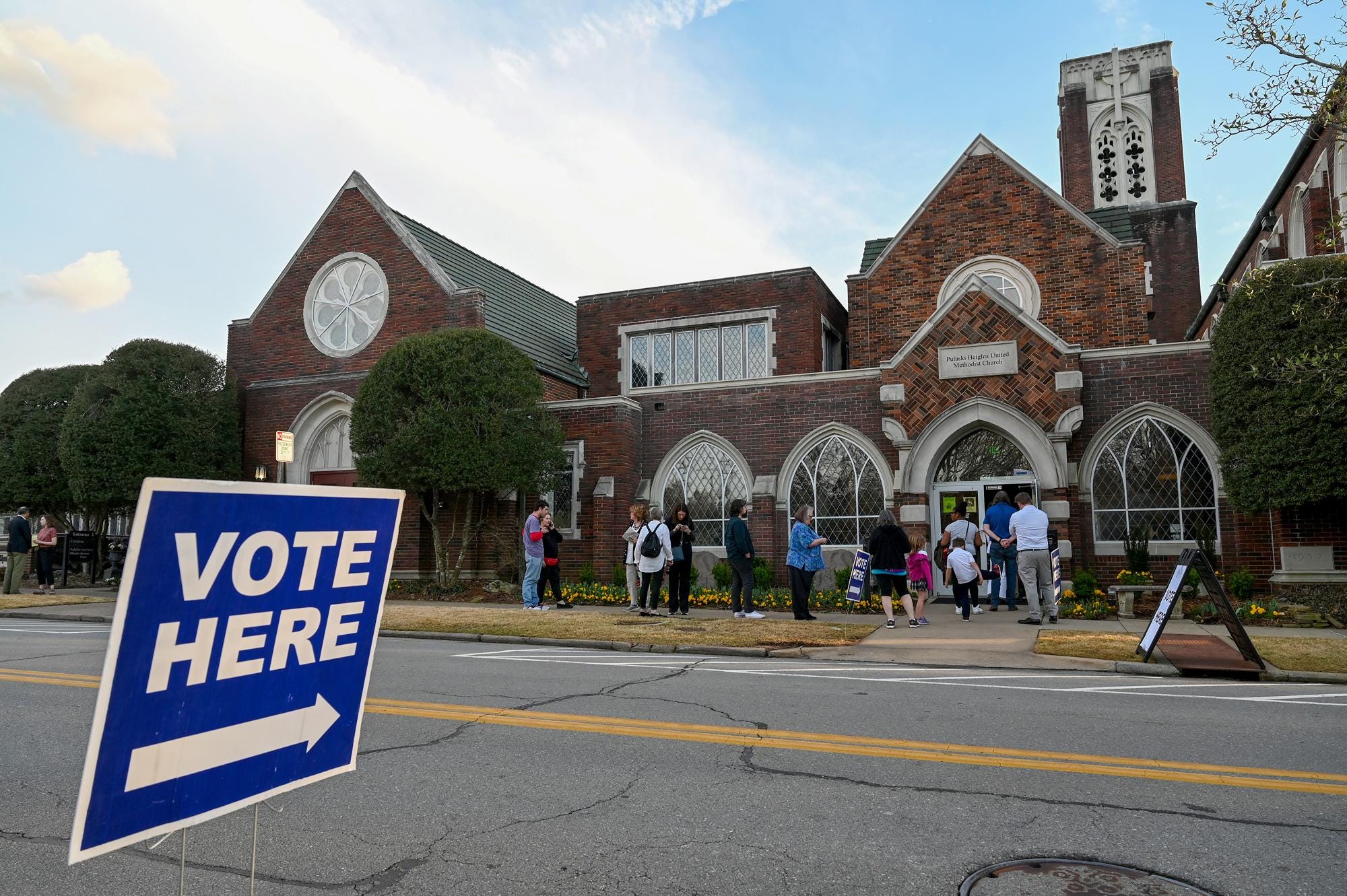
Another law requires early-voting locations in cities with populations of more than 15,000, even if there is already one in the same county.
Yet another law requires every absentee voter to sign an oath on the ballot return envelope attesting not only that the voter is qualified to vote, but also that he or she hasn’t received any unauthorized assistance in filling out his ballot and that the signature was witnessed by someone older than 18.
There’s also a new law tightening the rules for administrators of long-term care facilities that provide voting assistance. Another center staff member now needs to serve as a witness.
County election boards will also be allowed to close early-voting locations because of inclement weather, provided at least one remains open.
Another new law requires people who help disabled voters at polling places to be at least 18 and present photo IDs.
California
California passed several election-related laws, including one addressing its problem with long-delayed election results. Officials must now finish counting ballots within two weeks of Election Day or file an extension with the secretary of state.
Another law allows observers to watch not only signature verification for mail-in ballots but also the process of verifying signatures on cure statements.
The state also passed a law to shorten the deadline for voters to return ballot curing statements from 28 days after the election to 22 days for regular elections.
The same law also allows voters to work with nongovernment organizations to complete their signature verification statements and envelope statements.
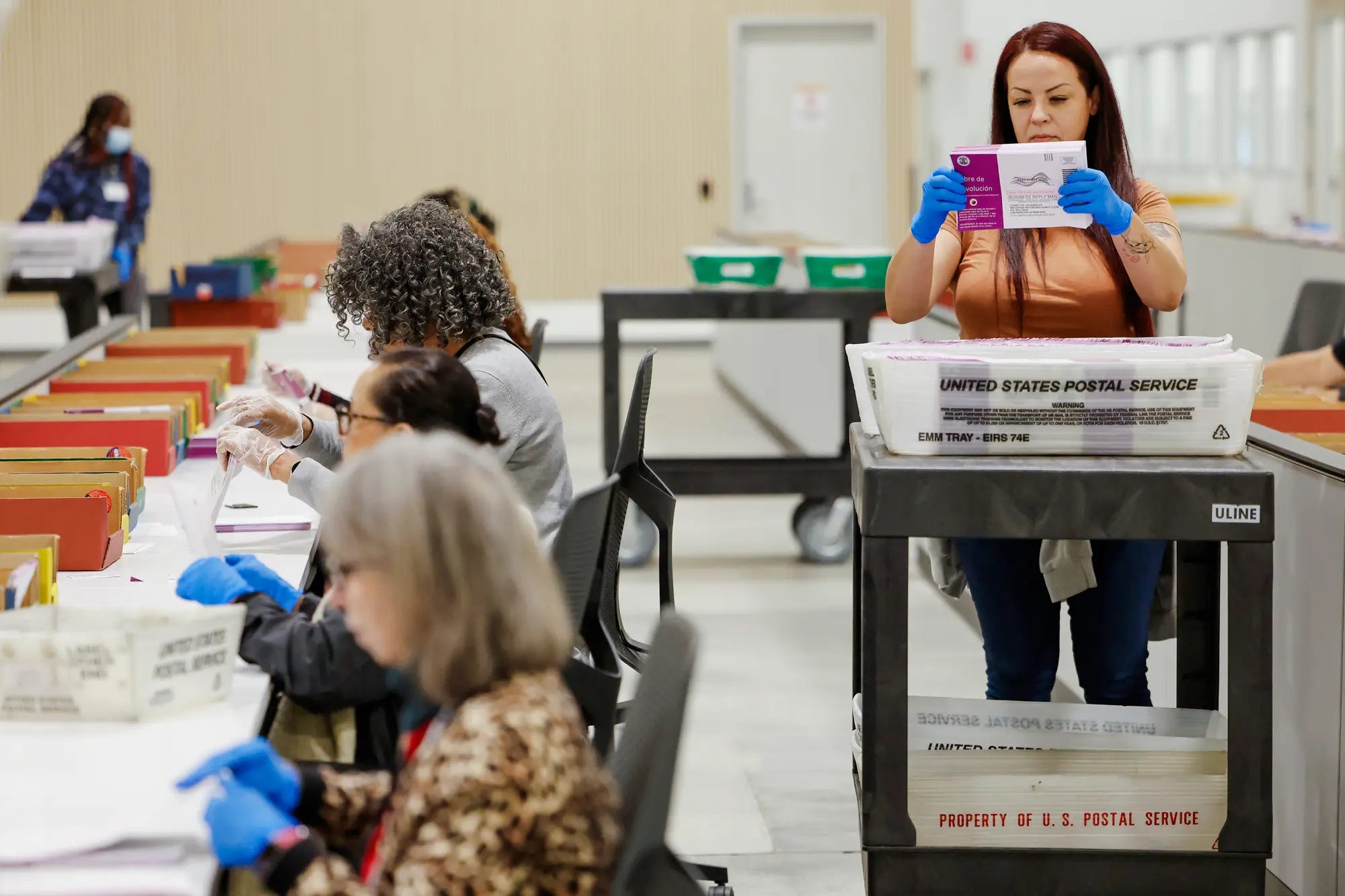
Yet another new law extends the deadline for receiving mail-in ballots to seven days after Election Day, up from three days. It applies only to all-mail elections, which any county can hold if it meets certain criteria.
There’s also a new law that requires counties to run voter registration programs.
Another law makes it a felony to knowingly offer anything of value to a person so that the person votes or registers to vote, with some exceptions, such as transportation to polls or giving employees time off to vote.
