

by John Haughey
January 8, 2026
With the U.S. capture of Venezuelan strongman Nicolás Maduro in a bold Jan. 3 military raid and a large naval force still prowling the southern Caribbean to ensure that Maduro’s successors cooperate with the Trump administration, other subtle, but key, developments in the region can be overlooked.
Among under-the-wire events is a December 2025 agreement between the United States and Venezuela’s neighbor, Guyana. That agreement could have profound implications, not only in the immediate context of unfolding events in Venezuela, but also for the long-term execution of the Trump Corollary to the Monroe Doctrine, unveiled in November 2025 by U.S. President Donald Trump.
A U.S. delegation led by senior Pentagon adviser Patrick Weaver and Acting Deputy Assistant Secretary of War Joseph Humire met with Guyanese President Irfaan Ali in the nation’s capital, Georgetown, on Dec. 9.
Ali told Guyanese media outlets that the nations had signed a statement of intent to “expand joint military cooperation,” a process that will be “evolving ... in the coming months.” He stated that there “will be greater discussions on more levels of cooperation and the integration of [the two countries’] work.”
The statement of intent is not a formal mutual defense treaty, he said, calling it a “reinforcement” of long-term training and collaboration between the United States and Guyana.

But such a pact could be on the table, Ali hinted, referring to the U.S. military effort dubbed Operation Southern Spear.

“The U.S. government now is launching what they call the Southern Spear of security,” he said. “They are now coming up with a strategy for the Western Hemisphere, and the U.S. government is to invest more and pay attention more to the [Caribbean] and Western Hemisphere.”
Southern Spear has been in the spotlight off Venezuela since September. The USS Gerald Ford, the world’s largest aircraft carrier, and the USS Iwo Jima, an amphibious assault ship, are the most visible components of the campaign that destroyed drug-smuggling speedboats, imposed a selective blockade on sanctioned oil tankers, and led to the Jan. 3 U.S. military operation that captured Maduro.
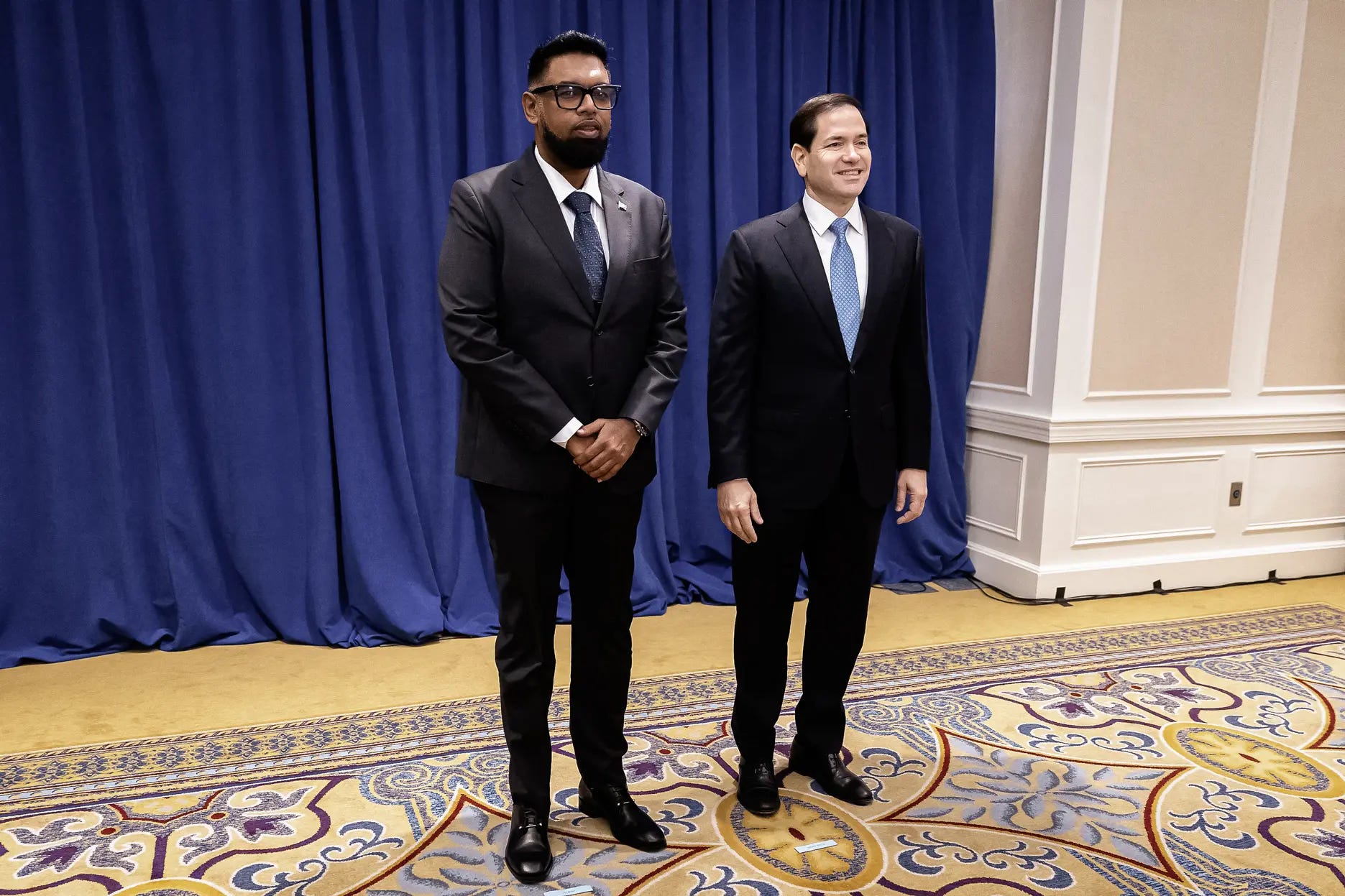
Guyana has a “growing role” in implementing that strategy, State Department principal deputy spokesman Tommy Pigott said in a Jan. 6 statement.
The commitment to “deepening security cooperation with Guyana to address shared challenges” was affirmed during a Jan. 6 phone call between U.S. Secretary of State Marco Rubio and Ali, Pigott said.
Territorial Dispute
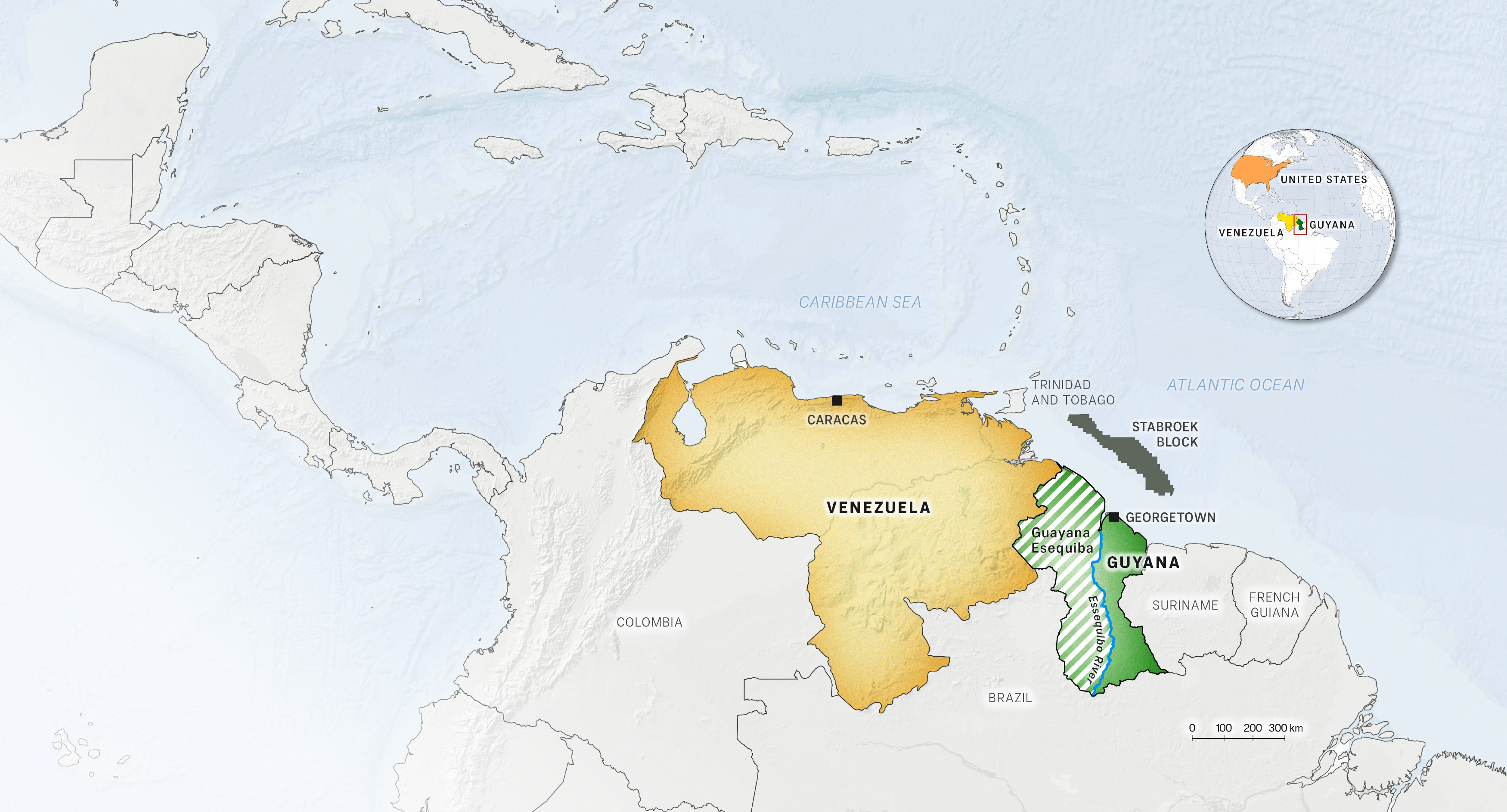
A former British colony, Idaho-sized Guyana is rich in minerals, has extensive offshore oil deposits, is perched on eastern Caribbean sea lanes, and is embroiled in an almost 200-year-old border dispute with Venezuela, used by the Maduro regime as an excuse to menace its sparsely populated neighbor with naval intrusions and troop buildups.
Venezuela has long claimed Guyana’s approximately 61,600-square-mile Essequibo region as its territory, despite a U.S.-mediated 1899 Paris ruling involving Spain, the UK, the Netherlands, and Venezuela, subsequently affirmed by the International Court of Justice.
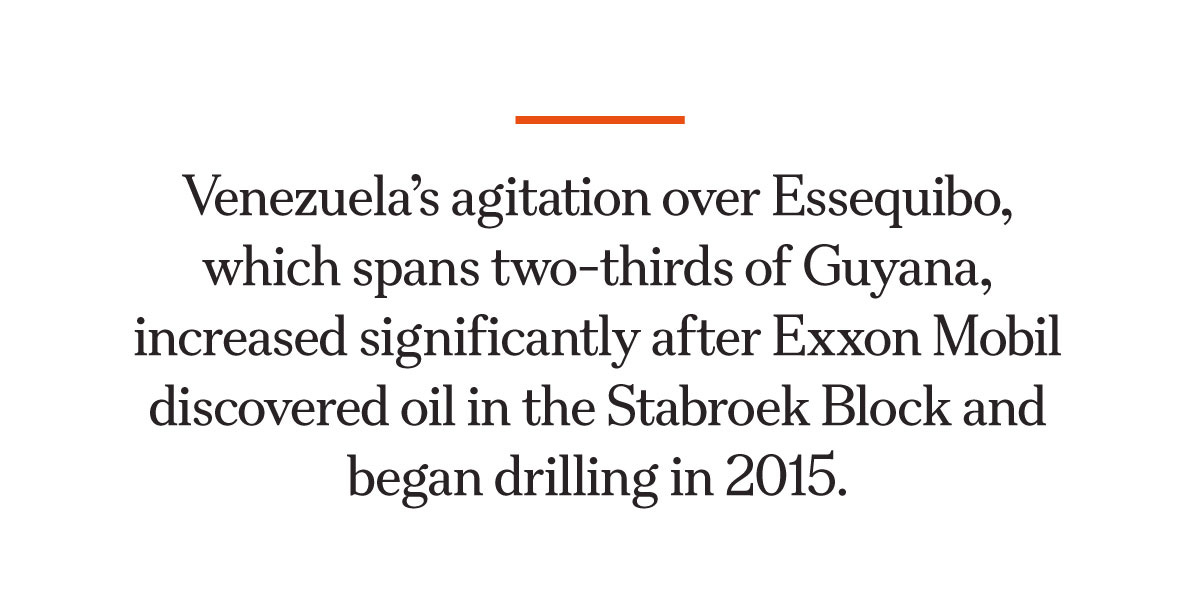
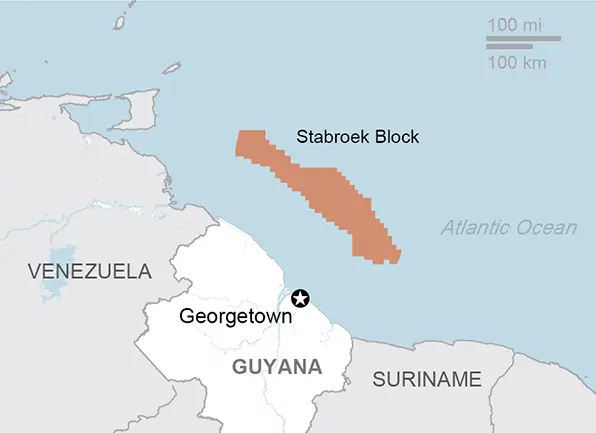
Venezuela’s agitation over Essequibo, which spans two-thirds of Guyana, increased significantly after Exxon Mobil discovered oil in the Stabroek Block off its shores in 2008 and began drilling in 2015.
The Punta Playa deposit contains an estimated 11 billion barrels of oil, making it one of the 21st century’s largest petroleum finds. It produces 900,000 barrels daily as of November 2025, according to Exxon Mobil. Venezuela, by comparison, has an estimated 300 billion barrels of oil reserves but only produces 1 million barrels per day.
In 2013, the Venezuelan navy boarded and impounded a survey ship operated by Anadarko Petroleum, an Exxon Mobil contractor, before releasing it. In 2018, Venezuela approached and “intercepted” an Exxon Mobil survey ship, according to the Guyanese foreign ministry, forcing it to abandon explorations.
In November 2023, Maduro announced a “people’s vote” to “respond to the provocations of Exxon, the U.S. Southern Command, and the president of Guyana” with a Dec. 3, 2023, referendum asking Venezuelans to annex Essequibo.
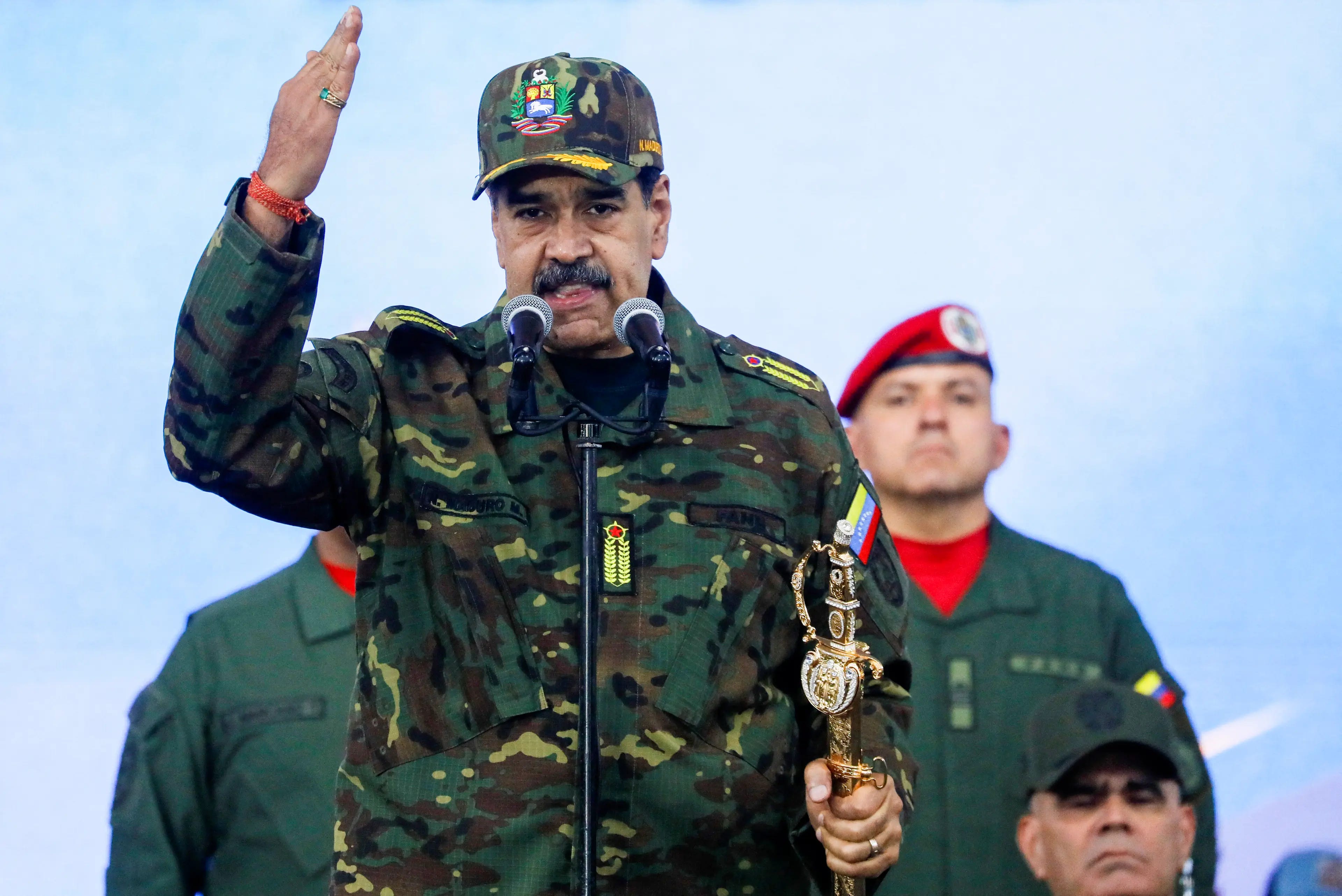
Venezuelans “approved” the measure, in what is widely believed to have been a rigged election, paving the way for the province of “Guayana Esequiba.” The Maduro regime portrayed the outcome as a mandate by voters united by a decades-long, nationalistic, cross-party issue.
The brewing crisis spurred the UK to dispatch a warship, a U.S. Army delegation to visit Guyana, and the Pentagon’s Southern Command to begin joint flight operations with the Guyana Defence Force, actions that convinced Maduro to meet with Ali in Saint Vincent and the Grenadines to sign the Argyle Accords and agree to de-escalate tensions.
But the Maduro regime has never complied with the Argyle Accords, instead amassing troops and military equipment along its border with Guyana, according to a March report by the Center for Strategic and International Studies. How Maduro’s deputy, Delcy Rodríguez, now sworn in as Venezuela’s acting president, will proceed in honoring the Argyle Accords is uncertain.
