


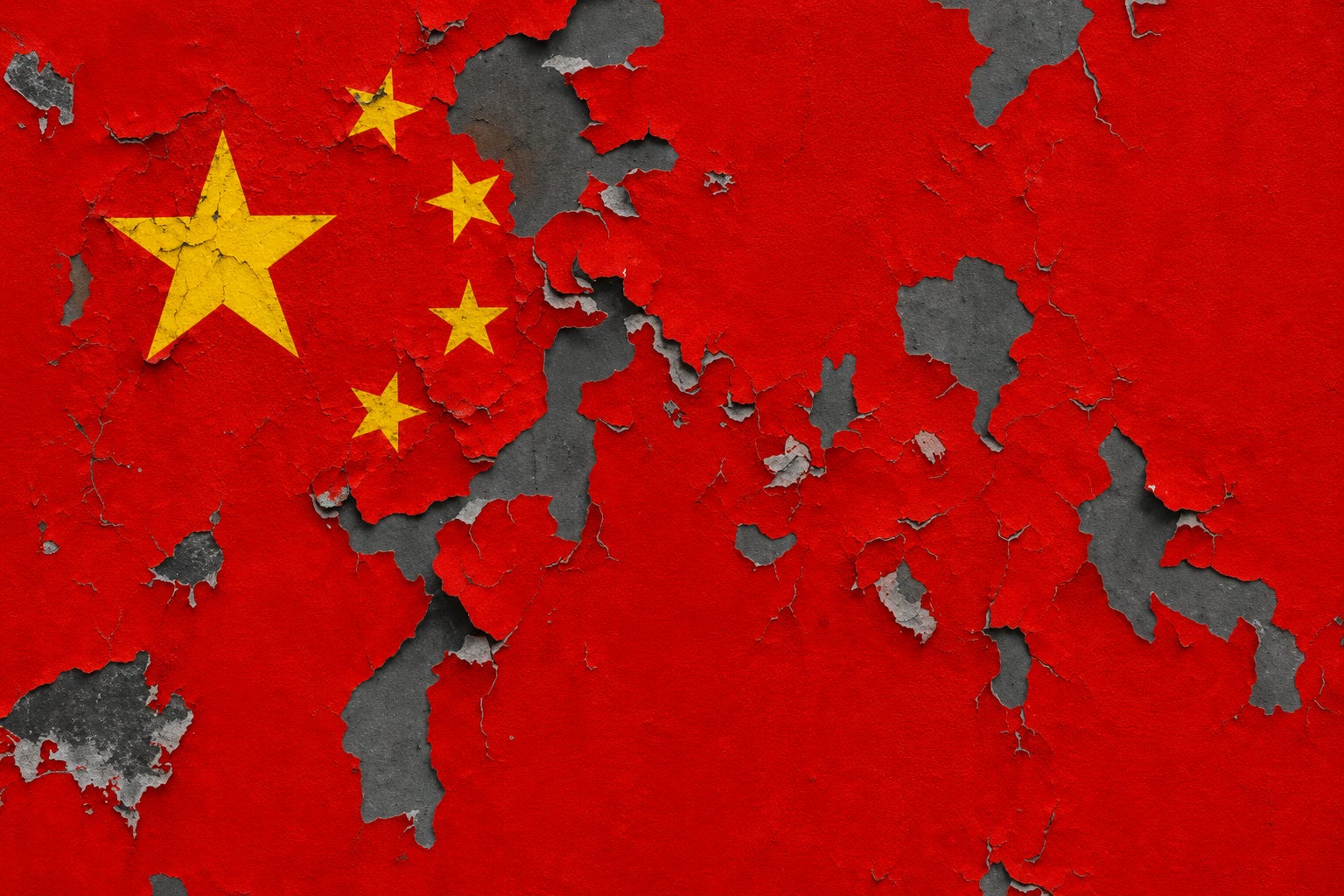
by Rod D. Martin
November 18, 2026
Several hours from now in Shenzhen, China, Donald Trump will hold an unprecedented trilateral meeting with Xi Jinping and Vladimir Putin: the three leaders of the largest nuclear powers on Earth.
Speculation for the meeting centers on Ukraine and trade, two deals near and dear to Trump’s heart and agenda. But the bigger story is the first-ever three-way nuclear arms talks. China has never before participated in arms control negotiations. It remains to be seen whether it will do more than go through the motions tomorrow. And yet just having the meeting is a breakthrough for Trump, one the American media first called impossible and then, when it wasn’t, panned.
This is a bigger deal than it seems. For half a century, nuclear strategy has rested on bilateral arithmetic. Washington counted Moscow’s launchers and warheads. Moscow counted ours. Each side knew roughly what the other could destroy, what would survive, and what would come back.
Now China has tripled its nuclear force in just four years, with no signs of slowing down. That threatens to turn the old bilateral equation into a nearly unsolvable triangle, in which any two powers could gang up on the third. In such a situation, traditional equal arms-control limits would become not just meaningless but self-defeating for all involved. Yet here we are.
That makes the world very dangerous very fast. And since China and Russia don’t trust each other either, all three countries have to try to outbuild the others, not just individually but combined. That runaway race rapidly spirals to numbers of weapons far in excess of the Cold War peak, with staggering economic costs and vastly higher risk of miscalculation and conflict.
On a “positive” note, that spiral will bankrupt Russia first. But it won’t be good for anyone. For America, the only real solution is Trump’s Golden Dome missile defense. But some reasonable agreement could buy time.

The question is, why is this happening now? Why is China spinning up its strategic forces after half a century of “minimum deterrence”?
The answer may seem counterintuitive to some, but it isn’t. China isn’t multiplying its nuclear forces because it’s strong but because it’s weak. It needs to establish as threatening a stance as possible while it still can.
Trump flew to Shenzhen by way of ally (and former U.S. colony) the Philippines, where he signed a landmark trade deal with Thailand and, more significant to his Chinese hosts, held talks with the other leaders of the Quad: Australia, Japan, and India. That growing, albeit somewhat informal, alliance exists almost entirely to contain Xi’s China, which routinely shows its “neighborliness” by periodically invading ostensible BRICS “ally” India, menacing the Philippines, and claiming waters that belong to Japan and Taiwan.
The region has reacted, much to China’s dismay: it turns out that threats have a way of uniting the threatened.
For decades, China increased its global presence, building a vast economy on overcapacity and exports to its beguiled enemies, funds with which it engaged in the largest military buildup in human history. It even took control of both ends of the Panama Canal, tightened alliances with Venezuela and Cuba, and threatened the routes around South America, all in an effort to build its own “First Island Chain” around its rival.

Today, with much of that dismantled by Donald Trump, China finds itself increasingly isolated in its own region, its most vital trade routes firmly in the control of the U.S. and its allies, with resolve stiffening everywhere. It is more dependent than ever on those exports. It is less sure of its ability to sustain selling them than ever.
Seen in that light, China’s nuclear buildup is much like that of post-Cold War Russia, which has constantly modernized its expensive nuclear forces while the rest of the country atrophies. The only reason Putin gets to be part of these three-way talks — the only reason anyone outside Ukraine cares about Russia at all — is those nukes.
China noticed.
The fact is, despite growing military and naval forces, China is far weaker than it looks. That Quad meeting is just one facet of a deteriorating picture that includes a “Malacca Dilemma” on steroids with the new U.S.-Indonesia defense pact, Japanese rearmament not only of itself but of neighbors like Australia and the Philippines, plus growing nuclear-powered navies in the region that radically augment the overstretched 7th Fleet.

China is the world’s biggest energy importer, meaning it’s vulnerable to 1970s-style oil shocks or embargoes. It’s also the world’s biggest exporter, making it dependent on foreign consumer markets, most essential of which is America and which Donald Trump has made clear can go away. His is a full-orbed containment strategy, straight out of George F. Kennan and Ronald Reagan. It’s a box China can’t get out of — not without risking its own destruction — unless it somehow re-beguiles the West into allowing it to dominate them (as it did in the pre-Trump past).
So in that light, the question must be asked: what if China’s fall is already in the cards? What if the PRC is already dying, regardless of those external forces?
That was where the Soviet Union was in 1981. Though the world believed it virtually eternal, it actually only had ten years of life left to it. It understood its own peril: it knew it had to expand or die. Western elites didn’t get it, but Ronald Reagan did. By containing Russian expansion and challenging it in its own backyard, he created the conditions that enabled Communism’s own internal contradictions to bring the whole system — and the existential threat it posed to the whole world — down.
Is China in a similar position today? Yes. Do we know how advanced down that path it is? No more than we knew in 1981. Will it necessarily go out with a whimper as Gorbachev did? No: that is anything but guaranteed.
So what happens as those internal forces accelerate? What might China do to counter them? And how dangerous might that be to the rest of us?
That’s the question in the back of Donald Trump’s mind as he goes to Shenzhen.
