

by Jeff Louderback and Jan Jekielek
February 20, 2026
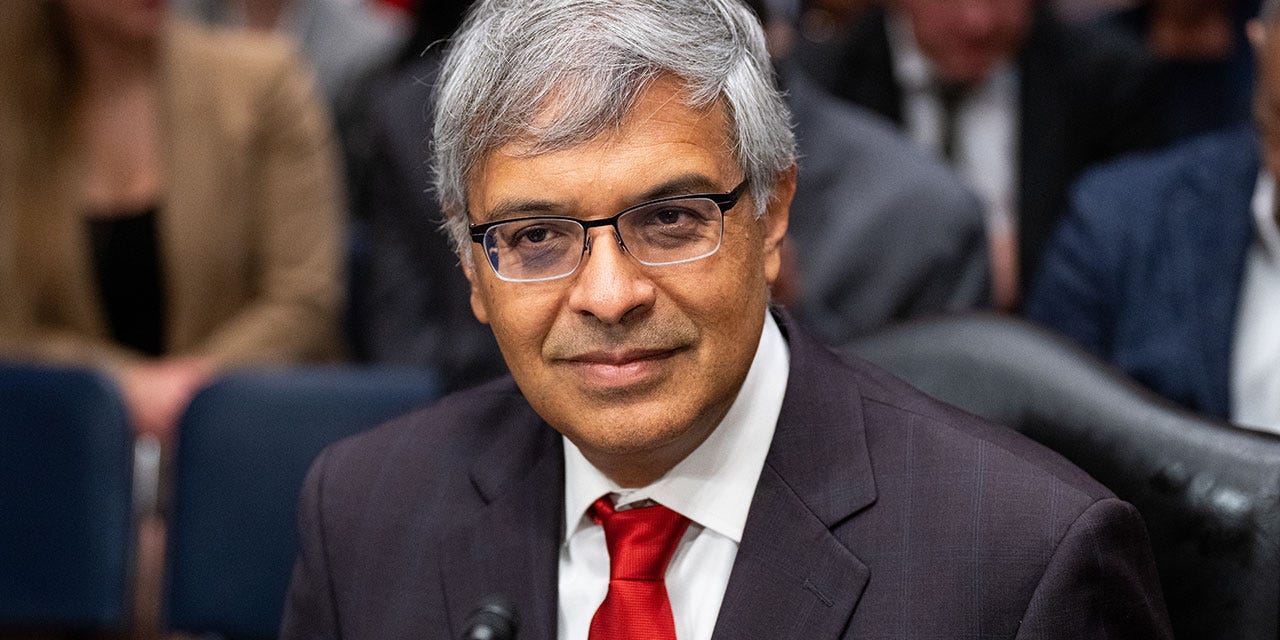
For decades, scientists have looked at the National Institutes of Health (NIH) as an agency that publishes papers, according to Dr. Jay Bhattacharya.
Under President Donald Trump’s second term, the emphasis for NIH funding has shifted to “provable, testable hypotheses, not ideological narratives,” he said, which is resulting in widespread reforms to the agency.
Bhattacharya, who obtained both a doctorate in economics and a medical degree from Stanford University within three years of each other, outlined changes that the NIH has implemented in his first year as the agency’s director and talked about his vision for the next three years in an interview with Jan Jekielek.
The NIH has been instrumental in medical advances for decades, Bhattacharya said, but in the 21st century, it became “much more of a staid institution, not willing to take intellectual risks.”
Yet during the same time, the agency “was willing to take risks on dangerous gain-of-function research and other social agendas, like DEI, that it had no business really engaging in.”
“I think the NIH now, under my leadership, under President Trump’s leadership, and under what Secretary [Robert F.] Kennedy is looking over … is focused on actually addressing the chronic health problems of this country, reversing the flatlining of life expectancy, and making good on its mission ... research that improves the health and longevity of the American people, and the whole world,” he said.
One of the 13 agencies managed by the Department of Health and Human Services, the NIH is the largest supporter of biomedical research globally, providing 85 percent of all biomedical research funding worldwide, according to Bhattacharya.
It funds about $50 billion in scientific research via grants to hundreds of thousands of researchers at academic institutions and hospitals, he said.
The NIH is not supposed to be an agency that makes decisions or policies about public health directly, Bhattacharya said, noting that he intends to “remove the politicization of science that has existed for decades.”

Dealing With China
The NIH must be “very careful about how we fund research relationships with China, especially post-pandemic,” Bhattacharya said.
“The U.S. invested in the Chinese biomedical research enterprise. Almost every single top Chinese biomedical research scientist of note was funded in some part by the NIH. Many were trained in the United States, so we invested heavily in that,” he said.
“Post-pandemic, and especially given the geopolitical circumstances we are in now, it looks, in retrospect, like it wasn’t all that wise an investment.”
The NIH must implement more secure measures with foreign research, he said, referencing the collaboration with the Wuhan Institute of Virology.
