

NOTE: We’ll have more in the Iran conflict later today. — RDM
by James Varney
April 8, 2026
Underneath the glaciers polar bears patrol along Alaska’s North Slope there are trillions of cubic feet of natural gas, an energy bonanza for the modern world. For now, there’s no way to get the gas to market.
That jackpot reservoir has left present-day Alaskans puzzling over how to divide the booty: How much do we need to keep for ourselves, and how much can we export?
The answers lie hundreds or even thousands of miles away, among lawmakers in Juneau, in oil and gas company executive suites in New York and Texas, and in capitals of potential buyers spread across the Asian rim. The solutions are being sought while warfare has erupted against Iran, which makes Alaska’s supply even more attractive. Meanwhile, the pockets of natural gas that state residents currently draw on are dwindling.
“Yet again, Alaskans are wondering why, with a huge amount of North Slope natural gas, we are going to increase our dependence on some of the world’s most unstable regions,” Republican Gov. Mike Dunleavy and former Sen. Mark Begich wrote in the Juneau Empire on March 30. “The answer, in part, is that we have failed to develop our own energy resources.”
Dunleavy’s pitch, which he has been making for more than a year, is for the construction of a natural gas pipeline that would run nearly 800 miles, from the frozen edge of Prudhoe Bay to new processing and shipping facilities on the Kenai Peninsula. At a time when energy demand is growing and energy markets are roiled by instability on several fronts, the pipeline, whose notable backers include President Trump, would seem to come at an ideal moment. Yet it faces multiple hurdles that illustrate how complex it has become to pull gas from the ground, and how expensive it will be to get it out of such a remote spot and across such a formidable landscape.
“Alaska does need it,” state senator Robert Myers says. “It’s not a done deal yet, but we are definitely seeing some progress.”
But Alaska is far from the only place that needs the pipeline, sooner than later.
Alaska Knows Pipelines
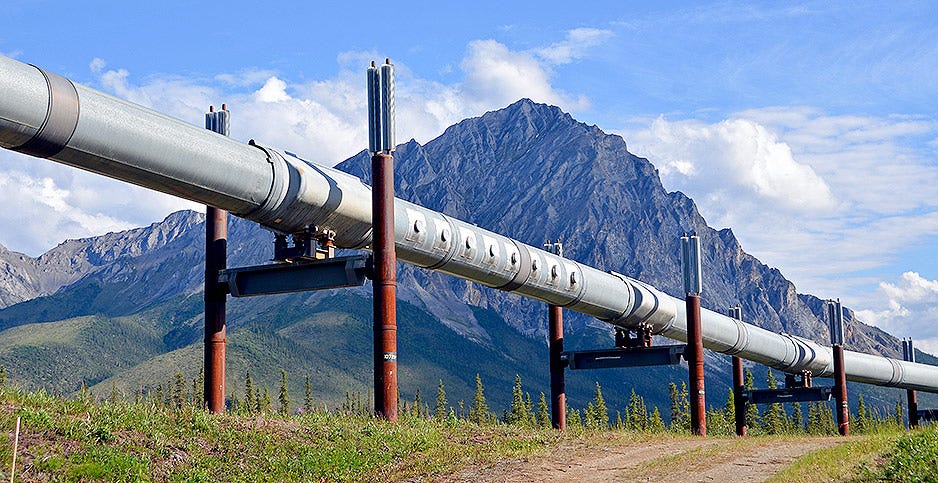
Alaska has done it before. When the Trans-Alaskan Pipeline System (TAPS) opened in 1977, it was an engineering marvel and an important source of oil. At a cost of $9 billion, it stood then as the most expensive private construction project in American history.
Running atop tundra, under mountains, through snow in winter and clouds of mosquitoes in summer, the Trans-Alaskan Pipeline pumped more than 2 million barrels of oil a day at its peak, an output that has fallen below 500,000 barrels a day as the rich pots of black gold have been sucked out.
Both the famous TAPS and the proposed natural gas pipeline also fall under Alaska’s unique constitution, which essentially gives residents an ownership stake. Initially, the gas pipeline was under the aegis of the Alaska Gasline Development Corporation. Last year, however, the state struck a deal with Glenfarne Group, making the multinational energy firm a majority owner and lead developer of the project, with the state retaining a 25 percent stake.
Glenfarne, a privately held company with an executive board dominated by Australians, is headquartered in New York and Houston, but most of its energy portfolio, aside from one LNG operation in Louisiana, is based in Latin America.
Now, Glenfarne and Alaska are seeking to replicate, with methane, what’s already been accomplished with oil. Like TAPS, its pipes would also begin along Alaska’s North Slope, with the gas line tapping one of the world’s great stranded reserves.
Some estimates have put the potential total as high as 200 trillion cubic feet (TCF). That would make it the third-largest natural gas field on Earth.
Unlike the TAPS system, which green groups continue to attack in courts, the natural gas line is not facing serious environmental opposition. While a fossil fuel, natural gas is cleaner than oil, and there won’t be any Exxon Valdez if something goes wrong — the methane is simply lost in the atmosphere.
The engineering challenges are largely solved already because the new pipe would closely follow the path of the Trans-Alaskan Pipeline for much of its length. Yet challenges remain. Because oil is warmer than natural gas, parts of the TAPS Pipeline were built above ground to prevent melting the tundra and destabilizing the tube. The proposed gas pipeline, on the other hand, will run entirely underground.
Builders can simply go around deep water, which adds miles but is cheaper, faster, and safer, according to lawmakers and energy experts. At some point, however, the pipe will have to run beneath the Yukon River, a mighty glacial drain that is a mile wide in places.
That will be a monumental piece of construction. While most of the river is quite shallow, its deepest point measures 130 feet by Rampart, Alaska, right by the pipe’s path. Wherever they cross, builders must have a launch point and a receiving pit on each riverbank, then use a remote-controlled tunneling head to drill a path under the river, dragging the attached pipe with it.
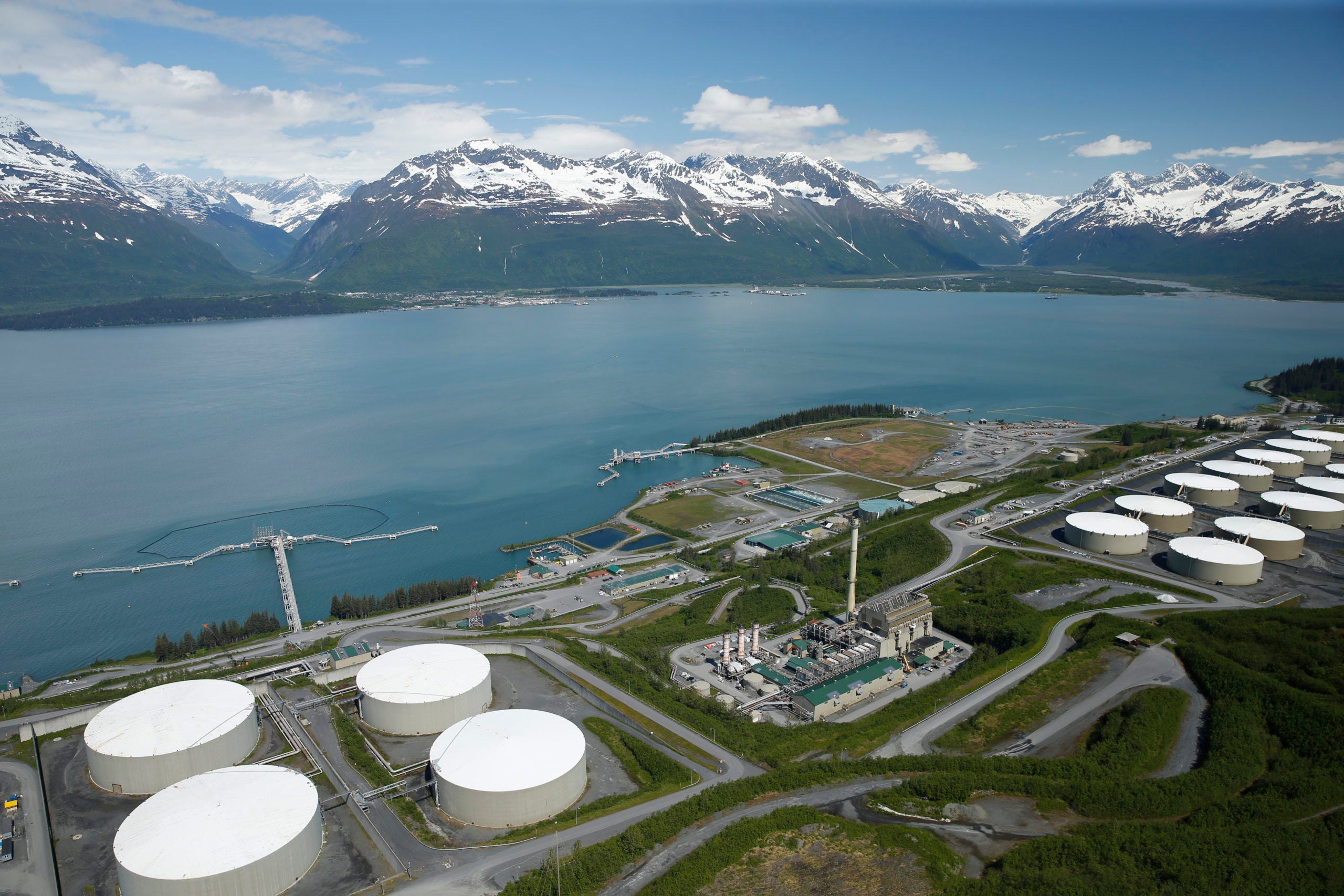
And unlike oil, which can be pumped directly into tankers and moved across the oceans, the methane gas must be cooled to -260 Fahrenheit to become liquid — the “L” in LNG — and transported.
Consequently, an expensive liquification plant will have to be built at the pipeline’s terminus, in Alaska’s Nikiski area. The facilities at LNG ports typically consist of 2 or more trains, the high-tech units that perform the supercooling liquefaction. Each train can cost anywhere from $5 to $10 billion to construct.
Then, only specialized ships can handle cargoes of super-cooled liquid gas. In fact, there are currently no big tankers meeting the strict requirements of the Jones Act, a law passed in 1920 that requires ships moving between U.S. ports to be built in America and crewed by the U.S. Merchant Marine. That means the biggest markets for Alaskan gas will be exclusively foreign ports.
Asian Markets
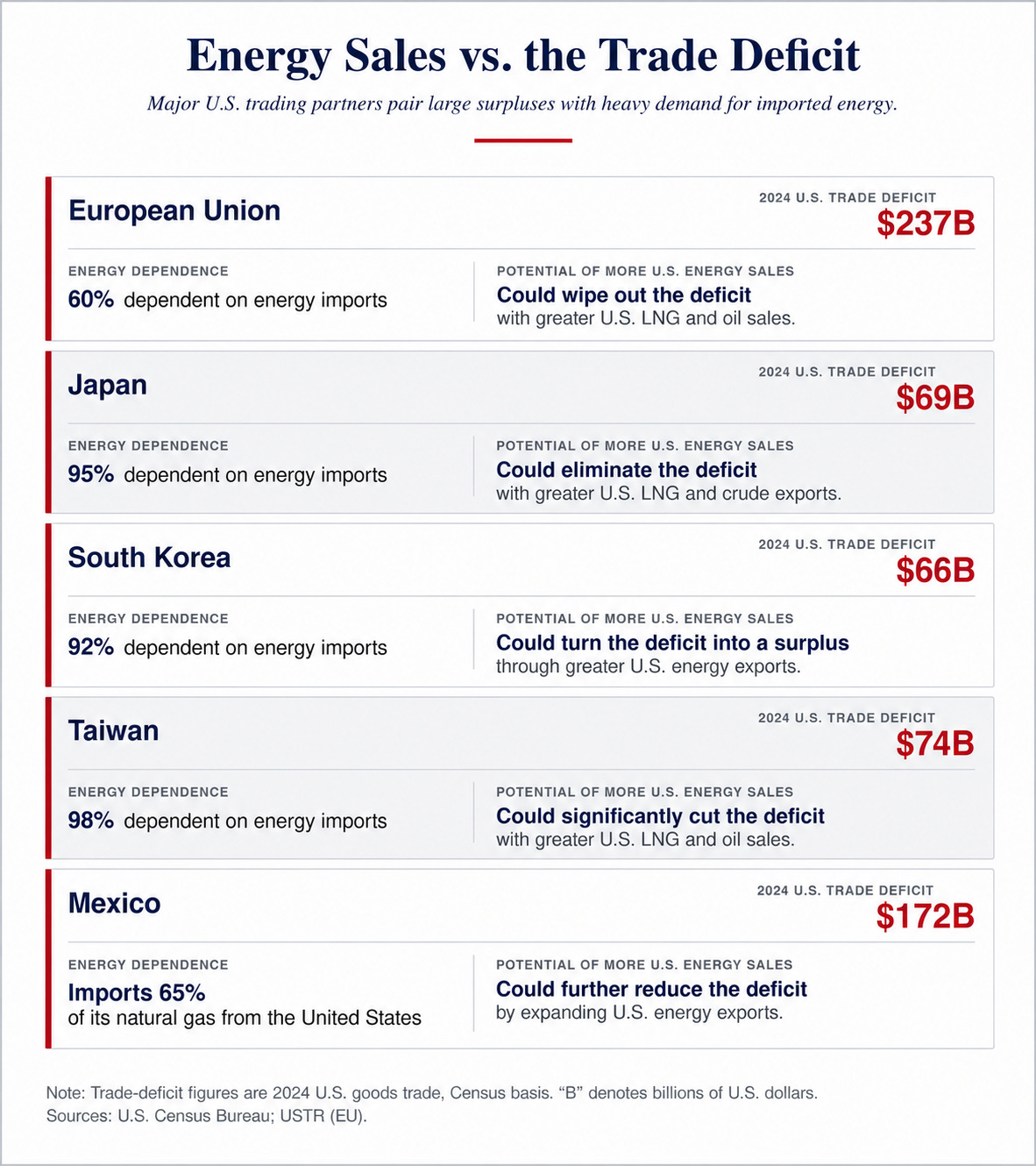
And of those, destinations in Asia, where industrial countries like Japan, South Korea, or Taiwan must import most of their energy, are the most attractive. Donald Trump has made energy exports a key part of nearly all of his new trade deals. That has potential to erase America’s trade deficit. It might also secure energy supplies for America’s allies for the first time since the first oil shock in 1973.
On a trip to the Asian rim last year, Gov. Dunleavy pitched potential buyers on the benefits of linking with Alaska: shorter distances and crossing routes not subject to the vicissitudes of war and instability that can impact operations and prices of energy from the Middle East. Tokyo, for example, is 1,200 miles closer to Alaska’s Kenai Peninsula than it is to the Strait of Hormuz.

The attacks on Iran by the U.S. and Israel are thus seen as potential game-changers for Alaskans. On March 13, Dunleavy declared the action in Iran “a strategic master stroke” in the Wall Street Journal, and supporters like Kiehl noted that “the instability in the Middle East might juice this project.”
But several experts said this isn’t just politicians talking.
