


Don’t miss “the greatest story NEVER told”: a million new jobs in 60 days, & MORE!

by Stu Cvrk
October 21, 2026
In May, the U.S. Department of the Navy released its “Fiscal Year 2027 Shipbuilding Plan, outlining the Administration’s long-term strategy to expand fleet capacity, strengthen the maritime industrial base, and deliver a more capable, ready, and lethal naval force.” The goal is to expand the fleet from 291 to 450 vessels by 2031 through a $65.8 billion investment in shipbuilding.
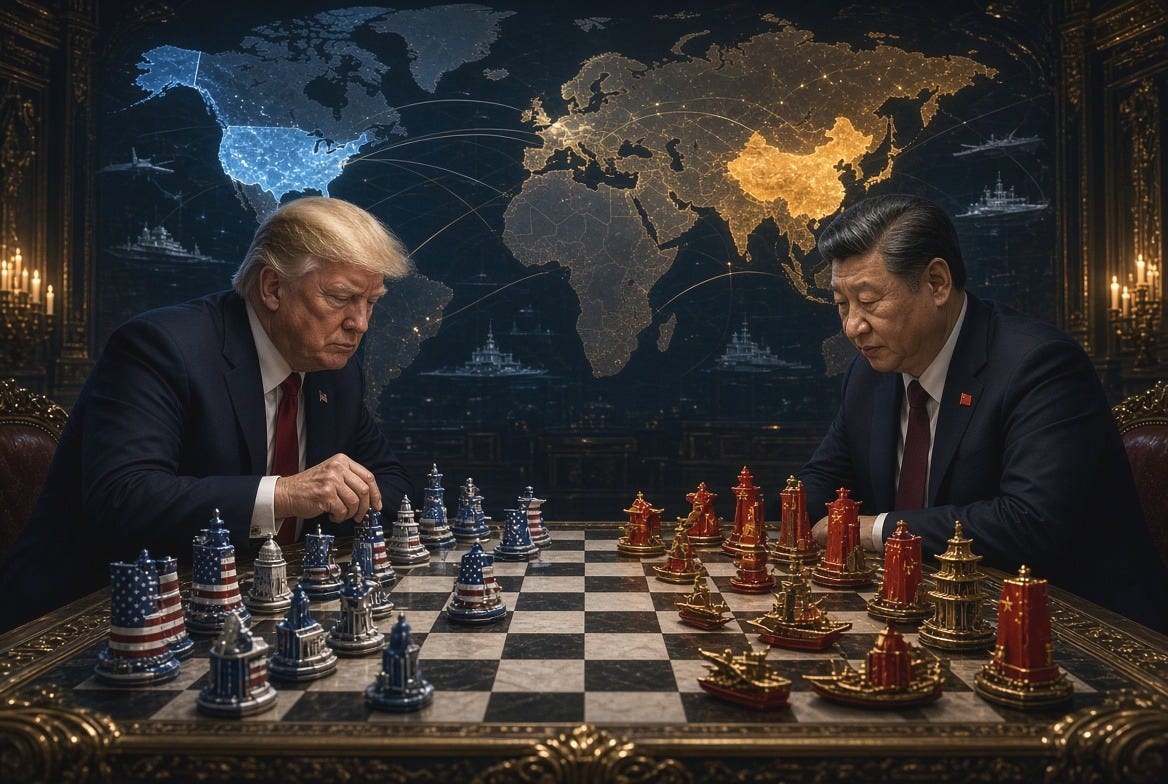
This plan provides the backbone and muscle in the evolving U.S. maritime chokepoint strategy that is aimed at countering communist Chinese moves to control or disrupt various chokepoints around the world.
Let us examine the topic, and with it, the CCP’s counterstrategy.

The Theoretical Foundation for U.S. Chokepoint Strategy
Since World War II, U.S. maritime chokepoint strategy has been to secure freedom of navigation and maintain assured access through critical global sea lanes and narrow waterways — such as the Strait of Hormuz, Malacca Strait, and others — to protect U.S. and allied economic prosperity, supply chain resilience, and military mobility while deterring adversaries, with a particular focus on countering China’s moves to control or disrupt these chokepoints as leverage in great-power competition.
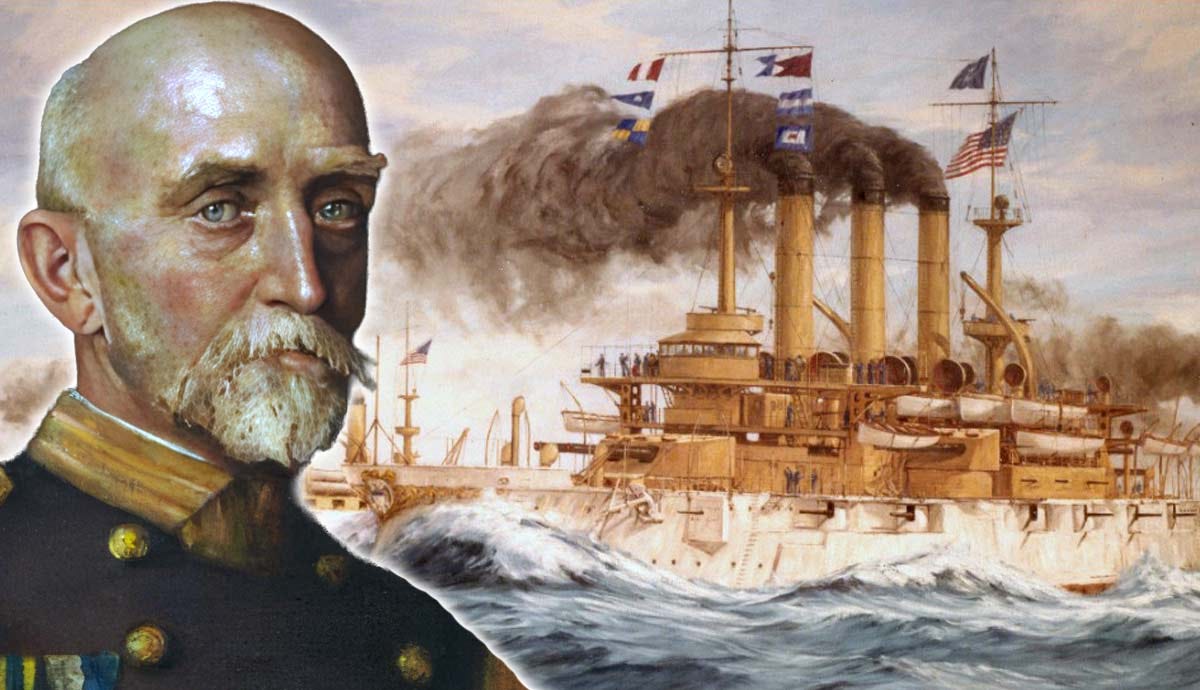
The intellectual godfather of this strategy is Alfred Thayer Mahan (1840–1914), an American naval officer and historian whose 1890 masterwork The Influence of Sea Power upon History became one of the most consequential strategic texts ever written. Mahan argued that national greatness derived not from land power but from control of the seas — and that control of the seas was achieved not by defending coastlines but by dominating the narrow passages through which all commerce and naval forces must flow.
Mahan’s believed that commerce is the lifeblood of modern states, and whoever can interrupt or protect the flow of trade controls the fate of nations. He further believed that naval superiority is the key instrument, and that a dominant battle fleet, concentrated rather than dispersed, can project power globally. Most importantly, he believed that chokepoints are the lever, in which a relatively small force positioned at a narrow strait or canal can hold at risk the entire commerce and military logistics of an adversary.
The Trump administration’s strategic posture, as expressed in the 2025 U.S. National Defense Strategy, is grounded in great power competition with China as the “pacing threat.” The chokepoint logic runs through it even if not always explicitly named. Key elements:
Maintaining forward bases near critical chokepoints. The U.S. has military infrastructure in Japan (covering the East China Sea and Taiwan Strait), Guam, the Philippines (renewed EDCA access), Singapore, Diego Garcia (Indian Ocean), Bahrain (Hormuz), Djibouti (Bab-el-Mandeb), and Rota/Naples (Mediterranean).
The Taiwan Strait as the decisive theater. The Trump administration has treated Taiwan as the linchpin. A Chinese takeover of Taiwan would give China control of the First Island Chain, threatening Japanese SLOCs (sea lines of communication) and giving Chinese submarines less-contested access to the Pacific. The AUKUS agreement (Australia-UK-U.S. submarines) is explicitly oriented toward this.

The Quad and Indo-Pacific alignment. The Quadrilateral Security Dialogue (U.S., Australia, India, Japan) is partly about sharing chokepoint surveillance and denial. India, which sits astride the northern Indian Ocean, can monitor Malacca traffic from the west; Japan and Australia cover the eastern approaches. U.S. Secretary of War Pete Hegseth’s announcement of the Major Defense Cooperation Partnership (MDCP) with Indonesia on 13 April was targeted on the Strait of Malacca, through which ~80–85 percent of China’s oil imports transit. This is China’s greatest vulnerability — its strategic nightmare is the U.S. closing or threatening Malacca in a conflict.
Tariff pressure as chokepoint leverage. The Trump 2025 tariff regime, while economically controversial, has a strategic chokepoint dimension: Chinese manufacturing depends on global supply chains that transit maritime chokepoints. Economic coercion and maritime coercion are two sides of the same coin in this framework.

Denial of Chinese port access globally. Scrutiny of Chinese investments in ports from Hamburg to Piraeus to Sri Lanka is driven by awareness that commercial port access is how a future Chinese navy would sustain forward presence near the world’s chokepoints.
Execution of the U.S. chokepoint strategy involves a robust interdiction capability: the ability to threaten or physically close a strait to enemy shipping and warships, typically through naval forces, submarines, mines, and land-based missiles. This boils down to choke-and-envelop: the full Mahanian logic is not just to hold one chokepoint, but to create a global network of overlapping chokepoint control so that an adversary has no viable maritime escape route. The U.S. alliance network is explicitly designed this way.

