
 About Rod D. Martin
 Praise for Rod D. Martin
 Book Rod to Speak
 Politics & Economics
 Technology & Markets
 Faith & Culture
Extremely encouraging, spot-on counsel from Japanese Prime Minister Shinzo Abe regarding maritime freedom in East Asia and the alliances needed for the 21st Century. — RDM
============
by Shinzo Abe
Japanese Prime Minister
January 16, 2013
In the summer of 2007, addressing the Central Hall of the Indian Parliament as Japan’s prime minister, I spoke of “Confluence of the Two Seas” – a phrase that I drew from the title of a book written by the Mughal prince Dara Shikoh in 1655 – to the applause and stomping approval of the assembled lawmakers.
In the five years since then, I have become even more strongly convinced that what I said was correct.
Peace, stability, and freedom of navigation in the Pacific Ocean are inseparable from peace, stability, and freedom of navigation in the Indian Ocean. Developments affecting each are more closely connected than ever. Japan, as one of the oldest sea-faring democracies in Asia, should play a greater role in preserving the common good in both regions.
Yet, increasingly, the South China Sea seems set to become a “Beijing Lake,” which analysts say will be to China what the Sea of Okhotsk was to Soviet Russia: a sea deep enough for the People’s Liberation Army’s navy to base their nuclear-powered attack submarines, capable of launching missiles with nuclear warheads. Soon, the PLA Navy’s newly built aircraft carrier will be a common sight – more than sufficient to scare China’s neighbors.
That is why Japan must not yield to the Chinese government’s daily exercises in coercio

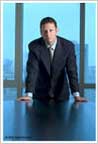 Rod is one of our nation’s leading minds. He’s smart, original, and very committed—a combination that one rarely finds.
 Rod Martin and [former Howard Dean campaign manager] Joe Trippi are America’s two foremost experts on online politics.
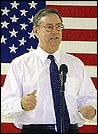 Rod Martin is a Reaganite-Thatcherite conservative…[and] a man who has spent much of his life ministering to and working for the benefit of others. I know Rod as an advocate for freedom, a leader who understands the real changes we need in Washington, and who has the drive and ability to make those changes happen.
 Rod Martin is the kind of dynamic leader who has the knowledge, ability and experience to lead us successfully into the 21st Century. His vision for America is compelling.
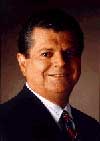 Rod Martin literally wrote the book on excellence. Humble yet brilliant, a man of love and compassion, with penetrating clarity he illuminates the world around us, and we are both stirred and enlightened.
 Rod Martin is a born leader and an outstanding political mind. Anyone who takes him on is going to have a serious fight on their hands.
 Rod Martin is a man of uncommon vision and character. Ever since I first worked alongside Rod in the early days of PayPal, I’ve been struck by his powerful vision for the future. Rod understands the intersection of technology, politics and culture in a way that few others do.
 Rod Martin wears with uncommon grace an uncanny ability to link his vigorous faith to the practical challenges of both the business world and the political arena. Yet the respect he shows for others carries a warmth and modesty that are both too rare among those who are strong advocates of feisty positions.
 America badly needs more leaders who really get the future. We need more Rod Martins.
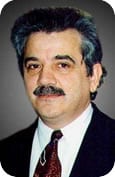 Rod Martin is a modern day philosopher-statesman. He is a capitalist intellectual, a conservative iconoclast, a gentle adversary and a kind prophet. He inspires us towards a fresh national vision built upon the original founding principles.
 Rod Martin is not only effective and efficient, but he is also perceptive, wise and gracious. He gets things done. He is a great friend and a great ally.
 Rod is one of the sharpest, most gracious men I know, and one of the most gifted political thinkers today. His ability to analyze issues and communicate thoughtful insights on them have earned him the respect of people across the political spectrum.
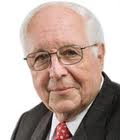 I am proud to have been Rod Martin’s friend for a quarter century, and I can tell you that he is one of the finest men and most outstanding leaders in our church and in our country today. He has a knack for turning everything he touches to success.
 Rod Martin is a cornucopian entrepreneur and eutropic thinker whose influence radiates through an array of companies, institutions, movements and churches. A renaissance American, he is also a prolific friend of freedom and faith around the globe.
 If Rod Martin represents the next generation of leaders, America has nothing to worry about.
 A leader and a servant, in public life and in private, Rod Martin strides at the top of his profession, and has nowhere to go but up. He is in the truest sense of the word ‘outstanding’.
 Rod Martin is undoubtedly one of the most accomplished thought leaders today. He is a wonderful mentor, a humble role model, and a deep inspiration for the next generation of scientific innovators and entrepreneurs.
 Rod’s achievements pale beside his character and his brilliance. He sees what others can’t. He leads when others won’t.
 Rod Martin is one of America’s finest young minds.
